Fuel injector cleaners remain a practical way to address mileage loss caused by deposit buildup, uneven spray patterns, and reduced combustion efficiency. In 2027, a few formulas stand out for drivers looking to recover performance without major repairs. From budget-friendly options to premium blends, each claims a different approach to cleaner fuel delivery. The question is which one offers the best balance of results, compatibility, and value.
Gumout 510013W-6PK Fuel System Cleaner, 6 Pack
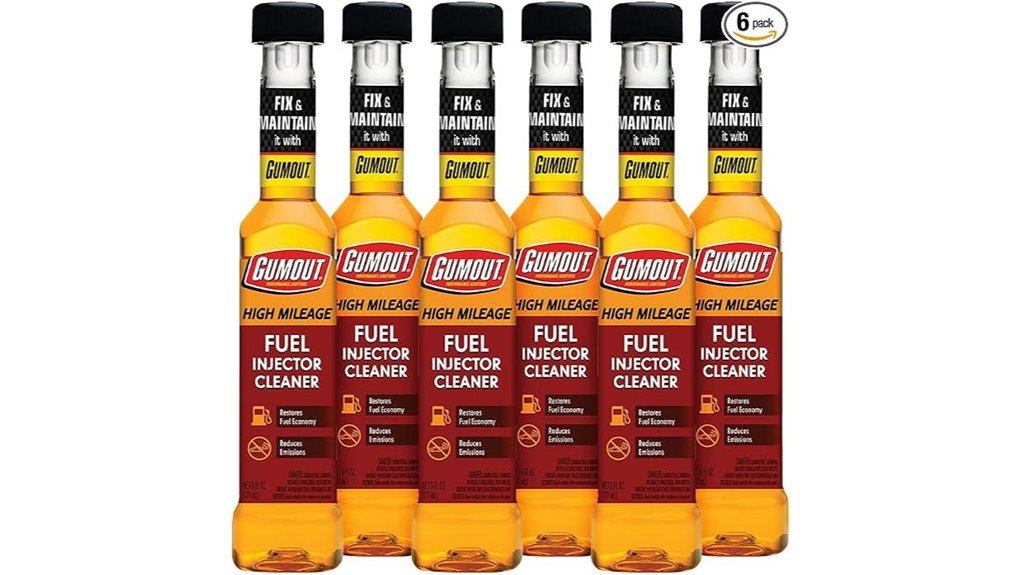
The Gumout 510013W-6PK Fuel System Cleaner, 6 Pack is a strong fit for drivers of higher-mileage vehicles, especially those with more than 75,000 miles, who want to restore engine performance and fuel economy. It targets carbon deposits in fuel injectors, intake valves, and ports, helping reduce emissions and prevent future buildup. The formula is oxygen sensor safe and works with turbocharged and supercharged engines. Users add one bottle to a nearly empty tank, then fill up to 21 gallons. For best results, it is used every 3,000 miles. The product will not void OEM warranties and comes in a six-pack.
Best For: Drivers of higher-mileage vehicles with over 75,000 miles who want to clean carbon deposits, restore performance and fuel economy, and maintain compatibility with turbocharged or supercharged engines.
Pros:
- Helps clean fuel injectors, intake valves, and ports to reduce carbon buildup.
- Oxygen sensor safe and won’t void OEM/manufacturer warranties.
- Convenient six-pack for regular use every 3,000 miles.
Cons:
- Best suited for older or high-mileage vehicles, so it may be unnecessary for newer cars.
- Requires adding to a nearly empty tank and then filling up, which is less convenient than some additives.
- Results may vary depending on engine condition and how much buildup is present.
Sea Foam IC5 Fuel Injector Cleaner for Gas Engines, IC5, 5.25 oz, Pack of 1
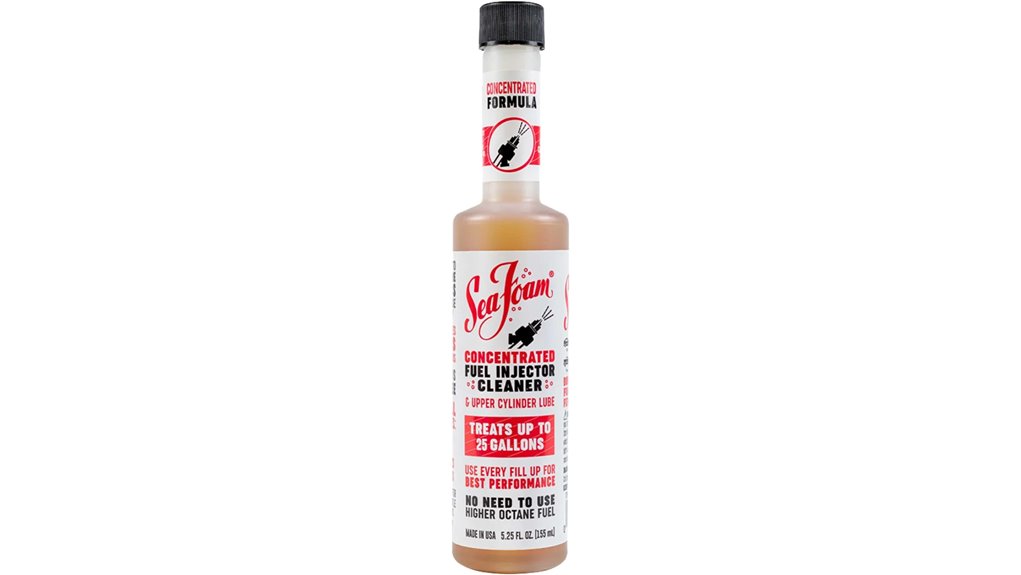
Sea Foam IC5 suits gasoline drivers seeking a compact cleaner that restores injector spray patterns. The 5.25-ounce bottle is formulated for gasoline fuel injection engines and treats up to 25 gallons of fuel, making it a practical single-use option. It adds lubricity to upper cylinders, helps recover lost MPG, and can reduce exhaust emissions when injectors are dirty. Compatibility includes capless fuel tanks, broadening its fit across modern vehicles. Sea Foam Brands lists the IC5 model with positive customer feedback, and Amazon’s 30-day return guarantee adds a modest layer of purchase confidence for buyers.
Best For: Gasoline vehicle owners who want a compact, easy-to-use fuel injector cleaner to restore spray patterns, improve performance, and support better fuel economy.
Pros:
- Treats up to 25 gallons of fuel, so one bottle works for a full tank treatment.
- Safe for all gasoline fuel injection engines and compatible with capless fuel tanks.
- Helps clean injectors, adds upper-cylinder lubricity, and may recover lost MPG.
Cons:
- Only suitable for gasoline engines, so it won’t work for diesel applications.
- The 5.25 oz size is a single-use option, which may be less convenient for frequent maintenance.
- Benefits depend on injector condition, so results may vary by vehicle.
Liqui Moly Jectron Fuel Injection Cleaner (300 ml)
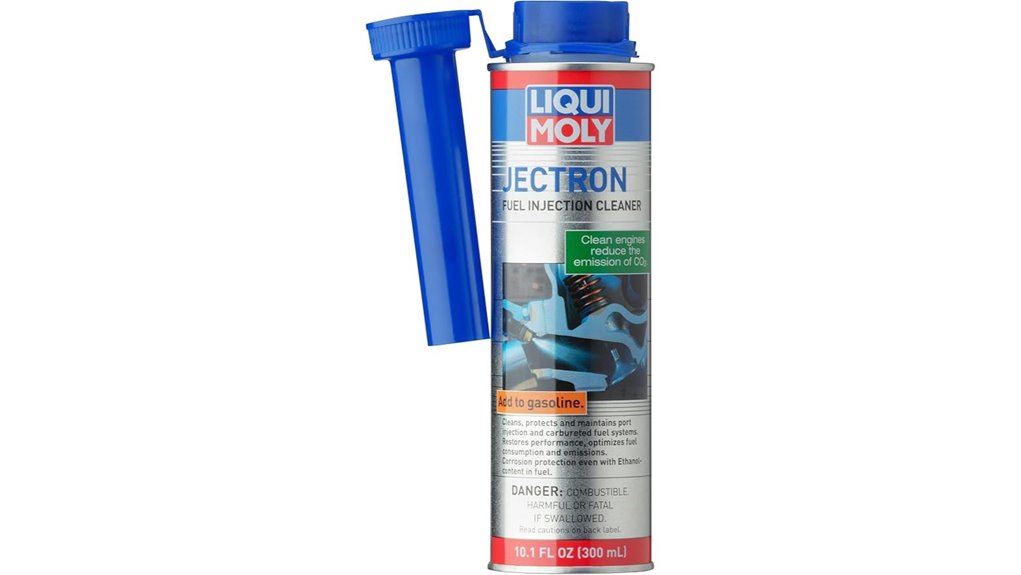
Liqui Moly Jectron Fuel Injection Cleaner suits petrol engines needing smoother starts and cleaner injection performance. This 300 ml petrol additive, SKU 2007, targets injection system deposits and contaminants that can cause hesitation, stalling, and rough idling. It helps restore accurate injector dosing and fuel atomization, which may improve throttle response, combustion quality, and fuel economy. The formula is especially useful for engines with catalytic converters, where cleaner burning matters. Liqui Moly positions it as a universal fit product, and its cleaner combustion can also support lower emissions and better overall engine efficiency.
Best For: Petrol car owners looking to improve starting, idle quality, throttle response, and injector cleanliness, especially in engines with catalytic converters.
Pros:
- Helps remove deposits and contaminants from the fuel injection system.
- Can reduce hesitation, stalling, and rough idling for smoother engine operation.
- Supports cleaner combustion, better fuel atomization, and potentially improved fuel economy.
Cons:
- Only suitable for petrol engines, not diesel applications.
- Benefits may be less noticeable if the engine already runs well or has underlying mechanical issues.
- Requires regular additive use to maintain cleaner injector performance over time.
Red Line SI-1 Fuel System Cleaner 15 Ounce
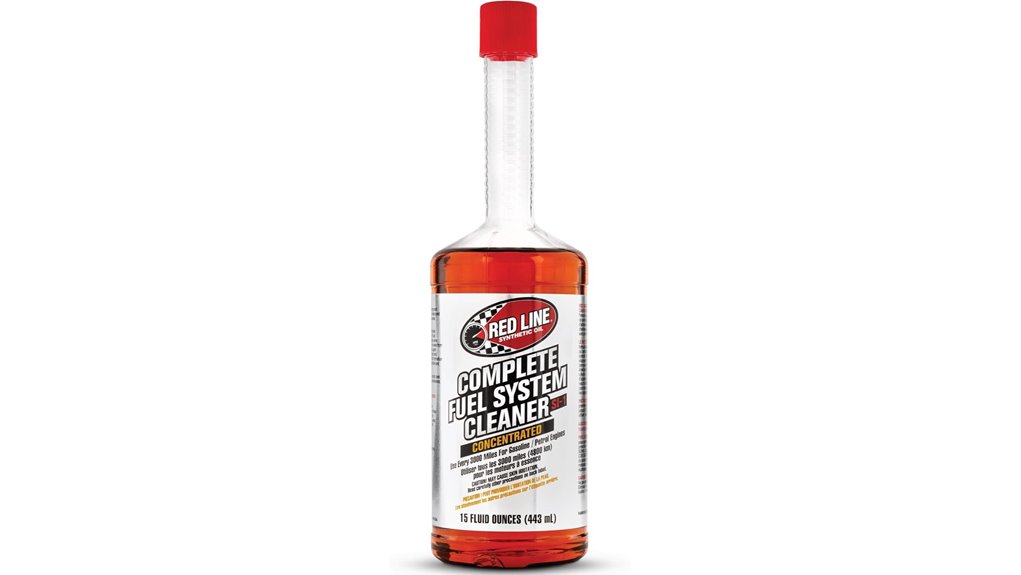
Red Line SI-1 suits performance-minded drivers who want a deep fuel-system cleaning in one treatment. The 15-ounce liquid bottle, part number 60103, combines concentrated high- and low-temperature detergents with a synthetic upper-cylinder lubricant. It is designed to clean injectors, carburetors, valves, and combustion-chamber deposits while helping prevent corrosion. Red Line says one bottle per tank can clean nearly 100% in a single service. The formula targets smoother operation, reduced gum and varnish, stronger power, and improved fuel economy. It is especially relevant for vehicles used in demanding or racing conditions.
Best For: Performance-minded drivers, including auto enthusiasts and racing users, who want a deep one-bottle fuel-system cleaning and better engine performance.
Pros:
- Cleans injectors, carburetors, valves, and combustion-chamber deposits effectively.
- Helps prevent corrosion while reducing gum and varnish buildup.
- Can improve fuel economy, smoother operation, and overall power in one treatment.
Cons:
- Best results may be most noticeable on vehicles with buildup, so it may be less dramatic for well-maintained engines.
- One bottle-per-tank use may be more expensive than basic fuel additives.
- Primarily aimed at performance-focused or demanding-use vehicles, so it may be more than some everyday drivers need.
Royal Purple Max-Clean Fuel System Cleaner (2-Pack)
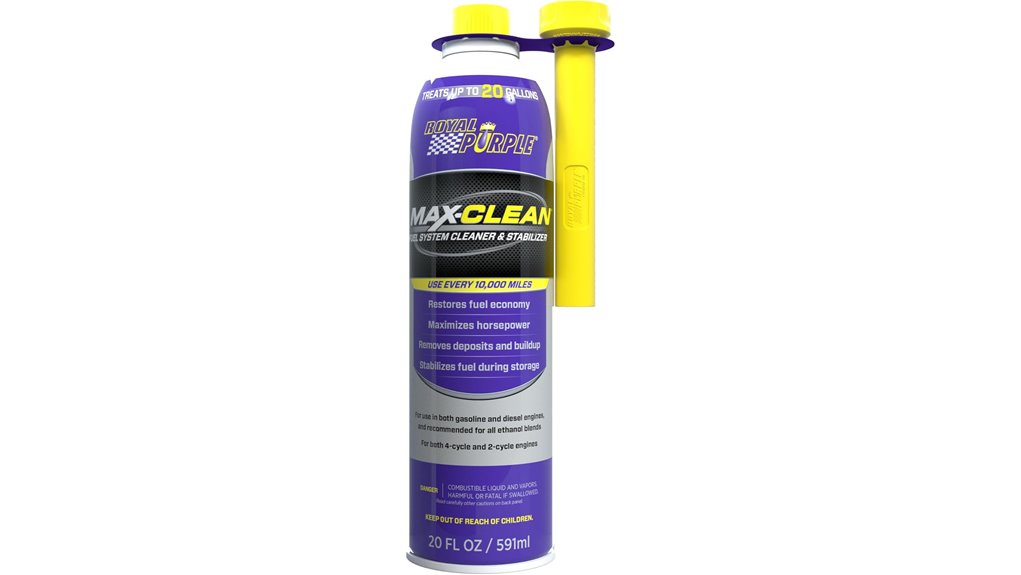
Royal Purple Max-Clean is a strong choice for drivers seeking a 3-in-1 cleaner with measurable performance gains. The Royal Purple 11722-2PK Max-Clean Fuel System Cleaner and Stabilizer comes as two 20-ounce liquid bottles with an unscented formula. It is designed to deep-clean injectors, carburetors, intake valves, and combustion chambers, helping prevent rough idle, hesitation, and stalling. Reported results include a 3.2% average fuel economy gain, 2.6% more horsepower, and notable emissions reductions in hydrocarbons, NOx, and CO. The 40-fluid-ounce pack offers a practical maintenance option.
Best For: drivers who want a 3-in-1 fuel system cleaner and stabilizer that can help improve fuel economy, increase horsepower, and reduce emissions while cleaning critical engine components.
Pros:
- Cleans injectors, carburetors, intake valves, and combustion chambers.
- Reported average gains of 3.2% in fuel economy and 2.6% in horsepower.
- Helps reduce hydrocarbon, NOx, and CO emissions.
Cons:
- Results can vary by vehicle and driving conditions.
- Requires regular use to maintain cleaning benefits.
- Pack of two may be more than some drivers need for occasional maintenance.
Factors to Consider When Choosing Fuel Injector Cleaners 2026: Restore Lost MPG
When choosing a fuel injector cleaner in 2026, the cleaner type, engine compatibility, and treatment capacity are key starting points. Its ability to remove deposits directly affects how well it can restore lost MPG. The most effective options are those matched to the engine and formulated for meaningful mileage recovery.
Cleaner Type
Fuel injector cleaners come in several forms, with liquid additives and concentrated solutions being the most common, and the right type can help clean injectors, restore spray patterns, and recover lost MPG. Liquid additives are typically poured directly into the fuel tank, offering a convenient option for routine maintenance. Concentrated solutions often deliver stronger cleaning power, making them useful when deposit buildup is more advanced. High-quality formulations can remove carbon deposits from injector tips, improve fuel atomization, and support better combustion efficiency. That can translate into measurable gains in miles per gallon when clogged injectors have been limiting performance. Regular use, often around every 3,000 miles, helps maintain cleanliness and reduce future buildup. Many products also support lower emissions by promoting more complete combustion.
Engine Compatibility
Compatibility with the engine is a primary consideration when choosing a fuel injector cleaner, because the formula must match the vehicle’s fuel system to work safely and effectively. A product should clearly state whether it is intended for gasoline or diesel engines, since using the wrong type can reduce performance or cause harm. Compatibility information for turbocharged or supercharged engines is also valuable, as these systems may require formulations that support higher stress and temperature. It is equally important to verify that the cleaner is safe for catalytic converters, so emissions components are not damaged. Oxygen sensor safe labeling should be confirmed to avoid inaccurate readings. Recommended dosage and application frequency should match the tank size and maintenance schedule to help preserve fuel efficiency.
Treatment Capacity
Treatment capacity is another key factor because a cleaner must be able to treat the amount of fuel actually in the tank. Products vary widely, with some formulated for as little as 25 gallons and others handling 21 gallons or more per bottle. Matching the cleaner to the vehicle’s tank size helps guarantee the additive is diluted correctly and performs as intended. Concentrated formulas may specify their dose in ounces or milliliters while covering larger fuel volumes, which can improve value over time. A higher capacity can also reduce how often replacements are needed, especially for drivers who use the product at regular intervals. Reading the label is useful for setting a use schedule, since some cleaners recommend application every 3,000 miles or after a defined fuel volume.
Deposit Removal
Effective fuel injector cleaners are formulated to dissolve carbon deposits and other contaminants that build up in the fuel injection system, helping restore proper injector spray patterns and improve fuel atomization. Deposit removal is the core measure of effectiveness, since accumulated residue can restrict injector flow and disrupt combustion. Many formulas rely on detergents that work in both high-temperature and low-temperature zones, targeting varnish, carbon, and related buildup throughout the system. Cleaner injectors can also support steadier operation by reducing hesitation, starting trouble, and stalling linked to poor spray quality. Regular deposit control helps keep combustion chambers cleaner and lowers harmful emissions, contributing to a healthier engine environment. When comparing products, strong cleaning action should be prioritized over surface claims alone.
Mileage Restoration
Beyond cleaning away deposits, fuel injector cleaners can also help restore lost MPG by improving how fuel is delivered and burned. Carbon buildup and contaminants can restrict flow, weaken spray patterns, and reduce combustion efficiency, causing fuel economy to slip. A quality cleaner helps remove these obstructions, allowing injectors to meter fuel more accurately and burn it more completely. In well-maintained engines, that improvement can recover an average of about 3% or more in fuel economy. Regular use, often every 3,000 miles, helps preserve these gains by keeping injector performance consistent over time. The result is typically smoother operation, sharper throttle response, and less wasted fuel. When mileage restoration is the priority, products that restore spray patterns and maintain injector cleanliness deserve the closest attention.
Emissions Reduction
Fuel injector cleaners can also play a meaningful role in emissions reduction by helping the engine burn fuel more cleanly. By dissolving carbon deposits that disrupt injector function, they help restore proper spray patterns and finer atomization, which supports more complete combustion. This cleaner burn can lower exhaust pollutants, including hydrocarbons, nitrogen oxides, and carbon monoxide, with some products reportedly cutting these emissions by up to 18%. Improved combustion also means less unburned fuel leaving the tailpipe. In addition, better fuel efficiency can indirectly reduce total emissions over time because less fuel is needed to travel the same distance. For vehicles with dirty injectors, targeted formulations may consequently support lower pollution levels while improving overall engine operation and helping the exhaust stream remain cleaner and more controlled.
Usage Frequency
How often a fuel injector cleaner is used can determine whether its benefits are temporary or sustained. Regular application every 3,000 miles is commonly recommended to preserve engine performance and fuel economy. This schedule helps maintain cleaner injectors, supports recovered MPG, and limits harmful emissions over time. Many products are designed for specific fuel volumes, with some treating up to 25 gallons per dose, so the amount used should match tank capacity. Adding the cleaner when the tank is nearly empty can improve mixing and treatment consistency. Used consistently, certain formulas also help prevent future carbon build-up, making ongoing maintenance more effective than occasional treatment.
Warranty Coverage
Warranty coverage is a practical factor to review when choosing a fuel injector cleaner, since most products include protection against manufacturer defects and may offer a 30-day return guarantee through retailers. This coverage generally does not void OEM or manufacturer warranties, which helps preserve confidence during use. Buyers benefit from checking the fine print, because some brands add specific limits on usage, support, or claim procedures. A strong warranty often signals that the manufacturer trusts the product’s cleaning performance and durability. It can also provide reassurance if the cleaner does not deliver expected results or if packaging or formulation issues appear. Reviewing warranty terms before purchase helps consumers compare options more effectively and make informed decisions while restoring MPG.
Frequently Asked Questions
How Often Should I Use a Fuel Injector Cleaner?
Most vehicles benefit from a fuel injector cleaner every 3,000 to 5,000 miles, or about every oil change, though the exact interval depends on driving habits, fuel quality, and engine condition. A person using mostly short trips or lower-quality fuel may need it more often. Following the product label and the vehicle manufacturer’s maintenance recommendations is the safest approach, since overuse rarely helps and may be unnecessary.
Will Injector Cleaner Fix a Rough Idle Immediately?
Probably not immediately; injector cleaner is not a magician in a bottle, despite automotive folklore. It may help a rough idle if dirty injectors are the cause, but results usually take time and a drive cycle. If the idle remains shaky, other suspects such as spark plugs, vacuum leaks, or sensors deserve attention. Persistent roughness after cleaning suggests a mechanic should diagnose the issue rather than expecting instant miracles.
Can I Use Fuel Injector Cleaner in Diesel Engines?
Yes, certain fuel injector cleaners can be used in diesel engines, but only products specifically labeled for diesel systems. A detached assessment would note that gasoline injector cleaners are not automatically safe for diesel engines, since diesel fuel systems differ in materials and combustion behavior. The product instructions should be checked carefully, and the engine type confirmed before use. If uncertainty remains, a mechanic or manufacturer guidance is the safer reference point.
Does Fuel Injector Cleaner Improve Acceleration Too?
Like polishing a clogged lens, fuel injector cleaner can sometimes improve acceleration by restoring proper fuel flow and spray pattern. If deposits were causing hesitation, rough idling, or sluggish throttle response, a cleaner may help the engine react more sharply. The effect is usually modest, not dramatic, and it will not fix mechanical problems, worn parts, or ignition issues. Benefits depend on how dirty the injectors were beforehand.
Is It Safe to Use Cleaner Before an Oil Change?
Yes, it is generally safe to use fuel injector cleaner before an oil change, since the product is added to the fuel tank, not the engine oil. It should not directly affect the oil itself. A detached observer would note that following the label dosage and vehicle recommendations matters most. If the vehicle has existing mechanical issues, or the cleaner is used excessively, consulting a mechanic is the wiser choice.
Conclusion
Ultimately, these five fuel injector cleaners stand out as smart, simple solutions for drivers seeking smoother starts, stronger spark, and steadier savings. From Gumout’s group value to Royal Purple’s reliable refresh, each formula helps fight fouling and fuel waste with focused force. For turbocharged or traditional engines alike, regular use can restore response, reduce residue, and recover lost MPG. In the end, consistent cleaning creates cleaner combustion, calmer running, and more confident commuting.