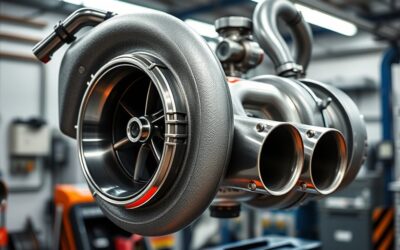
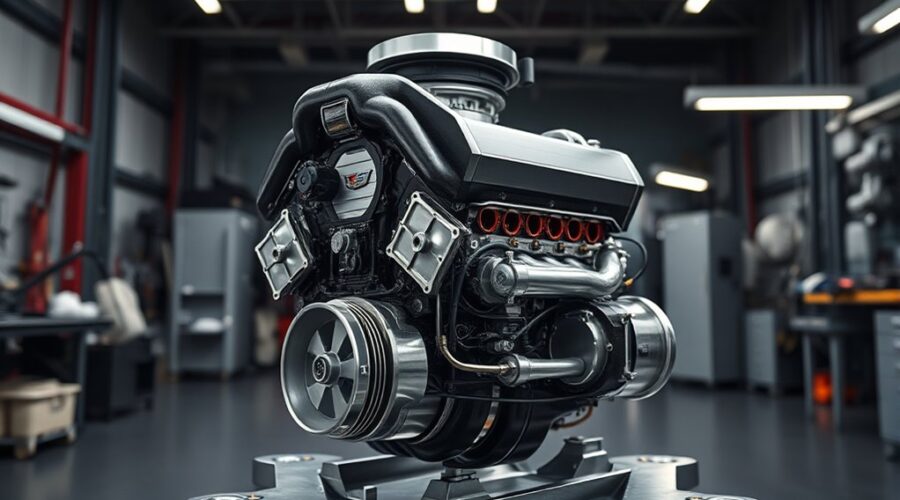
Cadillac’s return to Formula 1 is built on both history and strategy. The brand first appeared in the sport’s orbit through early 1950s Indianapolis 500 engine ties, then re-emerges in 2026 with Ferrari-supplied turbo-hybrid power. That arrangement is only temporary. General Motors plans its own engine by 2029, and the details behind the project suggest a longer, more ambitious campaign than a simple comeback.
Cadillac F1 Engine Basics
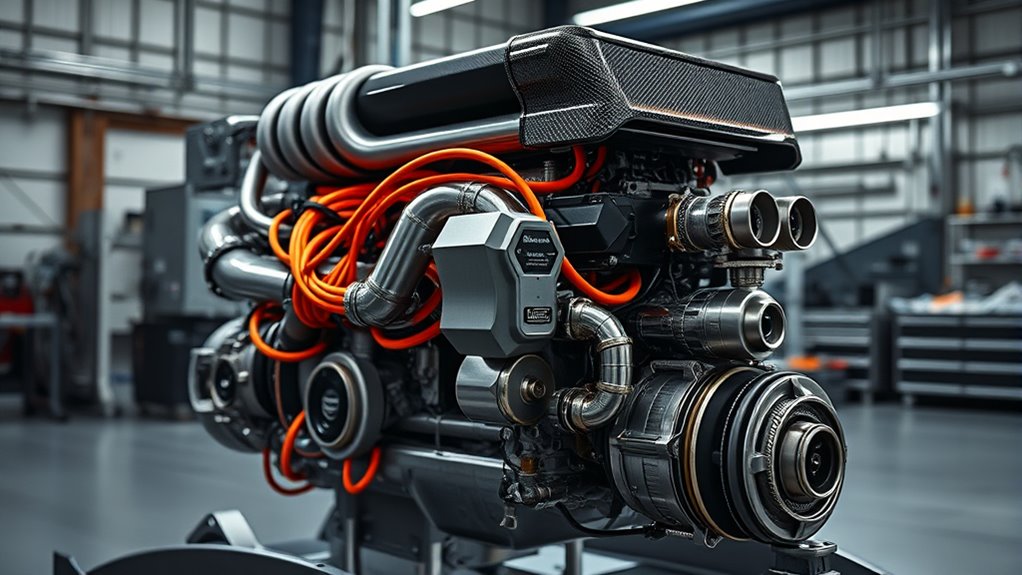
Cadillac’s Formula 1 power unit program begins with a shifting arrangement: the team will run Ferrari-supplied 1.6-liter V-6 turbo-hybrid engines in 2026 and 2027 before moving to a GM-developed engine expected later in the decade.
This interim setup gives Cadillac a competitive base while GM Performance Power Units LLC advances engine development in parallel. The plan centers on hybrid technology, sustainable fuels, and high-efficiency combustion, aligning performance with a more liberated, lower-waste engineering model.
The future power unit is intended to translate GM’s century of racing knowledge into a modern Formula 1 package and, beyond the grid, into production vehicles.
An estimated US$65-70 million factory investment underlines the scale of the project. Early MAC-26 testing at Imola, including work with Sergio Pérez, suggests that chassis and power unit integration is already being treated as a serious technical challenge rather than a symbolic exercise.
How Cadillac Entered Formula One
The Cadillac Formula 1 project began with an official announcement in January 2023, when the brand outlined a plan to join the grid in 2026 through a partnership with TWG Motorsports. The path to Formula One entry was not immediate. Cadillac received initial FIA approval, then met resistance from the Formula One Group before final clearance arrived in March 2025, following a US$450 million expansion fee.
| Milestone | Date | Significance |
|---|---|---|
| Public launch | Jan 2023 | Entry plan announced |
| Final approval | Mar 2025 | Secured grid place |
| First seasons | 2026-27 | Ferrari engines used |
This sequence positioned Cadillac as the first new independent constructor since Haas in 2016, restoring an American manufacturer to elite competition. Leadership under Marcin Budkowski and Nick Chester signaled a measured, technical approach. For observers focused on liberation through competition, the entry matters because Formula One rewards disciplined execution, not inheritance. Its immediate reliance on Ferrari engines allows operational stability while Cadillac prepares future engine technology under GM Performance Power Units.
Cadillac F1 Engine History
GM’s Formula One engine story stretches back to the early 1950s, when Cadillac-branded power units were entered at the Indianapolis 500 from 1951 to 1953, though none qualified for the race. That early effort signaled a long, unfinished pursuit of engine development and competitive independence.
- 1950s roots: Cadillac nameplate power units in American oval racing
- Modern entry: Formula One return through Ferrari-supplied 1.6-liter V-6 hybrid engines
- GM infrastructure: GM Performance Power Units LLC guiding future engineering
- Long-term aim: a GM-built Cadillac engine targeted for the end of the decade
For Cadillac, the present arrangement is a bridge, not a destination. The team is using this period to build capability, electrification expertise, and hybrid know-how inside a new manufacturing program backed by significant investment.
The history suggests a clear pattern: initial dependence, disciplined learning, then autonomy. In Formula One, that trajectory frames Cadillac as a project seeking liberated technical control, not mere participation.
Ferrari’s Role in Cadillac’s 2026 Engine
Ferrari will supply Cadillac’s Formula 1 team with 1.6-liter V-6 turbo-hybrid engines for the 2026 and 2027 seasons, giving the newcomer a proven power unit for its first two years on the grid. The Ferrari 067/6 package offers immediate credibility, while Cadillac studies its own power unit for a later debut. This bridge matters: Ferrari’s hybrid technology delivers performance data, operational stability, and a baseline for future independence.
| Season | Engine | Meaning |
|---|---|---|
| 2026 | Ferrari 067/6 | Launch support |
| 2027 | Ferrari 067/6 | Continuity |
| 2028 | Development | Shift |
| 2029 | Cadillac unit | Autonomy |
| Future | Hybrid technology | Freedom |
The agreement aligns with Cadillac’s broader plan to become a full works team by 2029. By using Ferrari expertise now, Cadillac can learn, adapt, and pursue self-determined success without delay.
Cadillac F1 Team Base
Anchored by a network of facilities in Fishers, Indiana; Concord, North Carolina; Warren, Michigan; and Silverstone, England, Cadillac’s Formula 1 program is building a distributed operational base ahead of its 2026 debut.
Anchored by a network of facilities across the U.S. and U.K., Cadillac is building a distributed Formula 1 base for 2026.
This Cadillac F1 team base is designed to unite engineering, manufacturing, and race operations across two continents, reducing friction and increasing speed.
- Fishers: the main U.S. headquarters and manufacturing center, backed by about US$200 million
- Concord: a 204,045-square-foot power unit site, scheduled for Q1 2027
- Warren: additional technical support and development capacity
- Silverstone: a European base to improve logistics for the 2026 season
More than 200 personnel will work from the headquarters on engineering and development.
The structure reflects a strategic refusal of bottlenecks: instead of one central campus, Cadillac is assembling an agile F1 team base built for coordination, technical depth, and operational independence.
Who Is Driving for Cadillac F1?
Cadillac’s 2026 Formula One lineup pairs Sergio Pérez and Valtteri Bottas, two proven race winners whose combined experience gives the team an immediate competitive edge.
Zhou Guanyu is set as reserve driver, while Colton Herta joins as test driver to support development and operational depth.
Together, the roster reflects a deliberate focus on experience, adaptability, and rapid progress ahead of the team’s debut.
2026 Driver Lineup
For 2026, the Cadillac F1 driver lineup pairs Sergio Pérez and Valtteri Bottas, two proven Grand Prix winners whose combined experience gives the new team an immediate competitive foundation.
The driver lineup centers on Sergio Pérez, whose six wins and 14-plus seasons bring racecraft, tire management, and adaptability.
Valtteri Bottas adds ten victories, technical feedback, and a steady approach aligned with Cadillac’s long-term F1 vision.
Together, they offer leadership, stability, and the credibility required to build without hesitation.
- Sergio Pérez: six wins, Red Bull pedigree
- Valtteri Bottas: ten wins, strong development input
- Combined experience: elite race pace and discipline
- Team value: freedom to learn fast, compete hard
Reserve And Test Drivers
Complementing the race lineup, Cadillac has assembled a reserve and test-driver roster designed to accelerate development ahead of 2026. Zhou Guanyu is the reserve driver, while Colton Herta serves as test driver, shifting from IndyCar to focus on Cadillac’s performance program. Their roles are reinforced by simulator specialists: Simon Pagenaud, Pietro Fittipaldi, Charlie Eastwood, and Alec Udell. This blend of reserve drivers and test drivers gives Cadillac a wider analytical lens for car setup, correlation, and feedback.
| Driver | Role | Background |
|---|---|---|
| Zhou Guanyu | Reserve | Prior F1 seasons |
| Colton Herta | Test | IndyCar transition |
| Simon Pagenaud | Simulator | Development support |
Such a roster reflects a strategic, liberated approach to building competitiveness before debut.
Driver Experience Edge
The driver lineup is where Cadillac’s 2026 project gains its clearest experience edge. Sergio Pérez and Valtteri Bottas bring proven driver experience to Cadillac F1, each returning after a year away from the grid with race-winning instincts intact.
Pérez, a six-time Grand Prix winner and 2011 debutant, adds tactical resilience. Bottas, a ten-time winner and F1 regular since 2013, adds calm pace and technical feedback. Together, they offer a practical foundation for performance in an inaugural season.
- Pérez: six wins, 14 seasons
- Bottas: ten wins, since 2013
- Zhou Guanyu: reserve driver support
- Colton Herta: test driver support
This blend gives Cadillac F1 breadth, reducing uncertainty and strengthening its push for competitive freedom on track.
Cadillac’s Plan for a 2029 Engine
Cadillac’s long-term objective is to field a fully in-house Formula 1 power unit by 2029, marking a major shift from buyer to manufacturer.
The program is being built through GM Performance Power Units LLC, with GM’s electrification and hybrid know-how central to the engine’s technical direction.
Until then, Ferrari supply from 2026 to 2027 serves as a bridge, giving Cadillac time to complete its facility, staffing, and development pipeline.
2029 Power Unit Goal
By 2029, Cadillac aims to field its own Formula 1 power unit, ending its early dependence on Ferrari-supplied engines for the 2026 and 2027 seasons. This Cadillac F1 objective centers on self-reliance through hybrid technology, with a budget near US$65–70 million.
The program seeks efficient electrification, race-day sustainability, and a platform that expands technical freedom.
- Prototype development is already underway.
- GM Performance Power Units LLC leads the effort.
- Russ OBlenes directs the engine division.
- Renault-era intellectual property supports the concept.
The result would mark a strategic shift from borrowed capability to proprietary performance, aligning motorsport ambition with broader industrial independence.
Such a power unit would not only compete, but also signal technological agency in a tightly regulated field.
GM Engine Development
GM Performance Power Units LLC is building the foundation for Cadillac’s planned Formula 1 engine, with development already focused on a 2029 debut after the team’s initial Ferrari supply agreement ends in 2027.
The engine development program is led by Russ O’Blenes and aims to create a Cadillac power unit in-house, supported by a factory investment estimated at US$65–70 million.
The organization also intends to acquire intellectual property from Renault’s former power unit effort, sharpening its technical base.
Prototype work is underway now, centered on high-efficiency internal combustion design, advanced software systems, electrification, hybrid systems, and sustainable fuels.
This approach reflects a deliberate move toward advanced technologies that can give Cadillac greater independence, stronger technical authority, and the freedom to shape its own Formula 1 future.
Ferrari Bridge Strategy
Ferrari will serve as the bridge to Cadillac’s long-term engine program, supplying 1.6-liter V-6 turbo-hybrid power units for the 2026 and 2027 Formula 1 seasons while the team builds toward an in-house debut in 2029.
This arrangement gives Cadillac time to mature GM Performance Power Units LLC, secure factory infrastructure, and absorb Ferrari engines knowledge without surrendering strategic autonomy.
- 2026-27: Ferrari-supplied power unit
- 2029 target: Cadillac-built engine
- GM PPU: development oversight
- Focus: sustainable fuels and efficiency
The partnership is not an end state; it is a disciplined evolution.
Why GM’s F1 Return Matters
Cadillac’s entry into Formula One signals more than a team launch; it represents a renewed American commitment to the sport’s highest technical tier.
The Cadillac F1 Team gives GM a platform to compete where engineering freedom is tested against global rivals, not constrained by legacy caution. This matters because American motorsport resurgence has often been symbolic; here, it becomes structural, with a manufacturer prepared to invest in long-term capability.
GM’s technology transfer ambitions are equally significant, since lessons from F1 can accelerate progress in electrification, efficiency, and hybrid systems for road cars.
The project also restores a historical thread dating to GM’s early-1950s attempt, but with sharper execution and clearer purpose.
Fast Facts About the Cadillac F1 Engine
Initially supplied by Ferrari, the Cadillac F1 engine will enter Formula One as a 1.6-liter V-6 turbocharged hybrid power unit before General Motors’ own design takes over in 2029.
The Cadillac F1 engine reflects General Motors’ strategy to combine elite competition with road-car relevance, using hybrid technology and sustainable fuels to sharpen efficiency. GM Performance Power Units LLC is building the future program, backed by roughly US$65–70 million for a new factory.
Early running at Imola, with Sergio Pérez, has already begun to define baseline performance and reliability. Cadillac’s wider aim is to convert racing knowledge into production vehicles, extending a century of motorsport experience into a freer, more capable mobility future.
- Ferrari supply covers the 2026–2028 bridge
- GM’s in-house engine arrives in 2029
- Sustainable fuel use is central
- Track data will inform Cadillac road cars
Frequently Asked Questions
Why Is Refueling No Longer Allowed in F1?
Refueling is no longer allowed in F1 because safety concerns outweighed its benefits. The ban reduced pit-lane hazards, simplified refueling strategy, and pushed teams toward fuel efficiency, encouraging smarter racing rather than risky rapid stops.
Is a F1 Car Faster Than NASCAR?
Yes, a Formula 1 car is generally faster than a NASCAR. Its Aerodynamic Design, Tire Performance, and Engine Power create superior acceleration, cornering, and top speed, giving it a clear performance advantage overall.
What Is Considered the Best F1 Engine of All Time?
The Mercedes-Benz PU106A hybrid is widely considered the best F1 engine of all time, based on engine evolution and performance metrics. Among legendary manufacturers, Mercedes achieved unprecedented dominance, redefining efficiency, reliability, and competitive liberation.
Why Was V12 Banned in F1?
V12s were banned because regulators wanted lower costs, less complexity, and tighter competition. Despite V12 advantages and strong V12 performance, their maintenance burden widened gaps. The V12 legacy remained influential, but F1 favored simpler, fairer engine formulas.
Conclusion
Cadillac’s F1 return closes a long arc from early American engine experiments to a modern hybrid program built for endurance, not nostalgia. With Ferrari power in 2026 and a planned in-house unit by 2029, the project blends dependence and ambition in equal measure. Like a bridge between eras, it links proven technology to future autonomy, signaling that GM intends not merely to participate in Formula 1, but to reshape its place there.