Juha Miettinen, a 66-year-old Finnish driver, was killed in a seven-car crash during the ADAC 24h Nürburgring Qualifiers on April 18, 2026. The chain reaction began in Klostertal after an oil spill cut grip, then a car hit the barriers and the field scattered. Miettinen’s BMW 325i struck a stationary vehicle in a violent T-bone impact. What followed exposed how quickly a controlled race can turn critical.
What Happened in Juha Miettinen’s Nürburgring Crash?

Juha Miettinen, a 66-year-old Finnish driver, died in a seven-car crash during the ADAC 24h Nürburgring Qualifiers on April 18, 2026.
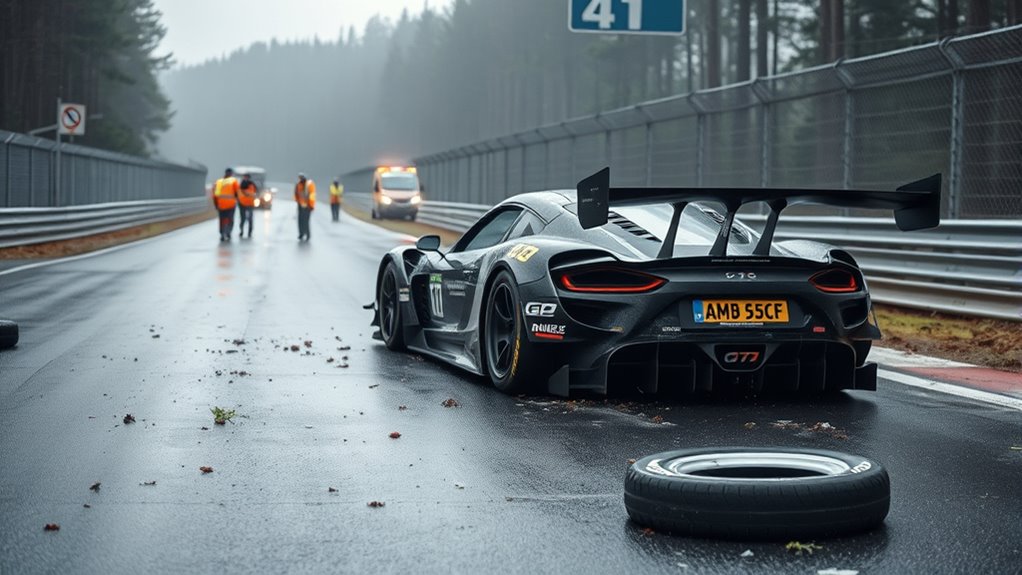
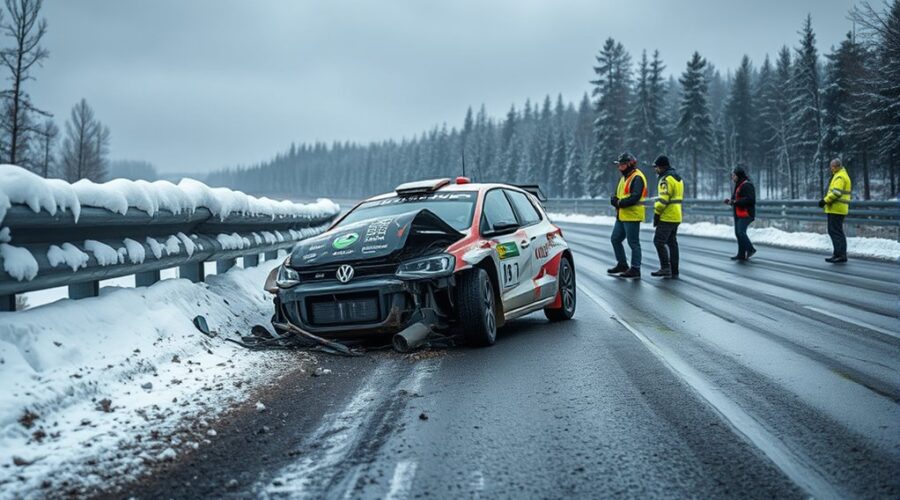
On the Nürburgring, the crash emerged in the Klostertal section during the third lap, where an oil spill likely reduced grip and set off a chain reaction. Miettinen, in BMW 325i #121, struck a stationary vehicle after another car hit the barriers, producing a forceful collision and contributing to the seven-car pileup.
Klostertal’s oil-slicked tarmac triggered a chain reaction, and BMW 325i #121 struck a stationary car in the ensuing pileup.
The scene demanded immediate emergency services response, and extrication was followed by resuscitation attempts. He was taken to the medical center, where he succumbed to his injuries.
The ADAC 24h session was stopped for recovery operations and will not resume, underscoring the severity of the incident.
Beyond the immediate loss, the event has intensified scrutiny of safety protocols, track conditions, and the duty to prevent avoidable harm to drivers seeking freedom on the circuit.
How the Seven-Car Pileup Unfolded
The seven-car pileup at the ADAC 24h Nürburgring Qualifiers began on the third lap in the Klostertal corner, where an oil spill on the racing line likely reduced grip and set off the initial crash.
The #503 BMW 330i struck the barriers head-on, and the impact became the pivot point for a chain reaction that drew in six more cars. Juha Miettinen’s BMW 325i (#121) then rotated into the already-stopped 330i at a right angle, creating a severe T-bone collision.
From there, the seven-car pileup spread through the field as following drivers had little time or room to evade the wreckage. Emergency services reached the scene quickly and tried to resuscitate Miettinen before transport to the medical center. He later died from his injuries.
The race was stopped and not resumed, underscoring how fragile freedom on track remains when safety measures fail to prevent cascading harm.
Why the Klostertal Oil Spill Was So Dangerous
Klostertal’s high-speed layout made the oil spill especially hazardous, because even a slight reduction in grip at that point in the Nürburgring can leave drivers with little time to correct a slide.
At these high-speed corners, tire traction is already stretched, so an oil spill on the racing line can turn normal cornering into an immediate loss of grip.
The first response from the #503 BMW 330i ended in a head-on crash into the barriers, showing how quickly fluid leaks can transform a lap into danger.
In motorsport, such contamination is a known trigger for multi-car collisions, since drivers behind often cannot read the surface change before they enter it.
The Klostertal curve has seen similar accidents linked to track conditions, reinforcing the need for strict safety measures, rapid cleanup, and stronger monitoring of fluid leaks.
In that setting, a small spill can become a public hazard.
What Happened to the Other Drivers?
Alongside Juha Miettinen, six other drivers were caught up in the crash, but none suffered life-threatening injuries. Emergency services reached the scene quickly, working through the wreckage to assess each person involved. The accident drew BMW and Porsche drivers into a tightly packed chain reaction, leaving damaged metal and shaken but conscious occupants. All six were moved to the Medical Centre and nearby hospitals for precautionary examinations, where doctors monitored their conditions and confirmed they remained stable.
| Driver group | Reported status |
|---|---|
| Miettinen and others | Stable after the crash |
| BMW drivers | Checked at Medical Centre |
| Porsche drivers | Sent for precautionary examinations |
The response focused on immediate care rather than speculation. That approach mattered: in multi-car accidents, careful observation can reveal hidden injuries. Here, the facts show a controlled medical outcome despite the violence of the pileup.
What Changes Could Follow the Crash?
Investigations by the FIA and DMSB are expected to examine how the crash unfolded, with particular attention to possible fluid spills and whether existing safety protocols were sufficient.
For the race, the Juha Miettinen accident may prompt a broader investigation into motorsport standards and driver protection.
The ADAC report is likely to shape next steps:
- Review track response and marshal procedures.
- Assess whether regulations require stronger barriers, runoff areas, or faster cleanup.
- Determine if safety protocols need revision for high-speed incidents.
Historical patterns suggest that serious accidents often lead to measurable reform.
If evidence confirms gaps, governing bodies could tighten regulations, upgrade monitoring, and expand driver protection measures.
Such changes would not only address this incident but also aim to prevent future harm.
In that sense, the crash may become a catalyst for a more accountable, safer racing environment, with the FIA and ADAC under pressure to turn findings into action.
Frequently Asked Questions
Do You Feel Pain in a Car Crash?
Yes, pain may occur in a car crash, yet an adrenaline response can delay it. Individual pain threshold, psychological effects, and emotional trauma shape perception; injury assessment, safety measures, support systems, recovery process, legal implications matter.
Was There a Crash on the Nurburgring Today?
Yes—today’s Nürburgring incidents resembled a cautionary fable. A seven-car crash prompted crash investigation into track conditions, with driver testimonies and emergency response under review; accident statistics, media coverage, fan reactions, vehicle damage highlighted racing safety.
Conclusion
Juha Miettinen’s death in the Nürburgring Qualifiers was a stark reminder that endurance racing can turn, in an instant, from measured competition to ruin. As the Klostertal oil spill set the stage for a seven-car chain reaction, the crash exposed how fragile safety margins can be when speed, visibility, and traction collapse together. Like a warning echoing through motorsport’s history, it may prompt sharper scrutiny of track response, barrier impacts, and caution procedures.