
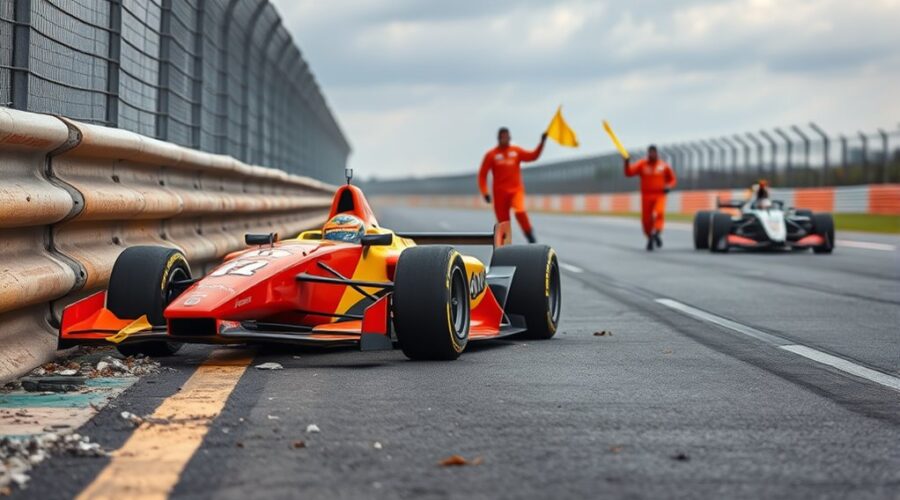
On August 31, 2019, a Formula 2 race at Spa-Francorchamps turned into a high-speed multi-car crash. Giuliano Alesi lost control, triggering a sequence that left Anthoine Hubert struck side-on by Juan Manuel Correa’s car at about 218 km/h. Hubert died from the impact, while Correa suffered serious injuries. The FIA later examined the incident closely, and its findings exposed critical open-wheel safety limits that changed the discussion around the category.
Spa-Francorchamps F2 Crash Overview
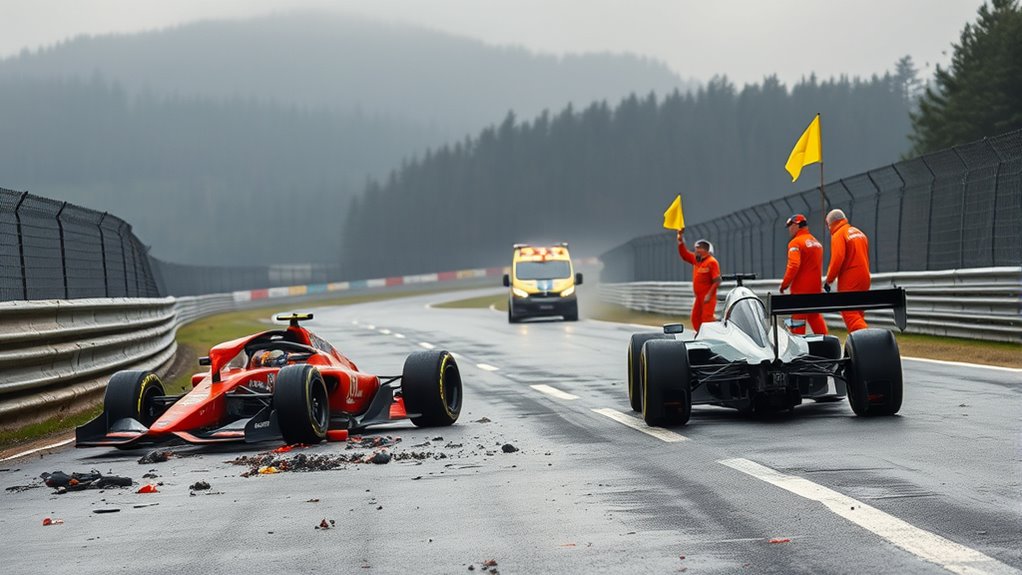
The fatal Formula 2 crash at Spa-Francorchamps occurred on August 31, 2019, during the race involving Anthoine Hubert, Juan Manuel Correa, and Giuliano Alesi.
The F2 incident at Spa-Francorchamps led to immediate scrutiny because it produced non-survivable trauma for Anthoine Hubert and severe injury risk for Juan Manuel Correa.
The Spa F2 crash drew immediate scrutiny after causing fatal trauma for Anthoine Hubert and severe injury risk for Juan Manuel Correa.
In the Formula 2 race, the crash was not attributed to a single error. The FIA investigation identified multiple contributory factors, while finding no driver at fault.
Safety teams reached the scene within seconds, showing the scale and urgency of modern track response. The event also highlighted the vulnerability of open-wheel competition when chain reactions develop at high speed.
Giuliano Alesi was involved in the sequence that preceded the impact.
The crash became a reference point for technical review, risk management, and the demand for freer, safer motorsport conditions.
How the Crash Unfolded
On the second lap of the Formula 2 race at Spa-Francorchamps on August 31, 2019, the sequence began when Giuliano Alesi lost control at Turn 3 and struck the barrier.
Debris from the impact entered the racing line and set the crash sequence in motion. Anthoine Hubert then hit Ralph Boschung’s car, losing his front wing and suffering a puncture.
With limited control, Hubert’s Formula 2 car was launched back into oncoming traffic. Juan Manuel Correa arrived at high speed and struck Hubert side-on at about 218 km/h.
The force of the impact was extreme; Hubert sustained fatal trauma, while Correa suffered serious injuries to his legs.
At Spa-Francorchamps, the chain reaction unfolded within seconds, leaving little margin for avoidance.
The FIA investigation later identified multiple contributing factors shaping the severity of the incident and concluded that no single driver was solely responsible for the crash.
Why Anthoine Hubert Died
Anthoine Hubert died from non-survivable trauma after his Formula 2 car was struck side-on by Juan Manuel Correa at about 218 km/h during the Spa-Francorchamps race on August 31, 2019.
The fatal accident occurred in a crash sequence that began after a yellow flag followed Giuliano Alesi’s loss of control. Hubert’s car was nearly stationary at impact, while the high-speed impact generated a peak force measured at 81.8g.
Such loading exceeded survivable limits, producing fatal internal and structural injuries despite rapid medical intervention. The FIA investigation later identified contributory factors in the incident, but no driver was assigned blame.
The event illustrated how speed, position, and timing can combine into a lethal outcome even under caution conditions. At Spa-Francorchamps, the combination of limited escape time and massive energy transfer left Hubert with injuries incompatible with life, and he was pronounced dead about 90 minutes after the crash.
FIA Findings and Safety Changes
FIA investigators concluded that the Spa-Francorchamps fatal crash resulted from multiple contributory factors rather than a single cause, and they did not assign fault to any driver.
The FIA investigation reported that marshals and race control responded promptly and that yellow flags were deployed appropriately after the initial incident. These findings supported safety recommendations focused on debris containment, stronger cockpit structures, and improved car-to-car compatibility to reduce future impact severity.
At Spa-Francorchamps, later track changes also targeted larger run-off areas and reintroduced gravel traps where feasible, reflecting a practical priority: driver safety over speed alone.
Additional measures included new car tethers to limit loose components.
The incident also led to the permanent retirement of car number 19 in memory of Anthoine Hubert, while the Anthoine Hubert Award was created for the highest-placed rookie in F2.
Anthoine Hubert’s Career and Legacy
Early promise defined Hubert’s rise through the junior categories: he began karting at age eight, finished runner-up in the 2010 CIK-FIA Karting Academy Trophy, and placed third in the U18 World Karting Championships in 2011 and 2012.
| Year | Series | Result |
|---|---|---|
| 2013 | French F4 | Champion |
| 2015 | Eurocup FR 2.0 | 5th |
| 2018 | GP3 | Title |
| 2019 | FIA Formula 2 Championship | 2 wins |
| 2019 | Spa-Francorchamps | Tragic death |
Anthoine Hubert advanced from karting to single-seaters with measurable pace, winning French F4 in his debut season and scoring wins at Silverstone and Le Mans. He secured the GP3 title, then entered the FIA Formula 2 Championship with BWT Arden, where his rookie season delivered two victories. His tragic death at Spa-Francorchamps cut short a rising racing career, yet his legacy remains active in motorsport. The Anthoine Hubert Award now recognizes the highest-placed rookie driver in F2, preserving his technical standard and the demand for liberated, competitive opportunity.
Frequently Asked Questions
Can You Explain the Anthoine Hubert Crash?
It involved a multi-factor F2 crash at Spa, where crash analysis highlighted driver reactions, F2 safety, track design, and race regulations. Impact technology and recovery protocols limited response time; media coverage and historical comparisons shaped driver training.
Did Senna’s Head Move After the Crash?
Yes—like a flicker after a shattered beacon, Senna’s head moved slightly after the crash impact. Records frame it as possible driver reactions, amid safety measures, race regulations, helmet technology, track design, media coverage, fan responses, emotional tributes.
What Was the Last Death in F2?
The last death in F2 was Anthoine Hubert in 2019 at Spa-Francorchamps. F2 safety, driver protocols, crash investigations, race regulations, fan reactions, media coverage, circuit design, team responsibilities, psychological impact, future implications followed.
Who Was the Last Fatal Death in F1?
Ayrton Senna was the last fatal death in F1, on May 1, 1994. His crash reshaped F1 safety, driver training, race regulations, crash investigations, helmet technology, circuit design, emergency responses, historical accidents, media coverage.
Conclusion
In the wake of the Spa-Francorchamps collision, the F2 race became a stark fracture line in modern motorsport safety. Anthoine Hubert’s death, caused by a high-energy side impact, exposed the exposed bones of open-wheel racing: speed, proximity, and fragility. FIA investigations translated tragedy into corrective action, strengthening barriers, protocols, and car design. Hubert’s legacy remains a quiet beacon—an emblem of talent, loss, and the relentless engineering of risk reduction.