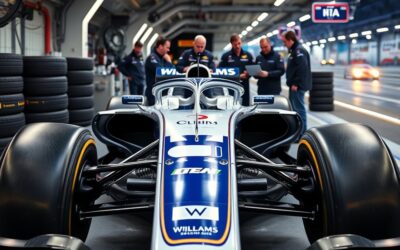
Ford’s upcoming Senate hearing is expected to focus on vehicle specifications rather than branding. Senators are likely to press the company on powertrain efficiency, horsepower, acceleration, and cabin dimensions, while also examining how safety systems and other options raise prices. Models such as the Mustang GT, F-150 Raptor, and Mustang Mach-E GT provide useful benchmarks. The larger question is whether Ford’s performance targets and cost structure can satisfy regulators without narrowing affordability further.
Key Takeaways
- Ford’s Senate hearing is set for January 14, 2026, to examine vehicle affordability, pricing, and federal regulations affecting auto costs.
- Jim Farley may miss the hearing because it conflicts with the Detroit Auto Show, raising questions about accountability and witness selection.
- Senators may focus on powertrain specs, including horsepower, torque, efficiency, towing capacity, and packaging across Ford’s lineup.
- Ford’s EV strategy, including a $50 billion investment and 600,000 annual EV-capacity target, is expected to face cost scrutiny.
- Features like safety tech, cabin size, and premium trim content increase manufacturing costs and help explain higher vehicle prices.
What Is Ford’s Senate Hearing About?

Ford’s Senate hearing, titled “Pedal to the Policy,” is scheduled for January 14, 2026, and is expected to examine vehicle affordability and the role federal regulations play in driving up auto prices.
The Senate hearing centers on rising new-vehicle costs, which now exceed $50,000 on average, and on whether mandated technologies, compliance requirements, and other government rules are reshaping market pricing.
Senator Ted Cruz, who chairs the proceeding, frames the inquiry as an effort to restore competition and lower barriers that constrain access to personal transportation.
restore competition and lower barriers that constrain access to personal transportation
The review will assess how policy interventions affect manufacturing cost structures, product content, and consumer choice across the auto sector.
Ford CEO Jim Farley is one of the industry figures associated with the discussion, underscoring the hearing’s relevance to Detroit’s strategic outlook.
If the major automakers participate, the session would represent a rare joint examination of industry conditions, signaling broad implications for vehicle affordability and the regulatory architecture governing the market.
Why Jim Farley Is Likely to Skip It
Jim Farley is likely to skip the January 14, 2026 Senate hearing because it conflicts with the Detroit Auto Show, creating an immediate scheduling constraint.
Ford has also argued that the hearing’s witness selection is uneven, noting Tesla included Vice President Lars Moravy rather than Elon Musk, which weakens the case for Farley’s attendance.
In addition, Ford’s legal team has indicated that Farley is not the most suitable representative for the hearing’s regulatory and affordability focus, limiting his expected utility as a witness.
Scheduling Conflict At Detroit Auto Show
Although the Senate hearing on January 14, 2026, is scheduled to examine vehicle affordability, Jim Farley is likely to miss it because of a direct conflict with the Detroit Auto Show, which takes place at roughly the same time and remains one of the automotive industry’s most important annual events.
Ford Motor must allocate executive bandwidth where exposure, supplier meetings, and product briefings are concentrated. The Senate hearing and the Detroit Auto Show compete for the same scarce decision-maker time.
- Detroit Auto Show attendance demands senior leadership
- Ford Motor prioritizes operational visibility
- Senate hearing preparation requires separate legal review
- Vehicle affordability testimony remains politically sensitive
- The overlap underscores constrained executive mobility
Farley’s absence may raise accountability concerns, yet it also reflects the practical limits imposed on leaders in a high-pressure industry seeking autonomy.
Tesla Invite Creates Unevenness
Unevenness in the witness list has become part of the rationale for why Jim Farley is likely to skip the January 14, 2026 Senate hearing. Ford’s CEO has already cited scheduling pressure, yet the invite structure also matters: Tesla’s VP Lars Moravy is listed, while Elon Musk is not, producing an asymmetrical industry lineup. Ford contends that this configuration weakens comparative value and muddies the hearing’s technical purpose.
| Factor | Effect |
|---|---|
| Tesla invite | Distorts parity |
| CEO roster | Alters accountability |
| Senate agenda | Narrows relevance |
| Public framing | Shapes perception |
Farley’s legal team has told Senator Cruz the attendance may not align with context or purpose. For an audience seeking liberation, the issue is not optics alone; it is whether a CEO should be drawn into a forum whose witness design appears uneven.
Farley Not Ideal Witness
Farley is expected to miss the January 14, 2026 Senate hearing, with Ford pointing to a scheduling conflict tied to the Detroit Auto Show and to a broader judgment that he is not the most suitable witness for the panel’s stated focus on vehicle affordability and government regulation.
- Ford cites executive scheduling limits.
- The Senate hearing centers on pricing pressure.
- Legal advisers question Farley’s fit.
- Representation appears uneven versus Tesla.
- Absence may complicate lawmaker relations.
The calculus is technical, not evasive: a CEO’s testimony can be less useful than a policy or regulatory specialist when questions concern cost structures, mandates, and market access.
Ford’s choice may preserve bandwidth, yet it also invites scrutiny over accountability and public transparency.
For observers demanding liberated, affordable mobility, the issue is whether leadership can explain pricing constraints without retreating from oversight.
Which Ford Specs Will Senators Question?
Senators are expected to focus on Ford specifications that most directly affect vehicle pricing, including powertrain efficiency, acceleration, towing capacity, and cargo or passenger dimensions.
Regulatory compliance is likely to draw attention as well, with emissions and fuel-economy standards viewed as cost drivers that may influence affordability.
Ford’s EV strategy will also be examined for its effect on production costs, pricing structure, and competitiveness in the shift to electric vehicles.
Vehicle Prices Under Scrutiny
Vehicle pricing is expected to draw close scrutiny at the hearing, with Ford’s average sticker price now above $50,000, roughly double its level from a decade ago.
Senators on the Senate Committee on Commerce will likely press executives on vehicle prices, cost of vehicles, and the justification for premium trims, technology bundles, and electrified models.
The inquiry may test whether pricing aligns with consumer access and market fairness.
- Average sticker price trajectory
- Import competition and tariff exposure
- EV shift expense
- Technology and compliance cost pass-through
- Value perception versus affordability
Ford may need to explain how these factors shape margins, model mix, and retail pricing without limiting mobility for working households.
Regulations Driving Costs
Regulatory pressure is expected to be a central line of questioning at the Senate hearing, with lawmakers examining how emissions rules, fuel-economy requirements, and electric vehicle mandates have influenced Ford’s vehicle costs and pricing strategy. Senators are likely to assess whether compliance has lifted average prices above $50,000, particularly through mandated hardware such as start-stop systems and other powertrain controls.
| Issue | Likely question |
|---|---|
| Emissions regulations | How much do compliance systems add to unit costs? |
| CAFE standards | Do fuel targets compress margins? |
| Start-stop hardware | Are mandated features altering drivability and price? |
| Electric vehicle mandates | What capital outlays are required? |
| Repeal proposals | Would relief reduce consumer costs? |
The inquiry may frame regulations as a constraint on liberated market choice, forcing higher costs across Ford’s product lineup.
Ford’s EV Strategy
Ford’s electric-vehicle strategy is expected to draw scrutiny over production targets, capital intensity, and pricing.
At the Senate Commerce Committee, Ford’s EV strategy may be tested on whether its planned shift from combustion engines to an electric vehicle portfolio by 2030 is operationally credible and socially accessible.
Key questions will likely focus on:
- annual EV capacity of 600,000 units
- more than $50 billion in EV investment through 2026
- battery and charging infrastructure buildout
- the F-150 Lightning as flagship volume model
- average EV pricing above $50,000
Senators may examine whether scale can reduce costs without narrowing consumer choice.
The hearing could probe supply-chain resilience, margin pressure, and whether electrification advances freedom of mobility or merely replaces one expensive dependence with another.
How Ford’s Powertrain Affects Cost
Powertrain choices materially shape Ford’s vehicle pricing, as turbocharged engines, hybrid systems, and electrified drivetrains require more advanced components, specialized materials, and greater engineering complexity than conventional setups. Each powertrain raises manufacturing expense, and those costs flow into vehicle prices across Ford’s lineup.
Start-stop hardware, variable valve timing, and related calibration systems improve efficiency, but they also add parts, testing, and assembly steps that increase overhead. Electric vehicle programs, including the Mustang Mach-E, require high-voltage architecture, battery integration, and software control layers, all of which elevate production costs while supporting regulatory compliance and consumer demand for cleaner mobility.
Ford’s multibillion-dollar EV powertrain investment signals a structural shift toward electrification; however, the change is expected to lift average transaction values, with some estimates projecting prices above $60,000 by 2025. In this context, powertrain strategy becomes a direct determinant of affordability, resource allocation, and market access.
What Ford Performance Numbers Matter?
Beyond cost implications, Ford’s performance story is defined by a small set of measurable outputs that shape how each model is positioned in the market: horsepower, torque, acceleration, and chassis tuning.
In Ford analysis, these numbers describe the liberation of motion from restraint, translating powertrain design into usable performance.
- Mustang GT: 450 horsepower from a 5.0L V8
- F-150 Raptor: 450 horsepower and 510 lb-ft from a 3.5L EcoBoost V6
- Mustang Mach-E GT: 480 horsepower, 634 lb-ft, 0-60 in 3.8 seconds
- Bronco: 310 horsepower and 400 lb-ft from a 2.7L EcoBoost V6
- Performance systems: selectable drive modes, adaptive suspension, and brakes
Together, these figures determine launch response, traction control, and sustained capability.
They also separate Ford performance trims from standard variants, where powertrain calibration and chassis hardware influence driver confidence, efficiency, and speed.
Why Ford Size and Cabin Space Matter
Cabin dimensions are a major factor in Ford’s vehicle design because they directly affect occupant comfort, storage flexibility, and overall usability.
Ford models typically provide generous cabin space, with strong legroom and headroom in both rows, supporting fatigue reduction on long drives and enabling a more open, less confining environment. In the F-150, cabin volume can reach 131.8 cubic feet, allowing flexible seating and cargo configurations suited to work, travel, and personal transport.
Ford models offer generous cabin space, with strong legroom and headroom that enhance comfort and flexibility.
Ergonomic layouts place controls and storage within efficient reach, improving accessibility and reducing wasted motion. Larger body dimensions also permit larger powertrain packaging, which can support stronger performance and towing capacity in utility-oriented vehicles such as the Super Duty.
Adequate interior volume further accommodates infotainment and other integrated technologies without compromising passenger room, preserving practicality while maintaining a sense of autonomy and functional space.
Which Safety Features Drive Ford Prices?
Ford prices are often elevated by the integration of advanced safety systems, especially Ford Co-Pilot360, which bundles technologies such as automatic emergency braking, blind-spot monitoring, and lane-keeping assistance.
These safety features reshape vehicle pricing because each subsystem requires sensors, calibration, and software validation.
- Adaptive cruise control adds radar and control logic.
- 360-degree cameras increase hardware and processing costs.
- Parking assist systems require additional ultrasonics and programming.
- FordPass connectivity supports diagnostics and alerts.
- Expanded driver aids raise transaction values.
Together, these advanced technologies strengthen occupant protection and expand user autonomy, but they also increase manufacturing complexity.
The result is higher vehicle pricing across many Ford nameplates, with safety content becoming a major cost driver rather than a minor option package.
In 2020, average transaction prices exceeded $50,000, reflecting consumer demand for robust protection and connected monitoring.
How Ford Stacks Up on Affordability
At the same time that safety content has pushed up vehicle costs, affordability has become a central issue for Ford as average new-vehicle transaction prices have moved above $50,000 across the market.
Ford’s position reflects a broader pricing environment shaped by regulatory compliance, supply-chain complexity, and the cost of advanced software and electric vehicles.
Jim Farley has argued that government regulations add materially to unit costs, narrowing the room for lower-priced trims and limiting consumer access.
In Senate scrutiny, the focus remains on how mandates and technologies translate into sticker prices, a matter that directly affects working buyers seeking mobility without financial strain.
The proposed One Big Beautiful Bill Act, by targeting certain electric vehicle mandates, could alter Ford’s cost structure and pricing calculus.
Public attention is thus centered on whether Ford can preserve affordability while meeting emissions, safety, and electrification requirements, or whether policy burdens will continue to push vehicles beyond reach for many households.
What the Hearing Could Mean for Ford
The January 14, 2026 Senate hearing could become an important test of how Ford is viewed on pricing discipline and regulatory accountability, particularly because Jim Farley’s absence may be read as a sign that the company is less willing to engage directly on rising vehicle costs.
For Ford, the Senate hearing may shape how policymakers assess vehicle pricing and the burden of mandated technologies.
- Average new-vehicle prices above $50,000 intensify scrutiny.
- Senators may challenge Ford on affordability metrics.
- Regulatory mandates can be framed as cost multipliers.
- Competing CEOs may amplify calls for reform.
- Tariff and mandate changes could alter Ford strategy.
If other automaker leaders press for reduced interference, Ford may gain room to argue that consumer liberation depends on lower compliance costs and more competitive output.
The hearing could consequently influence future legislative relations, production planning, and the company’s public posture on vehicle pricing.
Frequently Asked Questions
What Is Jim Farley’s Annual Salary?
Jim Farley’s annual salary is approximately $1.7 million, combining about $1.4 million base pay with bonuses and stock options. This executive compensation reflects corporate governance practices and salary benchmarks tied to Ford’s performance.
Who Is Bigger, GM or Ford?
GM is bigger than Ford in the Automotive Industry Comparison, with stronger GM Revenue Trends, higher sales, and greater market capitalization. Ford Market Position remains substantial, but GM’s scale, global reach, and profitability are generally larger.
Why Is Ford Struggling Right Now?
Ford is struggling because of market challenges, supply chain disruptions, and the electric shift’s high capital demands. Rising transaction prices, regulatory pressure, and legacy costs weaken competitiveness, while consumer affordability concerns constrain demand and margins.
Is Ford CEO Jim Farley Related to Chris Farley?
No; Jim Farley is not related to Chris Farley. Farley family ties are absent. The Chris Farley legacy stands apart from Jim Farley influence, with each man shaped by distinct careers, eras, and family lineages.
Conclusion
Ford enters the January 14 hearing with a contradictory profile: high-output powertrains, rapid acceleration, and generous interior packaging on one side; rising transaction prices, regulatory pressure, and affordability concerns on the other. The same specifications that support performance credentials also invite scrutiny over efficiency, compliance, and consumer access. In that tension, Ford’s lineup is both a technological showcase and a policy target, making the hearing less about a single model than about the economics of modern vehicle design.