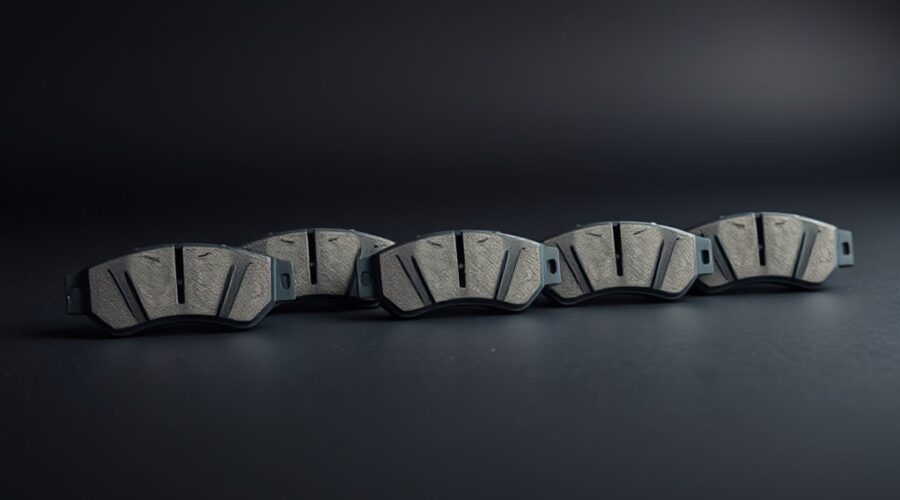
Choosing the right brake pads in 2027 is less about marketing claims and more about calm, dependable stopping under real conditions. The best options balance low noise, minimal dust, and steady performance across everyday driving, towing, and higher-powered vehicles. From ceramic sets built for quiet commutes to heavy-duty pads made for tougher loads, each product offers a different advantage. The question is which one delivers the best overall value when the details start to matter.
BOSCH QuietCast Premium Front Disc Brake Pad Set
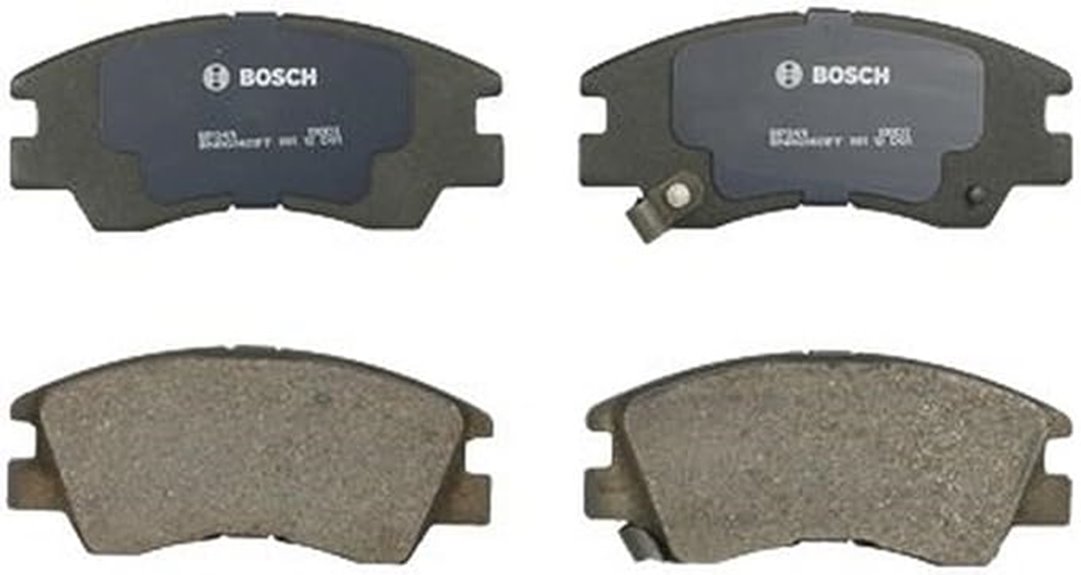
The BOSCH QuietCast Premium Front Disc Brake Pad Set is a strong choice for drivers of select Dodge and Mitsubishi front applications who want dependable stopping power with reduced noise. Bosch draws on more than 77 years of OE braking experience, pairing semi-metallic friction material with Molded Shim Technology and pre-attached multilayer shims. These features help improve strength, corrosion resistance, and quiet operation. Powder-coated backing plates resist rust, while slots and chamfers support fit and function. The set covers one axle and includes synthetic lubricant for smoother contact points, lower resistance, and dependable performance.
Best For: Drivers of select Dodge Raider, Ram 50, and Mitsubishi Mighty Max/Montero/Van front applications who want OE-backed braking performance, quieter operation, and low-dust semi-metallic pads.
Pros:
- Semi-metallic friction material offers strong stopping power and reliable performance.
- Molded Shim Technology with pre-attached multilayer shims helps reduce noise and improve durability.
- Powder-coated backing plates and included lubricant support corrosion resistance and smoother installation.
Cons:
- Fits only select front applications, so compatibility is limited.
- Semi-metallic pads can produce more brake dust than some ceramic alternatives.
- May not be the best choice for drivers seeking the quietest, lowest-dust pad option available.
TRW TPC1826 Premium Ceramic Brake Pad
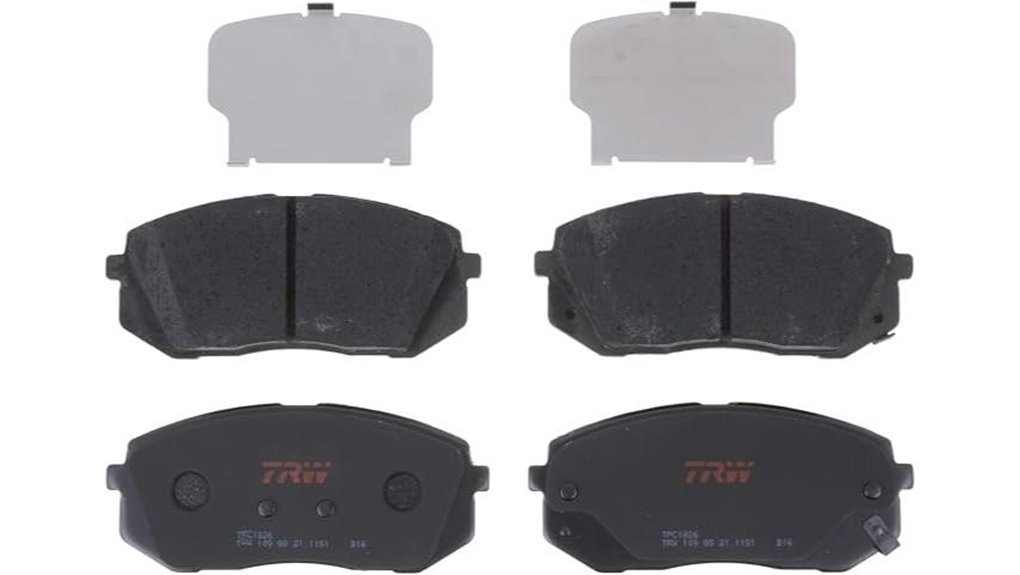
TRW TPC1826 suits drivers seeking OE-level braking with low dust and quiet performance. This premium ceramic disc brake pad set uses an application-specific friction formula, slotted and chamfered edges, and a bonded nitrile rubber coated steel shim to help damp noise and improve stopping consistency. TRW designs the TPC1826 to meet original equipment standards, and its braking systems expertise spans more than a century. The kit includes pads, hardware, and instructions for installation. Backed by a limited lifetime warranty, it is intended for car applications where dependable, clean, and quiet braking matters.
Best For: Drivers looking for OE-level ceramic brake pads with low dust, quiet operation, and dependable everyday stopping performance.
Pros:
- Application-specific ceramic friction formula supports consistent braking and reduced dust.
- Slotted, chamfered design with coated shims helps improve noise damping and braking feel.
- Includes hardware and instructions, plus a limited lifetime warranty.
Cons:
- Compatibility can vary by vehicle, so fitment must be checked carefully.
- Premium brake pads may cost more than basic replacement options.
- Best performance is aimed at standard road use, not high-performance racing applications.
Wagner Brake ThermoQuiet PD349 Disc Brake Pad Set
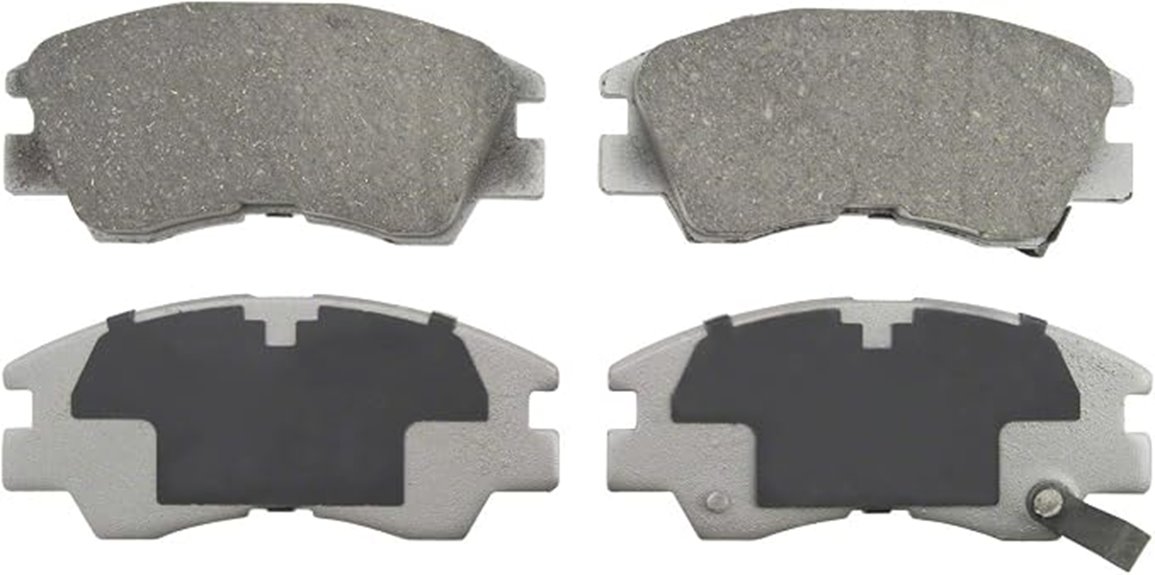
Wagner’s ThermoQuiet PD349 suits drivers who want quieter, cleaner daily braking. The application-specific friction material and laser-shaped design help disperse heat and vibration, reducing noise while supporting stable stopping performance. Its superior formulation also dissipates heat to limit brake fade and extend pad life. Wagner’s OE25 zero-copper, asbestos-free build aims for cleaner operation, with less rotor wear and brake dust to keep wheels tidier. The one-piece IMI™ construction integrates the friction material, backing plate, and insulator. Vehicle-specific fit and included stainless-steel hardware support select passenger-car applications.
Best For: Drivers of compatible passenger cars who want quieter, cleaner daily braking with reduced brake dust, less noise, and reliable pad life.
Pros:
- Quieter operation thanks to application-specific friction and laser-shaped design that help reduce noise.
- Cleaner wheels with a zero-copper, asbestos-free formulation that minimizes brake dust and rotor wear.
- One-piece IMI™ construction and included hardware support straightforward, vehicle-specific installation for select applications.
Cons:
- Vehicle-specific fit means it may not work for all cars, so compatibility must be checked carefully.
- Premium features may come at a higher cost than basic brake pad sets.
- Hardware is only included for select applications, so some installs may require separate parts.
PowerStop Evolution Pro Muscle Z26 Brake Pads Front Z26-1298
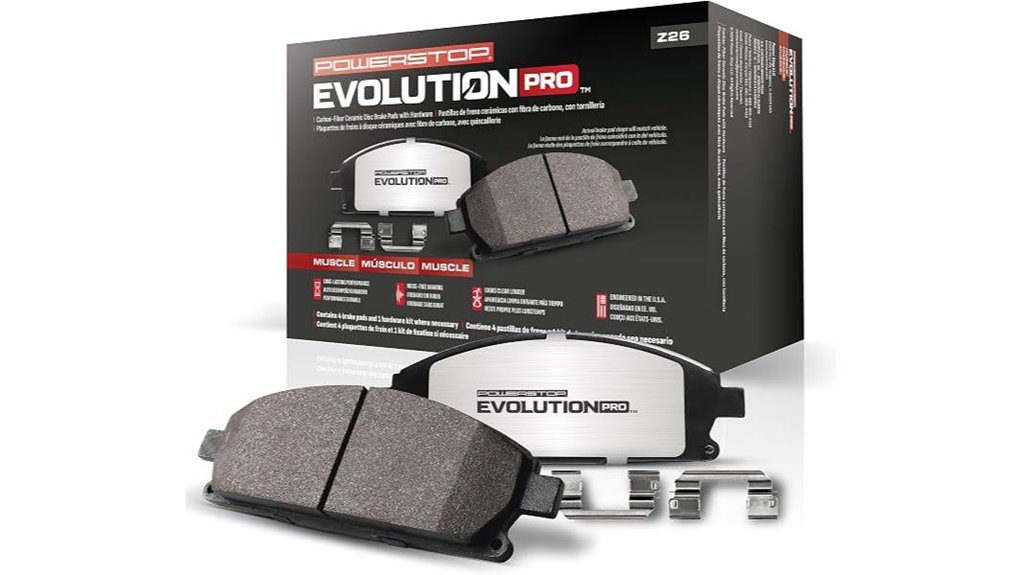
PowerStop Evolution Pro Muscle Z26 Brake Pads suit high-horsepower muscle cars needing aggressive street stopping power. The Front Z26-1298 set uses carbon fiber ceramic material and includes two brake pads plus installation hardware. It is tuned for performance driving, with low dust and fade resistance that support hard braking on modified street machines. Fitment should be confirmed through the Amazon Confirmed Fit bar or product description, since packaging may vary from images. Backed by a 12-month, 12,000-mile limited warranty, it targets modern muscle cars and other intense-duty performance builds.
Best For: High-horsepower muscle car and performance vehicle owners who want aggressive street braking, low dust, and fade-resistant front pads.
Pros:
- Carbon fiber ceramic construction for strong performance braking
- Low dust and fade resistance for aggressive street driving
- Includes installation hardware and a 12-month/12,000-mile limited warranty
Cons:
- Fitment must be confirmed before purchase
- Designed mainly for performance applications, not everyday economy driving
- Packaging may differ from product images
PowerStop Z36 Truck & Tow Brake Pad Set Rear Z36-1012
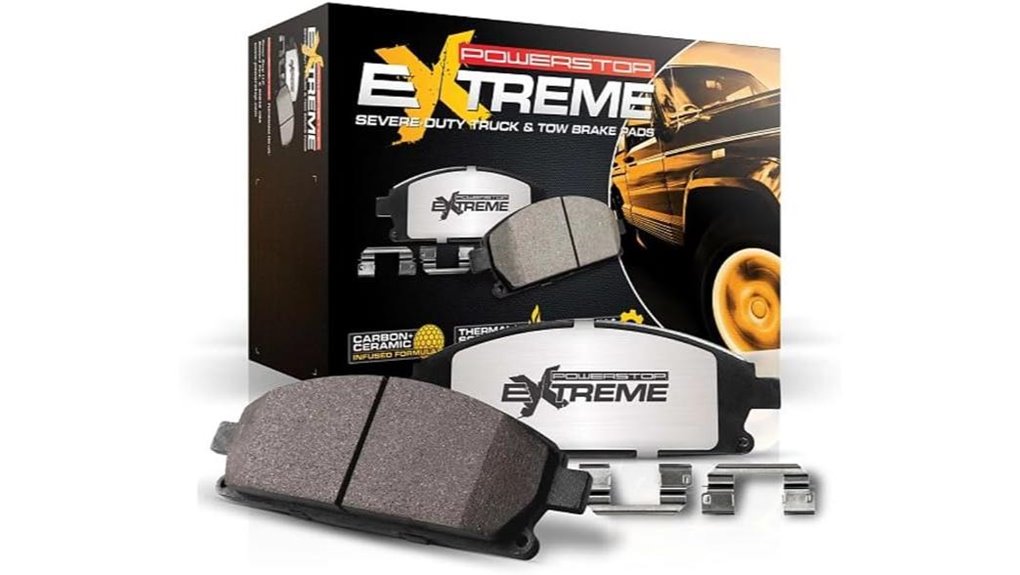
Designed for trucks and SUVs, this rear brake pad upgrade improves stopping power under heavy-duty use. The PowerStop Z36 Truck & Tow Brake Pad Set Rear Z36-1012 is a complete direct-fit replacement engineered for truck and SUV braking systems. It includes two carbon-fiber ceramic pads plus installation hardware. Compared with OE pads, the carbon-fiber ceramic formula provides stronger braking and better fade resistance during towing, hauling, and steep mountain driving. Buyers should confirm fitment through Amazon’s Confirmed Fit bar or the product description. A limited 30-Day, 12-Month, 12,000-Mile warranty adds further assurance.
Best For: Truck, SUV, and 4×4 owners who need a rear brake pad upgrade with stronger stopping power and better fade resistance for towing, hauling, and mountain driving.
Pros:
- Carbon-fiber ceramic formula improves stopping power over OE pads.
- Includes installation hardware for a direct-fit replacement.
- Built to handle heavy-duty use like towing and hauling.
Cons:
- Fitment must be confirmed before purchase.
- Rear-only brake pad set, so it won’t upgrade the front brakes.
- Performance benefits are most noticeable in demanding driving conditions.
TRW Automotive Disc Brake Pad Set for Mitsubishi Mighty Max
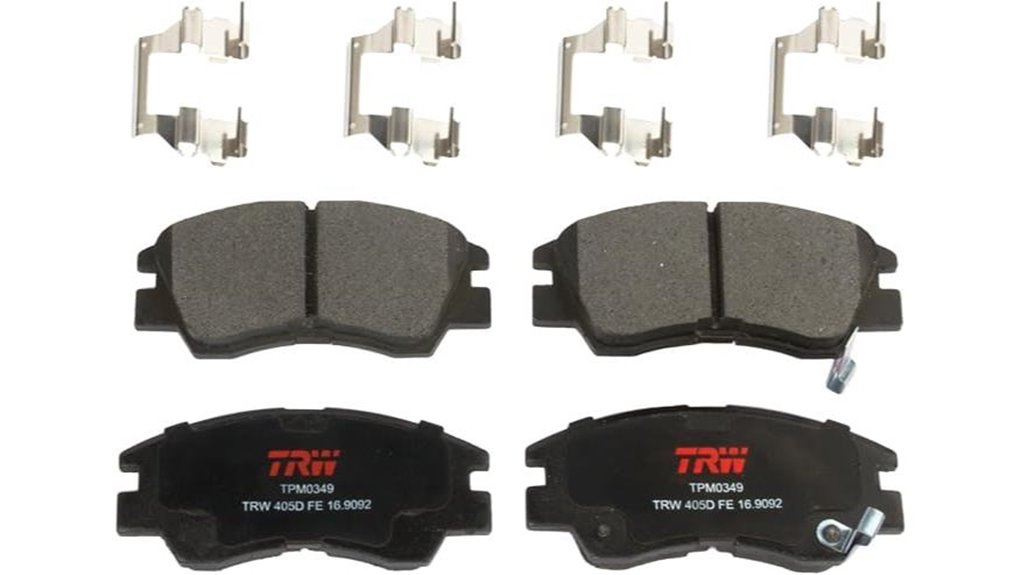
TRW’s TPM0349 front brake pad set suits Mitsubishi Mighty Max drivers needing reliable stopping power. It also fits select Dodge Raider, Dodge Ram 50, Mitsubishi Montero, and Mitsubishi Van models from the late 1980s and early 1990s. The semi-metallic pads use an application-specific friction formula, while slotted and chamfered edges support consistent braking and quieter operation. Included hardware and instructions help professional installation. Backed by TRW’s century of braking expertise, the set reflects a focus on safety, quality, and performance. A limited lifetime warranty and Amazon’s 30-day return guarantee add support.
Best For: Drivers of Mitsubishi Mighty Max, Dodge Ram 50, Dodge Raider, Mitsubishi Montero, or Mitsubishi Van models who want reliable front brake pads with professional-grade installation support and TRW-backed performance.
Pros:
- Semi-metallic, application-specific friction formula for dependable stopping power
- Slotted and chamfered design helps improve braking consistency and reduce noise
- Includes hardware and instructions, plus a limited lifetime warranty
Cons:
- Front-only fitment, so it won’t cover rear brake replacement needs
- Vehicle compatibility is limited to select late-1980s and early-1990s models
- Semi-metallic pads may produce more dust and noise than some alternative materials
Factors to Consider When Choosing Brake Pads 2026: Safe, Quiet Stopping Power
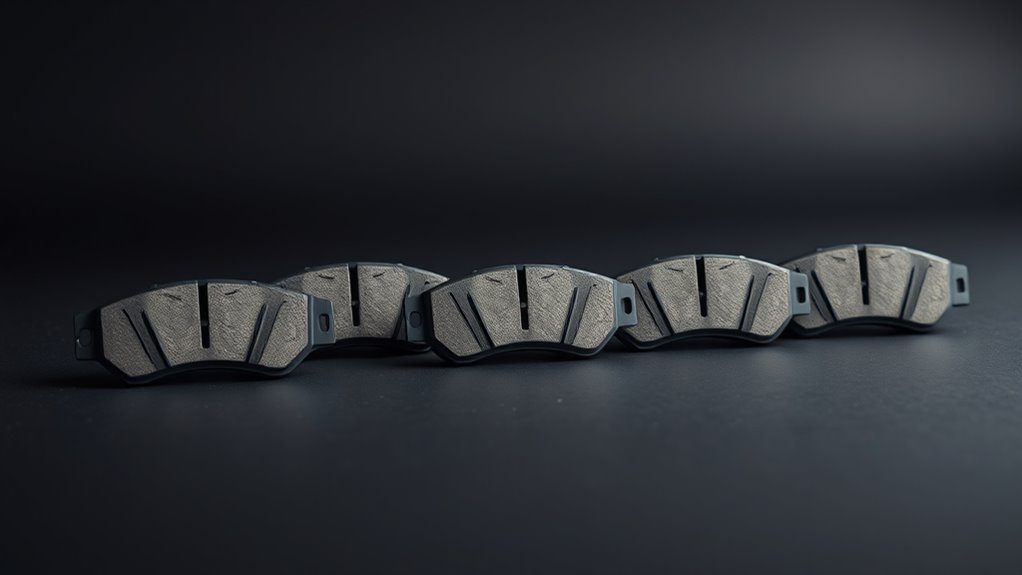
Selecting brake pads in 2026 calls for attention to friction material type, since it shapes stopping feel, pad life, and overall safety. Noise reduction design, dust control performance, and heat fade resistance also matter because they affect quiet operation, cleaner wheels, and reliable braking under load. Vehicle fitment accuracy remains essential, as even strong pads cannot perform properly if they do not match the braking system exactly.
Friction Material Type
Brake pad friction material plays a major role in how a vehicle stops, how much noise it makes, and how much dust it leaves behind. Organic pads use fibers and rubber, offering quiet operation and low dust, but they often wear faster than other options. Semi-metallic pads contain metal fibers and provide strong braking power, good heat transfer, and solid durability, making them a practical choice for many vehicles. Ceramic pads use dense ceramic material and are valued for consistent performance, quiet operation, low dust, and long life in everyday driving. Each material affects stopping force, noise, dust, and wear differently, so the best choice depends on the vehicle’s use, driving style, and the balance desired between performance and maintenance.
Noise Reduction Design
Quiet stopping often begins with the pad’s construction. Premium designs use pre-attached shims made from multilayer rubber compounds to absorb vibration before it reaches the caliper. Bonded rubber-coated steel shims add another layer of damping, helping suppress squeal and harsh resonance during daily driving. Slotting and chamfered edges further refine performance by dispersing heat and breaking up vibration patterns that can trigger noise. Some formulations are engineered for specific vehicle demands, balancing quiet operation with dependable stopping force. Advanced pads may also include integrally molded insulators, which reduce movement between components and limit the conditions that create brake chatter. Together, these features support smoother, quieter braking without sacrificing control.
Dust Control Performance
Beyond quiet operation, dust control performance is another major factor in brake pad selection. Excessive brake dust can cloud wheel appearance and, over time, may harm wheel finishes. High-quality brake pads address this issue through specialized formulations that reduce dust generation while preserving dependable stopping behavior. Materials such as carbon-fiber ceramic and semi-metallic blends often produce less residue, helping keep wheels cleaner and reducing the need for frequent washing. Premium pads may also use slotted and chamfered designs that limit dust buildup on rotors and wheels. Effective dust control supports overall brake system cleanliness, since accumulated debris can interfere with normal function and shorten component life. For drivers seeking a cleaner look and steady performance, low-dust pads offer a practical advantage.
Heat Fade Resistance
Heat fade resistance is a critical measure of how well brake pads maintain stopping power under the high temperatures created by repeated heavy braking. When heat builds, some pads lose friction, which can lengthen stopping distances and reduce confidence in demanding driving. Pads made with carbon-based or advanced ceramic compounds generally handle heat better than standard organic formulations, making them more consistent during repeated stops. Evaluating this trait often means testing pads through successive high-speed braking events to see whether performance remains stable as temperatures climb. Overall heat management also matters; vented rotors and other heat-dissipating components can support fade resistance by helping the braking system shed energy more efficiently.
Vehicle Fitment Accuracy
Accurate vehicle fitment is essential for brake pads to deliver safe, consistent stopping power, since incompatible parts can reduce braking performance and increase wear. Proper selection requires confirming the vehicle’s exact make, model, and year before purchase or installation. Manufacturers often publish fitment guides that narrow choices and reduce the risk of ordering the wrong part. OEM specifications are also useful, because they indicate whether a replacement pad matches or exceeds the original braking system’s standards. When fitment is correct, braking efficiency remains stable, and the vehicle is less likely to develop unwanted noise or degraded ride quality. Careful verification consequently supports both safety and comfort, making fitment accuracy a central factor in choosing brake pads.
Hardware And Shims
Hardware and shims are critical to brake pad performance because they provide the support, stability, and alignment needed for consistent braking. Pre-attached shims, especially multilayer rubber designs, dampen vibration and reduce squeal, helping the system remain quiet under repeated stops. Well-made backing plates with protective coatings resist rust and corrosion, preserving pad integrity and extending service life. Installation hardware, including clips and brackets, also matters because it secures proper fitment and keeps each pad aligned with the rotor. When these components are engineered to high standards, they improve contact quality, strengthen the pad-to-rotor bond, and reduce uneven wear. For safe, quiet stopping, hardware and shims should be treated as essential performance parts, not minor accessories.
Frequently Asked Questions
How Often Should Brake Fluid Be Replaced for Optimal Pad Performance?
Brake fluid should generally be replaced every two to three years, or sooner if the manufacturer specifies a shorter interval. Fresh fluid helps maintain consistent hydraulic pressure, reducing moisture buildup that can weaken braking response and accelerate wear. For peak pad performance, it is wise to inspect fluid condition regularly, especially in demanding driving or humid climates. Dirty, dark, or contaminated fluid signals that replacement is overdue and braking quality may suffer.
Do Ceramic Pads Produce Less Dust Than Semi-Metallic Pads?
Like a stage whispered rather than shouted, ceramic pads generally produce less visible dust than semi-metallic pads. Their composition tends to leave lighter residue, keeping wheels cleaner for longer. Semi-metallic pads, by contrast, often shed more dark dust because of their metal content and stronger bite. The tradeoff is that ceramics may wear more gently, while semi-metallic options can offer firmer performance under demanding braking conditions.
Can New Brake Pads Affect ABS Braking Behavior?
Yes, new brake pads can affect ABS braking behavior, especially during the initial bedding-in period. Different pad materials, friction levels, and rotor compatibility may slightly change pedal feel, stopping distance, and how quickly ABS cycles. If pads are improperly installed or the compound differs greatly from the old set, ABS performance may seem altered. Once properly broken in, normal ABS function should return, provided the system is working correctly.
What Causes Brake Pad Squeal During Light Braking?
Brake pad squeal during light braking usually comes from vibration between the pads, rotors, and caliper hardware. It is often caused by glazed pads, worn shims, dust buildup, uneven rotor surfaces, or insufficient lubrication on contact points. Hard pad compounds can also amplify noise at low pressure. In some cases, slight misalignment or normal resonance makes the sound more noticeable without indicating a serious braking fault.
Are Brake Pads Interchangeable Between Front and Rear Axles?
No, brake pads are usually not interchangeable between front and rear axles. Ironically, parts that look nearly identical can be sized, shaped, and formulated very differently. Front pads often handle more braking force and heat, while rear pads may be smaller or designed for different calipers. A detached observer would note that matching the exact axle specification is essential before installation, because fitment and performance depend on it.
Conclusion
In the noble quest for safe, quiet stopping power, these brake pads prove that even everyday driving can feel like a highly engineered act of restraint. BOSCH, TRW, Wagner, and PowerStop each offer their own version of silence, strength, and confidence, as if the humble brake pad were destined for greatness. Choose wisely, and your vehicle may stop with such composure that even traffic feels briefly impressed.