As battery care becomes more precise in 2027, a few chargers stand out for extending service life rather than simply topping off power. Smart controls, recovery modes, and dependable maintenance settings now matter as much as raw output. The NOCO GENIUS5, Battery Tender Junior, Schumacher models, and CTEK MXS 5.0 each bring a different advantage, but the best choice depends on how the vehicle is used and stored.
NOCO GENIUS5 5A 6/12V Smart Battery Charger, Trickle Charger & Maintainer

The NOCO GENIUS5 stands out as a strong choice for drivers who want a compact, do-it-all charger for routine maintenance and battery recovery. It is 34% smaller than earlier models yet delivers more than 65% greater power than the G3500. The unit supports 6V and 12V lead-acid batteries, including AGM, gel, flooded, and deep-cycle types, plus LiFePO4 lithium batteries. Its thermal sensor adjusts charging for temperature, while low-voltage recovery and Force Mode help revive deeply discharged batteries. Smart monitoring allows safe long-term connection, and a 3-year warranty adds confidence.
Best For: Drivers who want a compact, versatile smart charger for maintaining, recovering, and charging a wide range of 6V/12V lead-acid and LiFePO4 batteries.
Pros:
- Compact design is 34% smaller than earlier models while delivering over 65% more power than the G3500.
- Works with many battery types, including AGM, gel, flooded, deep-cycle, and LiFePO4.
- Smart temperature compensation, low-voltage recovery, and Force Mode improve charging flexibility and battery revival.
Cons:
- 5A output may be too slow for larger batteries or rapid charging needs.
- Best suited for battery maintenance and recovery rather than heavy-duty shop charging.
- Force Mode and recovery features may require some user familiarity to use correctly.
Battery Tender Junior 12V Charger and Maintainer (021-0123)
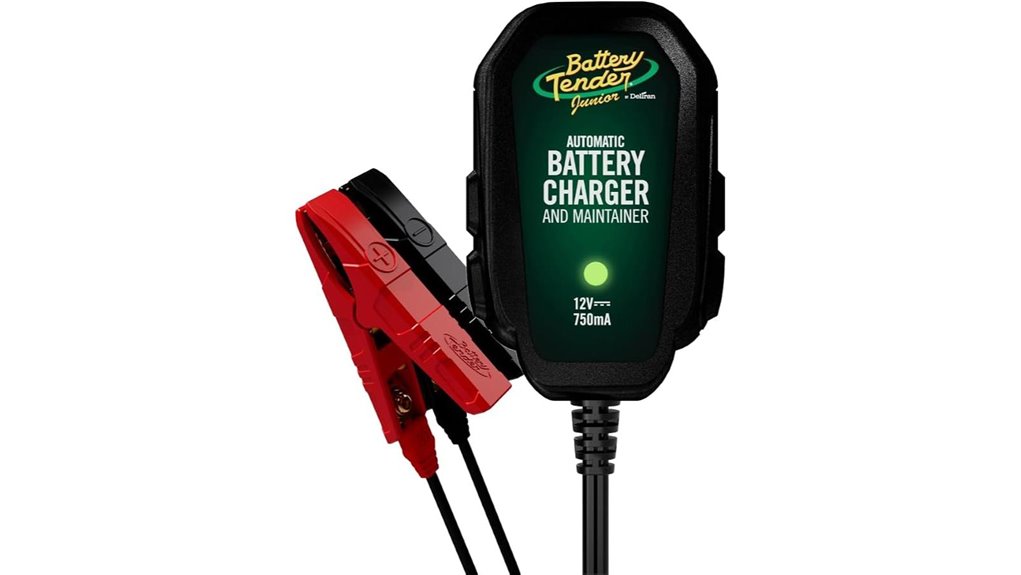
Built for smaller 12V powersport batteries, the Battery Tender Junior keeps motorcycles and ATVs reliably charged. This automatic 750mA maintainer uses a complete four-step cycle—initialization, bulk charge, absorption, and float—to protect flooded, AGM, and gel cells from overcharging. Its compact 3.3 x 1.3 x 2.4-inch body and 12-foot output cord make placement easy in tight spaces. Spark-proof circuitry and reverse-hookup detection add safety during connection. A two-color LED shows charge status, while adaptive output restores power if voltage drops. A five-year warranty and lifetime support round out the package.
Best For: Owners of motorcycles, ATVs, and other smaller 12V powersport batteries who want a compact, automatic maintainer that safely prevents overcharging.
Pros:
- Four-step charging process helps protect battery health and extend battery life.
- Spark-proof circuitry and reverse-hookup detection improve connection safety.
- Compact size, 12-foot cord, and adaptive charging make it easy to use in tight spaces.
Cons:
- Low 750mA output is best for maintenance, not fast charging.
- Designed for 12V lead-acid batteries, so it won’t suit lithium setups.
- Smaller capacity means it’s not ideal for larger vehicle batteries.
Schumacher 6V/12V Battery Charger & Engine Starter
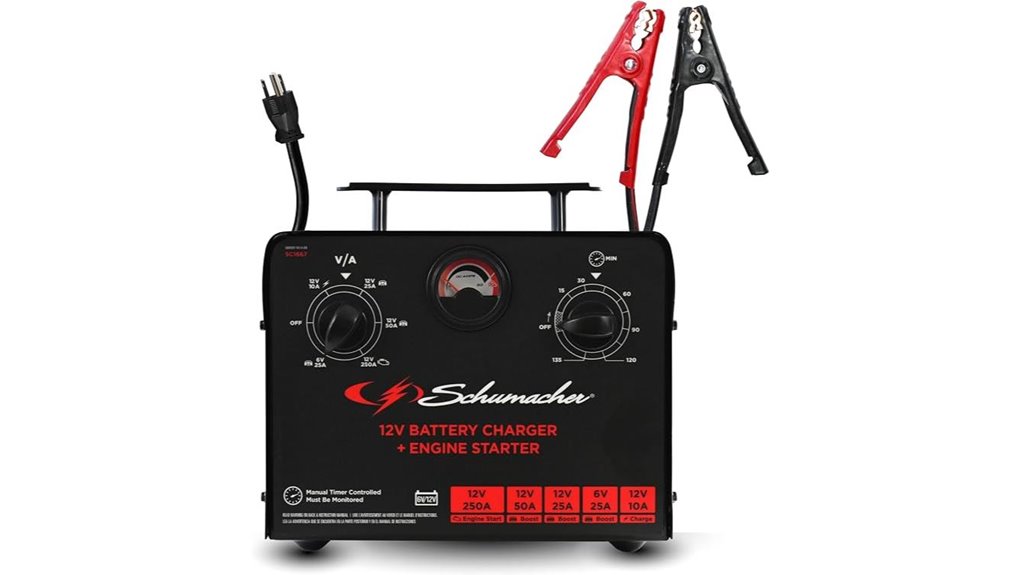
Schumacher’s SC1667 suits drivers who need both charging and jump-start power in one unit. The Schumacher Electric 6V/12V Time Controlled Battery Charger & Engine Starter uses a 135-minute timer, a built-in ammeter, and overload protection for controlled charging. It offers 50A 12V, 25A 12V, 25A 6V boost settings, plus a 10A 12V charge mode for standard use. With 250 cranking amps, it can start larger cars, trucks, and RVs. Heavy-duty metal housing, 6-gauge cables, and compatibility with standard, AGM, and gel batteries support year-round use in garages, driveways, and workshops.
Best For: Drivers, DIY mechanics, and workshop users who want a single heavy-duty unit for both battery charging and engine starting on 6V or 12V vehicles, including cars, trucks, and RVs.
Pros:
- 135-minute timer and built-in ammeter provide controlled, monitored charging.
- Multiple charge/boost settings support 6V and 12V batteries, including standard, AGM, and gel types.
- 250 cranking amps and heavy-duty cables make it useful for jump-starting larger engines.
Cons:
- Time-controlled charging may be less convenient than fully automatic smart chargers.
- Bulky metal housing and thick cables may be less portable than compact units.
- Best suited for hands-on users; it may be more than some casual drivers need.
Schumacher Electric 6A Car Battery Charger & Maintainer, 6V/12V – SC1281
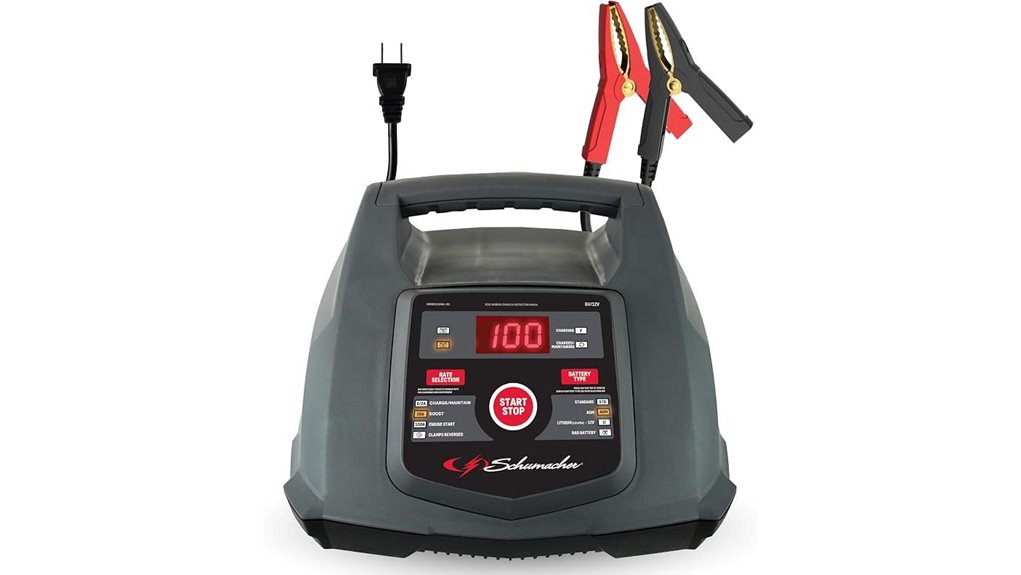
With 100-amp engine-start capability, the SC1281 suits drivers needing one tool to start and maintain batteries. This fully automatic Schumacher unit supports 6V and 12V batteries, including standard, AGM, deep-cycle, and 12V LiFePO4 types. It offers boost charging from 12A to 30A and smart trickle charging from 2A to 6A, while also testing, restoring, and desulfating weak batteries. Microprocessor control manages multi-stage charging, automatic voltage detection, reverse polarity protection, and shutoff against overcharge. At 10.25 by 10 by 7 inches and 12.7 pounds, it remains portable.
Best For: Drivers, hobbyists, and vehicle owners who need a fully automatic charger, maintainer, and jump starter for 6V/12V batteries across cars, motorcycles, ATVs, trucks, boats, and SUVs.
Pros:
- 100-amp engine-start capability plus boost and trickle charging modes for flexible use
- Supports a wide range of battery types, including AGM, deep-cycle, and 12V LiFePO4
- Includes smart safety and maintenance features like automatic voltage detection, desulfation, and overcharge protection
Cons:
- Heavier than many compact chargers at 12.7 pounds
- Requires a 120V AC outlet, so it’s not ideal for fully off-grid use
- The approximately 10-hour charge time may be slow for users needing a quick turnaround
CTEK MXS 5.0 12V Battery Charger and Maintainer
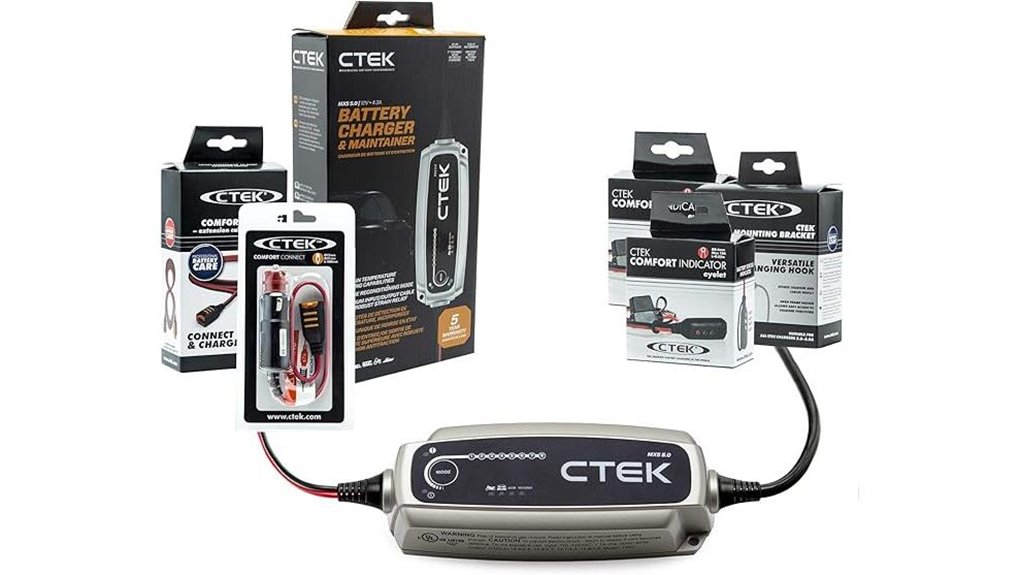
The CTEK MXS 5.0 suits owners who want a smart, fully sealed maintainer with reconditioning capability. This 12-volt CTEK 40-206 model charges batteries up to 110Ah and maintains larger units to 160Ah. Its reconditioning mode can help revive neglected batteries, while built-in temperature sensing improves charging control. The unit is spark proof and reverse-polarity protected, adding safety during use. It ships with an indicator eyelet, cigar plug, extension cable, and wall mount. With alligator clamps, one port, and a compact 1.42 kg build, it is practical for garage storage and regular maintenance.
Best For: Owners who want a smart 12V battery charger and maintainer with reconditioning features for routine garage use and larger battery upkeep.
Pros:
- Reconditioning mode can help revive neglected batteries
- Built-in temperature sensing improves charging control
- Includes useful accessories like an indicator eyelet, cigar plug, extension cable, and wall mount
Cons:
- Limited to 12V batteries
- Uses alligator clamps, which may be less convenient than plug-in connections for some users
- Best suited for maintenance and moderate charging needs rather than heavy-duty charging
Factors to Consider When Choosing Car Battery Chargers 2026: Picks for Longer Life
Choosing a car battery charger starts with matching the unit to the battery type, since compatibility affects both performance and battery life. Charging speed, safety features, and maintenance modes also matter because they help balance convenience with long-term protection. Durability and size round out the decision, especially for users who need a charger that can handle regular use and fit easily in the garage or vehicle.
Battery Type Compatibility
Battery compatibility is the first checkpoint when selecting a car battery charger, since the unit must match the battery chemistry and voltage in use. Lead-acid batteries, including AGM, gel, flooded, and deep-cycle models, require chargers suited to their construction, while lithium-ion packs such as LiFePO4 need chargers built for that chemistry. Voltage support also matters; a charger should clearly match 6V or 12V systems as required by the vehicle. Some models cover multiple battery types and voltages, which benefits households with varied equipment. Smart chargers add another advantage by identifying battery chemistry automatically and adjusting their output to suit it. For lead-acid batteries, recovery functions like desulfation can help revive deeply discharged units and support longer service life.
Charging Speed Needs
Charging speed depends mainly on a charger’s output current, with higher-amperage units delivering faster top-ups for both standard and deep-cycle batteries. A 5A model can replenish a typical car battery far more quickly than a 750mA unit, making it a practical choice when time matters. Battery chemistry also influences results, since AGM and lithium batteries accept current differently and may require specific charging profiles. Many advanced chargers use multi-stage charging to balance speed with battery health, reducing the risk of overcharging while still restoring capacity efficiently. Some models add temperature sensors that modify charge rate according to ambient conditions, helping maintain consistent performance. In practice, the best choice matches urgency, battery type, and charging technology to the vehicle’s needs.
Safety Features
Safety features should be a top priority when comparing car battery chargers, because the right protections can prevent damage and improve day-to-day use. Reverse polarity protection is essential, since it helps avoid costly harm if clamps are attached incorrectly. Spark-proof construction adds another layer of security by reducing the chance of sparks during connection, which is especially useful in enclosed spaces. Automatic shutoff is equally important because it stops charging once the battery reaches full capacity, limiting overcharging and supporting battery life. Thermal sensors improve safety further by adjusting output to ambient temperature, helping prevent overheating in hot or cold conditions. Built-in monitoring systems also matter, offering real-time battery status so charging decisions can be made with more confidence and less risk.
Maintenance Modes
Maintenance features matter just as much as protection features when selecting a car battery charger for long-term use. Smart maintenance modes can keep a battery at an ideal charge level with trickle charging, reducing the risk of overcharging while supporting longer service life. Advanced models use multi-stage charging algorithms that change output according to battery type and condition, improving efficiency during routine upkeep. Desulfation modes add value by targeting sulfate buildup in lead-acid batteries, which can limit performance over time. Reconditioning functions are also useful, since they cycle charge and discharge stages to help restore capacity. With regular monitoring and automatic voltage detection, these chargers adjust to battery needs and environmental changes, making maintenance safer, steadier, and more effective for extended use.
Durability And Size
Durability and size are key factors when choosing a car battery charger for long-term use. A charger built with robust, heavy-duty materials is more likely to withstand repeated handling, vibration, and exposure to harsh weather. That strength can improve reliability and extend service life, especially in demanding environments. Size also matters because compact chargers are easier to store, carry, and use in different settings. A smaller, lightweight unit suits home garages and on-the-go charging, while also fitting powersport vehicles where space is limited. Evaluating the weight-to-size ratio helps determine whether a charger is truly portable without becoming awkward or underbuilt. The best choice balances toughness, convenience, and practical handling for consistent everyday use.
Frequently Asked Questions
Can I Leave a Smart Charger Connected All Winter?
Generally, yes, if the smart charger is designed for long-term maintenance and is connected to a suitable battery in a safe, dry location. It should automatically switch to float or maintenance mode and prevent overcharging. Still, the battery and charger should be checked periodically for heat, damage, or error lights. Extremely cold conditions, poor ventilation, or a failing battery can make continuous connection unsafe, so the manufacturer’s guidance matters most.
Do Battery Chargers Work on Dead Batteries?
Battery chargers can work on dead batteries, but only if the battery is not utterly beyond salvation. A smart charger may detect a deeply discharged battery and slowly revive it, while a regular charger might struggle or refuse to start. If the battery has internal damage, sulfation, or a shorted cell, no miracle should be expected. In those cases, the battery is effectively finished and replacement is the real remedy.
How Long Should a Car Battery Stay on a Charger?
A car battery should stay on a charger only until it reaches full charge, typically 4 to 24 hours depending on battery size, charger type, and how depleted it was. A smart charger usually switches to maintenance mode automatically. Leaving a battery on a basic charger too long can cause overheating or damage. The safest approach is to follow the charger’s instructions and monitor charging progress regularly.
Can Charging a Battery Extend Its Overall Lifespan?
Yes—apparently batteries, unlike many humans, do enjoy being treated kindly. Proper charging can extend overall lifespan by preventing deep discharge, sulfation, and chronic undercharging. A sensible charger keeps voltage controlled and avoids overheating, which is the electrical version of bad living habits. However, overcharging or frequent rapid charging can do the opposite. So, in moderation and with the right equipment, charging absolutely helps a battery live longer.
Are Portable Chargers Safe for Hybrid or Electric Vehicles?
Portable chargers are generally safe for hybrid and electric vehicles when they are designed for the correct voltage, connector type, and charging standard. Safety depends on the charger matching the vehicle’s battery system and having built-in protections against overheating, overcurrent, and short circuits. Using uncertified or incompatible equipment can damage components or create hazards. A detached assessment would advise checking manufacturer approval before use, especially for high-voltage charging.
Conclusion
To summarize, the best car battery chargers for 2027 combine smart charging, safety, and dependable maintenance to help batteries last longer. The NOCO GENIUS5, Battery Tender Junior, Schumacher models, and CTEK MXS 5.0 each offer useful strengths for different needs, from compact storage to powerful recovery. When chosen well, these chargers can keep a vehicle ready without breaking the bank, proving that a little preventive care goes a long way.