Fresh fuel does not stay fresh for long, and the right stabilizer can make a noticeable difference. In 2027, products like Star Tron, STA-BIL, and Sea Foam continue to stand out, while others focus on moisture control, cleaning, or long-term storage. Each one promises a different kind of protection, but not all perform the same way. The real question is which option fits the fuel, the engine, and the storage timeline best.
Star Tron Small Engine Fuel Treatment (8 OZ)
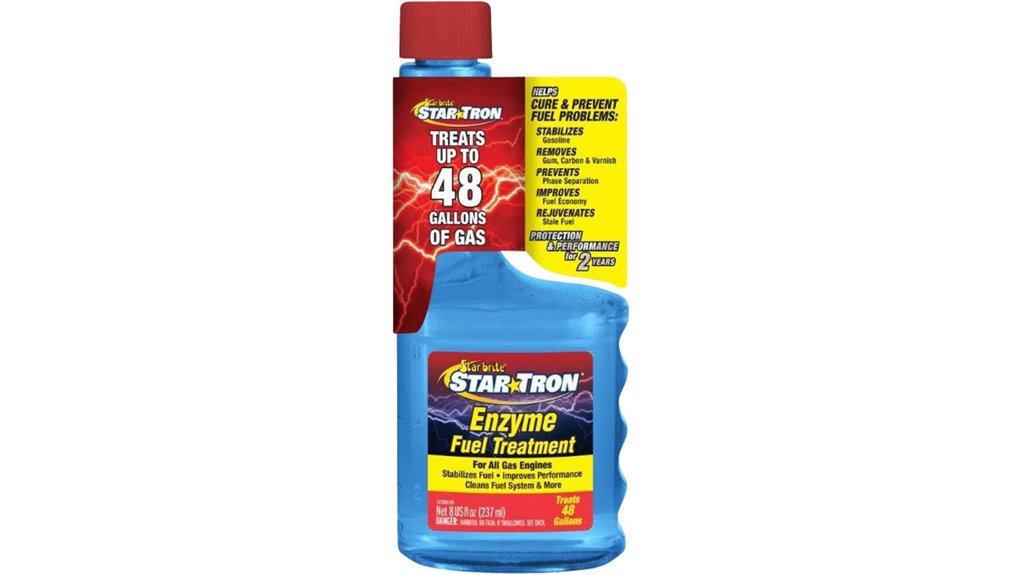
STAR BRITE Star Tron Enzyme Fuel Treatment in the 8 oz small-engine formula is a strong choice for owners who need reliable fuel stabilization for equipment that sits unused for long periods. Its enzyme-based formula helps engines start more easily, run smoothly, and resist ethanol-related problems such as rough idling and poor performance. It also removes gum, carbon, and varnish deposits to support fuel economy. Compatible with cars, boats, RVs, mowers, motorcycles, ATVs, and generators, it stabilizes fuel up to two years. The additive can also reduce smoke and harmful emissions, and overdosing is not harmful.
Best For: Owners of small engines and mixed fuel-powered equipment who want dependable fuel stabilization, easier starts, and protection against ethanol-related issues during storage.
Pros:
- Helps engines start more easily and run smoothly, even after sitting unused.
- Cures and prevents ethanol-related fuel problems while removing gum, carbon, and varnish deposits.
- Stabilizes fuel for up to 2 years and can be used across many engine types and fuel systems.
Cons:
- Primarily useful for fuel-treated equipment, so it may not be necessary for users with very little fuel storage.
- Requires measuring the correct dosage for best results.
- Benefits may be less noticeable on newer engines that already run cleanly and reliably.
STA-BIL Storage Fuel Stabilizer, 32 oz
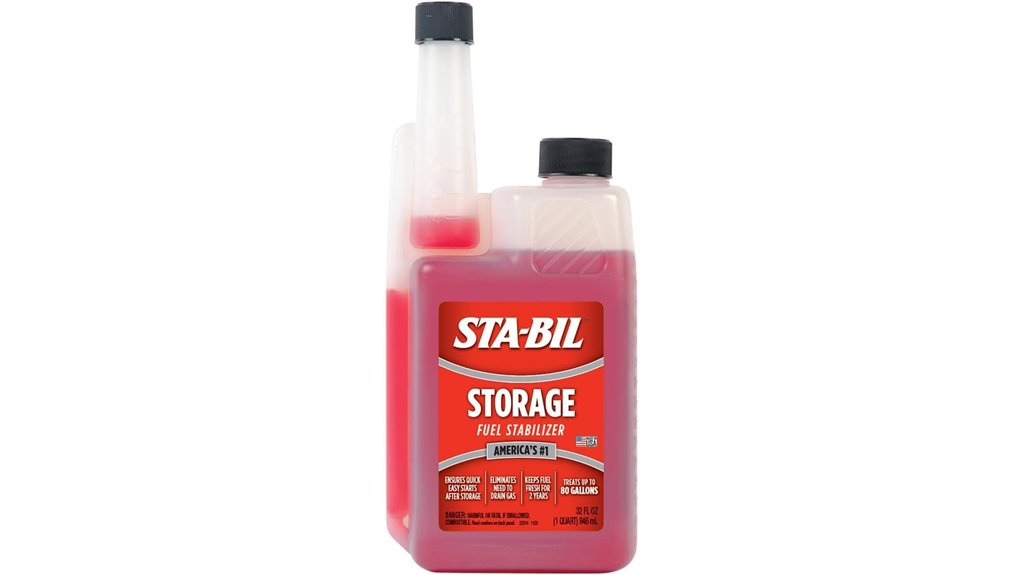
STA-BIL Storage Fuel Stabilizer, 32 oz is best for seasonal equipment owners who need reliable long-term fuel storage. Made by Gold Eagle Co., model 770-119, it keeps gasoline fresh up to 24 months and treats as much as 80 gallons. It helps prevent gum, varnish, rust, and corrosion in ethanol and non-ethanol fuel, supporting cleaner starts after storage. The alcohol-free formula is safe for all gasoline engines, including 2-cycle units, and suits boats, motorcycles, lawn mowers, snow blowers, generators, and vehicles. Add it before fuel, run the engine five minutes, and store tanks nearly full.
Best For: Seasonal equipment owners and anyone storing gasoline long-term who wants reliable fuel stabilization and easier starts after storage.
Pros:
- Keeps gasoline fresh for up to 24 months.
- Protects fuel systems from gum, varnish, rust, and corrosion.
- Safe for all gasoline engines, including 2-cycle engines, and works with boats, generators, mowers, and more.
Cons:
- Must be added before fuel and the engine needs to run for 5 minutes after treatment.
- Best results require storing tanks or gas cans nearly full to reduce condensation.
- Larger 32 oz size may be more than needed for occasional or small-volume users.
HEET Iso-HEET Water Remover & Gas Line Antifreeze, 12 oz
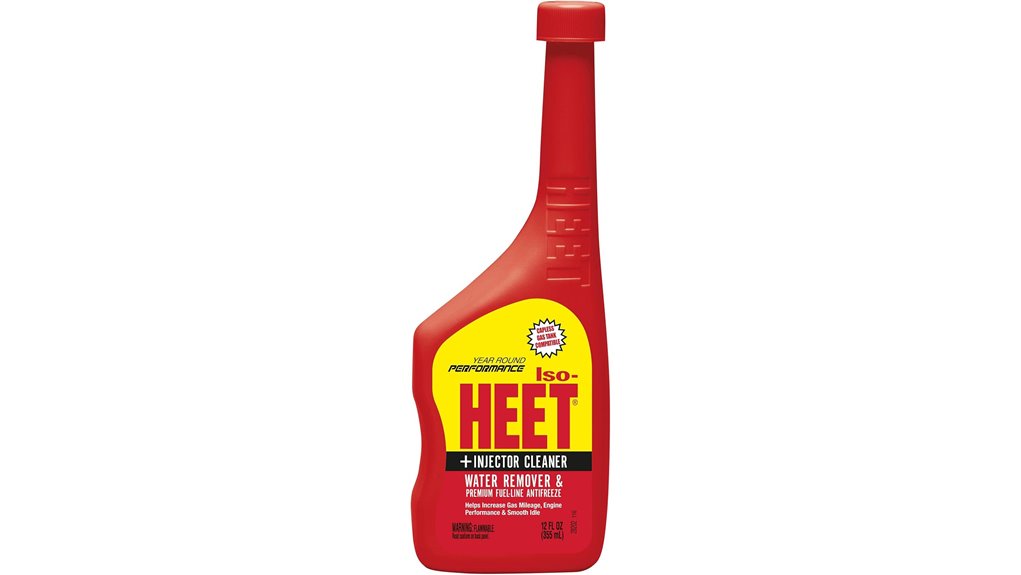
HEET Iso-HEET Water Remover & Gas Line Antifreeze is ideal for drivers facing winter fuel moisture issues. This 12 oz Gold Eagle formula helps prevent rust, corrosion, and fuel line freeze-up by absorbing water and condensation in gas or diesel systems. It works in all 2- and 4-cycle engines and can treat up to 20 gallons per bottle. The product is especially useful below freezing, though it also serves warm, wet weather needs. Its easy-pour design supports quick use, and regular winter fill-up treatment can help maintain cleaner injectors and steadier performance year-round.
Best For: Drivers who want a simple water remover and gas line antifreeze to help prevent fuel freeze-up, rust, and corrosion in gas or diesel engines, especially in cold weather.
Pros:
- Absorbs water and condensation to help protect fuel systems.
- Works in both gas and diesel, 2- and 4-cycle engines.
- Treats up to 20 gallons and is easy to pour and use.
Cons:
- Only treats one tank per bottle, so frequent use may be needed in winter.
- Primarily useful for moisture and freeze protection rather than broader fuel system repair.
- Not available for sale in Catalina Island.
Sea Foam Motor Treatment Fuel System Cleaner 16 oz (3 Pack)
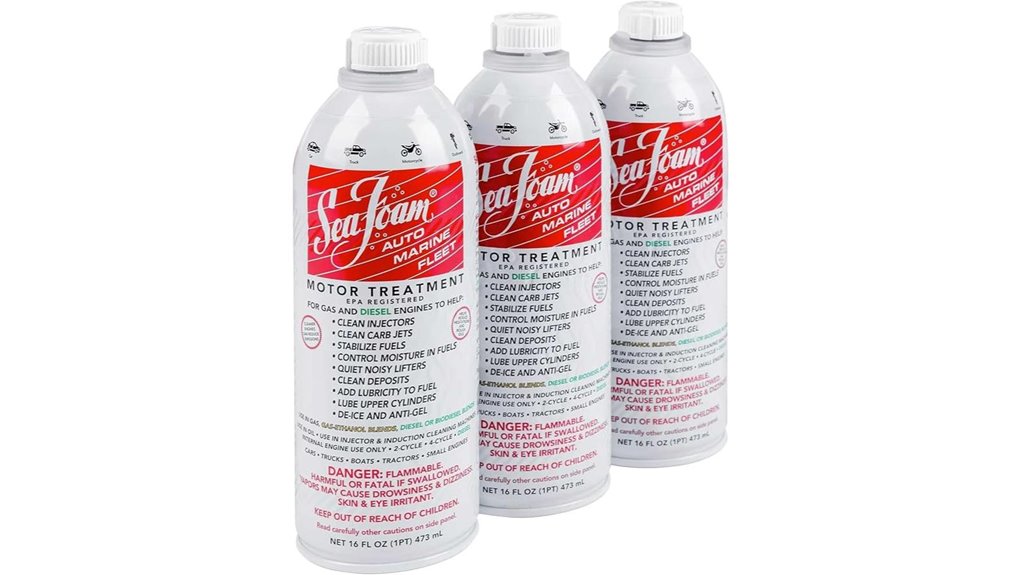
Sea Foam Motor Treatment suits owners who want one product for cleaning, stabilizing, and oil treatment. This 16 oz three-pack works in gasoline, diesel, and blended fuels across cars, trucks, RVs, boats, motorcycles, and more. It cleans injectors, carburetor restrictions, and combustion chamber areas to help restore power, smooth rough idle, and recover MPG. Added every 3,000 miles, it also clears sludge from crankcases, supports lubrication, and reduces wear. As a stabilizer, it limits evaporation, preserves vapors, and helps keep stored fuel fresh for up to two years.
Best For: Drivers and equipment owners who want an all-in-one fuel system cleaner, fuel stabilizer, and oil treatment for gas or diesel engines.
Pros:
- Cleans fuel injectors, carburetor restrictions, and combustion chamber areas to help restore power and smooth rough idle.
- Works with gasoline, diesel, and blended fuels across a wide range of vehicles and equipment.
- Helps stabilize stored fuel for up to two years and supports engine lubrication by reducing sludge and wear.
Cons:
- Requires regular use every 3,000 miles for best results.
- May not be necessary for newer engines that already run smoothly and efficiently.
- A 3-pack may be more than needed for occasional users or small equipment owners.
STP Ultra 5-in-1 Fuel System Cleaner (12 oz)
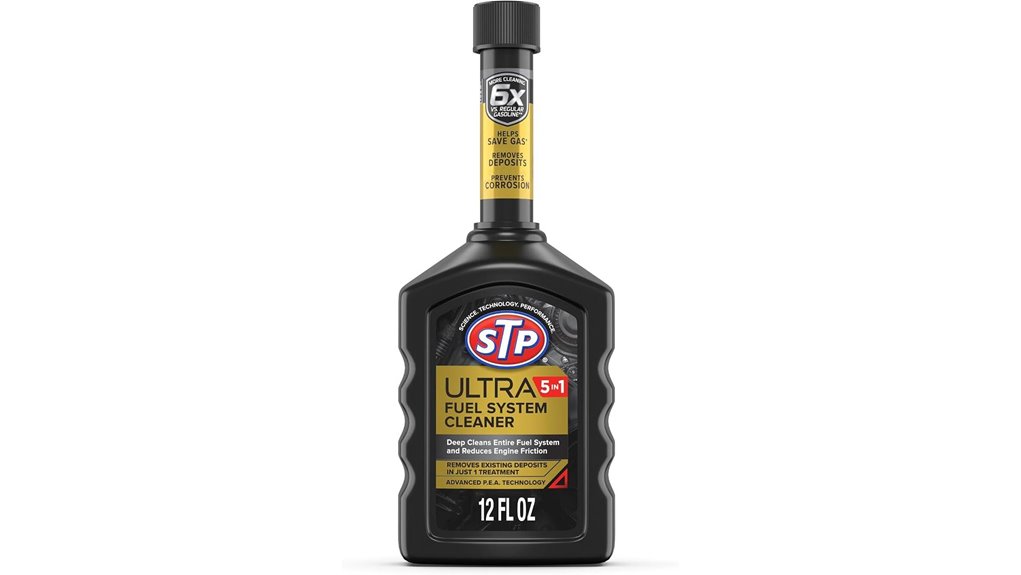
STP Ultra 5-in-1 Fuel System Cleaner suits drivers wanting a simple at-home treatment for gasoline engines. This 12 oz bottle is formulated for all gasoline engines and deep cleans the entire fuel system with a blend of PEA and PIBA detergents. It removes harmful deposits, reduces engine friction, and uses three times the cleaning agents found in leading premium gasoline. One bottle treats up to 35 gallons. For best results, the entire bottle should be poured into a tank at least half full. Regular use every 4,000 miles may help improve fuel efficiency and maintain a cleaner intake system.
Best For: Drivers with gasoline engines who want a simple at-home fuel system cleaner to help maintain performance and fuel efficiency.
Pros:
- Deep cleans the entire fuel system with PEA and PIBA detergents
- Treats up to 35 gallons per bottle
- Regular use may help improve fuel efficiency and keep the intake system cleaner
Cons:
- Must be used only in gasoline engines
- Works best when added to a tank at least half full
- Needs repeated use every 4,000 miles for optimal results
Royal Purple Max-Clean Fuel System Cleaner and Stabilizer 11722 20 Ounce
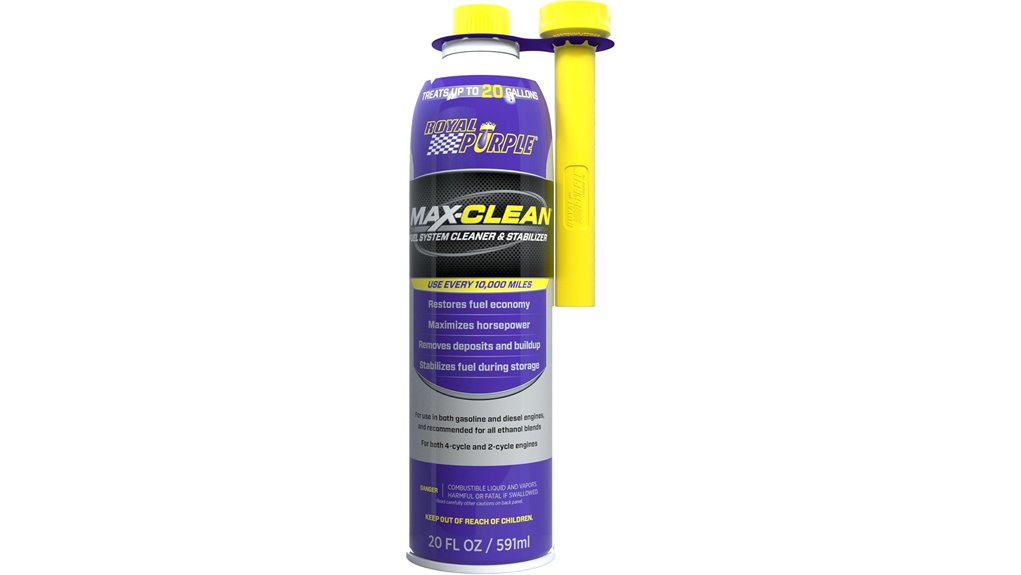
Royal Purple Max-Clean Fuel System Cleaner and Stabilizer suits drivers seeking cleaner, more efficient engines. This 20-ounce, vehicle-specific additive uses a 3-in-1 formula to help keep new engines clean while supporting fuel stability. It has been associated with an average 3.2% fuel-economy gain and a 2.6% horsepower increase. Emissions benefits are also notable, with average reductions of 12% in hydrocarbons, 13% in NOx, and 18% in CO. Specific directions should be followed for best results, especially when fresh fuel protection and system maintenance are priorities.
Best For: Drivers who want a vehicle-specific fuel system cleaner and stabilizer that helps keep engines clean, improve fuel economy, and support lower emissions.
Pros:
- 3-in-1 formula helps keep new engines clean and supports fuel stability.
- Average gains of 3.2% in fuel economy and 2.6% in horsepower.
- Helps reduce emissions, including hydrocarbons, NOx, and CO.
Cons:
- Vehicle-specific fit may limit use across all engine types.
- Requires following specific directions for best results.
- Benefits are average figures and may vary by vehicle and driving conditions.
Lucas Oil 10303 Fuel Stabilizer – 1 Quart
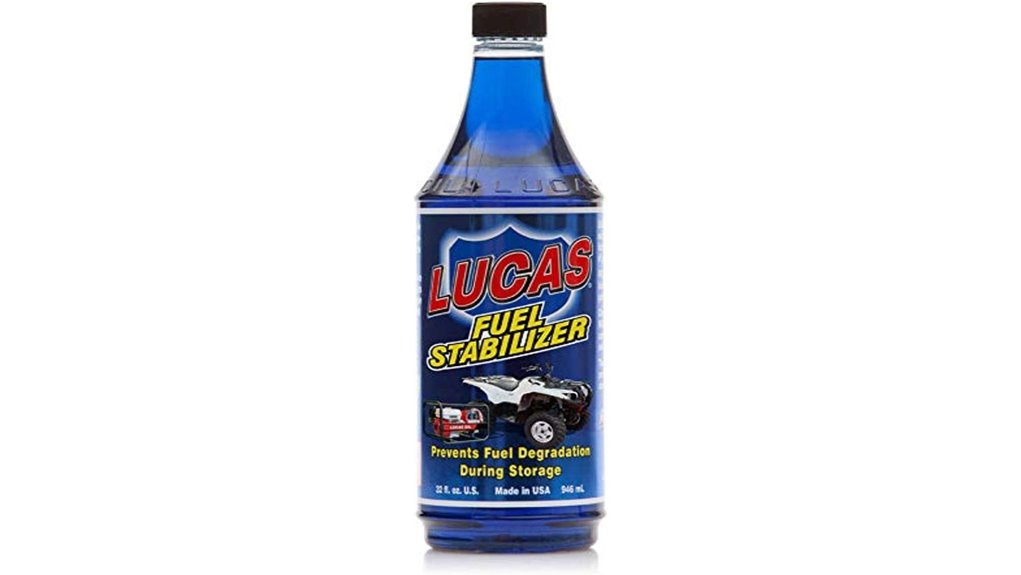
Lucas Oil 10303 Fuel Stabilizer is a strong choice for drivers storing gasoline long-term. This automotive fuel treatment is made by Lucas Oil and is intended to slow fuel degradation while helping preserve engine performance. The 1-quart bottle carries model and OEM part number 10303, with a compact 3.3 x 3.3 x 10.5-inch profile and 15.1-ounce weight. First available in 2008, it has earned 4.7 out of 5 stars from 138 reviews. It fits neatly within the fuel additives category and includes Amazon’s 30-day return guarantee.
Best For: Drivers who need a reliable fuel stabilizer for long-term gasoline storage and helping maintain engine performance.
Pros:
- Helps slow fuel degradation during storage
- Compact quart-size bottle from a trusted automotive brand
- Strong customer rating of 4.7 out of 5 stars
Cons:
- Designed for a specific maintenance use, not general engine cleaning
- May be unnecessary for vehicles used frequently
- Limited to fuel stabilization rather than broader fuel system protection
Factors to Consider When Choosing Fuel Stabilizers 2026: Keep Fuel Fresh for Months
Choosing a fuel stabilizer begins with how long it can keep fuel fresh, especially during extended storage. Ethanol protection, engine compatibility, and cleaning benefits also matter, since the right formula should work across equipment while helping prevent deposits and corrosion. Strong storage stability rounds out the decision, allowing fuel to remain usable for months with less risk of degradation.
Fuel Freshness Duration
How long fuel stays usable after treatment depends on the stabilizer’s formulation, with many products helping gasoline remain fresh for roughly 24 months to 2 years. That range varies by brand, fuel type, and storage conditions. The most effective stabilizers slow oxidation and limit the gum and varnish that can form as fuel ages. Storage environment also matters: high heat and humidity can shorten shelf life, while cooler, stable conditions support longer preservation. Results improve when the additive is mixed in before storage and the engine is run long enough to circulate it through the system. Because durability differs widely, selecting a stabilizer should focus on proven freshness retention rather than generic claims, especially for fuel expected to sit unused for extended periods.
Ethanol Protection
Because ethanol can degrade fuel over time, a stabilizer with strong ethanol protection is essential for maintaining engine performance and reliable startability. Effective formulations help curb fuel breakdown, reduce rough idling, and support smoother operation after extended storage. They may also address gum, varnish, carbon deposits, and other residue that can undermine fuel economy and efficiency. A dependable product should preserve fuel quality for as long as 24 months, helping keep a usable supply ready when needed. Corrosion prevention matters as well, since ethanol can speed rust and damage within fuel systems. By limiting these effects, ethanol-focused stabilizers help maintain cleaner fuel, steadier combustion, and better long-term reliability without adding unnecessary complexity to storage maintenance.
Engine Compatibility
Engine compatibility is a key factor when selecting a fuel stabilizer, since most products are formulated for a broad range of 2-cycle and 4-cycle gas and diesel engines, but not every formula suits every application. Many stabilizers also work with ethanol and non-ethanol fuels, which broadens their usefulness across equipment and vehicles. Even so, manufacturers’ specifications should be checked carefully to confirm that a product matches the engine type and fuel blend in question. This is especially important where older engines or specialized systems are involved. When the stabilizer is properly matched, it can support long-term reliability and help reduce gum and varnish buildup during storage. Regular use of a compatible product helps preserve engine integrity without risking avoidable mismatch issues.
Cleaning Benefits
Cleaning benefits are an important factor to weigh when choosing a fuel stabilizer, since many formulas do more than preserve fuel quality—they also help clean the fuel system by removing deposits that can interfere with performance. Detergent additives can reduce varnish and gum buildup in injectors and carburetors, helping engines idle more smoothly and respond with better power. In some cases, regular use may restore lost horsepower by clearing carbon deposits and restrictions that limit flow. Certain stabilizers also include corrosion and rust inhibitors, which protect metal components while they clean. By keeping the fuel system cleaner overall, these products can support better combustion and may improve fuel economy. For buyers, strong cleaning action is often a practical advantage beyond basic fuel treatment.
Storage Stability
Storage stability is a key consideration when selecting a fuel stabilizer, especially for equipment that may sit unused for months at a time. A quality product should keep gasoline usable for up to 24 months by slowing oxidation and limiting the formation of harmful compounds during storage. This matters for both ethanol and non-ethanol blends, since compatibility affects performance across different fuel types. Proper application also influences results: the stabilizer should be added before storage, then the engine run briefly to distribute it through the system. Products that include corrosion protection offer an added safeguard, helping preserve fuel system integrity while the fuel remains in the tank.
Water Removal
Water removal is a critical factor when choosing a fuel stabilizer, because moisture in the tank can lead to corrosion, rust, and reduced engine performance. Effective products help absorb water before it damages fuel systems or lowers combustion quality. In ethanol blends, this matters even more, since water can trigger phase separation, causing ethanol and gasoline to split and making engines harder to start. Strong water-removing additives also support cold-weather reliability by reducing the risk of fuel line freeze-up when condensation accumulates. Some stabilizers can absorb far more moisture than basic gas dryers, which improves protection during long storage. By keeping fuel drier, these additives help preserve fuel quality, reduce deposits, and promote smoother operation and longer engine life.
Dosage Coverage
Dosage coverage matters just as much as water removal when choosing a fuel stabilizer, because the right treat rate determines how well the product preserves fuel over time. Different products specify different ratios, such as 1 oz per 2.5 gallons or 1 oz per 3 to 6 gallons, and those instructions should be matched to the fuel volume being treated. Following the manufacturer’s guideline helps maximize fuel protection and engine care while keeping use efficient. Overdosing is usually not harmful, but using the recommended amount remains the most cost-effective approach. Larger containers can also matter, since a 32 oz bottle may treat up to 80 gallons, making it practical for tanks and storage systems. Regular application at the stated rate helps prevent gum and varnish buildup.
Emissions Reduction
Emissions reduction is another important factor because a quality fuel stabilizer can help fuel burn more completely, which lowers harmful hydrocarbon emissions and can reduce NOx output as well. Many formulations are aimed at cleaner combustion, limiting the incomplete burning that often raises exhaust pollution. By keeping gum and varnish from building up in fuel systems, these additives help engines maintain steady performance and can indirectly reduce carbon monoxide emissions during operation. They also protect critical components from deterioration, which may cut maintenance-related emissions over time. In addition, improved fuel economy can follow regular use, allowing vehicles and equipment to run more efficiently with less wasted fuel. For buyers focused on environmental impact, emissions performance is a practical measure of long-term value.
Frequently Asked Questions
Can Fuel Stabilizers Be Mixed With Ethanol-Blended Gasoline?
Yes, fuel stabilizers can generally be mixed with ethanol-blended gasoline if the product label says it is compatible. Ethanol can attract moisture and degrade fuel faster, so stabilizer use may help reduce phase separation and oxidation. It is wise to follow the manufacturer’s dosage exactly and use fresh fuel when possible. If the engine is stored for long periods, sealed containers and limited air exposure remain important.
Do Fuel Stabilizers Work in Diesel Engines?
Like a lock preserving a key, fuel stabilizers can help diesel engines by slowing fuel degradation, reducing oxidation, and limiting gum or varnish formation during storage. They are useful when diesel sits unused for weeks or months, especially in warm or humid conditions. However, they do not fix contaminated, water-laden, or already degraded fuel. Regular filtration, clean tanks, and proper storage remain essential for reliable diesel performance.
How Long Can Fresh Fuel Stay Usable After Treatment?
Fresh fuel treated with a stabilizer can usually stay usable for about 12 to 24 months, depending on fuel type, storage conditions, and container quality. Gasoline often degrades sooner than diesel, especially with heat, moisture, or air exposure. A sealed, cool, dry environment helps preserve it longer. Treated fuel should still be checked for odor, color, and sediment before use, because stabilizers slow degradation rather than preventing it entirely.
Will Stabilizers Damage Fuel System Sensors or Injectors?
No, properly used stabilizers generally will not harm fuel system sensors or injectors; they are designed to protect, not poison, the system. In rare cases, overconcentration or incompatible additives can create a nightmare of residue, fouling, or seal issues. When applied exactly as directed and matched to modern gasoline or ethanol blends, they are usually safe. Regular maintenance and quality fuel remain the best defense against unexpected sensor or injector problems.
Should Stabilizers Be Added Before or After Filling the Tank?
They should generally be added before or during filling the tank, so the incoming fuel can mix them thoroughly. That distribution helps the stabilizer protect the entire fuel supply more evenly. If added after filling, the tank should be driven or agitated soon afterward to promote mixing. The exact order is usually less important than achieving complete blending, but following the product label remains the safest approach for consistent results.
Conclusion
In the end, the best fuel stabilizer often feels like the right one by coincidence—chosen before storage, forgotten until the engine starts easily months later. Whether it is Star Tron, STA-BIL, HEET, Sea Foam, STP, Royal Purple, or Lucas Oil, each helps fresh fuel stay usable, clean, and dependable. For drivers and equipment owners alike, that small decision can mean smoother starts, better protection, and fewer surprises when it matters most.