
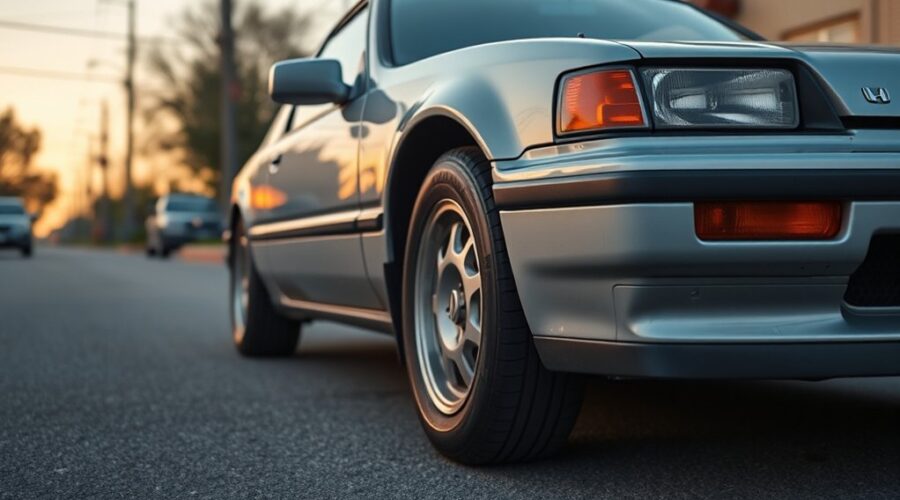
The old Honda Prelude was a two-door sports coupe built from 1978 to 2001 in five generations, growing from an 80 PS 1.6-litre car into a VTEC-powered coupe with up to 220 PS in Japan. This guide covers each generation’s engines, key technology and what to check before you buy one.
Old Honda Prelude Generations at a Glance
| Generation | Years | Notable engines (output varies by market) |
|---|---|---|
| First | 1978-82 | 1.6 L 80 PS; 1.8 L CVCC 90 PS (Japan) |
| Second | 1982-87 | 1.8 L 105-125 PS; Japan 2.0 L DOHC PGM-FI 160 PS |
| Third | 1987-92 | 2.0 L DOHC up to 160 PS (Japan); 2.1 L B21A about 145-150 PS |
| Fourth | 1992-96 | 2.2 L F22 and H22; Japan Si VTEC 200 PS |
| Fifth | 1996-2001 | 2.2 L; H22A Type S 220 PS (Japan) |
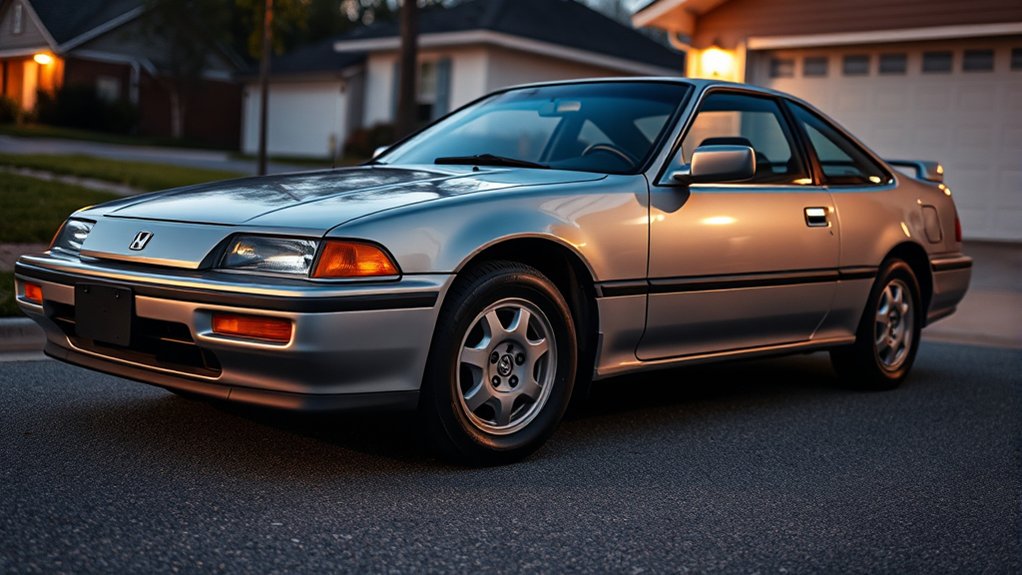
First and Second Generation (1978-87)
The first Prelude was a small 4,090 mm coupe with a 2,320 mm wheelbase. It had standard power steering and was Honda’s first car with a moonroof as standard.
The second generation added pop-up headlights, optional anti-lock brakes and, in Japan, a 2.0-litre DOHC PGM-FI engine making 160 PS. US cars used 100 to 110 hp engines.
Third Generation (1987-92)
The third generation offered Honda’s mechanical four-wheel steering as an option and had a drag coefficient of 0.34. Engines ranged from a 2.0-litre carburetted four to the DOHC fuel-injected versions and the 2.1-litre B21A.
Fourth Generation (1992-96)
This generation moved to electronic four-wheel steering and brought the VTEC H22A to the Japanese Si VTEC at 200 PS. Weight distribution was 58 percent front and 42 percent rear. For more on how VTEC works, read how i-VTEC works.
Fifth Generation (1996-2001)
The last of the old Preludes added ATTS torque vectoring and a sequential SportShift automatic. Outputs by market ranged from 133 hp to 217 hp, with the Japan-only Type S as the most powerful.
The Type S used 11.0:1 compression, a 62 mm throttle body and a Dynamic Chambering airbox. It weighed about 1,310 kg, while the North American Type SH was around 1,380 kg.
Buying an Old Honda Prelude in Canada
- Inspect for rust, especially on older cars, and ask for service records.
- Confirm the engine code and market, because power and equipment differ widely.
- Check that four-wheel steering and ATTS work, since these systems are complex.
- Be cautious with heavily modified cars; see our Honda D-series tuner guide for context on common engine swaps.
Imported Japanese-market cars must meet Transport Canada’s age and inspection rules, so confirm those before buying. If you want the modern car, read Honda Prelude vs Nissan Z, which compares the 2025 hybrid with the Z.
Old Honda Prelude FAQ
What years was the old Honda Prelude built?
The Prelude was built from 1978 to 2001 across five generations. A sixth-generation hybrid Prelude was revived for 2025.
Which old Honda Prelude is the fastest?
The Japan-market fifth-generation Type S with the H22A engine is rated at 220 PS (217 hp), the highest figure for any of the first five generations.
Which Honda Prelude had four-wheel steering?
The third generation offered a mechanical four-wheel steering option. The fourth generation replaced it with an electronic system.
What is ATTS on the Prelude?
ATTS is Honda’s torque-vectoring system, used on the fifth generation. It was badged Type S in Japan, VTi-S in Europe and Type SH in North America.
Which old Prelude engines have VTEC?
The Japan-market fourth-generation Si VTEC used the H22A, and VTEC H22 engines continued in the fifth generation. Check each car’s engine code, because many non-VTEC Preludes also exist.
What should I check when buying an old Honda Prelude?
Look for rust, a full service history, signs of heavy modification, and working four-wheel steering or ATTS where fitted. Parts availability varies, so confirm it before you buy.


