In *Tokyo Drift*, DK’s Nissan 350Z became more than a villain’s car; it became a reference point for modern tuning. The twin-turbo VQ35DE setup, Veilside wide-body kit, and lowered stance gave it a distinct technical identity on screen. Eleven cars were built for filming, each serving a different purpose. Its influence reached far beyond the movie, and the details behind the build still raise one question: what made it so effective?
Why DK’s 350Z Became a Tokyo Drift Icon
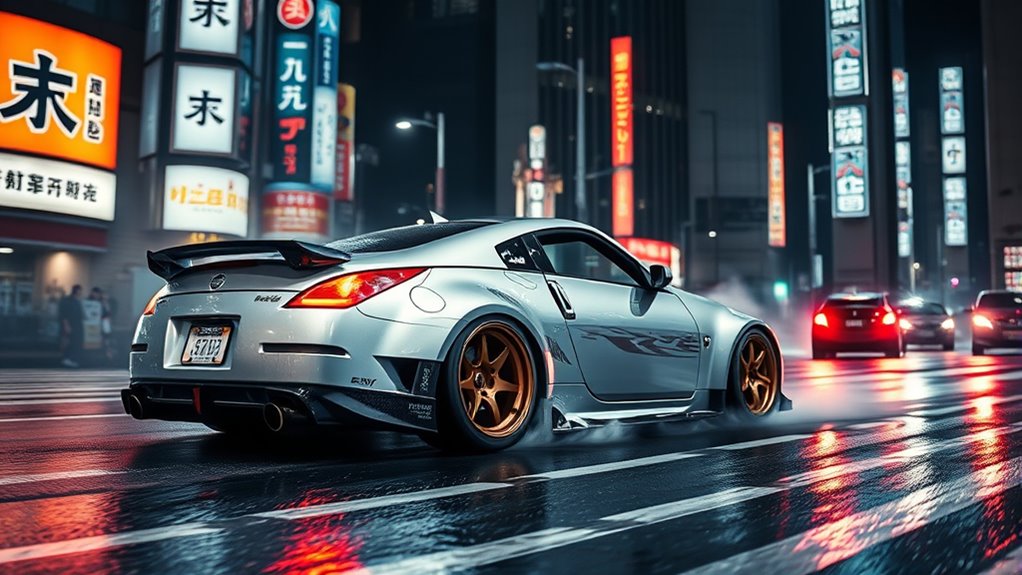
DK’s Nissan 350Z became one of *Tokyo Drift*’s defining machines through a combination of visual aggression and credible performance.
The Veilside wide-body kit gave the Z33 a low, severe profile that read instantly on screen, while the twin-turbocharged engine and 430 horsepower figure signaled real pace rather than styling alone.
In the drifting scenes, the car’s movement matched the film’s rhythm: controlled, forceful, and decisive.
Brian Tee’s Drift King character used the car as an extension of authority, making the machine part of the narrative threat.
Production backed the image with eleven Nissan 350Zs, a practical measure that preserved safety and consistency.
That attention to detail helped the car transcend its role as a prop.
After release, it emerged as a cultural icon in *Tokyo Drift*, influencing tuning culture and drifting enthusiasm worldwide, and reinforcing the appeal of engineered freedom over restraint.
DK’s 350Z Movie Specs and Powertrain
The film version of the Nissan 350Z combined a Veilside wide-body kit with functional chassis changes to create a car that looked and performed like a purpose-built drift machine.
DK’s 350Z used a twin-turbocharged VQ35DE 3.5L V6, rated at about 430 horsepower, giving the Nissan the thrust needed for sustained drifting and hard exits.
RSR lowering springs sharpened body control and reduced roll, supporting faster shifts on tight courses.
In period testing, the Z33 recorded a 0-60 mph time of 5.7 seconds and a quarter-mile run of 13.2 seconds at 114.8 mph, figures that matched its street and track credibility.
For filming, 11 examples were prepared to absorb the wear of repeated stunts.
The result was a 350Z engineered for speed, control, and freedom of motion, not show alone.
The Veilside Wide-Body Look Explained
Veilside’s wide-body treatment gave the 350Z its most recognizable visual identity, with extended fenders, a pronounced front fascia, and the full Version 3 form combining sharp lines with fluid curves.
Veilside’s wide-body kit defined the 350Z with extended fenders, sharp lines, and a fluid, unmistakable presence.
On DK’s Nissan 350Z, the Veilside wide-body kit delivered aggressive styling while improving airflow and stance without excess mass. Its lightweight materials supported handling and stability, particularly under hard cornering and high-speed shifts.
The package also enabled larger wheels, with 19×11-inch rears and 19×9-inch fronts, reinforcing a planted profile.
- Veilside design language: sharp, aerodynamic, and visually assertive
- Functional benefit: reduced weight aids handling and balance
- Cultural impact: its aesthetics became a reference point in car culture
The result is a machine that appears liberated from ordinary factory restraint, yet remains technically purposeful.
In the film’s broader influence, the kit helped turn the Nissan 350Z into an enduring icon of aggressive styling and aftermarket ambition.
How the 350Z Scenes Were Filmed
Behind the Veilside bodywork and aggressive stance, the 350Z’s film presence was built through careful stunt planning and a sizable fleet of cars. For D.K., portrayed by Brian Tee, the 350Z had to project menace while surviving repeated takes. | Element | Purpose |
| — | — |
|---|---|
| 11 cars | Damage coverage |
| Stunt drivers | Drift execution |
| APS twin-turbo | 430 horsepower |
Rhys Millen and Tanner Foust handled much of the drifting, translating APS power into precise slides. In filming, separate 350Zs were prepared for hero shots, chase inserts, and impact sequences, reducing downtime and protecting the core production. The Veilside kit amplified visual force, but reliability mattered equally; tuned mechanical packages kept the cars consistent under abuse. This method gave the crew freedom to stage close-quarters racing with controlled risk. Every pass of D.K.’s 350Z combined technical discipline, repeatable setup, and enough horsepower to keep the action credible.
Why Tokyo Drift Needed So Many 350Zs
Tokyo Drift needed 11 Nissan 350Zs because the film’s drift-heavy production placed extraordinary stress on each car. The 350Z platform had to survive repeated drifting passes, abrupt shifts, and close-quarters choreography while preserving performance and safety for stunt drivers.
Eight units were Japan-market vehicles, supporting authentic JDM presence and matching the film’s setting. Each car wore a Veilside wide-body kit, which added visual aggression and also accommodated performance and safety modifications.
- Multiple cars reduced downtime after damage
- Rhys Millen and other stunt drivers required dependable handling
- Individual builds could be tuned for specific scenes
This fleet strategy gave the production flexibility to replace worn components, isolate crash risk, and maintain consistent motion on screen.
For a film built around liberated speed and precision, the 350Z had to be expendable, controllable, and mechanically repeatable.
The Stunt Cars Behind DK’s 350Z
DK’s 350Z was not a single car but a coordinated group of 11 stunt vehicles, assembled to handle the demands of filming Tokyo Drift’s drift sequences. This car package let D.K.’s scenes run under controlled risk while preserving motion continuity.
Eight of the 11 350Zs were Japan-market models, matching the film’s JDM setting and giving the Drift footage a credible factory base. Rhys Millen and other professional drivers executed the stunt work, delivering repeatable angles, stable entries, and precise exits.
Different cars were assigned to different tasks, so damage from one sequence did not halt production. That division of labor made the Tokyo Drift schedule more flexible and less dependent on any single shell. The result was a purpose-built filming fleet for D.K., not a hero car alone.
One surviving star car remained in good condition by 2017 and later appeared for sale in the U.K. at $133,000, underscoring its collectible status.
How DK’s 350Z Shaped Car Culture
- Veilside bodywork accelerated demand for replica parts.
- Drifting scenes expanded U.S. awareness of the discipline.
- The East-meets-West theme linked Japanese tuning with broader American modification tastes.
After the film, aftermarket sales for 350Z parts and body kits rose sharply, as builders sought the same aggressive profile.
The result was not mere imitation; it was a technical statement of freedom, proving that modification could cross borders and still remain distinct.
Where the Tokyo Drift 350Z Is Now
The Nissan 350Z from *Tokyo Drift* remains one of the most recognized film cars in modern tuning history. The surviving Drift King 350Z is believed to be in Tokyo, where it is available for worldwide shipping.
Earlier reports placed the star car in the U.K. in 2017, offered at $133,000, confirming sustained market demand. Only two genuine film cars are known to survive from the 11 built for production; most stunt units were destroyed after filming.
The example carries a Veilside wide-body kit and a twin-turbo setup rated at roughly 430 horsepower, preserving its original specification. For collectors, the car’s historical significance is linked to Tokyo street imagery and wider car culture.
Its rarity, documented provenance, and film association position it as a unique asset for enthusiasts seeking liberation through ownership, display, or preservation. In the market, the 350Z functions less as transport and more as a mobile artifact.
How to Build a Tokyo Drift 350Z Replica
A proper Tokyo Drift 350Z replica begins with a 2003 Nissan 350Z fitted with the Veilside Version 3 wide-body kit, which defines the car’s aggressive proportions and film-accurate profile.
From there, a twin-turbo engine package should target 430 horsepower, ideally through an APS conversion on the VQ35DE, to deliver the urgency associated with Fast and the Furious drifting.
RSR lowering springs are used to drop the chassis and sharpen response, while Veilside Andrew Evolution V wheels complete the stance.
- Sparco seats, harnesses, and a roll cage improve safety and reproduce the cockpit layout.
- A carbon fiber hood and exposed intercooler reinforce the competition aesthetic.
- High-quality Veilside decals preserve visual fidelity.
The result is a disciplined build: lightweight, stable, and visually liberated, yet grounded in the technical cues that made the original 350Z memorable.
Frequently Asked Questions
What Are the Key Features of the Nissan 350Z?
The Nissan 350Z features Nissan performance, Z series history, aftermarket modifications, racing heritage, engine specifications, design evolution, handling capabilities, and tuning potential, combining a V6 platform, balanced chassis, aggressive styling, and strong drift-oriented dynamics.
How Much HP Can a 350Z Handle?
A 350Z typically handles about 500 horsepower with boost upgrades and engine tuning; stock output is 287-306 hp. Beyond those power limits, performance mods, aftermarket parts, racing potential, reliability issues, and fuel efficiency require careful balance.
Is a 350Z Faster Than a Mustang?
Neither is universally faster. The 350Z performance comparison favors lighter handling; Mustang acceleration specs often show stronger straight-line pull. Street racing dynamics depend on engine power differences, handling characteristics comparison, aftermarket modifications potential, racing history analysis, driver experience feedback.
Was Dk’s 350Z Turbo?
Yes, D.K.’s 350Z was turbocharged. Turbo upgrades, engine modifications, and aftermarket parts supported drift performance, racing history, tuning potential, suspension setups, and visual aesthetics, creating a capable, technically refined machine for rebellious drivers.
Conclusion
DK’s 350Z remains a defining drift icon, blending bold bodywork, balanced dynamics, and boosted VQ35DE power into a memorable movie machine. Its Veilside wide-body form, lowered stance, and carefully controlled stunt setup helped create a sharp, stylish screen presence. With multiple replicas used for filming, the car’s cinematic credibility and cultural influence grew quickly. Even now, the Tokyo Drift 350Z stands as a lasting symbol of speed, style, and street-spec spectacle.