

The 1980s marked a turning point in automotive history, when angular bodywork, aerodynamic thinking, and new electronics began reshaping the industry. Models such as the Ford Mustang, Chevrolet Corvette C4, and Toyota Supra reflected a decade focused on speed, efficiency, and image. Luxury cars grew more advanced, while turbocharging and digital systems changed expectations. Yet the most lasting influence of this era lies in how its ideas still shape modern vehicles.
What Defined 1980s Car Design?
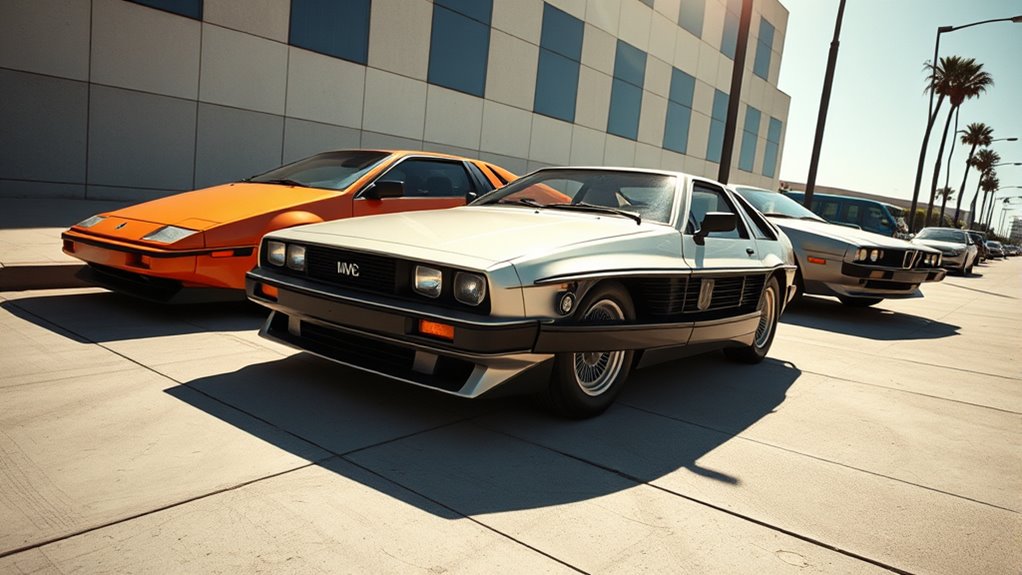
The 1980s car design was defined by a shift toward aerodynamic shapes, sharper angular lines, and a stronger emphasis on modern styling, reflecting the decade’s focus on speed and technological progress.
In the 1980s, manufacturers balanced visual drama with practical concerns, producing vehicles that signaled progress without ignoring restraint. Safety features such as anti-lock brakes and improved crash protection became more common, answering public pressure for safer mobility.
At the same time, fuel efficiency reshaped proportions and packaging, especially as compact cars from Honda and Toyota gained influence.
Inside the cabin, digital dashboards and electronic controls announced a new technological era, as shown by the Buick Riviera.
Pop culture also played a major role, elevating iconic models like the DeLorean DMC-12 into symbols of style and self-expression.
Together, these elements made 1980s car design a historical expression of independence, innovation, and changing consumer priorities.
1980s Car Design and Aerodynamics
Aerodynamics became one of the defining forces in 1980s car design, as manufacturers responded to fuel concerns by shaping vehicles to slip more efficiently through the air. Sleeker noses, lowered profiles, and reduced drag coefficients reflected a broader historical shift toward fuel efficiency and practical freedom from oil shocks.
Wedge forms and crisp surfaces gave many models sporty aesthetics while also improving high-speed stability. The period also saw computer-aided design (CAD) expand what designers could imagine, enabling more exact curves and tighter integration between form and function.
Flush-mounted windows, integrated bumpers, and other “aero” styling cues became standard, signaling a new visual language of motion. At the same time, advanced materials and technologies supported lighter construction and greater performance, as seen in technically ambitious cars such as the Porsche 959.
Together, these developments made aerodynamics not merely a styling trend, but a decisive tool in 1980s car design.
Iconic 1980s Cars That Defined the Decade
Several standout models came to embody the 1980s automotive landscape, each reflecting a different response to the decade’s shifting priorities of performance, practicality, and technology. Among the era’s iconic cars, the Ford Mustang embraced sleeker design trends and the Mustang GT’s V8 force, restoring accessible muscle to drivers seeking release from restraint.
- The Chevrolet Corvette C4 arrived in 1984 with a sharp profile, digital displays, and improved aerodynamics, marking a decisive turn toward advanced technology.
- The Dodge Caravan launched in 1984 and transformed family transport, proving that utility could also signal independence and mobility.
- In broader automotive history, these models defined the decade’s balance between speed, innovation, and everyday use.
Together, they illustrate how 1980s engineering widened the road for personal expression, making the car not merely transport, but a statement of motion and freedom.
Japanese 1980s Cars That Changed the Game
Japanese automakers in the 1980s introduced turbocharged performance icons that combined stronger horsepower with improved efficiency, shifting expectations for what a sports car could deliver.
Their sharp-edged styling matched the technical advances beneath the surface, giving models such as the Toyota Supra a distinctive presence on the road.
The Supra’s rise, alongside rivals like the Nissan 300ZX and Skyline GT-R, established a legacy that would shape global performance cars for decades.
Turbocharged Performance Icons
As turbocharging matured in the 1980s, it transformed Japanese performance cars from competent sports coupes into technological statements of speed, efficiency, and control. In automotive history, this shift widened the meaning of freedom for drivers seeking authority on open roads.
- The Nissan 300ZX and Toyota Supra became turbocharged symbols of force, pairing acceleration with disciplined chassis tuning.
- The Mazda RX-7 advanced sports cars through lightweight design, rotary responsiveness, and an aesthetic of precision rather than excess.
- The Subaru WRX fused all-wheel drive with boost, reshaping rally-derived performance and influencing later Japanese cars.
The Honda CR-X and 1985 Toyota Celica GT-S showed that liberation could also include economy, proving Japanese design could unite practicality, speed, and enduring cultural impact.
Sharp Edge Styling
The 1980s brought a decisive shift in Japanese car design, as angular bodywork and crisp lines replaced softer curves and gave performance cars a more assertive identity. This sharp edge styling marked Japanese cars as symbols of modern freedom, with innovation visible in machines built for speed and control.
| Model | Styling cue | Significance |
|---|---|---|
| Toyota AE86 | Boxy, clean profiles | Driver-focused balance |
| Nissan 300ZX | Low, angular nose | High-performance presence |
| Mazda RX-7 | Wedge form | Rotary-era distinction |
Through innovative technologies such as turbocharging and advanced suspension, performance improved alongside form. The Toyota AE86, Nissan 300ZX, and Mazda RX-7 showed that design could challenge convention while preserving accessible exhilaration.
Legacy Of The Supra
Arriving in 1986, the Toyota Supra rapidly established itself as a benchmark among Japanese performance cars, pairing a rear-wheel-drive layout with a powerful inline-six engine that gave it both refinement and authority.
Its legacy was built through:
- the A70’s multi-link rear suspension, which sharpened handling and signaled serious engineering;
- a turbocharged variant reaching 276 horsepower, proving that restraint and force could coexist;
- sleek design, with pop-up headlights and a distinct silhouette, making the Supra iconic.
Beyond the showroom, the Supra empowered drivers through a vigorous aftermarket, enabling tuning culture to flourish.
In automotive history, its 1980s form remains revered by collectors and celebrated in films and games, an enduring emblem of liberated performance.
How 1980s Cars Balanced Power and Tech
During the 1980s, automakers increasingly paired traditional performance with emerging electronics, creating cars that felt both quicker and more refined than their predecessors. Turbocharged and larger powerful engines remained central, yet advanced technology reshaped how they delivered power.
The Buick GNX’s 3.8-liter V6 showed that a modest layout could achieve serious performance through boost and calibration. Electronic fuel injection replaced carburetors in many models, improving fuel efficiency while sharpening throttle response.
In automotive design, computer-aided design (CAD) software and wind-tunnel testing helped shape sleeker bodies, as seen on the Chevrolet Corvette C4, where aerodynamics supported both speed and economy.
Safety and control also advanced: anti-lock braking systems made hard stops more usable, preserving driver agency rather than surrendering it to panic. Digital dashboards and onboard computers, such as those in the 1982 Cadillac Seville, turned the cabin into an information center, signaling a decade when machinery and electronics moved together.
1980s Luxury Cars and Supercar Trends
During the 1980s, luxury brands like Mercedes-Benz and BMW refined their identities through advanced comfort, electronics, and performance, with models such as the S-Class and the early M3 establishing new standards.
At the same time, supercars evolved toward sharper, more aggressive forms, as seen in the Lamborghini Countach, where angular design and V12 power became symbols of modern speed.
Together, these trends tied prestige to both engineering sophistication and visual drama, while turbocharging and luxury SUVs expanded the decade’s definition of high-end motoring.
Luxury Brand Evolution
The 1980s marked a turning point for luxury automobiles, as established European marques refined their formulas with greater emphasis on performance, comfort, and electronic innovation. Mercedes-Benz and BMW advanced luxury models such as the 560 SEL and E30 3 Series, proving that refinement could coexist with sharper performance and new technology.
- Turbocharging reached mainstream prestige through cars like the Buick Grand National, widening the field of luxury and performance.
- Japanese entrants, particularly Lexus and Acura, arrived with disciplined quality, reliability, and humane cabin design, challenging European authority.
- Supercar development, from the Porsche 959 to the Countach and Testarossa, signaled a distinct era of advancements, where speed and engineering gave enthusiasts a wider horizon of choice.
Supercar Design Advances
Supercar design in the 1980s reflected a new balance of speed, technology, and visual drama, extending the decade’s broader luxury-car emphasis on innovation. Engineers used carbon fiber and lightweight alloys to refine aerodynamics, reduce mass, and expand high performance without sacrificing exotic form.
Turbocharging and advanced engine management brought major horsepower gains, making the Ferrari F40 and Porsche 959 benchmarks of speed and control.
At the same time, iconic luxury cars such as the Lamborghini Countach established angular bodywork and scissor doors as a bold visual code. These machines became status symbols within automotive culture, amplified by film and media, including The Cannonball Run.
Their presence suggested liberation through motion, where supercar design fused technical progress with an aspirational, rebellious image.
Performance And Prestige
Many 1980s luxury and performance cars converged on a new definition of automotive prestige, where status depended as much on technology as on power. BMW 7 Series and Mercedes-Benz S-Class models paired opulent cabins with advanced technology, including digital dashboards and refined sound systems, signaling liberated driving without surrendering comfort.
- Supercars such as the Ferrari F40, Lamborghini Countach, and Porsche 959 used aggressive styling, turbocharged engines, lightweight materials, all-wheel drive, and aerodynamics to expand performance limits.
- Their speed, reaching 197 mph in the 959, reframed automotive prestige as technical mastery.
- Japanese sports cars like the Toyota Supra and Nissan 300ZX widened access, proving that attainable performance could challenge luxury cars and reshape status.
Why 1980s Car Design Still Matters
Although often remembered for excess, 1980s car design remains significant because it marked a turning point in how manufacturers balanced style, technology, safety, and performance.
In the 1980s, angular forms, bold colors, and pop culture influence reshaped iconic models, while design trends reflected changing consumer expectations and a desire for expression on the road.
The Chevrolet Corvette C4 showed how modern lines could support performance without abandoning visual drama.
At the same time, turbocharged engines and digital dashboards expanded the role of electronics in daily driving, making cars feel more independent from older mechanical limits.
Safety features such as ABS and crumple zones answered stricter regulations, proving that protection and freedom could coexist.
Japanese imports like the Toyota Supra and Mazda RX-7 further broadened automotive history by pairing efficiency, affordability, and agility, leaving a lasting benchmark for later decades and industry standards everywhere.
How 1980s Cars Shaped Modern Design
The 1980s reshaped automotive design by pushing manufacturers toward cleaner aerodynamics, greater safety, and more integrated technology. In automotive history, 1980s cars became laboratories for design trends that still define modern cars.
- Aerodynamic design, seen on the Ford Taurus and Chevrolet Corvette, replaced boxy forms with smooth surfaces that reduced drag and signaled a freer, more efficient visual language.
- Advanced safety features such as airbags and anti-lock braking systems established expectations for protection, turning restraint into a core design principle rather than an afterthought.
- Japanese sports cars like the Nissan 300ZX and Toyota Supra reinforced performance and reliability, while the BMW 7 Series introduced digital dashboards and refined audio systems.
The 1984 Dodge Caravan further expanded functional design, proving that utility could coexist with comfort.
Together, these 1980s cars redirected industry priorities toward efficiency, choice, and technological openness, shaping the architecture of contemporary vehicles.
Frequently Asked Questions
What Are the Top Three Trends in the Automotive Industry?
The top three trends are fuel efficiency, safety innovations, and performance enhancements. Later developments in electric vehicles, tech integration, design minimalism, and retro styling reflect liberation from waste, danger, and mechanical excess.
What Truck Will Last 500,000 Miles?
Toyota Tundra or Ford F-250 may endure 500,000 miles; steel strength versus worn roads. Durability Factors, Engine Technology, Maintenance Practices, Fuel Efficiency, Brand Reputation, Consumer Preferences, Warranty Coverage, and disciplined service determine longevity most.
What Color Car Is the Hardest to Sell?
Brown is often the hardest to sell, as car color psychology, resale value dynamics, market demand shifts, regional color preferences, collector car trends, seasonal color influences, and impact of advertising all favor neutral shades.
What Are the Latest Trends in Car Design?
Current car design trends are a river of change: Electric Vehicles, Retro Designs, Sustainable Materials, Autonomous Features, Minimalist Interiors, Smart Technology, and Aerodynamic Shapes now define liberated mobility, blending history, efficiency, and autonomy.
Conclusion
The 1980s left an enduring imprint on automotive history, where wedge profiles, turbocharged engines, and digital dashboards signaled more than stylistic change—they marked a new philosophy of motion. From the Mustang to the Supra, these cars suggested a future shaped by precision and aspiration, echoing the broader confidence of the decade. Their influence remains visible today, proving that the road from analogue muscle to modern sophistication was paved in the eighties.