
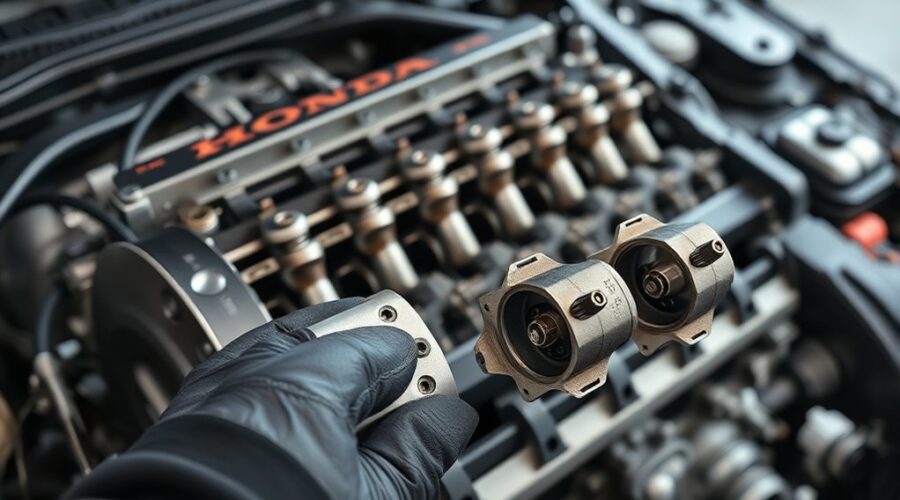
How does i-VTEC work? Honda i-VTEC is a variable-valve-control system designed to give an engine useful torque at low and midrange speeds while still supporting strong high-rpm breathing, fuel efficiency, and emissions control. The key idea is simple: VTEC changes how far and how long the valves open, while Variable Timing Control (VTC) can change camshaft timing as the engine runs. The exact strategy varies by engine, so not every i-VTEC motor behaves the same way.
Quick Answer
i-VTEC means intelligent Variable Valve Timing and Lift Electronic Control. On many Honda engines, it combines VTEC’s switchable valve-lift and duration profiles with VTC’s continuously adjustable cam timing. The result is a broader useful powerband and better control of efficiency and emissions than traditional two-profile VTEC alone.
What Is i-VTEC and What Does It Mean?
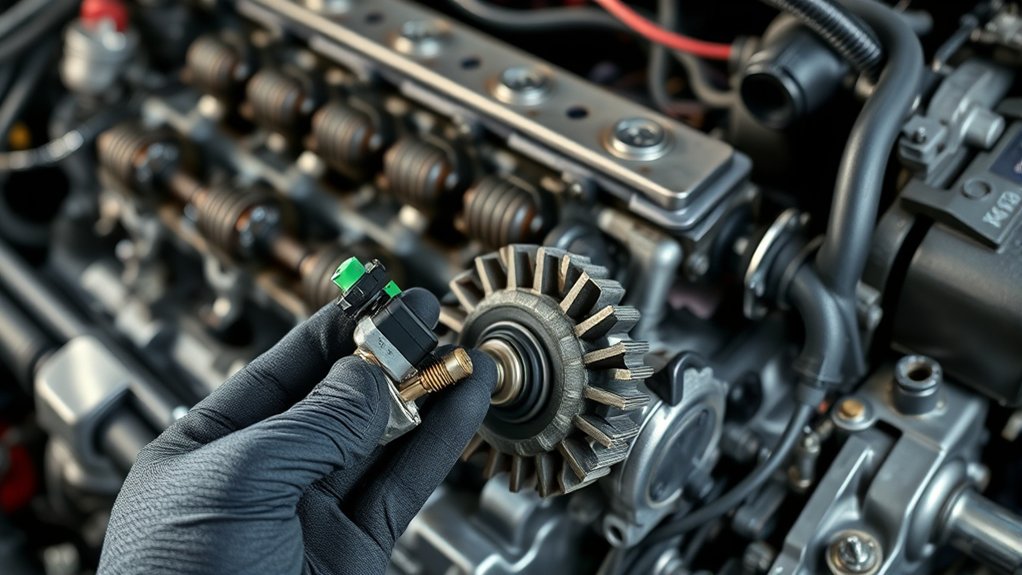
i-VTEC stands for intelligent Variable Valve Timing and Lift Electronic Control. Honda introduced the DOHC i-VTEC concept in 2000 as a new-generation system that combined VTEC with VTC. Honda’s current technical glossary still describes i-VTEC as VTEC augmented by Variable Timing Control of the camshaft. You can read Honda’s official i-VTEC definition.
Traditional VTEC solves a basic engine-design compromise. Valve timing and lift that work well at low engine speed are not ideal at high engine speed. Honda uses different cam profiles so the engine can favor smooth running and efficiency at lower rpm, then use a more aggressive profile when greater airflow is needed.
i-VTEC adds another layer. VTC can advance or retard camshaft timing while the engine is running, helping the engine respond to changes in speed and load instead of relying only on a fixed low-rpm/high-rpm cam-profile change.
How Does i-VTEC Work?
On a typical DOHC i-VTEC setup, VTEC and VTC do different jobs. VTEC changes valve lift and duration by switching between cam profiles, while VTC changes when the camshaft operates relative to the crankshaft. Together, they let Honda tune airflow across a wider range of operating conditions.
What VTEC Changes
VTEC uses different cam-lobe profiles for different operating ranges. At lower engine speeds, a milder profile can support stable running, drivability, and efficiency. At higher speeds, a higher-lift, longer-duration profile can let more air move through the engine.
Honda explains that the switch is controlled electronically and carried out hydraulically. Oil pressure moves locking pins in the rocker-arm mechanism so the valves follow the appropriate cam profile. Honda’s VTEC engineering overview describes this low-profile/high-profile arrangement and the hydraulic switching system.
What Variable Timing Control Changes
VTC does not simply switch between two cam lobes. It changes camshaft phase continuously within the range designed for that engine. This lets the engine control valve timing more precisely as rpm and load change.
At low rpm, Honda may retard intake cam timing for stable idle and lower emissions. As speed and load rise, the system can advance timing to improve cylinder filling and torque. Some newer Honda engines use VTC on both camshafts, so the exact hardware should always be checked by engine and model.
What Happens During VTEC Engagement?
When a VTEC-equipped engine meets the conditions programmed into its control system, the ECU or PCM commands the VTEC solenoid and hydraulic circuit to change the rocker-arm state. Oil pressure moves locking pins so the valves can follow a different cam profile.
- The engine computer decides when the change is appropriate.
- The VTEC solenoid controls oil flow to the switching mechanism.
- Oil pressure moves locking pins within the rocker-arm assembly.
- The valves then follow the cam profile intended for that operating range.
- When conditions change again, the mechanism can return to the lower-speed profile.
The result is not simply a sudden “power switch.” The high-rpm profile is one part of a broader control strategy that also includes fuel, ignition, throttle, and cam timing.
What Is the Role of Variable Timing Control (VTC)?
VTC continuously adjusts camshaft timing to help the engine balance torque, power, emissions, and fuel efficiency. Unlike VTEC’s profile change, VTC can alter valve timing in smaller steps as operating conditions change.
Honda’s DOHC i-VTEC technical material explains that VTC is hydraulically operated. It can retard cam timing at low rpm for stable idle, then advance timing as rpm and load increase to improve cylinder filling. Honda’s original 2000 DOHC i-VTEC launch announcement likewise described VTC as continuously adjusting intake-valve timing to match engine load.
| System | What it changes | Why it matters |
|---|---|---|
| VTEC | Valve lift and duration through different cam profiles | Lets one engine use valve behavior suited to different speed ranges |
| VTC | Camshaft phase | Fine-tunes timing as rpm and load change |
| i-VTEC | Uses VTEC plus VTC on many Honda applications | Broadens the range over which valve operation can be optimized |
i-VTEC vs. Traditional VTEC: What Is the Difference?
The main difference is that traditional VTEC changes between cam profiles, while i-VTEC adds continuously variable cam timing on many applications. That gives the engine another way to manage airflow between the low- and high-rpm operating points.
| Feature | Traditional VTEC | i-VTEC |
|---|---|---|
| Cam profiles | Switches between profiles for different operating ranges | Can retain VTEC profile switching |
| Cam phasing | Not the defining feature | VTC can continuously advance or retard cam timing |
| Control range | Primarily based on distinct cam profiles | Adds continuous timing adjustment between operating points |
| Goal | Broader powerband than a fixed-valve strategy | Broader optimization of torque, efficiency, and emissions |
How Can i-VTEC Improve Fuel Economy?
i-VTEC can improve fuel economy by changing valve behavior to reduce pumping losses and improve combustion under light-load conditions. The exact method depends on the engine family, so it is more accurate to talk about specific strategies than to say every i-VTEC engine saves fuel in the same way.
Economy-Focused Valve Control
Some Honda i-VTEC engines reduce how much fresh charge enters the cylinder or alter intake-valve timing during light-load operation. This can let the throttle stay more open, reducing the energy the engine wastes pulling air past a partly closed throttle plate.
Honda’s 1.8-liter i-VTEC engine developed for the 2006 Civic delayed intake-valve closing under low-load cruising. Honda reported that this strategy reduced pumping losses by up to 16 percent in the engine itself. The company explains the system in its 1.8-liter i-VTEC development release.
Performance Without One Fixed Valve Setting
An engine does not need the same valve behavior at idle, during normal acceleration, and near redline. i-VTEC gives engineers more than one way to change that behavior, which helps them tune for low-speed torque without giving up high-speed airflow.
This is why two Honda engines carrying i-VTEC branding can feel very different. A performance engine may use aggressive high-rpm valve lift, while an economy engine may use valve timing mainly to reduce losses and improve combustion.
Emissions Control
Valve timing also affects residual exhaust gas, cylinder filling, combustion stability, and catalyst operation. By adjusting timing to the engine’s operating state, Honda can use the valvetrain as part of the emissions-control strategy rather than treating it only as a performance feature.
A dramatic historical example is Honda’s 2003 Stream Absolute with the 2.0-liter DOHC i-VTEC I direct-injection engine. Honda said that engine combined i-VTEC with center injection to achieve an ultra-lean air-fuel ratio of up to 65:1 under its specified operating conditions. Honda documented that system in the Stream Absolute technical release.
Not All Honda i-VTEC Engines Work the Same Way
The i-VTEC name covers several valve-control strategies. The important question is not only “Does this engine have i-VTEC?” but also which camshafts use VTEC, which use VTC, and what the system is designed to accomplish.
Performance-Focused DOHC i-VTEC
Performance-oriented K-series engines combine VTEC’s higher-lift cam operation with VTC for cam phasing. Honda’s 2001 Integra Type R used a 2.0-liter DOHC i-VTEC K20A that combined high-rpm VTEC operation with continuously controlled intake-cam phasing.
Honda rated the Japanese-market Integra Type R’s engine at 162 kW (220 PS) and 206 N·m. The company’s 2001 Integra release is a useful example of how i-VTEC was applied to a high-output naturally aspirated engine.
Economy-Focused i-VTEC
Other versions use valve control mainly to improve efficiency at low and moderate loads. Some early economy-focused K-series engines kept one intake valve nearly closed at low speed to create stronger charge motion, then brought the second intake valve into fuller operation as engine speed increased.
This is one reason a single “VTEC kicks in at this rpm” statement is misleading. The operating change in an economy engine is not necessarily the same event as the high-lift cam change enthusiasts associate with a performance VTEC engine.
SOHC i-VTEC V6 With Variable Cylinder Management
Honda has also used the i-VTEC name with V6 engines that include Variable Cylinder Management (VCM). Under light load, VCM can deactivate cylinders by stopping fuel delivery and valve operation. When more torque is needed, the engine returns to six-cylinder operation.
That system shows how Honda expanded the VTEC concept beyond a simple high-rpm cam change. It uses valve control to reduce fuel consumption when full engine output is unnecessary.
Modern VTEC and VTC Applications
Honda’s current engines do not all use the older i-VTEC badge, but the underlying ideas continue. For example, the 2026 Civic Si combines VTEC with VTC on both camshafts, while the 2026 Civic Type R uses VTC on both camshafts and VTEC on the exhaust cam.
Those layouts are documented in Honda’s 2026 Civic Si engine guide and 2026 Civic Type R engine guide. The examples show why current Honda valve-control systems should be identified by their actual hardware rather than by assuming one universal i-VTEC layout.
Common Myths About i-VTEC
Most confusion comes from treating every Honda valve-control system as if it works like one famous high-revving VTEC engine. In reality, Honda has used VTEC and i-VTEC for performance, efficiency, cylinder deactivation, turbocharged engines, and Atkinson-cycle-style operation.
Myth: i-VTEC Always Engages at One Specific RPM
There is no single engagement rpm for every i-VTEC engine. The switching point and cam-phasing strategy are calibrated for a particular engine and can depend on operating conditions such as engine speed and load.
Numbers often quoted online may be correct for one engine family or one operating mode, but they should not be presented as universal i-VTEC specifications.
Myth: i-VTEC Is Only for High-RPM Power
Honda has used i-VTEC for both performance and efficiency. Performance versions can improve high-rpm airflow, while economy-focused versions can change intake-valve behavior to reduce pumping losses or improve combustion at lighter loads.
That flexibility is the main value of the system: the valvetrain can be optimized for more than one operating condition.
Myth: Every i-VTEC Engine Has the Same VTC Range
VTC range depends on the engine design. A commonly repeated “50-degree” figure applies to some applications, but it should not be treated as an across-the-board i-VTEC specification.
For a specific Honda or Acura, the service information or engine-specific technical documentation is the right place to confirm the actual cam-phasing range and VTEC strategy.
Can You Modify an i-VTEC Engine for More Performance?
Yes, but the useful modifications depend heavily on the exact engine. A naturally aspirated K-series, an economy-focused R-series, and a turbocharged VTEC engine respond differently, so parts and tuning advice should be based on the engine code rather than the i-VTEC badge alone.
- A less restrictive intake can change airflow, but gains vary by engine and calibration.
- An exhaust system can reduce restriction, although noise, emissions legality, and tuning requirements matter.
- ECU calibration can change fuel, ignition, throttle, cam timing, and in some cases VTEC operating points.
- Lightweight rotating parts can change engine response, but they may also affect drivability.
- Parts should be chosen for the exact engine, vehicle, and intended use.
Warning: Do not change VTEC control points or ECU calibration blindly. Incorrect tuning can cause poor drivability, emissions problems, or engine damage. Use engine-specific data and a qualified tuner when calibration changes are involved.
How the i-VTEC Idea Has Evolved
The original i-VTEC formula was VTEC plus continuously variable cam timing. Honda has since applied related valve-control ideas to turbocharged engines, dual-VTC layouts, cylinder-deactivation systems, and Atkinson-cycle-style strategies used for efficiency.
The key evolution is not a single replacement called “the next i-VTEC.” It is the wider use of electronically controlled valve timing alongside direct injection, turbocharging, hybrid systems, and other powertrain controls. That makes the engine’s exact valve-train specification more useful than the badge alone.
Frequently Asked Questions
Is i-VTEC better than VTEC?
i-VTEC generally gives engineers more control because it can combine VTEC cam-profile switching with continuously variable cam timing. That does not mean every i-VTEC engine makes more power than every older VTEC engine. The result depends on the engine’s purpose, displacement, airflow, compression, tuning, and vehicle application.
Is i-VTEC real VTEC?
Yes. i-VTEC is a Honda VTEC-family technology, but many versions add Variable Timing Control or use VTEC for a specific efficiency strategy. The exact hardware differs by engine, so the name does not guarantee the same cam arrangement or switching behavior in every Honda.
Is i-VTEC the best Honda engine technology?
i-VTEC is a valve-control system rather than one specific engine, so it cannot be judged as a single engine design. Honda has paired VTEC and VTC with naturally aspirated, turbocharged, V6, and efficiency-focused engines. Which setup is best depends on whether you value high-rpm response, low-speed torque, fuel economy, simplicity, or another goal.
Does VTEC really make a difference?
Yes. VTEC changes valve lift, duration, or valve operation so the engine does not have to use one fixed valve strategy across its full speed range. The difference may feel dramatic in a high-revving performance engine or much more subtle in an economy-focused engine.
At what RPM does i-VTEC kick in?
There is no universal i-VTEC engagement rpm. The control point varies by engine and operating conditions, and some i-VTEC strategies use continuous cam phasing rather than one noticeable switch. If you need the exact threshold for a specific Honda or Acura, use engine-specific service or technical information.
What does i-VTEC stand for?
i-VTEC stands for Intelligent Variable Valve Timing and Lift Electronic Control. Honda describes it as VTEC combined with Variable Timing Control (VTC) on the intake camshaft.
At what rpm does VTEC engage?
There is no single rpm. Engagement depends on the engine, its mode and operating conditions such as load, so numbers quoted online apply only to specific engines.
Related reading: see the tuner-focused Honda D-series engine specs, the Honda Prelude history and how twin-scroll turbos improve response.
Sources
- Honda Information Center: i-VTEC: Definition of i-VTEC and the relationship between VTEC and VTC.
- Honda Information Center: VTEC Engineering: Cam-profile switching and hydraulic control.
- Honda Global: 2000 DOHC i-VTEC launch: Original i-VTEC launch, VTC description, and early system goals.
- Honda Global: 1.8L i-VTEC development: Delayed intake-valve closing and pumping-loss reduction.
- Honda Global: Stream Absolute i-VTEC I: Direct injection and 65:1 ultra-lean combustion example.
- Honda Global: 2001 Integra: K20A performance i-VTEC specifications and VTEC/VTC description.
- Honda Information Center: 2026 Civic Si engine: Current VTEC and dual-VTC application.
- Honda Information Center: 2026 Civic Type R engine: Current VTEC and dual-VTC application.



[…] This generation moved to electronic four-wheel steering and brought the VTEC H22A to the Japanese Si VTEC at 200 PS. Weight distribution was 58 percent front and 42 percent rear. For more on how VTEC works, read how i-VTEC works. […]