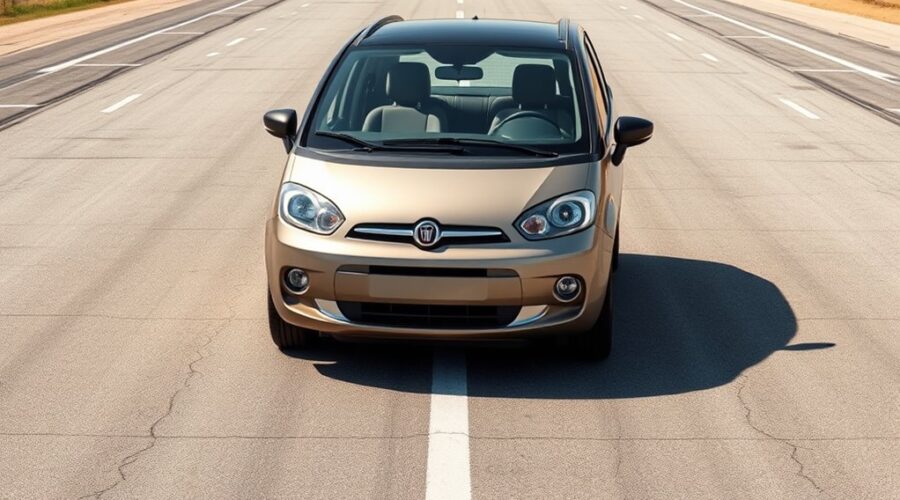
The Fiat Multipla, built from 1998 to 2010, stands out for its unusual packaging and broad engine range. It offered petrol, diesel, LPG, and CNG powertrains, including a 1.6-liter 16V unit with 102 bhp and a 1.9-liter JTD diesel. Its 106 mph top speed, 12.2-second 0–60 mph time, and compact footprint suggest a practical MPV with several technical trade-offs worth examining further.
What Is the Fiat Multipla?
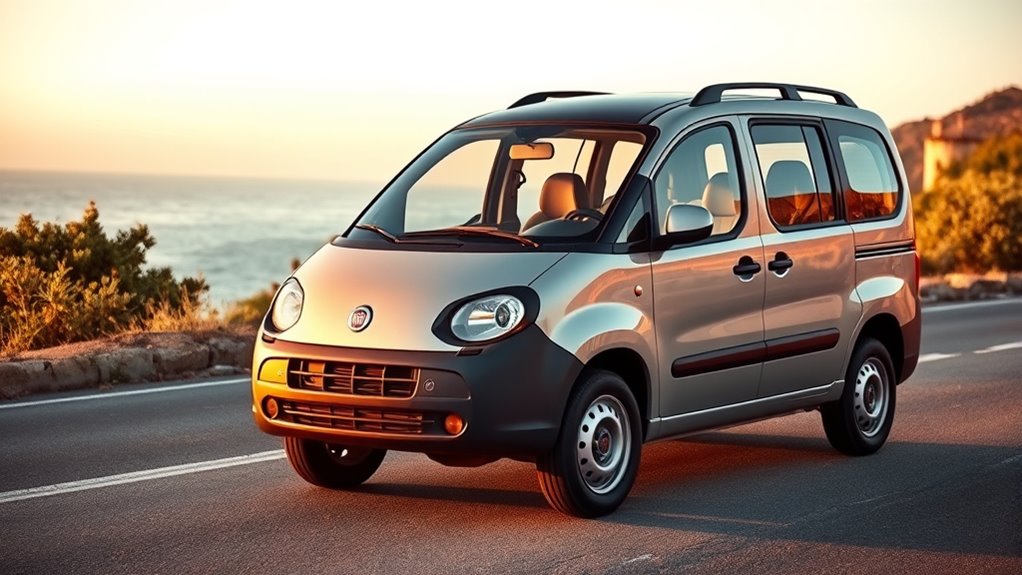
The Fiat Multipla is a compact multi-purpose vehicle (MPV) produced from 1998 to 2010, recognized for its unconventional and highly polarizing design. It was engineered on the Fiat Bravo/Brava platform and positioned as a practical alternative to conventional family transport, with a body that is shorter and wider than many rivals.
The Fiat Multipla’s compact, wide-bodied design made it a practical, polarizing alternative to conventional family transport.
This layout enabled a six-seat cabin arranged in two rows of three, maximizing passenger flexibility without sacrificing usability. The Multipla 100 16v SX designation identified one of its trim levels, reflecting the model’s functional, equipment-led character.
Its packaging philosophy emphasized space efficiency, load carrying, and everyday adaptability for users seeking liberation from rigid automotive conventions. The vehicle’s luggage area provided useful capacity for routine tasks, reinforcing its utility focus.
Although public reception was divided, the Multipla remains notable for advancing an independent approach to MPV design, prioritizing interior practicality over traditional styling norms.
Fiat Multipla Engine Options
Fiat Multipla engine options covered a practical spread of petrol, diesel, and alternative-fuel configurations, including a 1.6 L 16V petrol I4, a 1.9 L JTD diesel I4, and the Blupower version designed to run solely on CNG.
The petrol engine used multi-point fuel injection and delivered 102 bhp at 5750 rpm with 145 Nm at 4000 rpm, giving the model a clearly specified technical baseline. An LPG/petrol variant broadened choice by combining fuel flexibility with lower-emission operation, while the gaseous-fuel versions were supported by a 15-liter petrol tank for auxiliary use.
This engine range reflected an engineering approach centered on adaptable mobility rather than excess, allowing drivers to select a configuration aligned with personal freedom and fuel access.
Across the lineup, the Multipla’s engine architecture emphasized straightforward mechanics, measured output, and compatibility with conventional and alternative fuels.
Fiat Multipla Performance and Fuel Economy
With its 1.6 L inline-four producing 102 hp, the Multipla reaches a top speed of 106 mph and completes the 0–60 mph run in about 12.2 seconds, placing its performance in line with practical multi-purpose use rather than outright speed.
A 5-speed manual transmission and front-wheel drive support controlled traction, while the 29.72 lb/hp power-to-weight ratio gives adequate response in urban and highway conditions.
Fuel consumption is measured at 27.3 mpg combined, enabling a range of roughly 454 miles per tank, which reduces refueling frequency and supports independent travel with fewer interruptions.
Fuel consumption is measured at 27.3 mpg combined, offering roughly 454 miles of range for fewer refueling stops.
- Efficient cruising
- Measured acceleration
- Extended range
- Stable handling
Fiat Multipla Design, Seats, and Cargo Space
Distinctive by design, the Multipla adopts a compact five-door MPV body focused on family versatility, combining a short, wide stance with a kerb weight of 1,300 kg to support urban maneuverability.
The Multipla cabin is engineered for flexible occupancy, providing seating for up to six people through an unconventional layout that includes three-abreast front seating and removable rear seats. This arrangement maximizes personal space while preserving practical utility, allowing occupants to configure the interior according to changing needs without unnecessary constraint.
Cargo capacity is equally adaptable: the luggage area measures 430 liters in standard form and expands to 1,900 liters when the rear seats are removed. Such packaging reflects a technical emphasis on usable volume rather than visual conformity.
Its interior was displayed at MoMA in 1999, underscoring the design’s architectural clarity and the Multipla’s role as a liberated, function-first interpretation of family transport.
Fiat Multipla Variants and Legacy
Beyond its unusual cabin layout and generous load volume, the Multipla’s product strategy extended to a range of powertrain variants that reinforced its practical brief. The Fiat Multipla variants included petrol, diesel, LPG, and CNG options, allowing buyers to select fuel types aligned with economy, emissions, and operating flexibility. This breadth supported urban commuting, long-distance use, and lower-cost mobility without sacrificing the six-seater format or adaptable seating.
The Fiat Multipla offered petrol, diesel, LPG, and CNG variants, broadening practicality without compromising its six-seater flexibility.
- Efficient LPG and CNG choices signaled cleaner, more independent travel.
- Diesel and petrol versions broadened access across markets.
- Flexible seating enabled six occupants to move with purpose.
- Strong cargo capacity preserved utility under changing demands.
Its legacy remained polarizing: praised for spatial efficiency, criticized for unconventional styling, and later echoed by the Zotye Longyue in China.
Produced from 1998 to 2010, it stands as a technical example of functional freedom through packaging and propulsion diversity.
Frequently Asked Questions
Why Was the Fiat Multipla so Unusual?
It was unusual because its Design Quirkiness fused a six-seat, three-abreast layout with a tall, wide body and split-level lighting. The result maximized cabin utility while defying conventional MPV aesthetics and proportions.
Which Fiat Has a Ferrari Engine?
Fiat Dino had a Ferrari-designed V6, a roaring mechanical jewel, shaped by Ferrari Collaboration and released in the late 1960s. The Fiat 124 Spider and 500 Abarth later used Ferrari-influenced turbo technology.
What Are the Specifications of the Fiat Multipla?
The Fiat Multipla specifications include Engine Variants centered on a 1.6-litre inline-four, 102 hp, 145 Nm, 0–100 km/h in 11.1 seconds, 170 km/h top speed, 11.1/7.2/9.0 l/100km consumption, 430-litre cargo capacity.
Was the Fiat Multipla a Good Car?
Yes; the Fiat Multipla was a good car, though aesthetics invited Design Critique. Quaintly, it delivered exceptional practicality, six-seat flexibility, and efficient utility, while its unconventional form divided opinion, yet served families with notable competence and freedom.
Conclusion
In retrospect, the Fiat Multipla stands out as a technically unusual compact MPV, combining multiple powertrain choices with practical packaging and a remarkably flexible six-seat layout. Its 1.6-litre petrol and 1.9 JTD diesel variants delivered modest but adequate performance, while its compact footprint maximized interior utility. Though its styling remains distinctive, the model’s legacy is defined by efficiency, versatility, and space efficiency. It remains a fascinating automotive time capsule for engineers and buyers alike.