Choosing the right wheel brush in 2027 is less about appearance and more about how safely it reaches stubborn grime. The Woollywormit, Mothers, Chemical Guys Gerbil, and ABN kits each offer a different balance of softness, control, and coverage. Some suit tight spokes, while others favor broader cleaning with less effort. The real question is which one matches the wheel design without leaving marks, and that is where the comparison becomes useful.
Woollywormit Wheel Cleaning Brush Car Detailing Kit
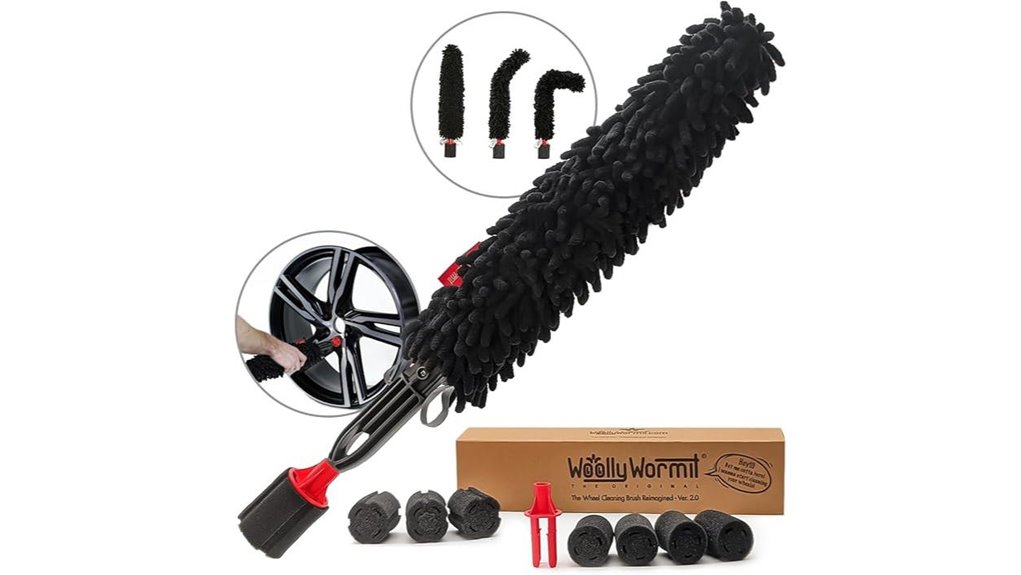
The Woollywormit Wheel Cleaning Brush Car Detailing Kit stands out for drivers who need a flexible, non-scratch tool that can reach deep into wheel barrels and behind spokes. Its 13.25-inch chenille microfiber brush fits openings larger than 1.5 by 2.5 inches, and the handle adds 4.3 inches when extra reach is needed. The kit also includes rim brushes, tire brushes, and two lug nut cleaners with four sponges. With no exposed metal parts, it helps protect finishes. The removable cover is machine washable, and replacement covers support long-term use.
Best For: Drivers and detailers who want a flexible, non-scratch wheel cleaning kit that can reach deep into wheel barrels, behind spokes, and around lug nuts.
Pros:
- Flexible chenille microfiber brush reaches tight wheel areas and helps clean deep into barrels and behind spokes.
- No exposed metal parts, reducing the risk of scratching delicate wheel finishes.
- Removable cover is machine washable, and replacement covers are available for long-term use.
Cons:
- Best fit is limited to wheel openings larger than 1.5 x 2.5 inches.
- The brush may need frequent rinsing during use to avoid trapping road grime.
- The kit’s added accessories can be more than some casual users need for simple cleaning tasks.
Mothers Car Wash, Wheel & Fender Brush
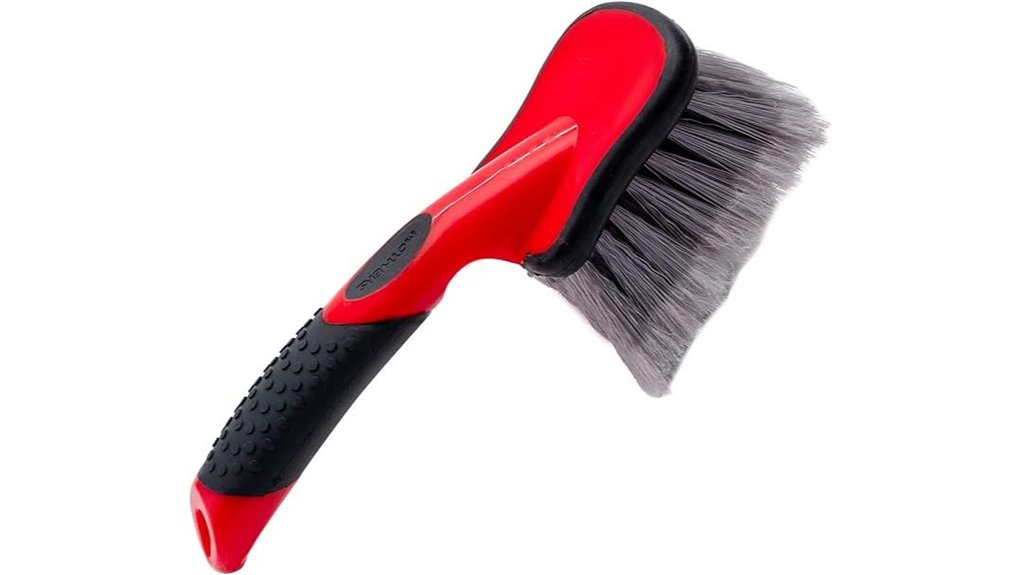
With soft triple-flagged bristles and dual grip points, it suits detailers needing gentle, controlled wheel cleaning. The 10.1-inch Mothers Car Wash Brush uses a red-and-black body with an ergonomic shape that adds rubber contact on the handle, underside, and outer edge. That layout gives secure handling from two positions while improving control around tight surfaces. Dense, soft bristles help maximize coverage without harsh scrubbing. It is designed for wheels, fenders, bumpers, wheel wells, and undercarriage areas, making access easier where grime collects and precision matters most for thorough exterior maintenance.
Best For: Detailers and car owners who want a gentle, controlled brush for cleaning wheels, fenders, bumpers, and other hard-to-reach exterior areas.
Pros:
- Soft triple-flagged bristles provide a gentle scrub that helps protect delicate surfaces.
- Dual grip points and ergonomic rubber lining improve control and handling.
- Dense bristle coverage makes it easier to clean tight spaces like wheel wells and undercarriage areas.
Cons:
- At 10.1 inches, it may be shorter than some users prefer for larger vehicles or deeper reaches.
- Soft bristles may not be ideal for removing heavily caked-on grime or stubborn brake dust.
- Primarily designed for exterior detailing, so it has limited use beyond wheel and fender cleaning.
Chemical Guys, Gerbil Wheel & Rim Brush, Soft Natural Bristles, for Tires
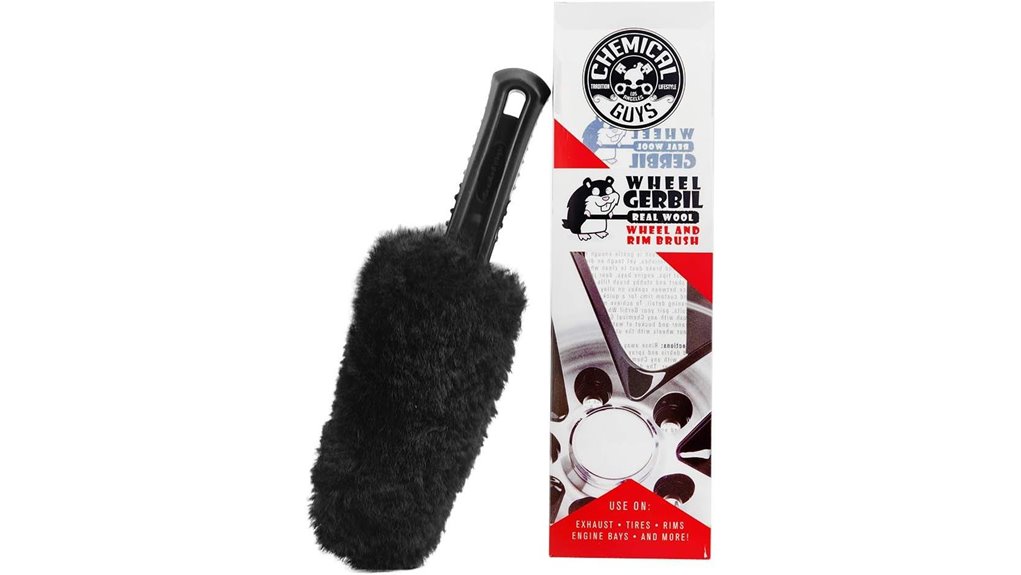
Chemical Guys’ Gerbil Wheel & Rim Brush is best for detail-focused owners who want gentle cleaning. Its soft natural fibers help prevent scratching on polished, painted, powder-coated, and chrome wheels, while the long bristles reach tight spokes and intricate contours. The lightweight stick-style brush offers good control and reduces fatigue during longer cleaning sessions. It also suits tires, exhaust tips, and engine bays, making it a practical all-around detailing tool. By holding cleaning product well, it removes brake dust and grime effectively without compromising delicate finishes or surface integrity.
Best For: Car enthusiasts, detailers, and DIY owners who want a gentle, effective brush for cleaning wheels, tires, exhaust tips, and engine bays without scratching delicate finishes.
Pros:
- Soft natural bristles help prevent scratching on polished, painted, powder-coated, and chrome surfaces.
- Long, flexible bristles reach tight spokes, contours, and other hard-to-clean areas.
- Lightweight stick design with an ergonomic handle improves control and reduces hand fatigue.
Cons:
- Soft bristles may not be aggressive enough for heavily baked-on brake dust or stubborn grime.
- Brush size and shape may be less efficient for very large wheel faces.
- Natural fiber bristles may require more care to keep them in good condition over time.
ABN Car Wheel Rim Cleaning Brush Kit
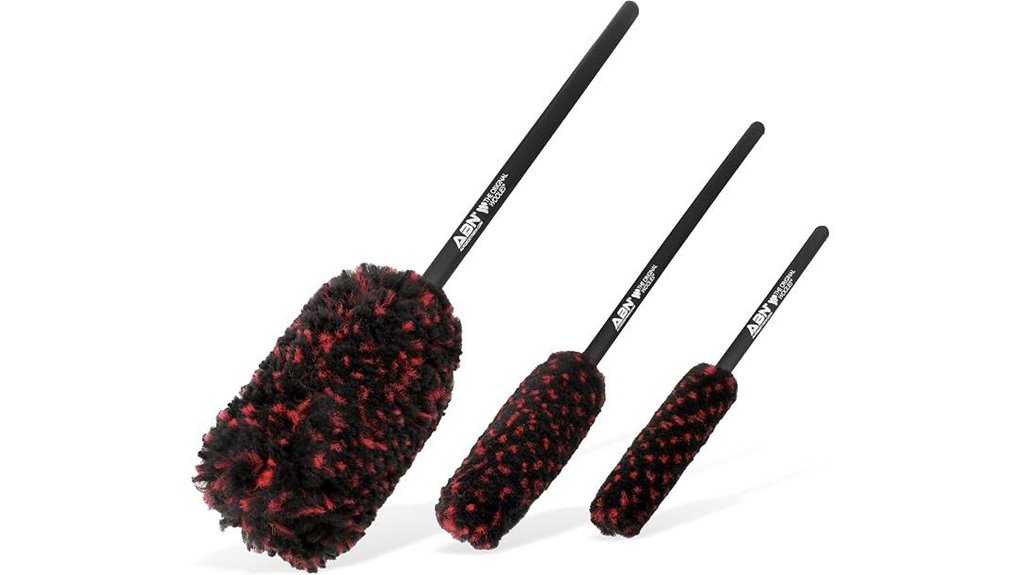
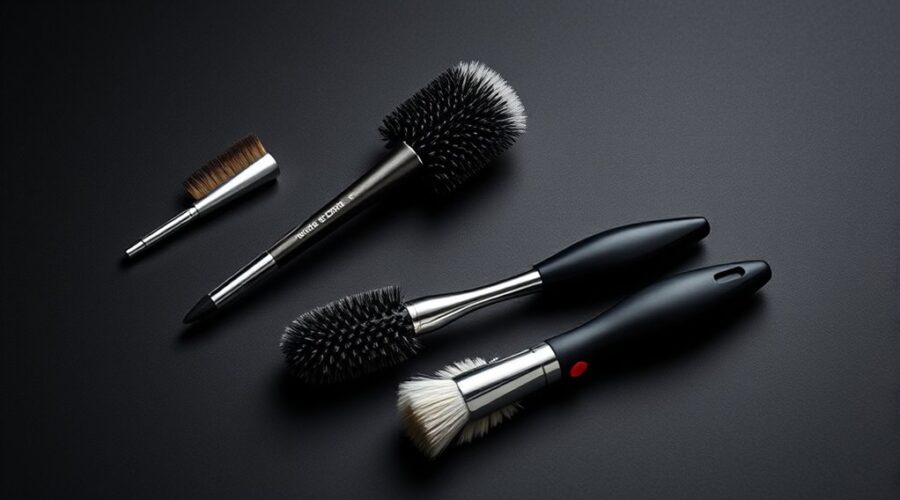
Built for detail-oriented drivers, the ABN Car Wheel Rim Cleaning 3-Piece Kit covers every tight wheel gap. It includes 18-inch, 12-inch, and 8-inch brushes, giving targeted reach for deep wheel wells, spokes, grills, door jambs, and engine bays. Made in America by American Brush Makers, it uses dense synthetic wool microfiber ends and polypropylene handles. The metal-free build helps prevent scratches and wheel cleaner splatter. Each brush is flexible, lint-free, easy to rinse, and quick to air dry, making grime and brake dust removal straightforward without dirtying hands.
Best For: Detail-oriented drivers who want a versatile, scratch-free brush kit for cleaning wheels, rims, grills, spokes, door jambs, and other tight spaces.
Pros:
- Three brush sizes provide targeted cleaning for deep wheel wells, medium gaps, and narrow spaces.
- Metal-free, synthetic microfiber construction helps prevent scratches and wheel cleaner splatter.
- Easy to rinse, lint-free, and quick to air dry for convenient reuse.
Cons:
- Primarily designed for detailed cleaning, so it may be less useful for general-purpose car washing.
- The soft brush ends may not be ideal for extremely stubborn buildup compared with more aggressive tools.
- Requires rinsing and drying after use to maintain performance.
Factors to Consider When Choosing Wheel Brushes 2026: Reach Every Spoke Safely
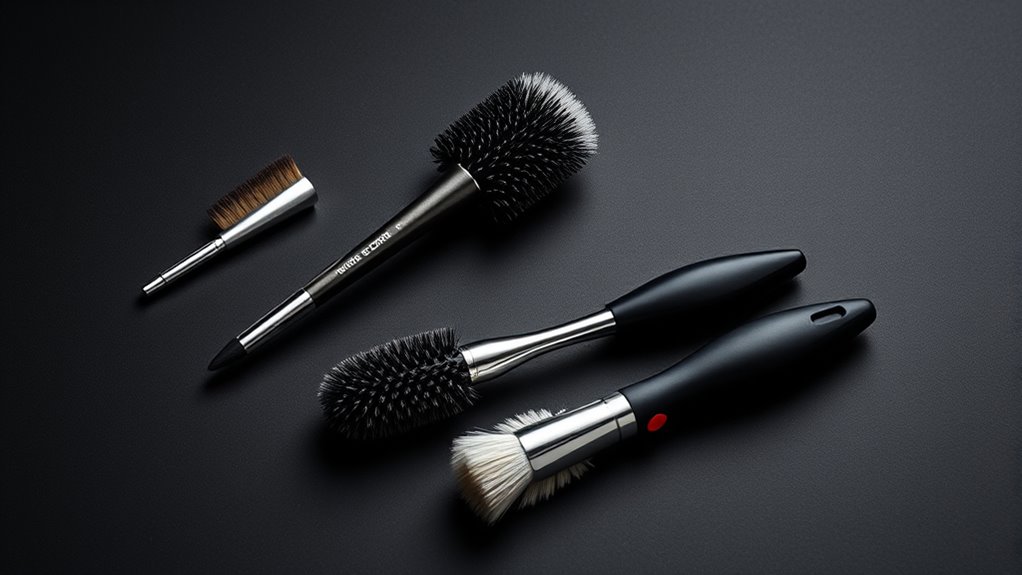
Wheel brushes should be judged by how well they access the wheel barrel and reach across each spoke without strain. Scratch-free materials, flexible brush heads, and enough handle length all help protect finishes while improving coverage. A comfortable grip also supports better control, especially during longer cleaning sessions.
Wheel Barrel Access
For deep wheel-barrel access, the most effective brushes combine a flexible shape with enough length to reach behind spokes and into narrow gaps without forcing contact. A pliable body helps the brush conform to curved barrel surfaces, improving coverage where rigid tools cannot fit. Openings larger than 1.5 inches by 2.5 inches are especially useful because they permit smoother movement through varied wheel designs. Brushes with soft bristles or microfiber covers support non-scratch cleaning, protecting delicate finishes inside the barrel. Multiple size options or interchangeable heads add precision when working around cramped areas and irregular contours. Longer models, particularly those over 12 inches, extend reach into deeper sections and reduce awkward hand positioning. Together, these features improve access while maintaining control and surface safety.
Spoke Reach Length
Reach length is a key factor because longer wheel brushes can access deeper barrels and the tight spaces behind spokes more effectively. For most wheels, an ideal length of about 10 to 18 inches offers enough reach for thorough cleaning without becoming unwieldy. Brushes with an extendable handle add useful range, helping reach recessed areas while reducing awkward hand positions. It also helps if the brush can fit openings wider than 1.5 inches, since that supports broader wheel designs and sizes. Flexible construction further improves coverage by letting the brush follow the contours of spokes and rims. In practice, the best reach length balances access, control, and ease of movement, so every spoke can be cleaned efficiently and safely.
Scratch-Free Materials
Scratch-free materials are essential when choosing a wheel brush, especially for polished or painted finishes that can show damage easily. Soft microfiber or natural-fiber constructions are preferred because they clean effectively without leaving marks on delicate surfaces. Dense synthetic wool microfiber adds another advantage by lifting dirt while maintaining a gentle contact point. Wheel brushes with no exposed metal parts further reduce the chance of accidental scratching during use. A secure ergonomic grip also supports steadier handling, which helps limit contact errors that could mar the finish. During cleaning, frequent rinsing keeps road grime from hardening into abrasive particles. Together, these material choices and maintenance habits help preserve wheel appearance while allowing thorough cleaning across sensitive surfaces and intricate areas.
Brush Head Flexibility
Beyond material choice, brush head flexibility plays a major role in safe, effective wheel cleaning. It allows bristles to conform to spokes, curves, and complex patterns without scuffing delicate surfaces. This adaptability improves access to tight corners, behind spokes, and deep inside wheel barrels, where dirt often accumulates. When paired with a longer reach, a flexible head reduces awkward angles and the need for excessive bending, making detailed cleaning more efficient. Soft microfiber and similar materials further support a non-scratch design, helping preserve polished, painted, and chrome finishes. For intricate wheels, flexibility is not merely convenient; it is essential for thorough cleaning and surface protection.
Handle Grip Comfort
A comfortable handle grip can make a noticeable difference during longer wheel-cleaning sessions, reducing fatigue and improving control as each spoke and barrel section is reached safely. Ergonomic grips with rubberized surfaces help maintain a secure hold, even when hands are wet or working in tight spaces. Handle length also affects comfort, since a longer design can extend reach while limiting wrist and arm strain. Some brushes add dual grip positions, giving users flexibility to choose a hold that suits the angle and cleaning method. Soft, padded grips further improve comfort by absorbing vibration and minor shocks, especially on uneven surfaces. Together, these features support steadier handling, smoother movement, and more efficient cleaning without unnecessary discomfort.
Size Compatibility
Size compatibility determines how effectively a wheel brush can reach between spokes, into barrel sections, and around tight wheel designs without causing damage. Brushes that fit openings larger than 1.5 inches by 2.5 inches offer broader versatility across different wheel styles, while longer options, such as 13.25 inches, improve access to recessed areas behind spokes. Flexibility also matters, because a brush that bends to match complex contours can clean more thoroughly without stressing delicate finishes. Multiple brush sizes, including 8-inch, 12-inch, and 18-inch versions, help cover wheel wells and narrow gaps with better precision. Proper sizing reduces the chance of scratches by keeping cleaning surfaces away from exposed metal components and allowing controlled contact with the wheel face, spoke edges, and deeper crevices.
Easy Cleaning Care
Easy cleaning care matters because a wheel brush that is simple to maintain stays effective and hygienic over time. Removable or machine washable covers make it easier to remove grime after use, helping preserve performance between detailing sessions. Flexible brush bodies are useful as well, since they can weave through spokes and recesses without scraping delicate finishes. Soft bristles or microfiber are preferred for non-scratch cleaning on coated, polished, or painted wheels. Length also affects convenience; longer handles improve access to deep wheel wells and tight inner areas. During use, rinsing the brush regularly reduces buildup, while worn covers or bristles should be replaced promptly. These maintenance habits extend tool life and keep cleaning results consistent.
Frequently Asked Questions
How Often Should Wheel Brushes Be Replaced?
Wheel brushes should be replaced whenever the bristles become bent, frayed, or contaminated enough to scratch surfaces. In regular use, that often means every few months to a year, depending on frequency and cleaning chemicals. A worn brush loses effectiveness and can trap grit. If it starts shedding bristles, holding odors, or no longer reaches tight areas well, replacement is advisable sooner rather than later for safe, thorough wheel cleaning.
Can Wheel Brushes Scratch Chrome Finishes?
Yes, wheel brushes can scratch chrome finishes if they are too abrasive, dirty, or used with excessive pressure—why risk a mirror-like surface? Soft, flagged-bristle brushes and clean tools reduce the chance of damage. Chrome is durable, yet it is not immune to grit trapped in brush fibers. Gentle technique, frequent rinsing, and proper wheel-safe products help preserve the finish while still removing grime effectively.
Are Wheel Brushes Safe for Matte-Painted Rims?
Wheel brushes can be safe for matte-painted rims only if they use ultra-soft, non-abrasive bristles and are kept clean. A detached assessment notes that stiff or dirty brushes can leave sheen changes, micro-scratches, or visible marks on matte finishes. Gentle pressure, pH-balanced wheel cleaner, and separate brushes for wheels reduce risk. Soft microfiber or boar’s-hair style brushes are generally safer than hard nylon alternatives on delicate coatings.
What Brush Size Fits Narrow Wheel Spokes Best?
Like a key made for a narrow lock, a slim brush fits narrow wheel spokes best. A head around 0.75 to 1.25 inches wide usually reaches tight gaps without snagging or forcing contact with the rim. A flexible, tapered profile helps too, especially on intricate spoke designs. Wider brushes can miss corners or rub surfaces unnecessarily, while smaller brushes offer better control and cleaner access in confined spaces.
How Do You Disinfect a Wheel Brush After Use?
A wheel brush is disinfected by rinsing away grime first, then soaking or spraying the bristles with a diluted disinfectant or mild bleach solution suitable for the brush material. It should remain wet for the product’s recommended contact time, then be rinsed thoroughly and air-dried completely. If the handle or ferrule is nonporous, those parts should also be wiped down. Proper drying helps prevent mold, odors, and bacterial growth.
Conclusion
In the end, the best wheel brush depends on the balance between reach, softness, and control. The Woollywormit kit, Mothers wheel and fender brush, Chemical Guys Gerbil, and ABN brush set each offer a different way to clean safely and effectively. Why settle for a brush that misses tight spaces or risks scratches? Choosing the right tool helps keep wheels cleaner, protects the finish, and makes detailing easier for the long run.