Old sports cars, especially those built before the 1980s, occupy a distinct place in automotive history. From early lightweight road cars to the refined coupes and roadsters of the 1960s, they were shaped by simple rear-wheel-drive layouts and a focus on handling. Their appeal rests on design, performance, and rarity. Yet the differences between eras, body styles, and the most collectible models reveal a story that is more complex than it first appears.
What Is an Old Sports Car?
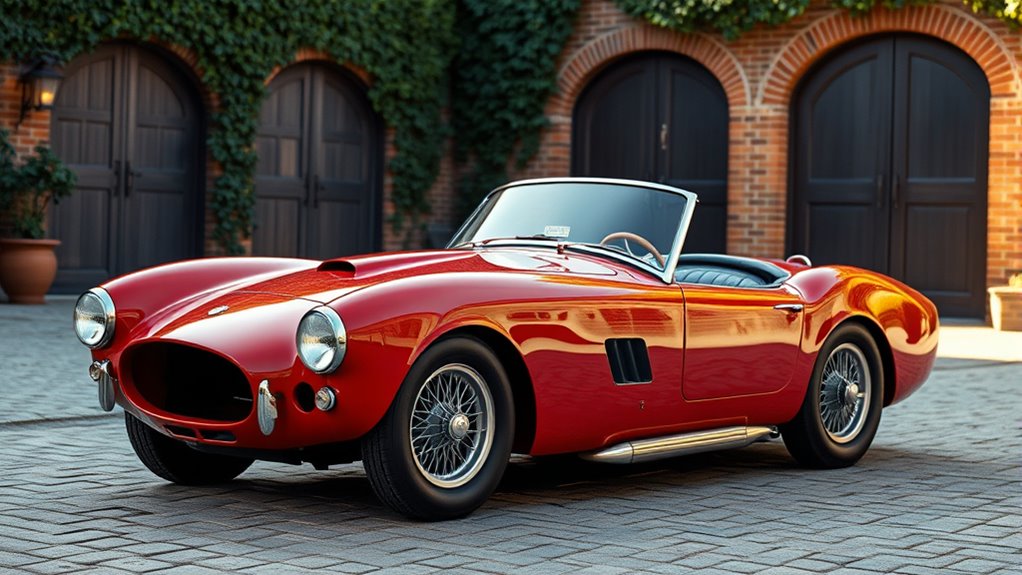
An old sports car typically refers to a vehicle produced before the 1980s, built with a lightweight design, sleek styling, and an emphasis on performance and handling.
In historical terms, the old sports car emerged as a distinct machine for speed, control, and personal movement beyond routine transport. Its appeal rested on engineering rather than ornament alone.
Rear-wheel drive was common, and engine placement could vary between front-engine and mid-engine forms, shaping handling characteristics that rewarded skilled drivers.
Iconic examples such as the Jaguar E-Type, Porsche 911, and AC Cobra helped define the category through mechanical balance and visual force.
Among classic cars, these machines are valued not only for performance but also for collectibility, since limited production and celebrated design increase desirability.
The result is a class of automobiles that still suggests freedom, precision, and the open road to those who study them.
Old Sports Car History by Era
The history of old sports cars can be traced through distinct eras that each advanced design, performance, and cultural appeal in different ways.
In the Vintage Era, from 1919 to 1929, AC Cars and Alfa Romeo built lightweight two-seater models that established the template for old sports cars focused on agility and purpose.
The Pre-War Era, 1930 to 1939, brought the MG Midget and Bugatti Type 57, even as the Great Depression reduced output and narrowed markets.
The Post-War Growth Era, 1939 to 1959, revived demand; the Porsche 356 and Mercedes-Benz 300 SL set new standards.
- 1960–1979: lightweight roadsters such as the Jaguar E-Type broadened appeal.
- 1960–1979: the Lamborghini Miura pushed design toward greater speed.
- 1980 to present: technical details evolved through turbocharging and hybrid systems, seen in the McLaren F1 and Porsche 918 Spyder.
Engine Layouts and Handling Traits
Engine layout has long shaped the character of old sports cars, with most traditional examples relying on rear-wheel drive in front-engine or mid-engine form to achieve balance, responsiveness, and a more engaging driving feel.
Across decades, engine layouts determined handling characteristics as much as horsepower did. Front-engine, rear-wheel drive machines remained common because they offered clear steering, predictable breakaway, and freedom to tune chassis balance.
Mid-engine layouts, placed nearer the center, often delivered superior cornering by improving weight distribution and reducing polar moment.
Rear-engine designs were rare, yet the Porsche 911 proved that unusual placement could create distinctive responses, demanding skill while rewarding precision.
Front-wheel drive appeared mainly in ordinary cars, though a few performance models used it for traction advantages.
Since the 1990s, all-wheel drive has expanded in sports cars, improving acceleration and stability on varied roads, while preserving the mechanical character that enthusiasts prize.
Roadsters, Coupes, and 2+2 Bodies
While body style has often been as important to old sports cars as mechanical layout, roadsters, coupes, and 2+2 designs each served distinct priorities in the evolution of performance motoring.
Roadsters, usually two-seaters without a fixed roof, reduced weight and sharpened agility, a design favored in the Triumph Spitfire and Porsche Boxster.
Coupes, with fixed roofs and two doors, offered a lower, more stable profile; the Ferrari 488 Pista and Jaguar F-Type reflected that balance of speed and practicality.
2+2 bodies added rear seats for limited extra space while preserving a sporting stance, as in the Aston Martin V8 Vantage.
- Roadsters emphasized open-air freedom and quick responses.
- Coupes pursued high-speed stability and structural rigidity.
- 2+2 bodies broadened the classic car audience without abandoning sports car character.
Many models, including the Austin Healey 3000, appeared in both roadster and coupe form, showing how body design shaped performance, comfort, and consumer choice.
Most Collectible Old Sports Cars
Among the most collectible old sports cars, a small group has achieved lasting fame through rarity, racing success, cultural association, and distinctive design. The 1962 Ferrari 250 GTO stands foremost: only 39 were built, and its racing pedigree has driven auction prices beyond $48 million.
The 1963 Porsche 911 introduced a rear-engine formula and clean technical details that made early examples a classic among collectors. The 1957 Chevrolet Corvette, often called America’s first sports car, remains prized, especially fuel-injected versions valued for performance and style.
The 1963 Porsche 911’s rear-engine design and the 1957 Corvette’s style helped make them collector favorites.
The 1964 Aston Martin DB5 gained enduring appeal through elegant lines and James Bond association, lifting values steadily. The 1970 Porsche 917, a dominant endurance racer and star of Le Mans, also ranks among the most collectible sports cars.
Together, these machines illustrate how scarcity, competition, and image combine to shape the market for a classic automobile.
Frequently Asked Questions
Which Is the Oldest Sports Car?
The oldest sports car is often considered the 1910 Prince Henry Vauxhall 20 hp. Its racing heritage, engine performance, and design evolution shaped vintage models from iconic brands, increasing collector value among enthusiasts.
What Is the $3000 Rule for Buying Cars?
The $3000 rule, a modern compass like Odysseus’s chart, urges budget considerations under $3000. It favors used, even classic models, while weighing maintenance tips, resale value, test drives, insurance costs, and total ownership.
What Is a Poor Man’s Supercar?
A poor man’s supercar is an affordable performance car delivering near-exotic thrills through classic designs, engine tuning, racing heritage, and iconic models, often inviting budget upgrades; it offers liberation from luxury pricing without sacrificing spirited driving.
What Is the Crappiest Car of All Time?
The crappiest car may be the Yugo GV, a monument of automotive failures. Its worst car reputation arose from design disasters, reliability issues, and harsh consumer reviews, making it one of history’s great historical blunders.
Conclusion
In the history of motoring, old sports cars stand as polished relics of speed, their aluminum skins and low-slung frames symbolizing an era when engineering and elegance moved in tandem. From early roadsters to later coupes, they traced a line of mechanical evolution shaped by rear-wheel drive, light weight, and careful balance. Their engines, like beating hearts, powered a legacy preserved in the Ferrari 250 GTO, Porsche 911, and other enduring icons.