The best head gasket sealer is a temporary option at best: BlueDevil and K-Seal are the most common pour-in products, Steel Seal is sold in cylinder-count versions, and all of them are intended for small coolant leaks, not a failed engine. Confirm the head gasket is actually the problem first, because a sealer will not fix a warped head or a badly damaged engine.
Disclosure: As an Amazon Associate we earn from qualifying purchases. If you buy through links on this page we may earn a commission at no extra cost to you.
This guide is based on manufacturer specs and listing information, not hands-on testing. Results vary widely with the size and location of the leak, so many mechanics treat sealers as a stop-gap to get you to a proper repair.
Quick Comparison
| Product | Size | Intended for |
|---|---|---|
| Steel Seal 6-cylinder | Check listing | 6-cylinder liquid-cooled engines |
| K-Seal ST3501 | 16 oz | Small head gasket and cooling leaks |
| BlueDevil 38386 | 1 quart | Gasoline and diesel engines |
| K-Seal ST5516 | 16 oz | Heavy-duty and larger engines |
Steel Seal Blown Head Gasket Fix, 6 Cylinder
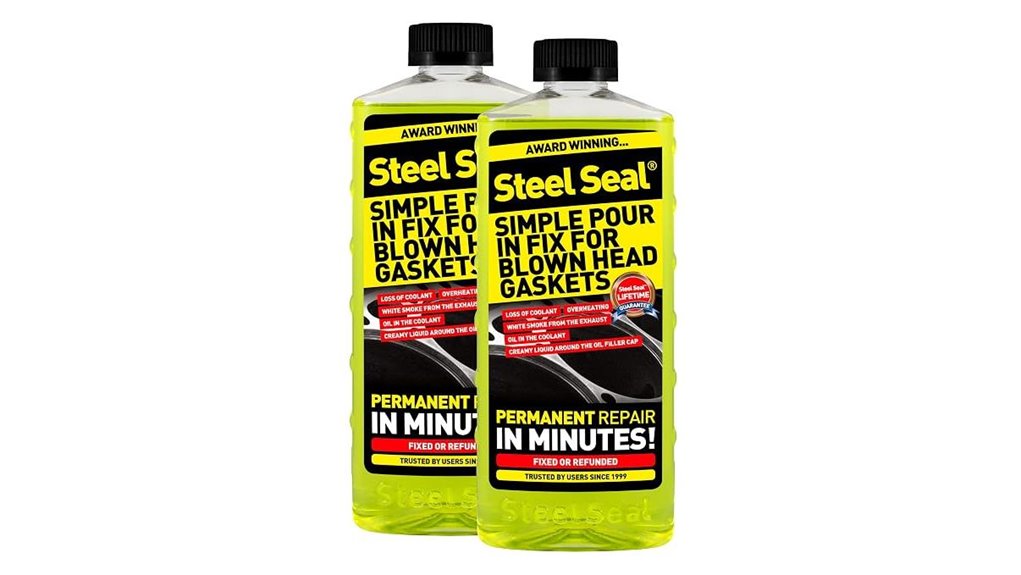
Steel Seal is a pour-in sealant sold in versions for different cylinder counts; this listing is the 6-cylinder version (6CYL001USA). The maker markets it for head gasket, cracked head, heater core and freeze plug leaks, and says it is a permanent repair. That is a marketing claim, and owners report mixed results. Match the version to your engine and check the instructions.
Best for: Owners of 6-cylinder liquid-cooled engines who want to try a sealer before a repair.
Pros
- Pour-in application
- Version made for 6-cylinder engines
- Used on multiple types of cooling leak, per the maker
Limitations
- Only for the matching engine size
- Results vary
- Permanence claims are unproven
K-Seal ST3501 Pour & Go Head Gasket Sealer (16 oz)
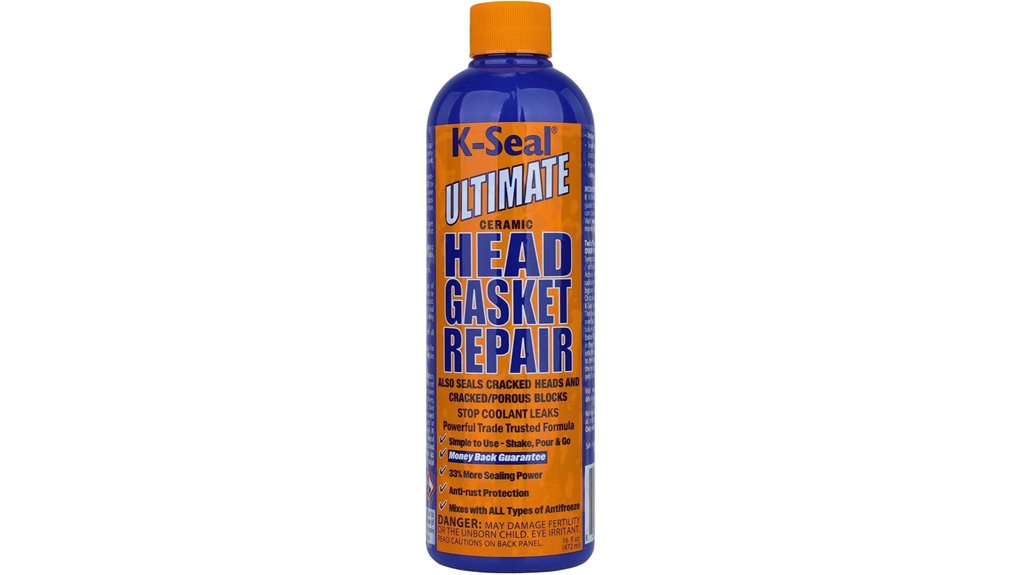
K-Seal uses ceramic micro-fibres in a pour-and-go formula for small coolant leaks. The listing claims extra sealing power and leaks up to about 0.64 mm, but those are the maker’s figures. It works best on small leaks and may not stop larger failures.
Best for: Small leaks where you want a quick, one-step attempt.
Pros
- One-step pour-and-go
- Works with common coolants, per the maker
- Small leak focus
Limitations
- Not for large leaks
- Does not repair a warped head
- Results vary
BlueDevil Products 38386 Head Gasket Sealer (1 quart)
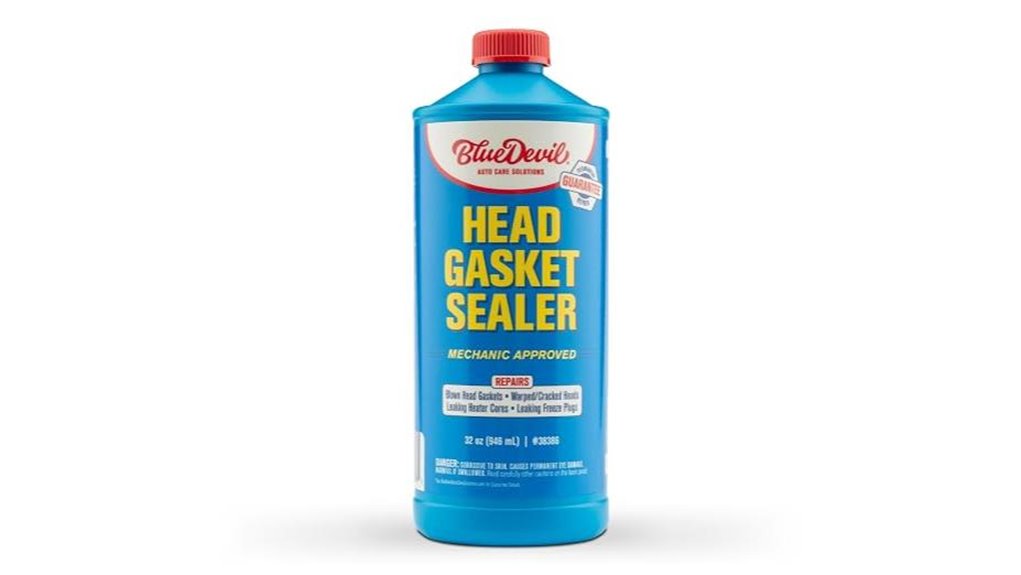
BlueDevil is a liquid sealant that the maker says contains no solid particles, so it is less likely to clog. It is marketed for gasoline and diesel engines and for head gasket, cracked head and heater core leaks. Treat any “permanent” language with caution, and check the warranty terms yourself.
Best for: Owners who prefer a non-particle sealant for a suspected small gasket leak.
Pros
- Liquid formula, no solid particles, per the maker
- Gasoline and diesel use, per the maker
- Easy to use
Limitations
- Not a mechanical repair
- Results depend on the damage
- May be more than a small leak needs
K-Seal ST5516 Coolant Leak Repair (16 oz)
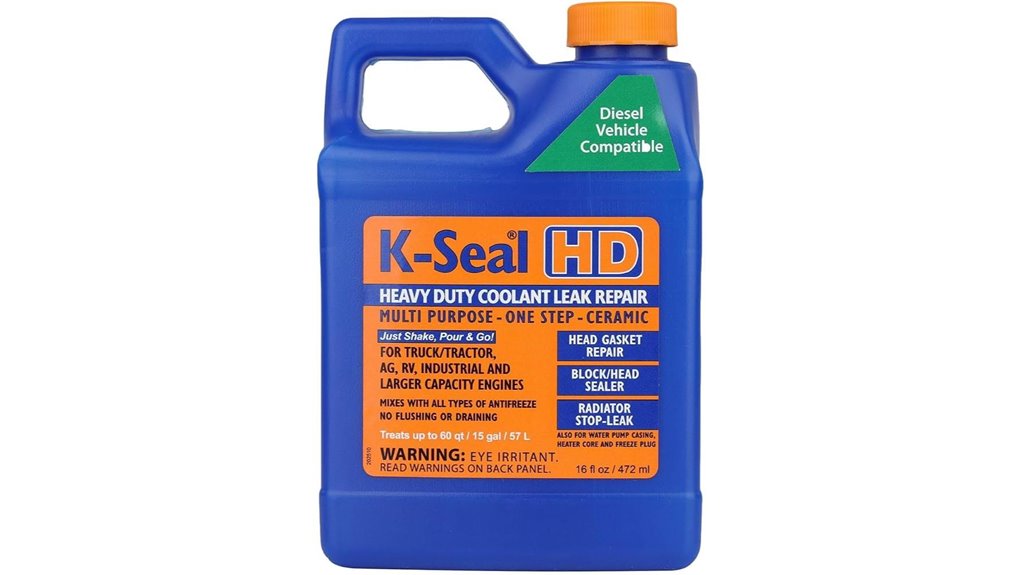
A multi-purpose K-Seal sold for larger and commercial engines. The listing says it works on leaks in radiators, freeze plugs, blocks, heater cores and water pumps, and requires no flush. It is more a general coolant leak product than a head-gasket-only fix.
Best for: Larger engines and mixed cooling-system leaks.
Pros
- Broad use on cooling leaks, per the listing
- No flush needed, per the listing
- Heavy-duty positioning
Limitations
- Not for large holes
- Temporary in many cases
- Does not replace a repair
How to Choose a Head Gasket Sealer
- Confirm the problem: signs include white exhaust smoke, milky oil, steady coolant loss with no visible leak, bubbles in the coolant and overheating. A shop can run a block test or pressure test.
- Engine fit: check cylinder count, gasoline or diesel, and coolant type.
- Leak size: sealers only suit small seepage.
- Risk: sealers can clog narrow passages in radiators and heater cores, so follow the label exactly.
When to skip a sealer
If the engine overheated badly, has milky oil, or loses lots of coolant, see a mechanic; sealer will not fix a warped head and can mask the issue. For minor radiator leaks see our radiator stop leak guide, flush neglected systems before further work with our engine flush picks, and look at oil additives only after the cooling system is sound.
Frequently Asked Questions
How long does a head gasket sealer last?
It varies from weeks to longer, depending on the leak, the engine and driving. Treat it as a temporary measure and plan a proper repair.
Can sealer damage my radiator or water pump?
It can if it clogs narrow passages or is misused. Follow the label exactly and consider flushing the cooling system afterwards if the maker allows.
Will head gasket sealer work on diesel engines?
Only if the label says it is suitable for diesels. Diesel engines run different pressures and the sealer is not a fix for serious damage.
Should I flush coolant before adding sealer?
Follow the product instructions. Some say to flush, while others say to leave the existing coolant in place.
Can I drive immediately after using sealer?
Usually not. Most products specify running the engine for a period so the sealer circulates and sets. Follow the label.