

The best carburetor cleaner for most jobs is an aerosol spray such as WD-40 Specialist, CRC 03077 or Berryman B-12, while a soak cleaner like Berryman B-9 Chem Dip handles heavily gummed parts off the engine.
Disclosure: As an Amazon Associate we earn from qualifying purchases. If you buy through links on this page we may earn a commission at no extra cost to you.
Five products are compared here from manufacturer and retailer listings, not hands-on testing. Always read the label for the materials, sensors and finishes the product is safe on, and wear eye and skin protection.
Quick answer: Quick spray clean: WD-40 Specialist, CRC 03077 or Berryman B-12 (20 oz, non-chlorinated per the maker). Heavy varnish on removed parts: Berryman B-9 Chem Dip with basket. Clogged jets: add the Mudder needle and brush kit. Spray cleaners are for carburetors and throttle bodies, not general sensors.
Carburetor cleaner comparison
| # | Product | Best for | Link |
|---|---|---|---|
| 1 |
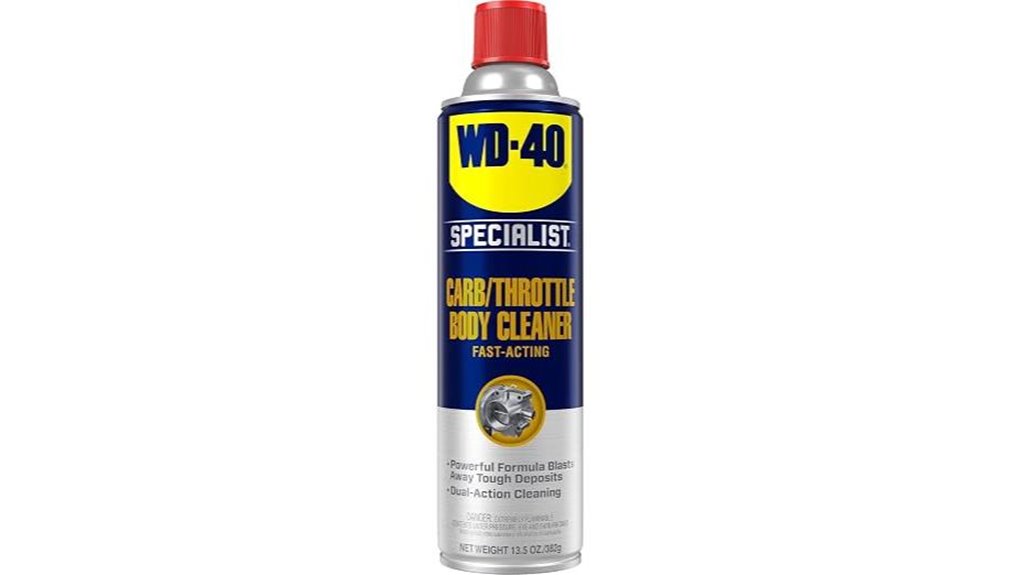 WD-40 Specialist Carb/Throttle Body & Parts Cleaner, 13.5 OZ |
Aerosol for carbs, throttle bodies and unpainted parts | Check price on Amazon |
| 2 |
 |
12 oz aerosol for carbs, chokes and intake parts | Check price on Amazon |
| 3 |
 |
Soak cleaner for removed, heavily gummed parts | Check price on Amazon |
| 4 |
 |
20 oz non-chlorinated spray for carb and throttle body | Check price on Amazon |
| 5 |
 |
Needle and brush set for clogged jets | Check price on Amazon |
WD-40 Specialist Carb/Throttle Body & Parts Cleaner, 13.5 OZ
WD-40 Specialist is a 13.5 oz aerosol for carburetors, throttle bodies and unpainted metal parts. The maker says it is safe on most unpainted metals and that incidental contact will not affect oxygen sensors or catalytic converters.
- Format: 13.5 oz aerosol
- Use: Carburetors, throttle bodies, unpainted metal parts, small engines
- Compliance: Listing says 50-state VOC compliant; check Canadian and provincial rules
Best for: Cleaning varnish and carbon from a carb or throttle body on cars and small engines.
Pros
- Fast spray cleaning
- Safe on most unpainted metals per the maker
- Wide use on cars, bikes and outdoor power equipment
Limitations
- Not for painted surfaces
- Aerosol is less precise
- Needs ventilation and gloves
CRC Carb & Choke Cleaner Aerosol, 12 oz
CRC 03077 is a 12 oz aerosol for gum, varnish and deposits in carburetors and choke systems. CRC also lists it for automatic chokes, EGR valves, heat risers, intake parts and crankcase breather elements.
- Format: 12 oz aerosol, model 03077
- Targets: Gum, varnish and deposits
- Also listed for: Chokes, EGR valves, heat risers, intake parts, breather elements
Best for: DIYers who want an affordable, well-known aerosol.
Pros
- Brand with wide parts-store availability
- Listed for several intake components
- Low-VOC claim per the listing
Limitations
- Aerosol, so less useful for big soak jobs
- Mostly for carb and intake cleaning
- Check the label for flammability and plastic compatibility
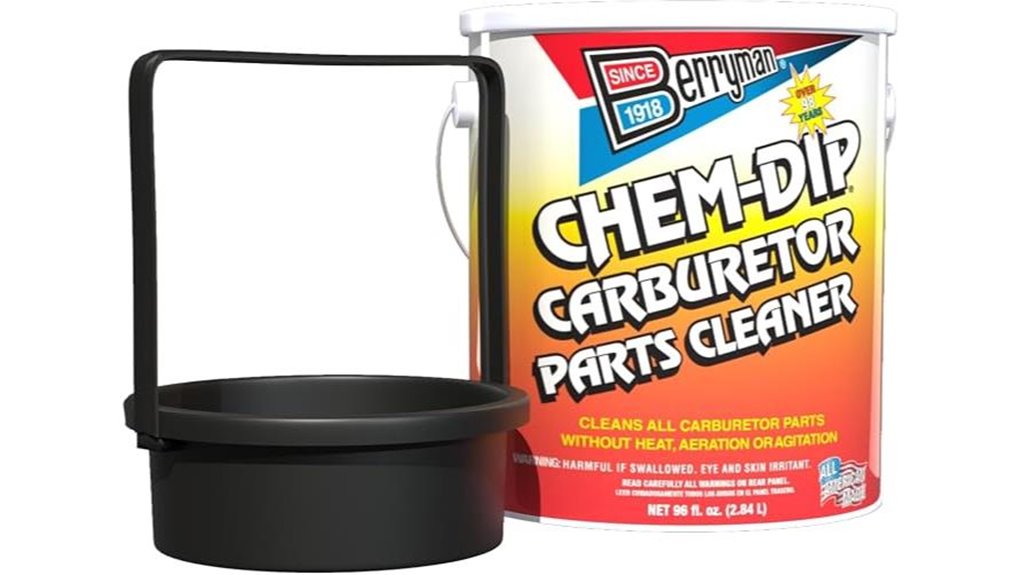
Berryman B-9 Chem Dip Parts Cleaner with Basket
Berryman B-9 Chem Dip is an immersion cleaner sold in a 3/4-gallon (3-quart) pail with a basket. The listing says it removes gum, varnish, sludge, hard carbon, oil and grease, and that it is safe on plastic, rubber and most painted surfaces. Confirm those claims on the label and wear chemical-resistant gloves.
- Format: 3/4 gallon (3 qt) pail with basket
- Method: Immersion soak; carburetor must be disassembled and rubber/plastic parts handled per the label
- Safety: Use in a ventilated area; follow the SDS
Best for: Rebuilds and heavily gummed carbs, valves and small parts.
Pros
- Deep cleaning for parts you can remove
- Basket for soaking
- Handles gum and varnish
Limitations
- Soaking takes time
- Needs disassembly
- Small pail for big shop jobs
Berryman B-12 Carburetor, Choke and Throttle Body Cleaner
Berryman B-12 is a 20 oz aerosol for carburetors, chokes and throttle bodies. Berryman describes it as non-chlorinated and safe for oxygen sensors and catalytic converters, and it can be sprayed without disassembly.
- Format: 20 oz aerosol
- Formula: Non-chlorinated, per Berryman
- Use: Carburetors, chokes, throttle bodies without disassembly
Best for: Cleaning a carb or throttle body in place on modern or older engines.
Pros
- Large can
- Non-chlorinated formula
- No disassembly needed
Limitations
- Less thorough than a soak on heavy gum
- Needs ventilation and eye protection
- Do not spray on sensors or wiring
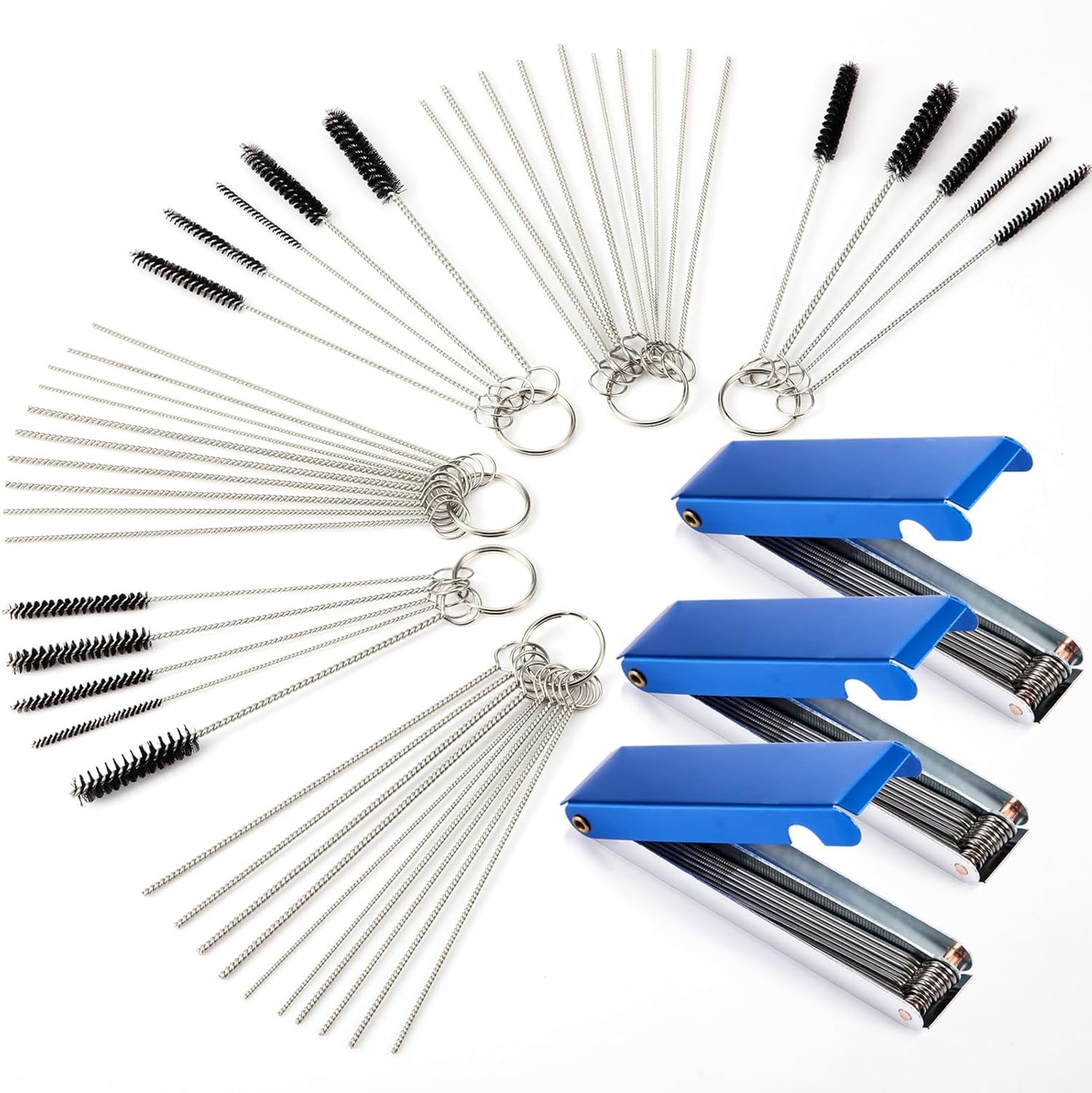
Mudder 9-Piece Carburetor Cleaning Kit
The Mudder kit is a hand-tool set, not a chemical: stainless needle cleaners in five sizes (1.1 to 2.1 mm), five nylon brushes and a storage box. It is aimed at motorcycle and small-engine carburetor jets.
- Needles: 1.1, 1.4, 1.6, 1.8 and 2.1 mm
- Brushes: 2, 3, 4, 5 and 7 mm nylon
- Includes: Aluminum storage box and key ring
Best for: Clearing physically clogged jets alongside a spray or dip cleaner.
Pros
- Reaches small passages
- Multiple needle sizes
- Compact kit
Limitations
- Does not dissolve varnish alone
- Can scratch jets if used roughly
- For disassembled carbs
How to choose the best carburetor cleaner
- Spray or soak: sprays are quick for light deposits; soak cleaners work better on parts you can remove.
- Materials: check the label for rubber, plastic, paint and sensor compatibility before spraying.
- Engine type: carb cleaner is for carburetors and throttle bodies. For modern fuel injection, use products labelled for that job.
- Regulations: VOC rules vary; check what is sold and allowed where you live.
How to use carburetor cleaner safely
- Work outdoors or in a ventilated space with the engine off and cool, away from flames and sparks.
- Wear chemical-resistant gloves and eye protection.
- Spray the carb or throttle body as the label directs, then wipe and let it dry.
- Use needles or brushes gently on jets, then reassemble with fresh gaskets if needed.
- Dispose of rags and empty cans according to local rules.
Carburetor cleaner FAQ
Can carburetor cleaner damage plastic or rubber parts?
Yes, some can. Strong solvents may swell, crack or discolour plastics and rubber. Check the label and keep spray off sensitive parts.
How often should I clean a carburetor?
Clean it when symptoms such as rough idle, hard starting or stalling appear. Small engines stored for long periods may need cleaning before each season, and fuel stabilizer helps.
Is aerosol carb cleaner safe for fuel-injected engines?
Not for general use. Use it only on parts the label allows, such as a throttle body, and keep it off sensors, wiring and plastic parts. Follow your vehicle manual.
Do carburetor cleaners work on motorcycle carbs?
They help with light varnish, but badly gummed carbs usually need disassembly and a soak, plus cleaning of the jets.
What safety gear should I wear?
Chemical-resistant gloves and safety goggles, plus long sleeves. Work in a ventilated area, away from flames, and avoid skin contact.
Bottom line
Use WD-40 Specialist, CRC or Berryman B-12 for quick spray cleaning, Berryman B-9 for soaking removed parts, and the Mudder kit when jets are physically blocked. Links go to Amazon.com, so check availability, shipping to Canada and any limits on shipping aerosols.
Related reading
- Best fuel injector cleaners
- Best fuel additives for MPG and engine health
- Best fuel stabilizers
- Best engine flush