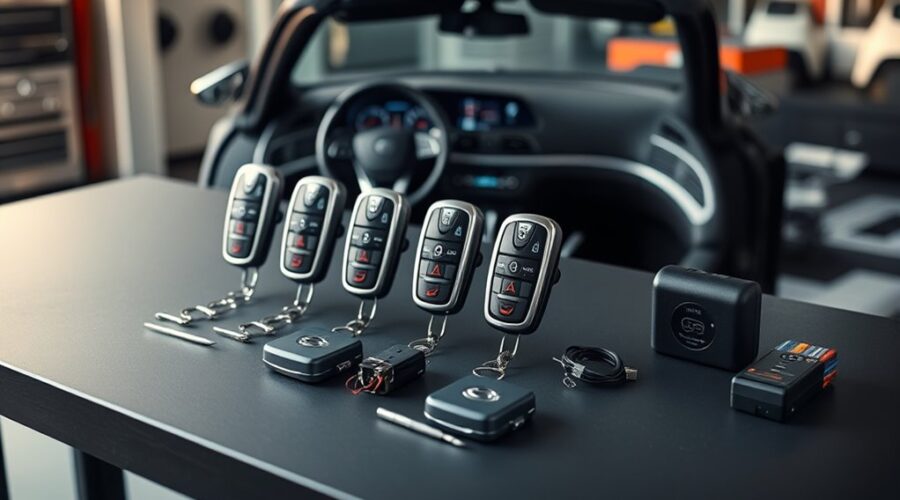
Choosing the right aftermarket remote start in 2027 depends on more than convenience. Compatibility with specific vehicles, reliable range, and security features like code-hopping all matter. Some kits focus on simple key-start installs, while others add two-way confirmation or smartphone control. From Viper and Avital to Compustar and vehicle-specific Start-X options, the strongest picks are not always the most obvious. A closer look reveals which systems stand out for the right reasons.
Viper 4105V 1-Way Remote Start System
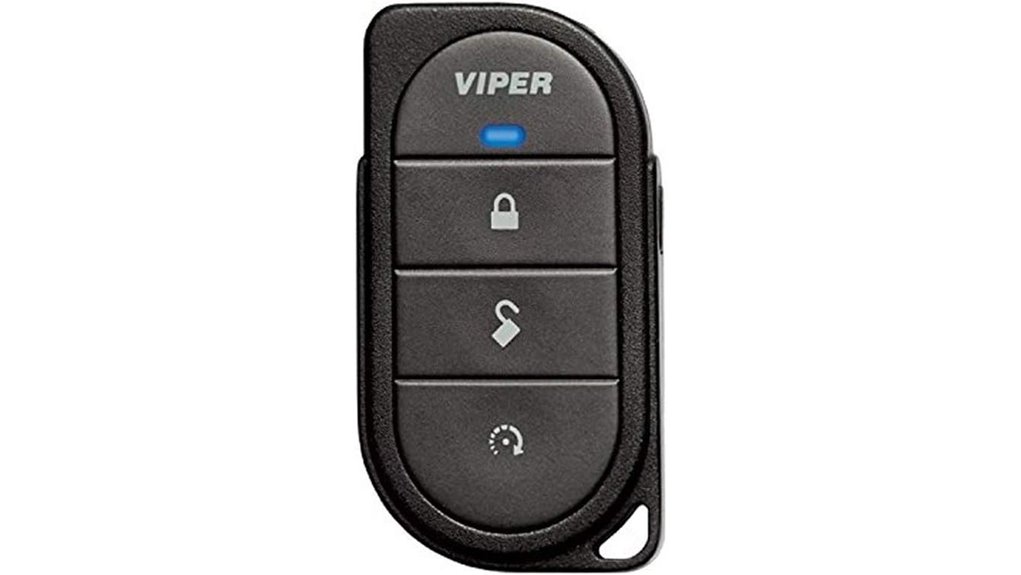
The Viper 4105V 1-Way Remote Start System is a strong fit for drivers of automatic, fuel-injected, diesel, or hybrid vehicles who want reliable remote start and keyless entry without unnecessary complexity. It offers up to 1,500 feet of range and includes two four-button transmitters for locking, opening, starting, and locating the vehicle. Clone-Safe code-hopping adds security, while two auxiliary channels support trunk release or window control. Panic mode is available with horn wiring, and Viper Smart Start compatibility extends control through a smartphone.
Best For: Drivers of automatic, fuel-injected, diesel, or hybrid vehicles who want a straightforward remote start and keyless entry system with long range and smartphone expandability.
Pros:
- Up to 1,500 feet of range for convenient remote starting and locking
- Includes two 4-button transmitters with remote start, lock/unlock, and car finder functions
- Clone-Safe code-hopping plus Viper Smart Start compatibility add security and control options
Cons:
- Designed for automatic transmissions only, so it is not a fit for manual vehicles
- Panic mode requires horn circuit connection, which may add installation complexity
- Basic 1-way system, so it does not provide two-way confirmation feedback
Avital 4105L 1-Way Remote Start System with 4-Button Remote
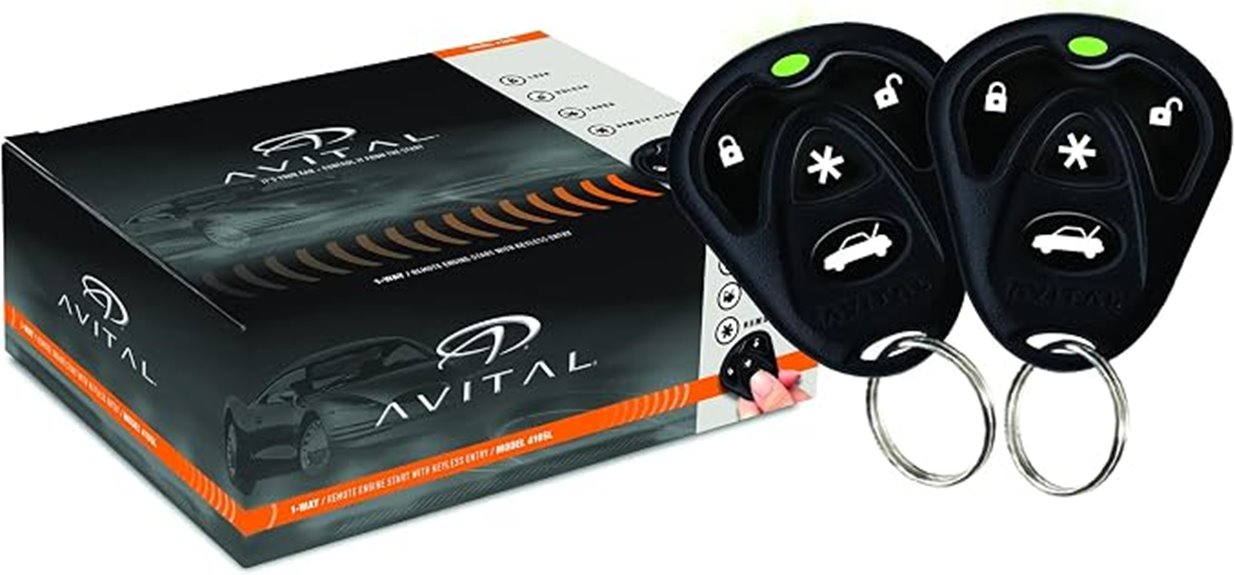
With two 4-button remotes and up to 1.5 miles of range, the Avital 4105L suits drivers wanting reliable control from farther away. This 1-way remote start security system supports lock, open, trunk release, and remote start functions, while a fault-proof starter interrupt helps deter hot-wiring. A dual-zone impact sensor can trigger chirps or siren alerts after impacts. Directed SmartStart compatibility adds smart-device integration. The unit also uses a dedicated A-to-D converter, onboard relays, D2D serial data port, and Bitwriter programming. Avital backs it with an 18-month warranty and a 30-day return guarantee.
Best For: Drivers who want a long-range 1-way remote start and security system with added anti-theft protection and smart-device compatibility.
Pros:
- Up to 1.5 miles of range for convenient control from a distance
- Includes useful functions like lock, unlock, trunk release, and remote start
- Fault-proof starter interrupt and dual-zone impact sensor add security
Cons:
- 1-way system does not provide confirmation back to the remote
- Installation may be more involved than simpler plug-and-play accessories
- SmartStart compatibility may require additional equipment or setup
EASYGUARD EC003N-K Car Alarm System with Remote Start
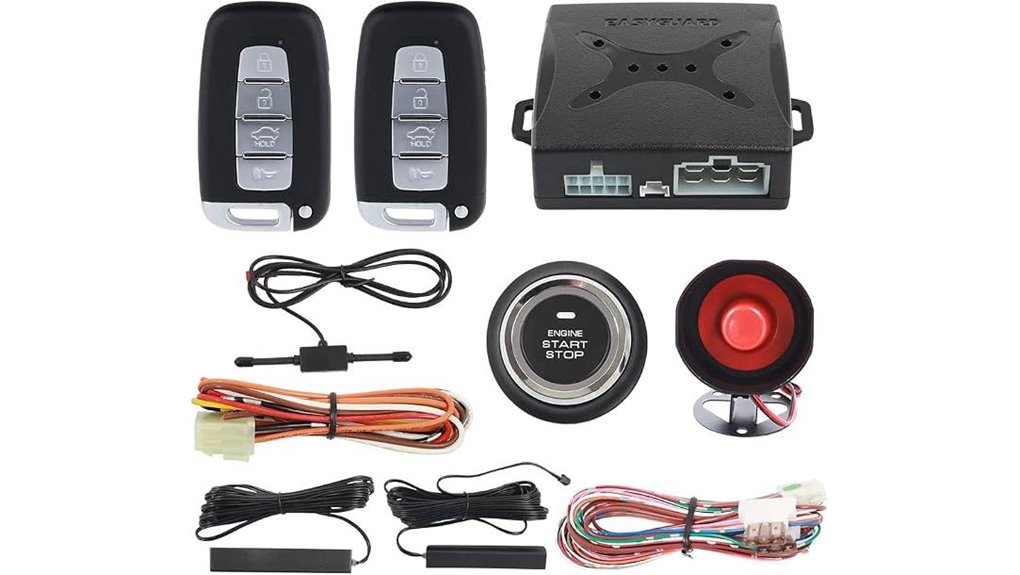
Easyguard EC003N-K suits most DC12V petrol-car owners wanting keyless entry and remote start. This universal alarm system adds passive keyless entry, remote engine start/stop, and push start/stop features for manual and automatic transmissions. The smart key can lock or open doors automatically within 1 to 3 meters, improving convenience in daily use. Remote starting helps pre-cool or pre-warm the cabin before driving. Installation should be handled by a trained technician or professional alarm installer. It is not compatible with double pulse open, pneumatic, vacuum, factory push-start, or many luxury vehicles.
Best For: DC12V petrol car owners who want a universal alarm system with passive keyless entry, remote engine start/stop, and push start/stop convenience.
Pros:
- Adds passive keyless entry with automatic lock/unlock within 1–3 meters
- Supports remote engine start for pre-cooling or pre-warming the cabin
- Compatible with most DC12V petrol cars, including manual and automatic transmissions
Cons:
- Not compatible with double pulse unlock systems, pneumatic/vacuum locks, or factory push-start vehicles
- Installation is recommended only for trained professionals
- May not suit many luxury vehicles
Compustar CSX4900-S 4-Button 2-Way, 3000′ Remote Start System w/Drone X1LTE
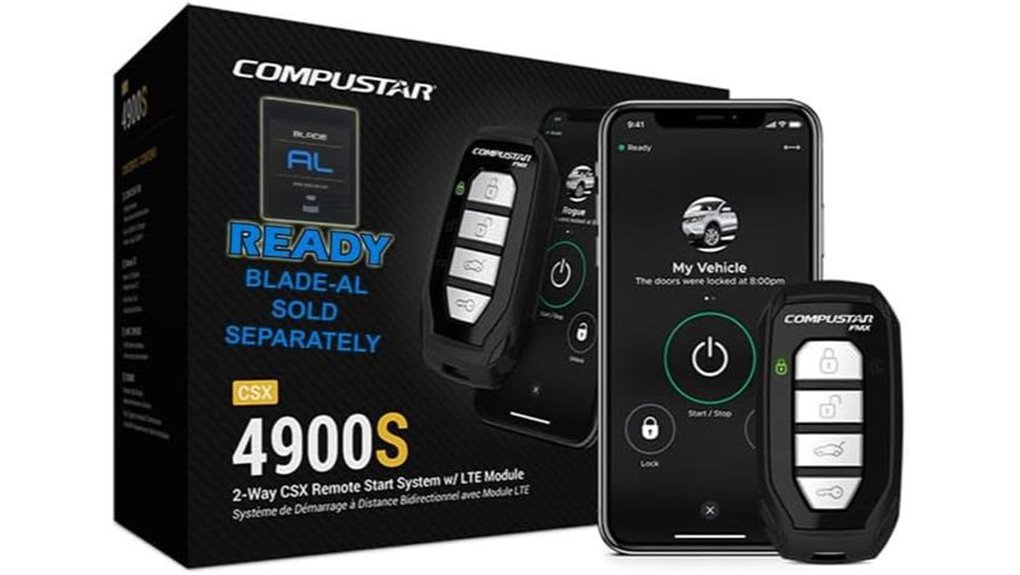
Drivers wanting long-range control and phone access will appreciate the Compustar CSX4900-S. This 4-button, 2-way remote start system includes Drone X1-LTE for unlimited range and smartphone control. The remote provides 3000 feet of range, 2-way LED confirmation, water-resistant construction, and keyless entry support. It also works with a 3X lock start using the OEM remote, while the included CM900-S module manages remote start functions. A limited lifetime warranty covers the system, and the remote carries a 1-year warranty. Installation pricing depends on an authorized Compustar installer, and vehicle compatibility should be verified first.
Best For: Drivers who want a long-range remote start system with smartphone control, keyless entry, and 2-way confirmation.
Pros:
- Includes Drone X1-LTE for unlimited range and phone access
- 3000-foot range with 2-way LED confirmation
- Supports keyless entry and 3X lock start using the OEM remote
Cons:
- Installation requires an authorized Compustar installer
- Vehicle compatibility must be verified before purchase
- Remote warranty is limited to 1 year
Start-X Remote Starter Kit for Toyota Tundra (2010-2017) Trucks
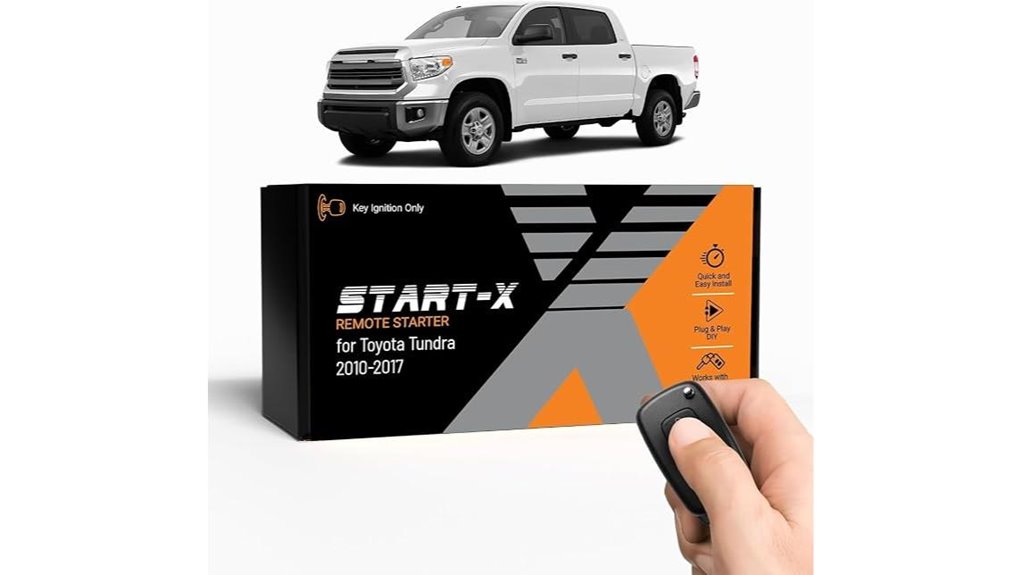
Start-X suits Toyota Tundra owners who want OEM-style remote starting without cutting wires. Designed for 2010-2017 Tundra trucks with a G-marked ignition key, it works only with gas, automatic models and requires the factory remote. The system starts the truck by pressing lock three times on the existing key fob, matching the normal remote range. A vehicle-specific T-harness supports plug-and-play installation, though some disassembly may be needed. Optional range extenders can push control farther, with 1-way and 2-way options available. Installation video support and technical help add practicality.
Best For: Toyota Tundra owners with a 2010-2017 model and G-marked ignition key who want an OEM-style remote start solution with plug-and-play installation.
Pros:
- No wire cutting required thanks to the vehicle-specific T-harness.
- Uses the factory key fob, so starting is as simple as pressing lock three times.
- Optional range extenders are available for much greater remote start distance.
Cons:
- Only compatible with 2010-2017 Toyota Tundra trucks with a G key.
- Not compatible with push-to-start vehicles or non-gas/automatic setups.
- Some disassembly may still be needed during installation.
Prestige APS997Z Two-Way LCD Confirming Remote Start & Alarm 1-Mile Range
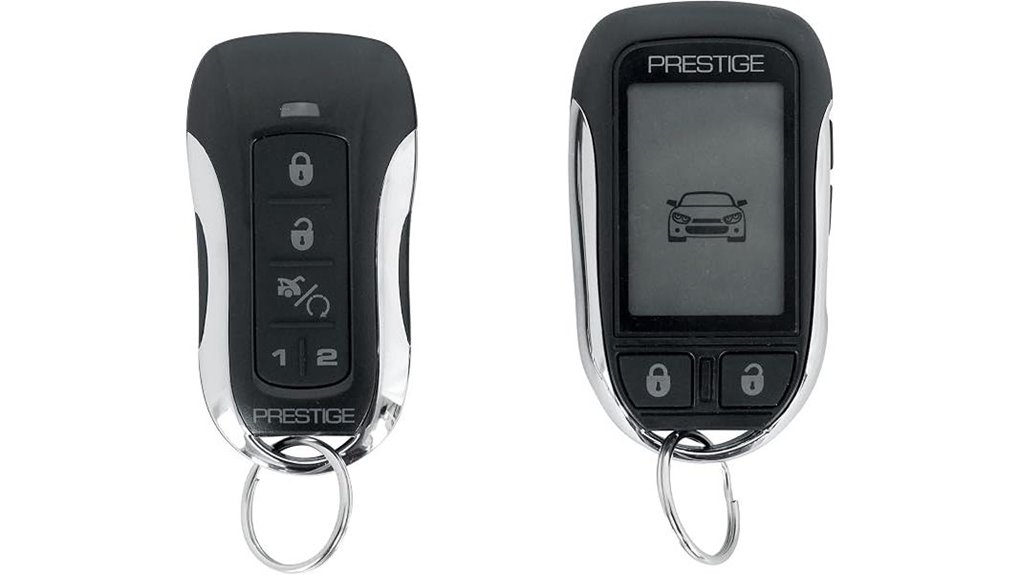
With 1-mile range and two-way LCD confirmation, the Prestige APS997Z suits owners wanting long-range control and security. This remote start and alarm system includes a five-button two-way LCD transmitter, a five-button one-way transmitter, a Flash Logic compatible antenna with LED and valet switch, and a mini siren. It supports single or two-user programming, multiple vehicles, automatic arming and locking, and remote keyless entry. Selectable modes include 24-hour, cold temperature, and timed starts. The LCD shows a parking meter countdown, while dual-stage shock sensing, city mode, starter interrupt, and 120 dB audio strengthen deterrence.
Best For: Drivers who want a long-range, feature-rich remote start and security system with two-way confirmation, multi-vehicle support, and advanced alarm functions.
Pros:
- 1-mile range with two-way LCD confirmation for clear status feedback
- Supports single- or two-user programming plus multiple vehicle control
- Includes useful security and convenience features like automatic arming, shock sensing, and remote panic
Cons:
- Installation may be complex and may require professional help
- Fewer premium smart features compared with newer connected systems
- Product warranty details are limited and only available upon request
Factors to Consider When Choosing Aftermarket Remote Starts 2026: Top Kits Compared
Choosing an aftermarket remote start begins with vehicle compatibility, since not every kit fits every make, model, or trim. Remote range, control options, security features, and installation complexity also shape which system best matches a driver’s needs. A careful comparison of top kits helps separate basic convenience from stronger protection and easier setup.
Vehicle Compatibility
Vehicle compatibility is the first factor to verify when comparing aftermarket remote start kits, since many systems are built for specific makes, models, and production years. A buyer should confirm the exact vehicle make, model, and year match before assuming a kit will work. Ignition style also matters: traditional key-start vehicles are often easier to support, while push-to-start systems may require a different unit or be excluded entirely. Special locking systems, including double pulse release or pneumatic locks, can alter installation requirements and limit supported kits. Transmission type must be checked as well, because most remote starters are intended for automatic vehicles and may not suit manual transmissions. Finally, the system’s voltage rating should align with the vehicle’s electrical architecture, typically 12V, to guarantee proper operation.
Remote Range
Remote range is another key factor, since it determines how far away a driver can reliably start the vehicle. Most one-way systems reach about 1,500 feet, roughly a quarter mile, which suits many daily routines. Higher-end kits can extend to 1.5 miles, giving much greater flexibility for large parking lots or remote locations. Two-way systems add practical value by confirming a successful start or warning of an issue. Some advanced kits use smartphone integration, removing distance limits entirely. Even so, real-world performance can drop when buildings, weather, or electronic interference block the signal. Buyers should compare advertised range with expected conditions, not just the maximum figure, to avoid disappointment and guarantee dependable use in their typical environment.
Control Options
Control options can vary widely, from basic one-way remotes to two-way systems that confirm a successful start, while smartphone integration can remove distance limits altogether. Some kits also work with existing OEM key fobs, letting drivers use familiar controls without carrying extra hardware. That approach can simplify daily operation and keep the setup uncluttered. Systems such as the Compustar CSX4900-S offer control ranges up to 3000 feet, which adds flexibility for parking lots and larger properties. More advanced packages may include programmable settings for different users, customizable run times, or special tools like parking meter countdowns. For shoppers comparing aftermarket remote starts, the best choice depends on how much convenience, personalization, and access they want from the control interface.
Security Features
Security should be a primary filter when comparing aftermarket remote starts, since the best kits do more than begin the engine. Clone-Safe code-hopping is a key safeguard, changing access codes with each use to reduce the chance of unauthorized entry. Fault-proof starter interrupts add another barrier by blocking hot-wiring attempts and helping deter theft. Dual-zone impact sensors matter as well, because they can warn of light taps or stronger blows before a break-in escalates. Systems with smartphone control often extend protection through remote monitoring and alerts for suspicious activity, giving owners faster awareness. Programmable features, including custom code overrides, also improve control over security settings. Together, these features separate basic convenience from genuine vehicle protection in 2027.
Installation Complexity
Installation complexity can vary widely between aftermarket remote start systems, with some demanding professional wiring and vehicle-specific hardware while others are built for simpler at-home setup. Kits with plug-and-play harnesses typically reduce labor because they avoid wire cutting and major disassembly. Vehicle-specific designs usually fit faster and more cleanly than universal units, which often require additional adapters and careful routing. Some manufacturers include detailed guides, diagrams, and support resources that help shorten installation time and reduce mistakes. Systems with advanced functions, such as dual-zone impact sensing or smart device integration, may justify professional installation, since they require greater technical skill and precise configuration. Overall, the easiest kits combine tailored compatibility, clear instructions, and minimal wiring demands for a smoother setup.
Warranty Coverage
Warranty coverage is another key factor that can influence the long-term value of an aftermarket remote start system, especially after installation quality and compatibility have been sorted out. Coverage can differ widely by brand, with some systems offering a limited lifetime warranty on the unit and one year on remotes, while others provide only 30 days to 18 months against manufacturing defects. Buyers should examine the fine print carefully, because certain warranties remain valid only when a professional installer handles the setup. Extended protection may also be available for purchase, adding security beyond the standard term. Before committing, warranty details should be checked through product pages or customer support, since confirmation before purchase helps avoid unexpected gaps in coverage later.
Frequently Asked Questions
How Do Remote Starts Affect Vehicle Warranty Coverage?
Remote starts can affect warranty coverage only if they cause a failure or are installed improperly. A manufacturer generally cannot void an entire vehicle warranty because of an aftermarket part, but it may deny coverage for damage linked to the remote start system. Proper installation by a qualified technician, using vehicle-compatible components, helps reduce risk. Documentation, receipts, and warranty terms should be reviewed before installation to avoid disputes and surprises later.
Can Remote Starts Work With Hybrid or Electric Vehicles?
Like a key turning in a locked door, remote starts can work with many hybrid and electric vehicles, but compatibility varies by model. Some EVs and hybrids use aftermarket systems designed for their powertrain and security architecture, while others require factory-approved integration or may not support remote starting at all. Installation should be checked carefully, since climate control, battery management, and warranty considerations can differ greatly between vehicles.
Are Smartphone-Controlled Remote Starts Worth the Extra Cost?
Smartphone-controlled remote starts are worth the extra cost for drivers who value convenience, range, and added features. They often allow status checks, climate preconditioning, and wider control than basic key fobs. However, the premium may not suit buyers who only need simple start-and-stop functionality. Reliability, subscription fees, and vehicle compatibility should be weighed carefully before purchase. For some, the convenience justifies the price; for others, it does not.
What Security Risks Come With Aftermarket Remote Start Systems?
Aftermarket remote start systems can introduce security risks, especially if installation is sloppy or the control module is poorly protected. Weak encryption, exposed wiring, or insecure smartphone apps may let thieves intercept signals or tamper with the vehicle. Some systems can also create vulnerabilities in the car’s ignition or alarm circuits. A reputable installer, strong authentication, and updated software reduce these risks, though no system is completely immune.
How Difficult Is DIY Installation Versus Professional Installation?
DIY installation is often moderately to highly difficult, depending on vehicle wiring, immobilizer systems, and module compatibility. A technically inclined owner may manage a basic setup with diagrams and tools, but mistakes can cause electrical faults or security issues. Professional installation is usually faster, cleaner, and more reliable, especially for newer vehicles. The added labor cost often reflects reduced risk, better integration, and warranty support from an experienced installer.
Conclusion
Choosing the right aftermarket remote start in 2027 is less about chasing every flourish and more about finding the one that fits a vehicle’s temperament. Some systems offer a modest, straightforward touch, while others arrive with reassuring range, smartphone grace, and a few extra layers of protection. For traditional key-start vehicles especially, the best kit is the one that slips in quietly, performs reliably, and leaves the driver feeling pleasantly well looked after.