In 2027, fuel additives are being judged on two fronts: better MPG and healthier engines. Lucas Oil 10013, STAR BRITE Star Tron, Opti-Lube XPD, Helix Racing 5-in-1, and STA-BIL 360 Marine each claim different strengths, from cleaner injectors to improved fuel stability and corrosion control. The real question is which of them delivers the most noticeable gain without adding unnecessary cost or complexity.
Lucas Oil 10013 Fuel Treatment – 1 Gallon
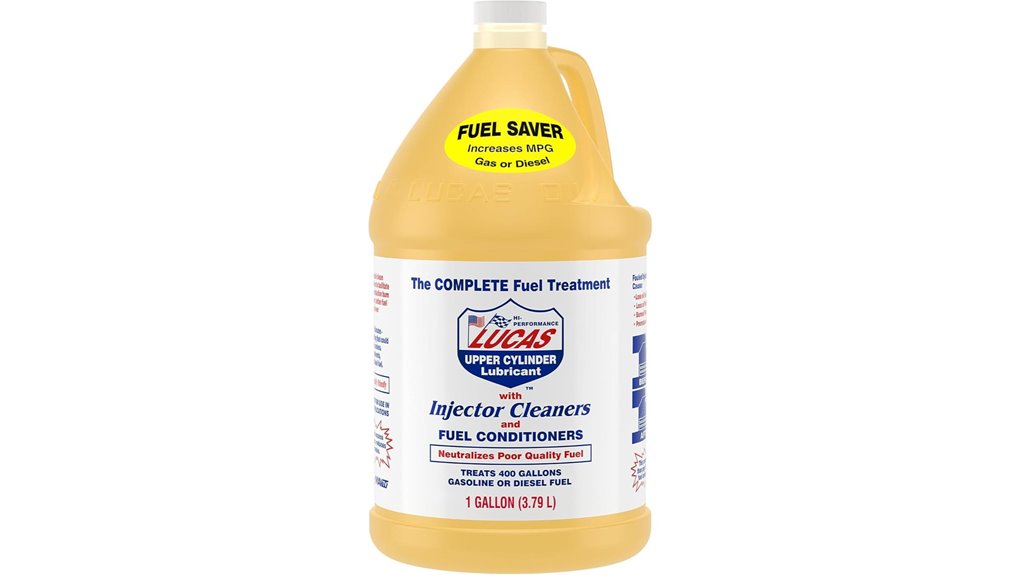
Lucas Oil 10013 Fuel Treatment is a practical choice for drivers who want one additive to support both MPG and engine health, especially those with gasoline, diesel, or older engines that need cleaner fuel system performance. This 1-gallon formula is designed to improve fuel flow, support better acceleration, and help reduce exhaust emissions. It cleans and lubricates injectors and carburetors while helping prevent carbon and gunk buildup. It also neutralizes sulfur, resists rust and corrosion, and meets federal low-sulfur diesel requirements. Lucas Oil recommends use every 3,000 miles.
Best For: Drivers with gasoline, diesel, or older engines who want a single fuel treatment to help improve fuel system cleanliness, support MPG, and protect engine components.
Pros:
- Helps improve fuel flow, acceleration, and fuel economy
- Cleans and lubricates injectors and carburetors while reducing carbon buildup
- Protects against rust, corrosion, and sulfur-related contaminants
Cons:
- Requires regular use every 3,000 miles to maintain benefits
- 1-gallon size may be more than some drivers need for occasional use
- Results can vary depending on engine condition and driving habits
STAR BRITE Star Tron Enzyme Fuel Treatment – Gasoline
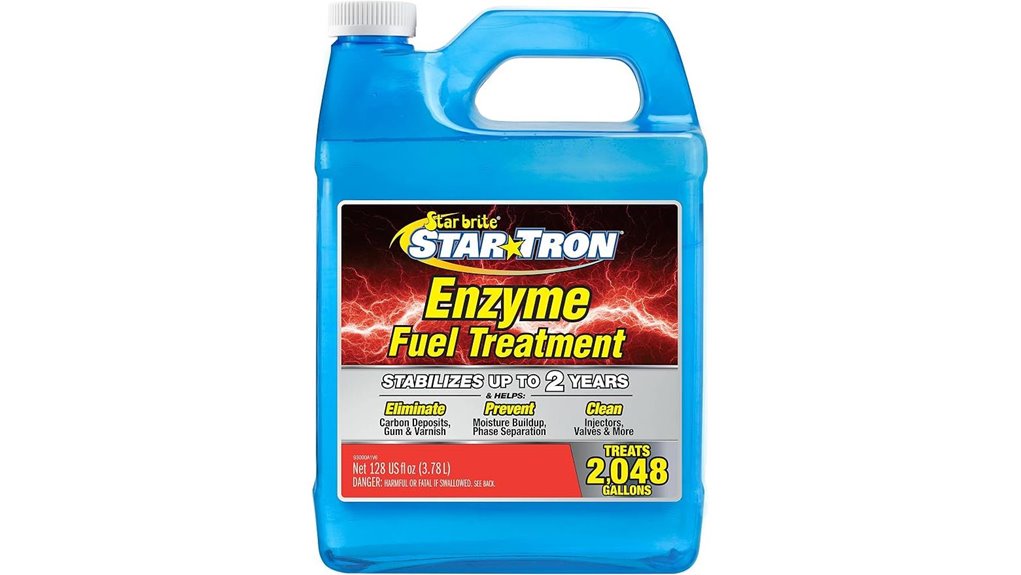
STAR BRITE Star Tron Enzyme Fuel Treatment suits owners battling stale fuel, ethanol issues, and inconsistent engine performance. Built by Star brite, model 093000N, it uses advanced enzyme technology to improve combustibility across gasoline and ethanol blends. It can help engines start easily after months of inactivity while cleaning gum, carbon, and varnish from fuel systems. The formula stabilizes fuel for up to two years, supports better economy, and reduces smoke. It works in cars, boats, RVs, mowers, and small engines, with one ounce treating 16 gallons.
Best For: Drivers, boaters, RV owners, and small-engine users who want a fuel treatment that helps stabilize gasoline, improve combustion, and fight ethanol-related fuel problems.
Pros:
- Helps stabilize fuel for up to 2 years, making it useful for seasonal storage.
- Cleans gum, carbon, and varnish buildup while improving engine starting and smoothness.
- Works across a wide range of engines and fuel types, including ethanol blends.
Cons:
- Requires regular dosing, which may be inconvenient for some users.
- Benefits may be less noticeable if the engine issue is caused by something other than fuel quality.
- A 1 oz per 16-gallon treatment ratio may make it less convenient for very large fuel tanks.
Opti-Lube XPD All-Season Diesel Fuel Additive, 1 Gallon + Pump Kit
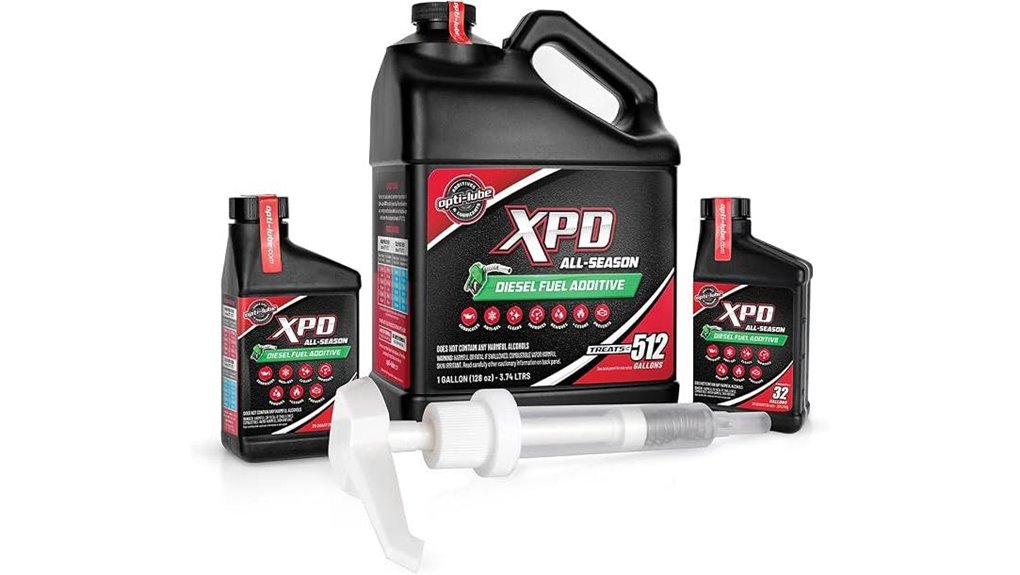
Opti-Lube XPD suits diesel operators seeking year-round MPG support and fuel-system protection. The Opti-Lube OPT-XPD formula is designed for trucks, farm equipment, and construction machinery, and it works with all emissions systems. It boosts ULSD lubricity, cleans injectors, reduces deposits, and helps prevent rust and corrosion. Its anti-gel protection supports fuel flow to -10°F, while the demulsifier separates water from diesel. A cetane increase of up to three points may aid combustion. The gallon kit includes a hand pump and travel bottles for easier dosing.
Best For: Diesel operators who want year-round fuel-system protection, improved lubricity, injector cleaning, and cold-weather anti-gel support for trucks, farm equipment, or construction machinery.
Pros:
- Improves ULSD lubricity while helping clean injectors and reduce deposits.
- Provides anti-gel protection down to -10°F and separates water from diesel.
- Compatible with all emissions systems and includes a pump plus travel bottles.
Cons:
- Benefits are additive-dependent and may be modest compared with more expensive fuel-system repairs.
- Best mixing requires adding it at the pump, which may be less convenient for some users.
- The 1-gallon kit may be more than occasional users need.
Helix Racing 5-in-1 Ultimate Fuel Additive 700604500837
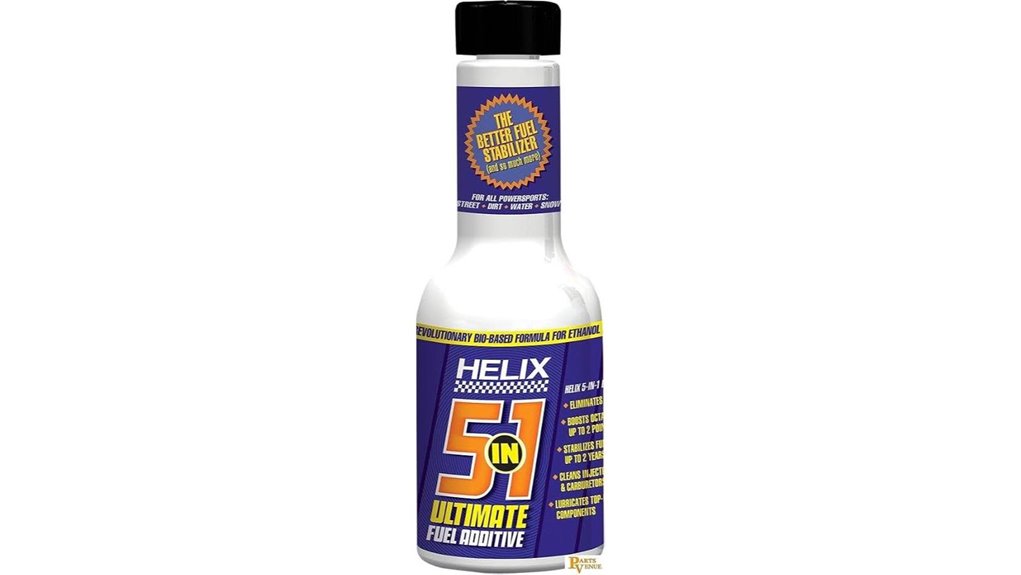
Helix Racing’s 5-in-1 Ultimate Fuel Additive suits drivers needing water control, fuel stability, and cleaner fuel delivery. It uses combustible organic compounds to encapsulate free water so it can burn off during normal operation, and it helps prevent phase separation in E-10 and E-15 blends. The formula can raise octane by up to two points and stabilize fuel for as long as two years. It also dissolves gums and varnishes in injectors and carburetors, restoring spray patterns, supporting smoother idle, easier starts, stronger acceleration, and improved mileage. The UPC is 700604500837.
Best For: Drivers and small-engine owners who want water control, fuel stabilization, mild octane boosting, and cleaner injectors/carburetors in gasoline or ethanol-blended fuel.
Pros:
- Helps encapsulate free water so it can burn off during normal engine operation.
- Can raise octane by up to 2 points and help reduce phase separation in E-10/E-15 fuels.
- Cleans gums and varnishes from injectors and carburetors, supporting smoother idle and better acceleration.
Cons:
- Octane gain is modest, so it won’t replace a dedicated high-octane fuel.
- Fuel stabilization for up to 2 years depends on proper storage conditions and container sealing.
- Benefits may be less noticeable on already clean, well-running engines.
STA-BIL 360 Marine Fuel System Treatment, 32 oz
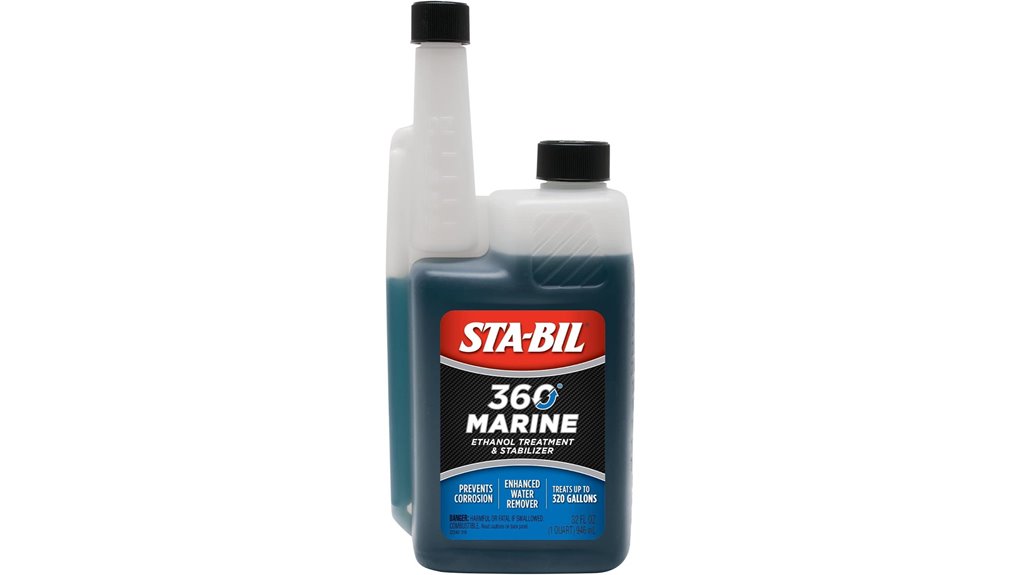
STA-BIL 360 Marine Fuel System Treatment suits boat owners seeking cleaner fuel systems and corrosion defense. This 32 oz fuel system cleaner and stabilizer uses PEA additives to clean injectors, lines, and fuel pumps while removing water, gum, and varnish. Its corrosion protection helps guard internal parts during in-season operation. By promoting efficient combustion, it supports better fuel economy, stronger power, and longer engine life. The treatment is poured into the tank before filling, at 1 oz per 10 gallons, then the engine is run for five minutes. Pairing it with STA-BIL Storage extends seasonal protection.
Best For: Boat owners who want a fuel system cleaner and stabilizer that helps remove deposits, protect against corrosion, and support better engine performance during the season.
Pros:
- Cleans injectors, fuel lines, and fuel pumps with PEA additives.
- Helps remove water, gum, and varnish while protecting against rust and corrosion.
- Can improve fuel economy, power, and engine longevity.
Cons:
- Requires careful measuring at 1 oz per 10 gallons.
- Must be run through the engine for about five minutes to fully treat the system.
- Best results may require pairing with a separate storage treatment for off-season use.
Factors to Consider When Choosing Fuel Additives 2026: Boost MPG and Engine Health
When choosing fuel additives in 2026, fuel type compatibility and engine system cleaning should be checked first to verify proper use and effective deposit control. Claims about MPG improvement also merit scrutiny, especially when balanced against corrosion protection and long-term engine health. Cold weather performance can further influence which additive is most suitable for reliable year-round operation.
Fuel Type Compatibility
Fuel additive selection starts with fuel type compatibility, since a product that works well in gasoline may not be suitable for diesel, ethanol blends, or 2-cycle pre-mixed fuel. Proper matching helps preserve engine performance and reduces the risk of damage from using the wrong formula. Many modern additives are built for multiple fuel types, supporting combustion and helping limit ethanol phase separation. For small engines, compatibility with 2-cycle pre-mixed fuel is especially important so operation remains steady. Some products also stabilize fuel during storage, keeping it usable for up to two years, which benefits seasonal vehicles and equipment. Manufacturer guidelines should always be checked to confirm the additive matches the engine and fuel system, helping avoid corrosion, degradation, or other compatibility-related problems.
Engine System Cleaning
Effective engine system cleaning is a major factor in choosing a fuel additive because deposits such as gum, carbon, and varnish can restrict fuel flow and reduce efficiency. A well-formulated additive removes these contaminants from fuel delivery passages, injectors, and combustion areas, helping the engine operate more smoothly. Regular use can also limit rust and corrosion, which supports longer component life and reduces wear inside the fuel system. Some products use enzyme or chemical technologies to promote cleaner combustion and lower emissions by improving fuel flow. Others encapsulate free water so it can burn off safely, reducing phase separation and preserving fuel quality. Cleaning agents may also restore injector spray patterns, improving atomization and maintaining consistent engine performance over time.
MPG Improvement Claims
Claims about MPG improvement should be evaluated by looking at how a fuel additive affects combustion quality, fuel flow, and deposit control. Additives that promote more complete combustion may reduce wasted fuel and help the engine produce power more efficiently. Products that clean injectors or remove carbon deposits can lower resistance in the fuel system, which may support better mileage. Enzyme-based treatments may also help stabilize stored fuel and restore performance in older fuel, preserving efficiency over time. Some formulas advertise higher octane, and that can improve engine operation in applications designed to benefit from it. Results are usually modest and depend on vehicle condition, driving habits, and maintenance. Regular use, when directed by the manufacturer, may help sustain any MPG gains and keep performance consistent.
Corrosion Protection
Corrosion protection is a key factor in choosing fuel additives because it helps shield metal parts in the fuel system from rust and other damage caused by moisture and contaminants. Many formulas include specialized inhibitors that form a protective barrier on injectors, fuel lines, and tanks. This barrier helps limit degradation and keeps critical components working longer. Some additives also neutralize harmful contaminants, including sulfur compounds, which can otherwise weaken fuel-system integrity over time. By reducing corrosion-related wear, these products can lower maintenance expenses and help avoid repairs linked to damaged parts. Regular use may also support steadier engine reliability and performance, especially where fuel is more likely to contain water or other corrosive impurities.
Cold Weather Performance
Cold weather adds a different set of demands to fuel-system protection, especially for diesel engines that can experience gelling and restricted flow in low temperatures. In such conditions, anti-gel additives become essential because they help keep diesel moving through filters and lines. Some formulas also improve cold-flow properties, allowing fuel to stay pumpable down to about -10°F. For winter driving, cetane improvers can raise ignition quality, supporting quicker, more reliable starts in frigid weather. Additives with corrosion inhibitors offer added defense against moisture and rust that may develop during cold-season operation. In practice, the best winter additive balances flow protection, combustion improvement, and system cleanliness, helping engines start easier, run more smoothly, and maintain efficiency when temperatures drop sharply.
Storage Stability Life
Fuel storage can remain reliable far longer when the right additive is used, with some formulas preserving stability for up to two years and helping prevent fuel breakdown during long periods of sitting. For stored gasoline or diesel, stability is a core measure of value because degradation can reduce combustibility and leave engines harder to start. Additives with organic stabilizers help keep petroleum compounds blended, limiting phase separation and preserving fuel integrity. Products that also remove water are especially useful when seasonal temperature swings invite moisture into tanks. The best options typically support storage life by cleaning deposits, reducing contamination, and protecting metal surfaces from corrosion. In this way, older or off-spec fuel may regain usable performance instead of becoming waste.
Dosage And Mixing
Getting the dosage right is essential, because many fuel additives are formulated for exact ratios such as 1 fluid ounce per 16 gallons to work effectively without causing side effects. Careful measurement helps guarantee the product delivers intended cleaning, lubrication, or combustion benefits without stressing the fuel system. Most labels advise pouring the additive into the tank before refueling, allowing incoming fuel to disperse it evenly. Usage frequency also matters: some formulas are meant for every few thousand miles, while others are better reserved for seasonal storage. Compatibility should be checked against gasoline, diesel, or specific engine types. Overdosing can reduce performance or cause damage, so manufacturer instructions remain the safest guide for consistent results.
Frequently Asked Questions
Can Fuel Additives Void My Vehicle Warranty?
Fuel additives can void a vehicle warranty if they cause damage, are used contrary to the owner’s manual, or are unapproved by the manufacturer. In many cases, a warranty cannot be denied simply because an additive was used; the automaker must show the additive caused the failure. The safest approach is to check the warranty terms, use only approved products, and keep receipts and product labels for documentation.
Do Fuel Additives Work in Hybrid Engines?
Yes, fuel additives can work in hybrid engines, but their benefits are usually modest. Industry testing often suggests only 5% to 10% of additives deliver measurable fuel-economy gains. In a hybrid, where the gasoline engine already runs intermittently and efficiently, additives may help keep injectors cleaner or reduce deposits, yet they rarely transform MPG. Their value depends on engine condition, product quality, and whether the formulation matches the fuel system.
How Often Should I Add Fuel Treatment to a Full Tank?
It should be added only as directed on the product label, typically every fill-up, every few tanks, or at scheduled maintenance intervals. The exact frequency depends on the additive type, fuel quality, driving conditions, and engine condition. Overuse offers little benefit and may cause excess cost or residue. A measured approach is best: match the dose to the full tank size, then follow the manufacturer’s recommended treatment interval carefully.
Are Fuel Additives Safe for Small Engines and Motorcycles?
Are fuel additives safe for small engines and motorcycles? Generally, yes—if they are formulated for gasoline systems and used exactly as directed. Yet safety can be a thin bridge: overuse, incompatible solvents, or products with harsh detergents may harm seals, carburetors, or fuel lines. A careful user should verify manufacturer guidance first. In two-stroke engines, oil-mix compatibility matters especially. When chosen properly, additives usually pose little risk.
Can Additives Improve Cold-Start Performance in Winter?
Yes, some additives can improve cold-start performance in winter by helping fuel flow more easily, reducing moisture issues, or improving combustion quality. Their effect depends on engine condition, fuel type, and the specific product used. They are not a cure for worn batteries, weak ignition, or poor maintenance. In very low temperatures, a well-maintained engine and proper winter fuel usually matter more than additives alone.
Conclusion
In 2027, the best fuel additives do more than promise better MPG—they help engines run cleaner, smoother, and longer. From Lucas Oil 10013 to STA-BIL 360 Marine, each product offers a distinct edge in fuel stability, combustion, or protection. Choosing the right additive is like giving your engine a daily shield and tune-up in one bottle. With the right match, drivers can improve performance while supporting long-term engine health.