
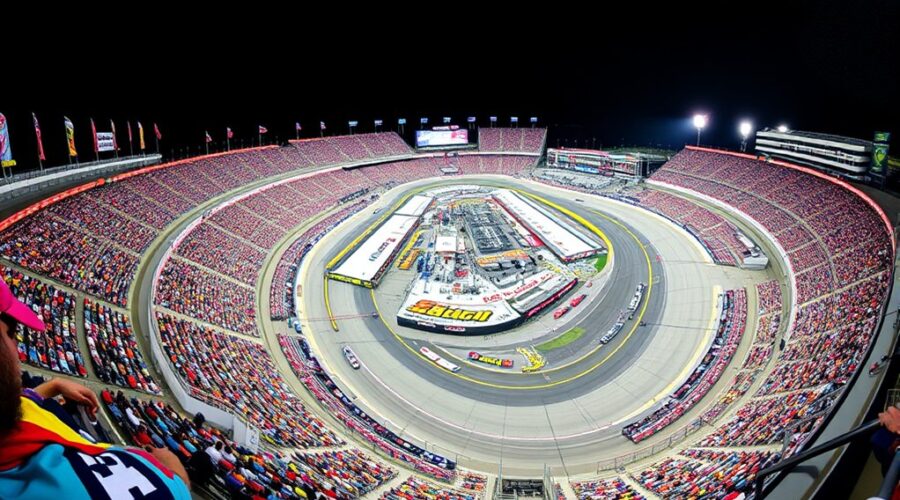
Bristol Motor Speedway has grown from an 18,000-seat oval in 1961 to a venue that now holds about 146,000 spectators. Its steep bowl design, expanded seating, and dual pit lanes helped shape that rise. Major events have repeatedly tested its limits, from Cup races to the 2016 Battle at Bristol. The track’s scale is only part of the story, and the details behind that expansion are more revealing.
Key Takeaways
- Bristol Motor Speedway opened in 1961 with 18,000 seats and has grown through multiple expansions over time.
- Its current capacity is about 146,000, down from a 2006 peak of roughly 160,000.
- The bowl-shaped, half-mile track with steep banking improves sightlines and keeps fans close to the action.
- The venue has hosted major events like the Food City 500 and Bass Pro Shops Night Race, drawing huge crowds.
- Amenities include Colossus TV, varied concessions, suites, and hospitality packages for a broader fan experience.
Bristol Motor Speedway Capacity History
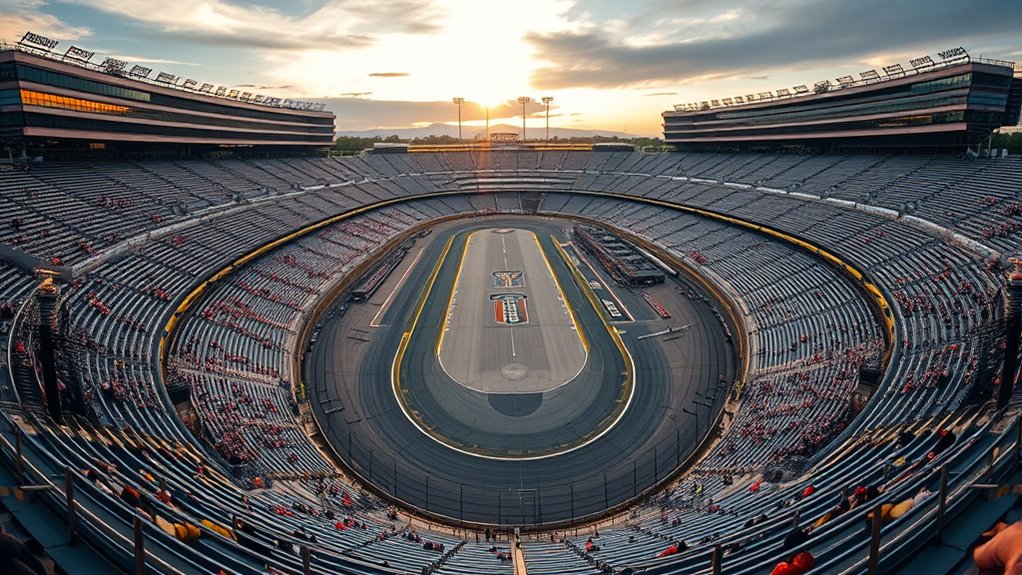
Bristol Motor Speedway’s seating capacity has changed dramatically since the track opened in 1961 with 18,000 seats, later growing to 21,000 as demand increased. In the venue’s history, later expansions under Bruton Smith reshaped the Tennessee facility from a modest oval into a major mass gathering place. By the late 1990s, seating capacity had reached 86,000, and Bristol had become the largest sports arena in Tennessee. Further renovations and technical details of grandstand design pushed the figure to about 160,000 by 2006. That scale helped explain why the speedway sold out 55 consecutive races through March 2010, a record that reflected extraordinary public appetite. As of 2021, current seating capacity stood at 146,000, showing ongoing adjustments aimed at preserving fan experience while maintaining access and visibility. Bristol Motor Speedway’s capacity history consequently records not only growth, but a long contest between engineering, crowd demand, and the public’s right to gather in numbers.
What Drove Bristol’s Capacity Growth
Bristol Motor Speedway’s capacity growth was driven first by strong early seating demand, which quickly exceeded the 18,000 seats available when the track opened in 1961. The first major expansion came in 1982, when capacity climbed to nearly 60,000 after Lanny Hester sold his interest in the facility. Under Bruton Smith’s ownership, later renovations and additions such as skyboxes and improved infrastructure pushed the venue to roughly 160,000 seats by the late 1990s.
Early Seating Demand
When Bristol Motor Speedway opened in 1961, it offered just 18,000 seats, a modest figure that reflected the strong but still regional demand for short track racing in the area. As NASCAR’s reach widened, the seating capacity had to follow the crowd’s rising appetite for speed, spectacle, and communal contest. By the 1990s, capacity had climbed to nearly 60,000, showing how the fan base had outgrown the original design. After Bruton Smith acquired the track in 1996, renovations pushed attendance limits higher, and later events were staged for as many as 160,000 spectators. Bristol Motor Speedway became a rare arena where sellouts were routine, including 55 straight events through March 2010, proving that demand, not mere construction, drove its growth.
Expansion Under Smith
Under Bruton Smith’s ownership, Bristol Motor Speedway entered a period of aggressive expansion, with seating capacity rising from 86,000 in 1996 to 160,000 by 2006, enough to make it the largest sports venue in Tennessee. The first major increase came in the late 1990s, when NASCAR’s growth and overflowing demand for tickets pushed the track to enlarge its grandstands. Bristol Motor Speedway also added luxury skyboxes and improved facilities, strengthening the fan experience while preserving the track’s high-energy atmosphere. Its twin pit road lanes and compact layout made the site distinctive, but also intensified pressure for more space. As the venue evolved into a multi-purpose venue, expansion answered diverse audience demands and secured larger crowds for racing and other major events.
How the Track Layout Shapes Seating
Bristol Motor Speedway’s bowl-shaped oval was arranged to keep spectators close to the action, with steep grandstands rising around the 0.533-mile circuit. Its 24- to 28-degree banking in the turns improved sightlines by drawing the racing line into clearer view from nearly every seat, including those highest in the stands. Over time, the track’s expanding grandstand reach preserved that intimate field of vision while increasing capacity to 146,000.
Bowl Shape Sightlines
The bowl-shaped layout of Bristol Motor Speedway has long been a defining feature of its seating experience, giving spectators unusually clear sightlines across the entire half-mile track. Its bowl shape and oval configuration preserve unobstructed views, while steep banking in the corners helps the grandstands overlook every arc of racing action.
| Feature | Effect |
|---|---|
| Compact seating capacity | Fans remain close to the track |
| Steep banking | Visibility extends across the circuit |
| Bowl shape | Spectator engagement stays intense |
As seating capacity grew to 146,000, the design kept even upper rows connected to the race below. This historical arrangement strengthened Bristol Motor Speedway’s reputation as the Last Great Colosseum, where distance is reduced and communal focus is amplified. The result is a liberated viewing experience, shaped by engineering and tradition alike.
Banking And Grandstand Reach
Steep corners and a compact oval define Bristol Motor Speedway’s reach, with variable banking from 24 to 28 degrees helping extend sightlines from the grandstands across the 0.533-mile track. Bristol Motor Speedway’s oval configuration and steep racing surface have long shaped how seating functions, giving spectators a direct view of short track racing from nearly every tier. The 40-foot-wide surface permits multiple grooves, so NASCAR races unfold with continuous motion visible to much of the seating capacity. As the grandstands expanded to 146,000, the venue preserved spectator sightlines and a stadium-like feel uncommon in motorsport. This design history reflects a deliberate effort to combine speed, proximity, and access, allowing fans to witness the contest without barriers and to experience the track as a shared public arena.
Bristol’s Two Pit Lanes
Unlike many short tracks, Bristol Motor Speedway is distinguished by two pit road lanes, a design that improves service efficiency and helps handle the heavy flow of cars that defines its races. At Bristol Motor Speedway, these two pit lanes are among the most notable technical details, shaping pit stops with greater order and speed. In the NASCAR Cup Series, where competition is compressed and every second matters, the dual arrangement supports driver safety by easing movement during caution periods and reducing pressure on crews. The 40-foot racing surface allows simultaneous pit strategies, limiting congestion that can slow a single-lane facility. This layout reflects Bristol’s long-standing role as a venue built for intense, rapid exchange on and off the track. Rather than merely containing cars, the design organizes motion, permitting faster service while preserving control. In a sport defined by precision, Bristol’s dual pit structure remains a practical expression of racing efficiency and disciplined competition.
Major Events That Fill Bristol Motor Speedway
Bristol Motor Speedway’s 146,000-seat capacity places it among the largest sports venues in the United States, and that scale is matched by a calendar built around marquee events that consistently draw massive crowds. | Event | Year | Note |
| — | —: | — |
|---|---|---|
| Food City 500 | Annual | NASCAR Cup Series staple |
| Bass Pro Shops Night Race | Annual | Night race tradition |
| Battle at Bristol | 2016 | NCAA attendance record |
Since its first night race in 1978, the speedway has built a durable history of major events. The Bristol NASCAR Cup Series weekends, led by the Food City 500 and Bass Pro Shops Night Race, repeatedly test the seating capacity with packed stands and broad national attention. Demand has been sustained for decades; Bristol sold out 55 consecutive races through March 2010, a marker of uncommon loyalty. In 2016, the venue reached an attendance record with nearly 157,000 fans for college football, showing how the site can host gatherings that exceed even its vast race-day scale.
Current Seating Options and Fan Amenities
With a current seating capacity of 146,000, the venue combines scale with a range of seating and hospitality choices designed for different audiences. Bristol Motor Speedway sustains its place among major American sports sites through flexible seating capacity that includes skyboxes, man cave suites, and broad general admission sections. These fan amenities reflect a long history of adapting the track to changing expectations while preserving access for large crowds. The Colossus TV, the world’s largest outdoor four-sided video screen, sharpens sightlines with high-resolution imagery, ensuring that distant seats remain connected to the action. Hospitality packages extend the experience through access to the Thunder Valley Amphitheatre, where concerts and entertainment events add another layer of public gathering. A nightclub, along with varied food and beverage options, supports a full-day visit. Taken together, these features show how Bristol Motor Speedway balances mass attendance with comfort, choice, and a measure of freedom for fans.
Related Reading
Frequently Asked Questions
What Are Some Interesting Facts About Bristol Motor Speedway?
Bristol Motor Speedway offers Bristol history, Racing legends, Fan experiences, Track modifications, Night races, Famous events, Pit strategies, Driver rivalries, Location significance, and Special promotions, while its sold-out crowds and twin pit lanes define its remarkable allure.
Has Bristol Motor Speedway Ever Been Sold Out?
Yes, Bristol Motor Speedway has repeatedly sold out, with ticket sales often exhausting capacity limits. Historical significance, venue upgrades, and event promotions have sustained attendance records, while the seating arrangement enhances fan experience on race day.
What Was the Largest Crowd Ever Seen at Bristol Motor Speedway?
Like a coliseum echo, the largest crowd was 156,990 at the 2016 Pilot Flying J Battle at Bristol, amid historic events, fan experiences, race day, seating arrangements, ticket sales, weather conditions, driver performances, track layout, safety measures, visitor amenities.
Which NASCAR Track Has the Largest Capacity?
Talladega Superspeedway has the largest seating capacity among any NASCAR track, shaping a vast fan experience. Its track design has hosted historic races, intensifies driver challenges, and influences race day ticket prices, event schedule, future developments.
Conclusion
Bristol Motor Speedway’s capacity has grown from modest beginnings to one of the largest and most famous crowds in motorsports, a change shaped by demand, innovation, and its distinctive bowl-like layout. Its steep banking, dual pit lanes, and modern fan amenities continue to support major events and memorable experiences. As the old adage says, necessity is the mother of invention, and Bristol’s evolution reflects that truth in steel, seats, and spectacle.



[…] Bristol Motor Speedway Capacity: Seating History and Layout […]