Car owners in 2027 face a wider range of vacuum choices than ever, from wall-mounted shop-style units to cordless handhelds built for quick cleanups. Each model promises a different balance of suction, portability, and convenience, but not all perform equally in real use. The strongest options stand out for specific reasons, and the differences become clearer when each vacuum is examined more closely.
METROVAC Vac N Blo Car Vacuum & Blower
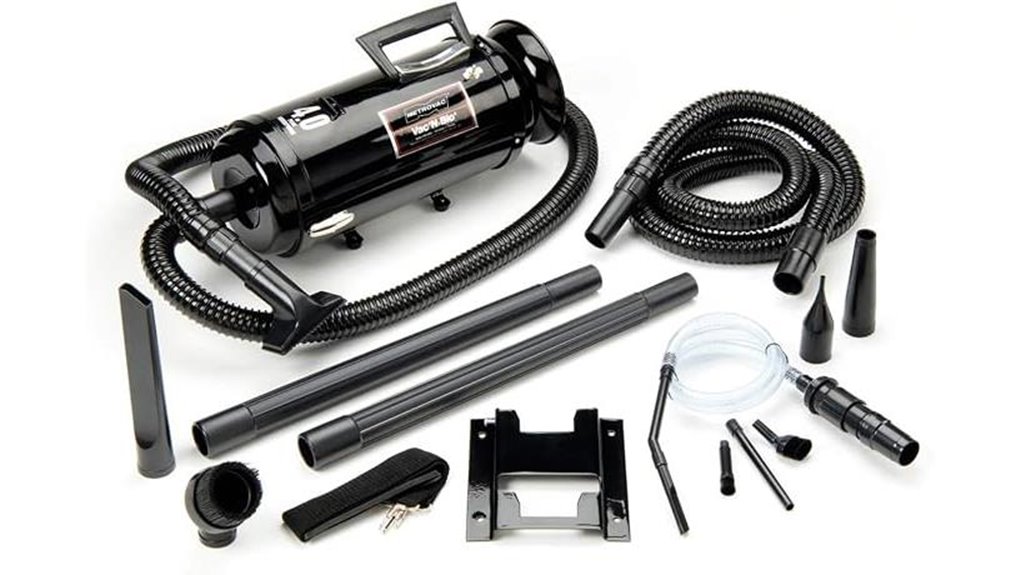
The METROVAC Vac N Blo Car Vacuum & Blower is a strong pick for drivers and detailing enthusiasts who want more than basic cleanup, thanks to its 4.0 peak HP motor and 95 cfm water lift. Its all-steel build adds durability, while the lightweight design supports easier handling during longer sessions. Beyond vacuuming, it works as a blower, dryer, and inflator, making it useful in garages and around the home. A full set of automotive attachments helps deliver professional-level detailing for cars, trucks, and SUVs, both inside and out, with efficient maintenance.
Best For: Drivers, car owners, and detailing enthusiasts who want a durable, versatile vacuum and blower for thorough cleaning and maintenance of cars, trucks, SUVs, and garage spaces.
Pros:
- Powerful 4.0 peak HP motor with 95 cfm water lift for strong cleaning performance
- All-steel construction offers durability, while the lightweight design improves handling
- Multi-functional use as a vacuum, blower, dryer, and inflator with automotive attachments
Cons:
- May be more machine than casual users need for simple cleanup tasks
- All-steel construction can still feel bulky compared with smaller handheld vacuums
- Best suited for vehicle and garage use, so it may not replace a dedicated home vacuum
Bissell Garage Pro Wall-Mounted Wet Dry Vacuum/Blower, 18P03

With wall-mounted storage and a 32-foot hose, the Bissell Garage Pro suits garage-detailers needing reach and organization. Its 12-amp corded motor handles wet and dry debris, while the blower function adds flexibility for workshops and vehicles. A 4-gallon semi-translucent tank includes an LED full-water indicator, and seven attachments cover floors, upholstery, and crevices. The accessory bag helps keep tools sorted, and the wall mount preserves floor space. At 80 dB, it is not especially quiet, but the 2-year warranty and support for Bissell Pet Foundation add practical appeal.
Best For: Garage owners, car detailers, and workshop users who want a wall-mounted wet/dry vacuum with long reach, strong suction, and organized storage.
Pros:
- 32-foot hose and wall-mounted design provide excellent reach while saving floor space.
- 12-amp motor and blower function make it versatile for wet messes, dry debris, and vehicle cleanup.
- Includes 7 attachments plus an accessory bag for handling floors, upholstery, and crevices.
Cons:
- At 80 dB, it is relatively loud during operation.
- Requires corded power, so portability is more limited than cordless options.
- Wall-mount installation may not suit users who prefer a fully mobile vacuum.
Adam’s Polishes Wall Mounted Detailing Vacuum

Adam’s Polishes Wall Mounted Vacuum suits garage owners who want strong, space-saving detailing power. This premium detailing vacuum is built for garage or shop use and mounts to the wall to keep floor space open. Its hose extends from 8 to 35 feet, giving reach for upholstery and tight crevices, then retracts to 8 feet for storage. The unit holds 7 pounds of debris, or 1 gallon, and delivers 110 waterlift suction. It includes seven tools: telescoping wand, bare floor tool, snake wand, wall clamp, crevice tool, dust brush, and upholstery tool.
Best For: Garage and shop owners who want a wall-mounted, space-saving detailing vacuum with strong suction and long reach for interior cleaning.
Pros:
- Extends from 8 to 35 feet for excellent reach on upholstery and tight spots
- Wall-mounted design helps keep garage floor space clear and organized
- Includes 7 useful tools for a variety of detailing tasks
Cons:
- Designed mainly for garage or shop use, so it’s less versatile for general home cleaning
- Wall installation may be inconvenient for users who prefer a portable vacuum
- Premium detailing focus may make it more than some casual users need
Chemical Guys DetailVac Handheld Portable Car Vacuum

Chemical Guys’ DetailVac suits drivers who want portable cleaning power without bulk. The EQP410 uses a 110W, 8.8A motor inside an ergonomic, lightweight gray body that measures 17 by 5 by 5.5 inches and fits easily in storage. It plugs into a 12V outlet or cigarette lighter, and its 16-foot cord helps reach seats and cargo areas. Included crevice, brush, and flexible hose attachments handle dirt, dust, sand, cereal, and other debris. A spare filter, storage bag, and cleaning brush add convenience for regular upkeep in cars, trucks, SUVs, and more.
Best For: Drivers who want a compact, plug-in car vacuum with decent reach and useful attachments for routine cleanup in cars, trucks, SUVs, and similar vehicles.
Pros:
- Lightweight, ergonomic design makes it easy to store and carry.
- 16-foot cord and flexible hose help reach seats, cargo areas, and tight spaces.
- Includes handy attachments plus a spare filter, storage bag, and cleaning brush.
Cons:
- Must be plugged into a 12V outlet, so it isn’t cordless.
- Recommended run time is limited to about 15 minutes.
- May be best for light-to-moderate cleanup rather than heavy-duty messes.
Dyson Car+Boat Handheld Vacuum, Cordless Lightweight 115AW

The Dyson Car+Boat suits drivers who want strong, portable cleaning power. Its cordless, lightweight build pairs with 115AW suction and up to 50 minutes of fade-free runtime. Two power modes help balance speed and deeper cleaning. Included tools add reach and flexibility: a mini motorized tool for fabric, a combination tool, a wide nozzle, a brush, and a crevice tool that reaches seven inches. Whole-machine filtration traps 99.99% of particles as small as 0.3 microns, while durable materials, a two-year warranty, and lifetime Dyson support strengthen its appeal for cars, boats, upholstery, and pet hair.
Best For: People who need a powerful, portable handheld vacuum for cars, boats, upholstery, and quick messes with strong suction and versatile attachments.
Pros:
- Strong 115AW suction with up to 50 minutes of fade-free runtime
- Handy accessory set for fabric, tight spaces, dusting, and quick switching
- Whole-machine filtration, durable build, and lifetime Dyson support
Cons:
- Handheld design may not suit large-area or whole-home cleaning
- Best performance may require swapping between two power modes
- Premium features likely come with a higher price than basic portable vacuums
BLACK+DECKER dustbuster Cordless Handheld Vacuum (HHVK515J00FF)
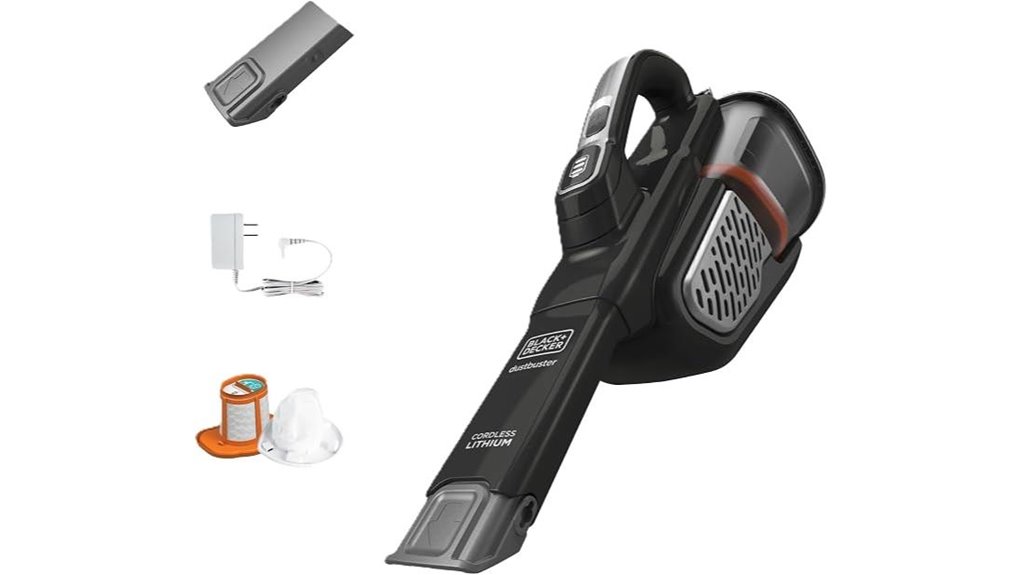
With its 20V MAX battery and 35 AW suction, the BLACK+DECKER dustbuster suits quick car cleanups. The HHVK515J00FF is a cordless handheld vacuum designed for home, dorm, and vehicle use, making it a practical all-around option. Its two-speed system offers standard cleaning or power boost mode when extra pickup is needed. A built-in crevice tool helps reach tight spots between seats and along trim. The 750ml dustbin supports longer sessions with fewer interruptions, while the cordless format improves mobility. It handles quick messes and larger debris with simple emptying.
Best For: Homeowners, dorm residents, and drivers who want a cordless handheld vacuum for quick cleanups, tight spaces, and light-to-moderate messes.
Pros:
- 20V MAX battery with up to 35 AW suction for solid handheld cleaning power
- Built-in crevice tool and cordless design make it easy to reach tight spots and move around
- Large 750ml dustbin allows longer cleaning sessions with fewer empty-outs
Cons:
- Battery-powered runtime may be less convenient for long deep-cleaning sessions than a corded vacuum
- Handheld design is best for spot cleaning, not full-size floor cleaning
- May be overkill for very small messes if you only need a basic portable vacuum
Armor All, AA255, 2.5 Gallon 2 Peak HP Wet/Dry Utility Shop Vacuum, Orange

Armor All’s AA255 suits drivers who want a compact, corded wet/dry vac with serious utility. Its 2.5-gallon polypropylene tank, 2 peak HP motor, and 48-inch maximum suction target crumbs, mud, and small spills efficiently. At 7 pounds, it remains easy to carry, while the 6-foot hose and 10-foot cord provide workable reach. Included brushes, crevice tool, and deluxe car nozzle broaden cleaning options. A blower mode helps with drying, and automatic shutoff limits overflow. On-board storage, reusable filters, and a two-year warranty round out a practical garage-ready package.
Best For: Drivers and homeowners who want a lightweight, corded wet/dry shop vacuum for quick car cleanups, small spills, and garage detailing tasks.
Pros:
- Compact 7-pound design is easy to carry and store.
- Strong 2 peak HP motor with 48-inch maximum suction handles crumbs, mud, and minor wet messes well.
- Useful accessories, blower mode, and on-board storage add versatility and convenience.
Cons:
- 2.5-gallon tank is small for larger cleanup jobs.
- 10-foot cord and 6-foot hose may feel limiting for bigger areas.
- 82 dB operation is fairly loud.
Factors to Consider When Choosing Car Vacuums of 2026

When choosing a car vacuum for 2026, suction power remains a key measure of cleaning performance, especially for dirt trapped in tight spaces. Corded and cordless models each bring tradeoffs in convenience, while tank capacity affects how often the unit needs emptying. Attachments, portability, and overall weight also shape how practical the vacuum will be for routine use.
Suction Power
Suction power is one of the most important factors in choosing a car vacuum, since it determines how effectively dirt, crumbs, and debris are lifted from seats, floor mats, and crevices. It is commonly measured in cubic feet per minute and water lift, with stronger ratings indicating better cleaning performance. A model delivering about 95 cfm of water lift can provide deep cleaning, while 110 water lift is generally effective for upholstery and tight crevice areas. Peak horsepower also matters, as motors above 4.0 peak HP often deliver stronger suction efficiency. Good airflow design helps maintain power without excessive noise, which may reach about 80 dB. Adjustable suction settings add flexibility for different tasks, including blower functions.
Corded Vs Cordless
Choosing between corded and cordless car vacuums depends on how the tool will be used. Corded models suit longer sessions because they deliver continuous power and can run as long as they remain plugged in. They also tend to provide stronger suction, making them better for deep cleaning and stubborn debris. Cordless vacuums trade power for convenience, offering quick mobility without a cable and easier access to tight areas. Their lighter build helps during fast clean-ups, though battery life usually limits use to about 20 to 50 minutes per charge. Corded options generally require less battery upkeep and maintain steadier performance over time, while cordless units need regular charging and battery care. The better choice depends on balancing runtime, portability, and cleaning demands.
Tank Capacity
Tank capacity is another major factor that affects how practical a car vacuum feels in regular use, especially after comparing corded and cordless models. A larger tank holds more debris, so cleaning sessions are interrupted less often for emptying. Car vacuums commonly range from about 1 gallon to more than 4 gallons, and the bigger options suit deep cleans, large vehicles, or several cars at once. Smaller tanks are more compact and easier to store, yet they may need frequent emptying when handling heavy dirt or wet messes. The best choice depends on how much cleaning is expected and how often maintenance is acceptable. Capacity should be weighed against size and weight, since a bulkier tank can affect maneuverability and convenience.
Attachments Included
Attachments can make a car vacuum far more practical, especially when the included tools are matched to different surfaces and tight spaces. Crevice tools help reach seams, seat tracks, and other narrow areas, while upholstery brushes support fabric surfaces and floor nozzles improve pickup on carpets and bare mats. A model with multi-surface accessories can handle pet hair, dust, and larger debris more effectively across the cabin. Telescoping wands and flexible hoses extend reach into awkward corners and under seats, increasing cleaning coverage without repeated repositioning. It also helps if the vacuum includes storage for its accessories, since organized tools are easier to find and use during routine detailing. Buyers should favor sets that match their vehicle’s materials and cleaning needs.
Portability And Weight
Beyond the right attachments, a car vacuum also needs to be easy to carry and maneuver. Weight is a key factor, since lightweight models are simpler to steer through narrow footwells, under seats, and around consoles. Cordless designs improve portability by removing the need to stay near an outlet, making cleanup more flexible in garages, driveways, or parked cars. Compact handheld vacuums are especially practical for quick messes, because they store easily and reduce strain during short cleaning sessions. Flexible hoses or extension tools can help reach tight corners without adding bulk. A design that supports simple storage, such as a wall mount or small footprint, further improves convenience for users with limited space and frequent transport needs.
Filtration Efficiency
Filtration efficiency is one of the most important factors in a car vacuum, especially when fine dust, pollen, and other tiny particles need to be trapped rather than recirculated into the air. Advanced filtration systems can capture 99.99% of particles as small as 0.3 microns, which supports cleaner air inside the vehicle. HEPA filters are especially useful because they reduce allergens and dust, making them a strong choice for households with pets or allergy sensitivities. Filter material and design also affect durability and cleaning performance, while reusable filters typically need periodic washing to stay effective. Regular maintenance and timely replacement help prevent clogging, preserve suction power, and keep the vacuum operating at its best. Strong filtration improves overall cleaning results across carpets, seats, and other surfaces.
Noise Levels
Noise levels are another important factor when choosing a car vacuum, since most models operate between 70 dB and 80 dB and can be distracting in quiet settings. Higher-powered units, including some 12-amp models, may approach 80 dB or more, while lower-powered options tend to sound less intrusive. That difference matters in apartments, garages, and other enclosed spaces where steady noise becomes tiring. Since prolonged exposure above 85 dB can affect hearing, the rating should not be ignored. Some manufacturers address this issue with noise-reduction features, such as air diffusers or improved housing design. Checking decibel specifications before purchase helps buyers match performance with acceptable sound levels and choose a model suited to personal tolerance.
Wet Dry Versatility
Wet and dry versatility is a major advantage in a car vacuum because it lets the same unit handle spilled drinks, mud, dust, and other debris. This dual capability suits vehicles and garages where messes vary from day to day. Models with 12 amps or more typically deliver strong suction for stubborn cleanup jobs, while dirt tanks of 2.5 to 4 gallons support longer sessions before emptying. Some units also convert to a blower, which helps dry damp surfaces or inflate gear. Specialized attachments further improve reach and surface contact, making cleanup more efficient in tight footwells, seams, and cargo areas. For buyers seeking one tool for many tasks, wet/dry versatility increases usefulness and reduces the need for separate equipment.
Frequently Asked Questions
How Often Should I Replace My Car Vacuum Filter?
A car vacuum filter should generally be replaced every three to six months, though heavy use, fine dust, or pet hair may shorten that interval. Signs like reduced suction, lingering odors, or visible damage suggest earlier replacement. Some washable filters can last longer if cleaned regularly and dried fully. Maintenance frequency ultimately depends on the filter type, usage conditions, and manufacturer guidance for the specific vacuum model.
Can Car Vacuums Clean Pet Hair From Upholstery?
Yes, car vacuums can clean pet hair from upholstery, though the feat often feels like a comedy of labor. Models with strong suction, motorized brush heads, or rubber attachments usually perform best on stubborn strands. A quick loosen-and-lift approach helps. For deeply embedded hair, repeated passes may still be needed, because even the bravest vacuum cannot negotiate with a determined shedding pet or fabric weave.
Are Cordless Car Vacuums Better for Quick Detailing?
Cordless car vacuums are often better for quick detailing because they are easy to grab, move, and use without finding an outlet. They suit fast cleanup of crumbs, dust, and pet hair in tight spaces. Their main limits are shorter runtime and sometimes weaker suction than corded models. For brief touch-ups, though, portability usually matters more than maximum power, making cordless options a practical choice.
What Attachments Help Clean Tight Car Interior Spaces?
Crevice tools, flexible hoses, and small brush heads help clean tight car interior spaces. Crevice tools reach between seats, along consoles, and into door pockets with surgical precision. Flexible hoses bend like a miracle thread, slipping into awkward gaps. Brush attachments loosen dust from vents, seams, and cup holders without scratching surfaces. A compact upholstery nozzle also helps lift crumbs from fabric and trim efficiently.
How Do I Store a Car Vacuum in Small Garages?
A car vacuum can be stored in a small garage by keeping it on a wall-mounted hook, inside a slim cabinet, or in a labeled tote placed on a high shelf. Its cord and attachments should be wrapped neatly and kept together in a pouch to reduce clutter. If space is extremely limited, a hanging organizer on the garage door can hold the unit, hoses, and accessories efficiently.
Conclusion
Ultimately, the best car vacuum depends on the balance between power and convenience. Wall-mounted units like the Bissell Garage Pro and Adam’s Polishes model stand like garage sentinels, ready for deep cleaning, while cordless choices such as the Dyson Car+Boat and BLACK+DECKER dustbuster move with the freedom of a quick errand. For drivers seeking versatility, the METROVAC and Armor All options bridge workhorse strength and portability, turning cluttered interiors into clean, quiet spaces.