
Choosing the right GPS navigation device in 2027 is less about basic directions and more about how well a unit handles traffic, road alerts, and long-distance travel. The Garmin DriveSmart 76, Garmin DriveSmart 86, and Rand McNally TND 550 each serve different driving needs. Some favor clarity and convenience, while others focus on truck-specific guidance. The real question is which one fits the road ahead best.
Garmin DriveSmart 76 7-inch Car GPS Navigator
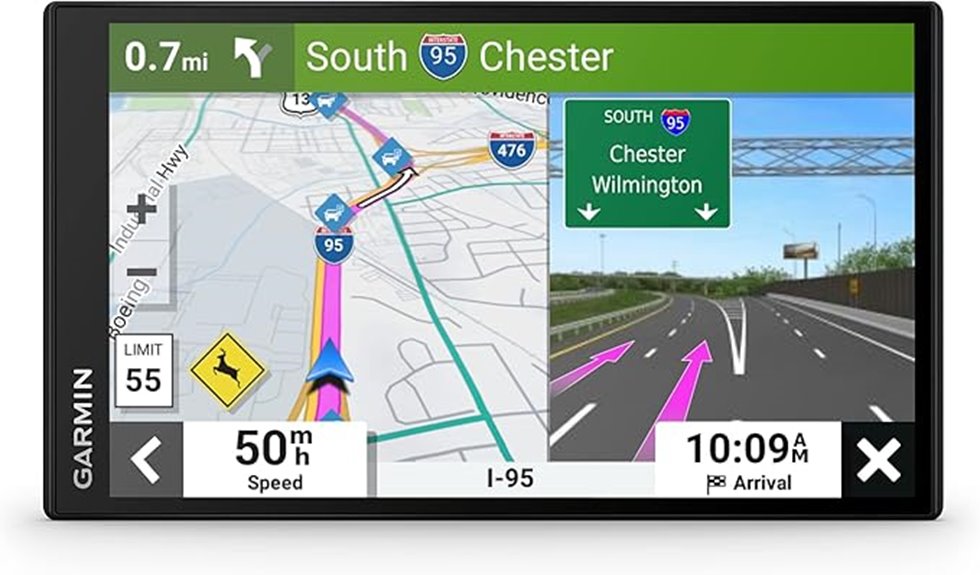
The Garmin DriveSmart 76 stands out as a strong choice for drivers who want a large, easy-to-read 7-inch display and reliable turn-by-turn guidance with modern convenience features. It offers high-resolution North America maps, live traffic, weather, and traffic cam data through the Garmin Drive app. Voice assist supports hands-free calling and navigation requests, while Bluetooth and Wi-Fi simplify connectivity and updates. Safety alerts warn of school zones, sharp curves, and speed changes. Road trip tools include national parks, Tripadvisor ratings, and Foursquare points. Alexa built-in and a dual USB charger add convenience.
Best For: Drivers who want a large, easy-to-read 7-inch GPS with live traffic, safety alerts, and convenient voice-assisted connectivity for everyday commuting and road trips.
Pros:
- Large 7-inch high-resolution display is easy to read at a glance
- Live traffic, weather, and traffic cam updates help with route planning
- Helpful road trip and smart features like national parks, Tripadvisor, Foursquare, Bluetooth, Wi-Fi, and Alexa built-in
Cons:
- North America maps may limit usefulness for international travel
- Alexa and app-based features depend on smartphone connectivity and setup
- Bulkier than smaller GPS units, so it may take up more dashboard space
Garmin DriveSmart 86 8-inch Car GPS Navigator
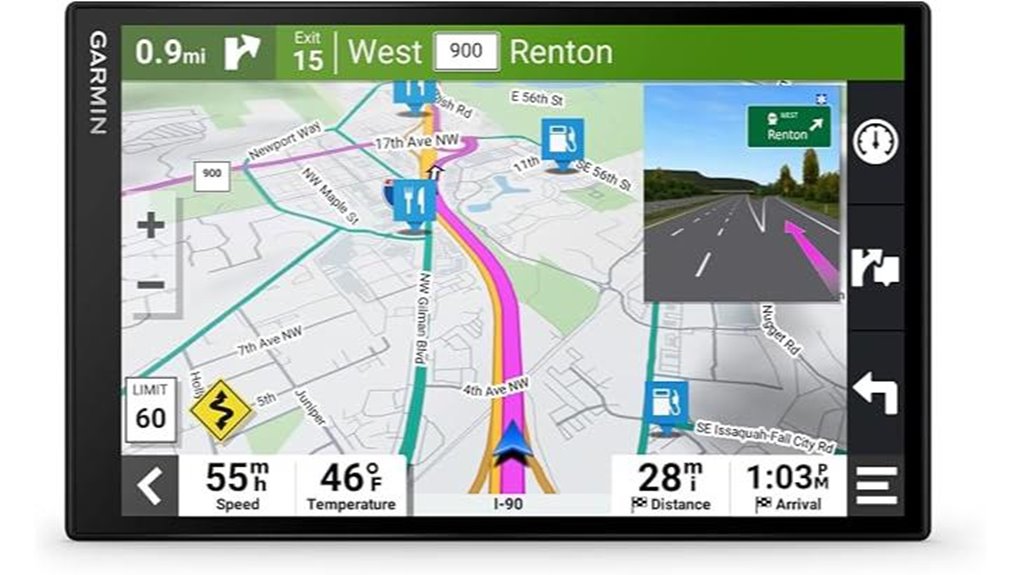
With its 8-inch dual-orientation display, the Garmin DriveSmart 86 suits drivers who want clear, large-screen guidance. It includes North America map updates and Garmin Real Directions for straightforward turn-by-turn direction. Bluetooth hands-free calling, Garmin voice assist, and built-in Wi-Fi support easier use and simple updates. When paired with the Garmin Drive app, it can show live traffic, fuel prices, weather, and parking. Driver alerts help flag school zones, sharp curves, and speed changes, while HISTORY, national parks, Tripadvisor, and Foursquare POIs support trip planning. Alexa Built-in and smart notifications add convenience.
Best For: Drivers who want a large, easy-to-read GPS navigator with voice guidance, live traffic and travel info, and helpful safety alerts for everyday commuting or road trips.
Pros:
- 8-inch dual-orientation display makes directions easy to see
- Bluetooth, voice assist, Wi‑Fi, and Garmin Drive app support add convenience
- Useful travel and safety features like driver alerts, Tripadvisor, HISTORY, and national parks info
Cons:
- North America map focus may not suit international travelers
- Some live features require pairing with a smartphone and the Garmin Drive app
- Larger screen and extra features may be more than casual drivers need
Rand McNally TND 550 Truck GPS Navigator
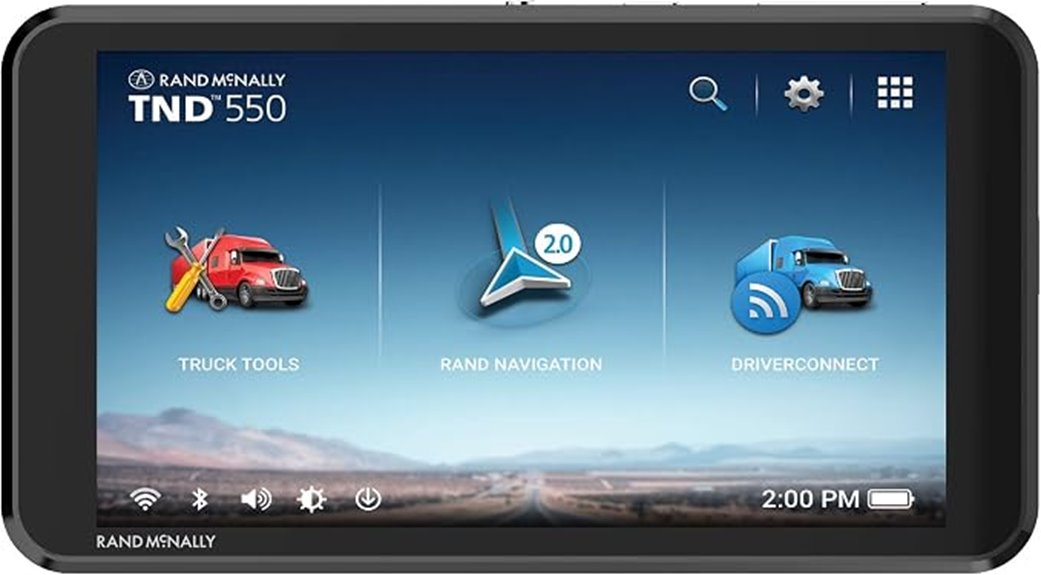
Designed for truck drivers, the Rand McNally TND 550 prioritizes custom trucking routes and truck-specific POIs. Its 5-inch capacitive LCD touchscreen displays 480×854 resolution graphics with 3-D junction views, real-time traffic updates, and dynamic weather overlays. Rand Navigation 2.0 supports downloadable 2025 maps, while 3-D buildings and landmarks improve situational awareness. Bluetooth and Wi-Fi add smartphone compatibility, and AUX output handles audio needs. The unit uses a heavy-duty suction mount, weighs 4.4 ounces, and offers about five hours of battery life. Rand McNally backs it with a one-year limited warranty and a 30-day return guarantee.
Best For: Truck drivers who want a compact 5-inch GPS navigator with custom trucking routes, truck-specific POIs, and updated navigation features.
Pros:
- Rand Navigation 2.0 with downloadable 2025 maps
- Truck-focused features like custom routes, 3-D junction views, and dynamic weather overlays
- Bluetooth, Wi-Fi, and AUX output for added connectivity and audio support
Cons:
- Small 5-inch screen may feel limited for some drivers
- Battery life averages only about 5 hours
- Model year 2020 may be less current than newer GPS units
Factors to Consider When Choosing GPS Navigation for Cars 2026: Top-Rated Picks
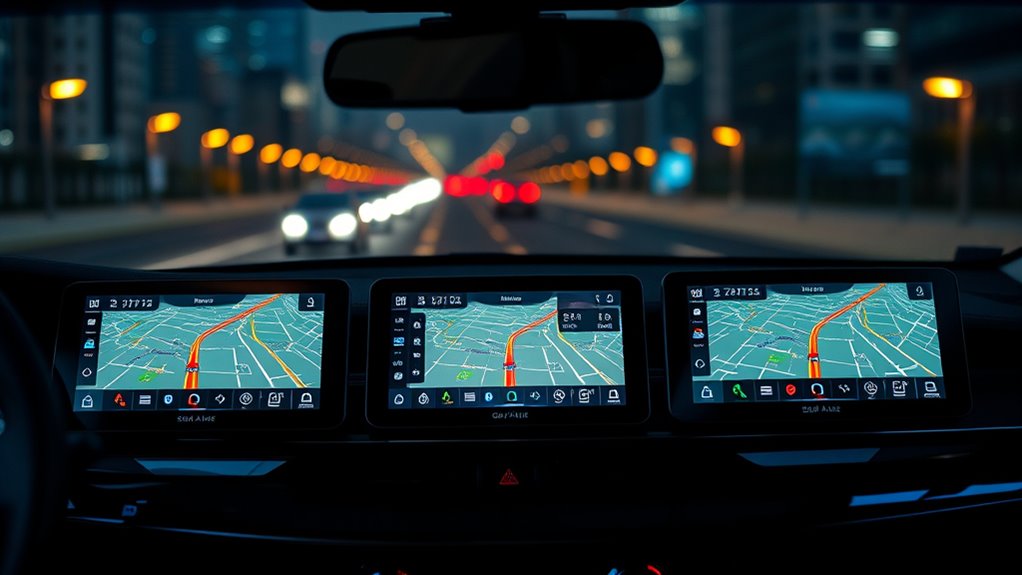
Choosing GPS navigation for cars in 2026 starts with screen size, since a clear display can improve route visibility and reduce distraction. Map update coverage, live traffic features, and voice control options also shape how well a unit performs in daily driving. Safety alert systems remain a key consideration for drivers seeking a more informed and secure navigation experience.
Screen Size Matters
A clear display can make a GPS navigation system far easier to use at a glance. Screen size is a major factor, and displays in the 7- to 8-inch range often offer the best balance of visibility and compactness. A larger screen reduces eye strain, making maps, lane guidance, and turn prompts easier to read while driving. High-resolution panels add further value by sharpening road names, icons, and points of interest, which helps in unfamiliar neighborhoods. Dual-orientation support can also improve fit, letting the device work in landscape or portrait mode depending on dashboard space. Extra screen real estate supports split-screen views, so directions and live traffic can appear together. In dense city driving, that added clarity can improve accuracy at complex intersections.
Map Update Coverage
Map update coverage is a critical factor because it determines how accurately a GPS system can guide drivers through current roads, closures, and traffic changes. Devices with broad, reliable map support tend to deliver better routing, safer detours, and fewer navigation errors over time. Many models now include free lifetime map updates, reducing long-term ownership costs while keeping road databases current. Coverage should also match intended travel habits: some units focus on North America, while others provide international maps for cross-border or overseas use. Regular updates may add new points of interest and reflect revised road networks. Update frequency matters as well, since more frequent releases usually improve accuracy and user confidence. A strong update policy often signals lasting value.
Live Traffic Features
Live traffic intelligence is one of the most valuable features in a car GPS, because it provides real-time congestion and road-condition updates that help drivers avoid delays and select faster routes. Modern navigators often combine traffic cameras, historical patterns, and other live data sources to improve accuracy and timeliness. Alerts for accidents, road closures, and construction give drivers a clearer picture of changing conditions before they become major setbacks. Some devices also recalculate routes automatically, allowing seamless detours when congestion builds or incidents appear ahead. Smartphone app integration can further enrich the experience by adding fuel prices, weather information, and parking availability along the route. For frequent commuters and long-distance travelers, these capabilities make live traffic support a critical factor in overall GPS performance.
Voice Control Options
Voice control options are a key factor in modern car GPS navigation, since they let drivers manage routes, answer calls, and access smart notifications without taking their hands off the wheel. Well-designed systems support spoken destination entry, route changes, and call handling with minimal distraction. Advanced assistants can also deliver navigation prompts, traffic updates, weather reports, and points of interest in real time, helping drivers stay informed on the move. When paired with a high-resolution display, voice guidance improves clarity by reducing the need for constant visual checks. Some models add Alexa integration, allowing music, audiobooks, and news to be controlled by voice. In practice, stronger voice features make GPS navigation more convenient, efficient, and easier to use during everyday driving.
Safety Alert Systems
Safety alert systems play a major role in modern car GPS navigation by warning drivers about school zones, sharp curves, speed changes, and other road hazards before they become a problem. These notifications help drivers stay aware of changing conditions and reduce the likelihood of accidents. Many devices also use real-time traffic data to flag delays and hazards, making route decisions safer and more efficient. Driver alerts can reinforce safer habits by reminding motorists of speed limits and road conditions at the right moment. Advanced units may include dynamic weather overlays, helping users anticipate rain, fog, or other disruptions ahead. When combined with voice-activated operation, these features support safer, less distracting travel by keeping attention focused on the road.
Smartphone Connectivity
Smartphone connectivity has become a key factor in choosing a car GPS navigator, as many models now sync with dedicated apps to deliver live updates, notifications, and route changes directly from a phone. Bluetooth support adds hands-free calling and voice-activated navigation, helping reduce manual interaction while driving. Built-in Wi-Fi also matters, since it allows map and software updates without a computer, keeping navigation data current. Many devices now display smart notifications for calls and messages, letting drivers stay informed with fewer distractions. Integration with popular apps can further improve trip planning by supplying real-time traffic, fuel prices, and weather information. Together, these features make connected navigation more responsive, practical, and better suited to modern driving needs.
Mounting and Portability
After considering smartphone connectivity, the next practical factor is how the GPS navigator fits into the vehicle and daily routine. Mounting type matters because a dashboard mount can provide steady positioning and quick visibility without constant adjustment. A unit with a lighter build is easier to move between cars, pack away, or handle when parking is finished. Size also influences convenience: a larger screen may improve map readability, while a compact body can blend more cleanly into the cabin. Built-in charging support, including dual USB options, helps keep the device powered during travel and reduces cable clutter. Battery life should not be overlooked, since longer runtime gives portable units more flexibility when they are used outside a plugged-in setup or transferred between vehicles.
Extra Travel Tools
A well-equipped GPS navigator can do more than guide turns, with expansive POI databases, including millions of Foursquare listings and Tripadvisor ratings, helping drivers discover restaurants, attractions, and services along the way. Systems with U.S. national parks directories and historical sites databases add value for road trips, turning transit time into discovery. Real-time traffic, weather, and fuel price updates further improve planning by supporting faster routes and smarter stops. Voice-activated assistance is another useful extra, since it lets drivers manage navigation and entertainment without taking hands off the wheel. Built-in Alexa access can also stream music, audiobooks, and news, which helps reduce boredom on long drives. These travel tools make a navigator more versatile and practical for everyday commuting and extended journeys alike.
Frequently Asked Questions
How Often Do GPS Map Updates Occur?
GPS map updates typically occur every few weeks to several months, depending on the manufacturer and device model. Some systems receive quarterly updates, while others rely on annual releases. Connected navigation services may update more frequently, sometimes automatically in the background. The update rate usually depends on road changes, licensing agreements, and whether the device uses built-in maps or live cloud-based navigation data.
Can GPS Devices Work Without Cellular Data?
Yes, GPS devices can work without cellular data because they receive positioning signals directly from satellites. A device with preloaded maps can still provide turn-by-turn navigation, route calculations, and location tracking offline. Cellular data mainly helps with live traffic, weather, and map updates. In remote areas, offline GPS remains useful, though accuracy may depend on satellite visibility and whether the device stores current map information locally.
Do These Navigators Support Voice Control?
Yes, many navigators support voice control, allowing drivers to enter destinations, search points of interest, and adjust settings hands-free. This feature can improve safety by reducing distraction, especially during traffic or long trips. Availability varies by model, so some units offer advanced natural-language commands while others provide only basic spoken input. The most capable systems also integrate with smartphones and car infotainment platforms for easier operation.
Are GPS Units Compatible With All Car Models?
No, GPS units are not universally compatible with all car models. Like a key that fits many, but not every lock, compatibility depends on mounting options, power connections, dashboard design, and whether the unit uses Bluetooth or vehicle integration features. Most portable navigators work in many cars, yet some built-in systems or larger screens may require specific hardware. Checking the vehicle’s specifications before purchase remains the safest approach.
How Long Do GPS Batteries Typically Last?
GPS batteries typically last about 2 to 8 hours on a single charge, depending on screen brightness, map use, satellite connection, and battery size. Many handheld units fall near the middle of that range, while some car GPS devices rely on vehicle power and have smaller internal batteries mainly for backup. Battery lifespan over years usually declines after 2 to 4 years, especially with frequent charging and heat exposure.
Conclusion
In the crowded road ahead, the Garmin DriveSmart 76 and 86 shine like dependable headlights, guiding drivers with clear screens, live traffic, and helpful alerts. For commercial hauls, the Rand McNally TND 550 stands like a seasoned co-pilot, built for the long grind of the highway. Choosing the right GPS is less about gadgets than about trust; the best device becomes the quiet compass that turns every journey into a smoother, safer ride.