
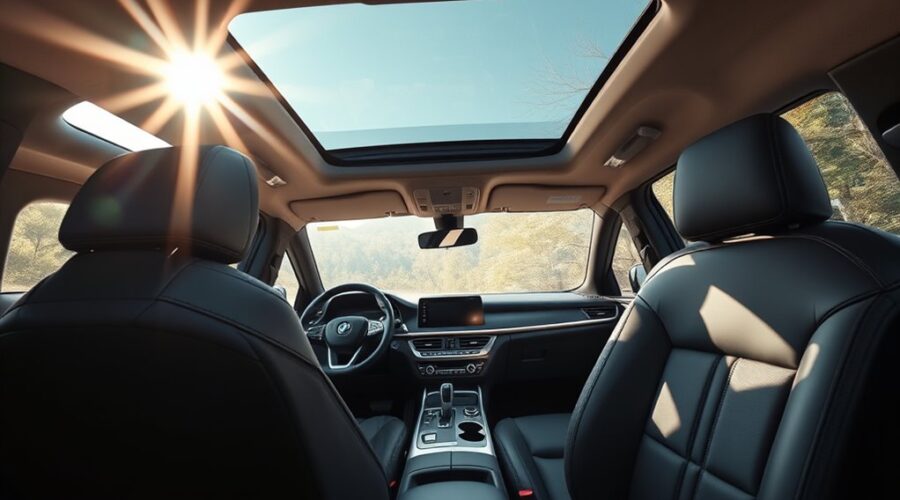
Vehicle interior space is measured in a few standard numbers: front and rear legroom, headroom, shoulder room, passenger volume and cargo volume. Compare those figures between cars, then confirm them with a seat-by-seat test, because the listed numbers do not show how a cabin feels.
Quick answer
- Legroom and headroom: check front and rear, since rear figures vary most.
- Cargo volume: compare seats up and seats folded, and note whether it is quoted in cubic feet or litres.
- Test it: sit behind your own driving position and load your own gear.
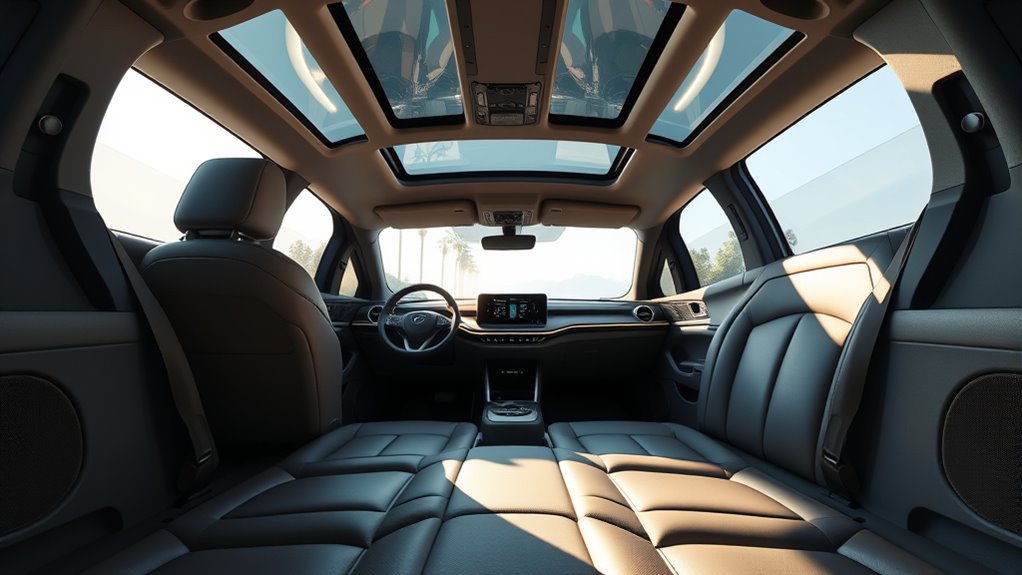
The numbers that describe interior space
| Measure | What it tells you |
|---|---|
| Front and rear legroom | How much room for your legs, usually the key limit for adults in the back |
| Headroom | Space between your head and the roof; sunroofs often reduce it |
| Shoulder and hip room | Whether three people fit across the rear seat |
| Passenger volume | Total cabin volume for people, in cubic feet or litres |
| Cargo volume | Luggage space behind the rear seats, and with the seats folded |
Different standards produce different numbers. North American figures usually follow SAE methods in cubic feet, while European and many Canadian-market specs use litres measured with VDA blocks. One cubic foot is about 28.3 litres, so convert before comparing.
How layout changes the feel of a cabin
- Flat floors: electric cars have no transmission tunnel, which can make the middle rear seat more usable.
- Wheelbase: a longer wheelbase usually allows more rear legroom without a longer car.
- Glass area and roofline: big windows and a high roof make a cabin feel airier, while a sloping roof can cut rear headroom.
- Console design: a slim console or an open storage area gives you more usable room than the raw numbers suggest.
Rear-seat comfort to check
In larger and luxury cars, the rear seat matters as much as the front. Look at legroom, cushion length, seat-back angle, rear climate controls and how easy it is to get in and out.
Features that make space more usable
- Storage: door bins, a deep console and under-floor compartments keep clutter out of sight.
- Seat adjustment: lumbar support and adjustable cushions reduce fatigue on long drives.
- Controls: physical buttons for climate and volume are quicker to use than menus on a touchscreen.
- Insulation: sound-damping materials make a cabin feel calmer even if the size is the same.
How to test interior space before you buy
- Set the driver’s seat for yourself, then sit directly behind it.
- Check knee room, head clearance and foot space for each rear seat.
- Install your child seat or bring your usual gear, such as a stroller, hockey bag or winter boots.
- Fold the rear seats and check the opening, floor flatness and load height.
- Look for visibility problems from the driver’s seat, including thick pillars and a small rear window.
For specific cars, see how these ideas play out in our guides to the Honda Civic interior, Ford Bronco interior and Audi e-tron GT interior. For the design side, read car interior design explained.
Frequently Asked Questions
How is vehicle interior space measured?
It is described with legroom, headroom, shoulder room, hip room, passenger volume and cargo volume. Standards differ, so compare figures from the same measurement method.
What is the difference between passenger volume and cargo volume?
Passenger volume is the cabin space for people, while cargo volume is the luggage space behind the seats or with them folded.
How do I convert cubic feet to litres?
Multiply cubic feet by about 28.3 to get litres. For example, 10 cubic feet is roughly 283 litres.
Why is rear legroom important?
It is often the biggest difference between cars of similar size and decides whether adults can ride comfortably in the back.
Do electric cars have more interior space?
Often they feel roomier because there is no transmission tunnel and the floor can be flat, but actual space depends on the car’s design and wheelbase.
How should I test interior space before buying?
Sit behind your own driving position, check rear knee and head room, install child seats or gear you carry, and fold the seats to check cargo space.