
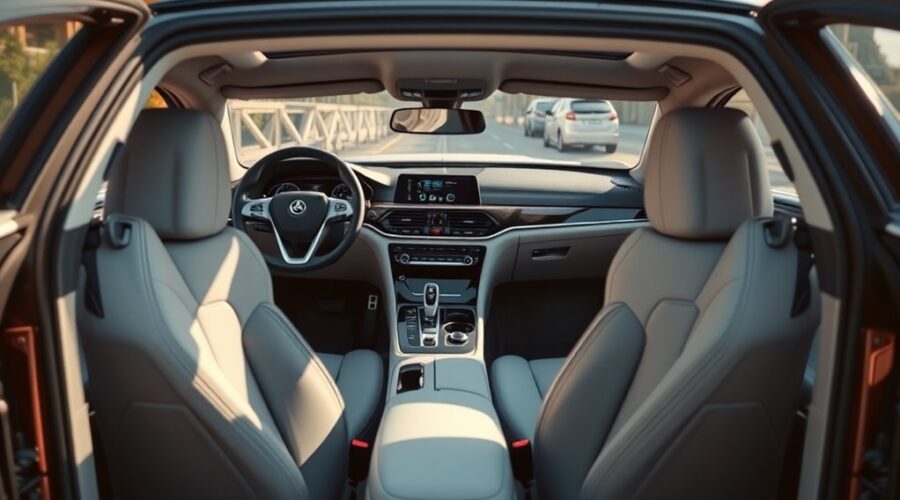
Car interior design is built around a simple goal: make the cabin work for the driver without distraction. Seat position, control placement, sightlines, and material choice all shape how the space feels and functions. The best layouts reduce effort and improve control, while newer SUVs and EVs add room and cleaner surfaces. Yet the real difference often lies in details that are easy to miss at first glance.
Core Principles of Car Interior Design
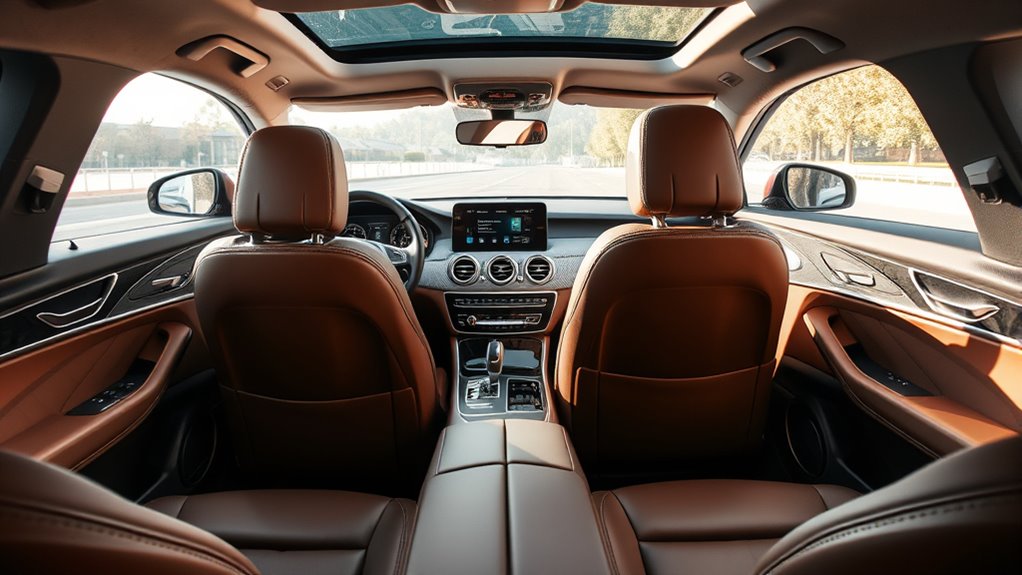
The cabin is designed around the driver, with controls placed for immediate reach and sightlines arranged to preserve focus and safety. In car interiors, interior design is organized to reduce friction between intention and action, giving the occupant a clearer path through traffic and distance.
The driver’s seat is positioned to support a natural posture, and ergonomics shape the angle of the torso, knees, and arms to limit fatigue on long journeys. Materials are chosen for durability and touch quality; soft surfaces meet abrasion-resistant upholstery, so use does not quickly erode the environment.
Ergonomic seating and durable materials ease long journeys, keeping the cabin comfortable, resilient, and quietly refined.
Precise assembly and tight tolerances limit vibration, preserve quiet, and keep the cabin feeling solid as time passes. Technology integration adds information without clutter, placing displays in the forward field while retaining physical controls for essential safety features.
The result is a controlled space that supports alert motion, steadier judgment, and a sense of release from unnecessary strain.
Driver-Focused Layout and Ergonomics
A driver-focused cockpit angles key controls toward the seat, reducing reach and making essential functions easier to access without interrupting attention to the road.
This driver-focused layout places instruments in a tight visual arc, so glance shifts stay brief and the road remains dominant in the driver’s field of view. Frequently used controls are grouped logically, lowering cognitive load and allowing adjustments to happen with minimal hesitation.
Ergonomically designed seats support an upright, relaxed posture with thigh and lumbar support, helping the body hold a stable position over long distances.
Clear visibility is preserved through careful placement of pillars, screens, and mirrors, while the steering wheel is set for consistent reach across different body sizes.
The result is a cabin that feels responsive rather than restrictive, where comfort is engineered through proportion, access, and sightline discipline.
How Seats and Materials Shape Cabin Comfort
Seats do much of the cabin’s comfort work through precise shaping and placement: ideal height, lumbar support, and alignment with the pedals and steering wheel help position the body in a natural posture that reduces fatigue on long drives.
In the interior of a car, these design elements turn restraint into ease, giving the driver space to move with less tension. Ergonomic design also depends on proper thigh support, which steadies circulation and keeps pressure from building during extended use.
High-contact zones are typically finished with soft-touch materials and durable upholstery, balancing comfort with resistance to wear. Leather treated for abrasion resistance adds a refined surface while extending service life.
Together, seats and materials create a cabin that feels composed, tactile, and built for daily freedom, where comfort is not decoration but a structural condition of relaxed, confident driving.
Why Car Interior Tech Should Stay Simple
Modern cabin technology works best when it reduces mental effort rather than adds to it.
In cars, Interior Design should keep the cockpit legible, with an infotainment display positioned near the driver’s natural line of sight and a clear visual hierarchy for speed, alerts, and navigation. This arrangement limits eye travel and preserves driver focus.
For critical functions, physical controls still matter: climate, volume, and defrost should be reachable by touch, without burying them in menus. Logically grouped switches and restrained software layers make frequent actions fast, predictable, and calm.
That simplicity supports a more liberated drive, because attention stays on the road, not on interface puzzles. When controls are intuitive and data is organized, the cabin feels less like a command maze and more like an extension of intent.
The result is safer, lighter, and more direct.
How SUV and EV Interiors Change the Formula
SUV and EV interiors alter the design formula by expanding usable volume and rethinking how space is organized around occupants. In an SUV, the interior often emphasizes spaciousness and versatility, with configurable seating, deep cargo wells, and storage zones that support movement without constraint.
Electric vehicles push this further: flat floors, compact drivetrains, and open footwells create a cabin that feels less segmented and more liberated.
- User-friendly technology places displays within the driver’s line of sight.
- Sustainable materials soften surfaces while reducing environmental impact.
- Lounge-like layouts support relaxation as autonomy grows.
- Flexible seating improves access, comfort, and social interaction.
Together, SUV and electric vehicles redefine interior architecture as a system for comfort, access, and adaptability rather than fixed compartments. The result is a cleaner visual field, greater passenger freedom, and a cabin that responds to changing use with technical precision.
Frequently Asked Questions
What Is the 70/30 Rule in Interior Design?
The 70/30 rule allocates 70% to functional space optimization and ergonomic design, with 30% for aesthetic expression. It guides material selection, lighting effects, color psychology, and texture contrast, balancing utility with liberated visual appeal.
What Is the $3000 Rule for Cars?
The $3000 rule for cars is a financial litmus: repair costs above $3,000 on vehicles under $10,000 trigger value assessment, budget planning, car upgrades, resale value, maintenance costs, and feature prioritization, preserving mobility and freedom.
What Is the 30-60-90 Rule for Cars?
The 30-60-90 rule places primary controls within 30 degrees of sight and 60 centimeters reach, supporting ergonomic seating, dashboard layout, material selection, lighting design, sound insulation, and storage solutions for liberated, precise driving.
What Color Car Is Least Stolen?
White cars are least stolen; in one survey, black made up 50% of stolen vehicles while white accounted for 20%. Stolen car statistics, color psychology, vehicle theft prevention, popular car colors, insurance implications, regional theft trends.
Conclusion
Car interior design ultimately resolves into a quiet equation: body position, control reach, material resilience, and visual clarity. When each element aligns, the cabin feels immediate, almost inevitable. Yet the most effective interiors reserve one final layer of uncertainty—how a driver will adapt over time, and how technology, space, and surface finish will age together. In SUVs and EVs especially, that answer is still unfolding, hidden in the next drive, the next seat adjustment, the next silent mile.