Disclosure: This article contains affiliate links. If you buy through them, we may earn a commission at no extra cost to you. This never affects which helmets we include or what we say about them.
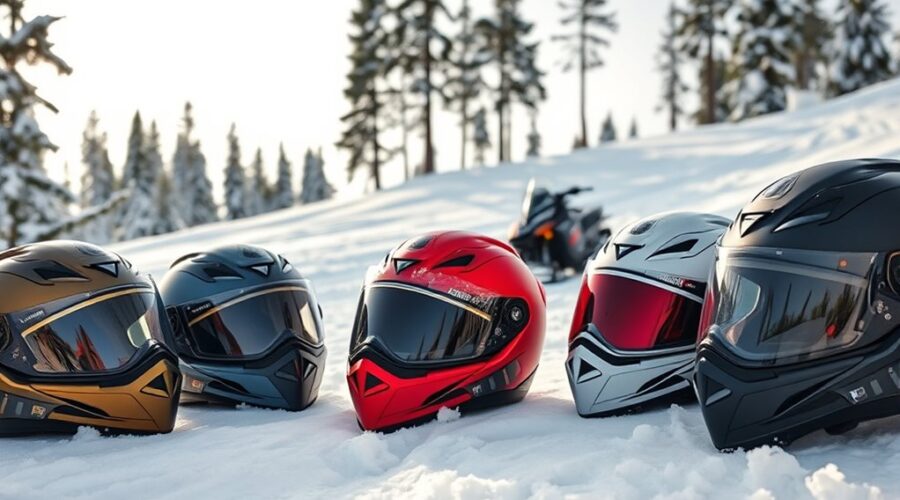
Picking a snowmobile helmet for the 2027 season comes down to one decision most buyers make too late: goggle-style or shield-style. Goggle-style helmets have a wide open eye port and rely on your goggles to seal out wind — warmer and far more fog-resistant, but the goggles are a separate purchase. Shield-style and modular helmets give you an all-in-one setup you can flip up at a trail stop, at the cost of more fogging risk unless the shield is dual-pane. Everything else — certification, insulation, breath box, ventilation, and fit — follows from that first choice. Below are three helmets built specifically for snow, covering both approaches.
Quick Comparison: 2027 Snowmobile Helmet Picks
| Helmet | Best For | Eye Protection | Certification | Price |
|---|---|---|---|---|
| 509 Tactical | Best Overall for goggle riders | Goggles (sold separately) | DOT / FMVSS 218 | Check Price |
| 509 Delta R3L Ignite | Most versatile / changing conditions | Shield + drop-down sun shield | DOT / FMVSS 218 + ECE | Check Price |
| Castle X Mode Dual Sport SV | Best value shield helmet | Shield | DOT + ECE | Check Price |
509 Tactical Helmet — Best Overall for Goggle Riders
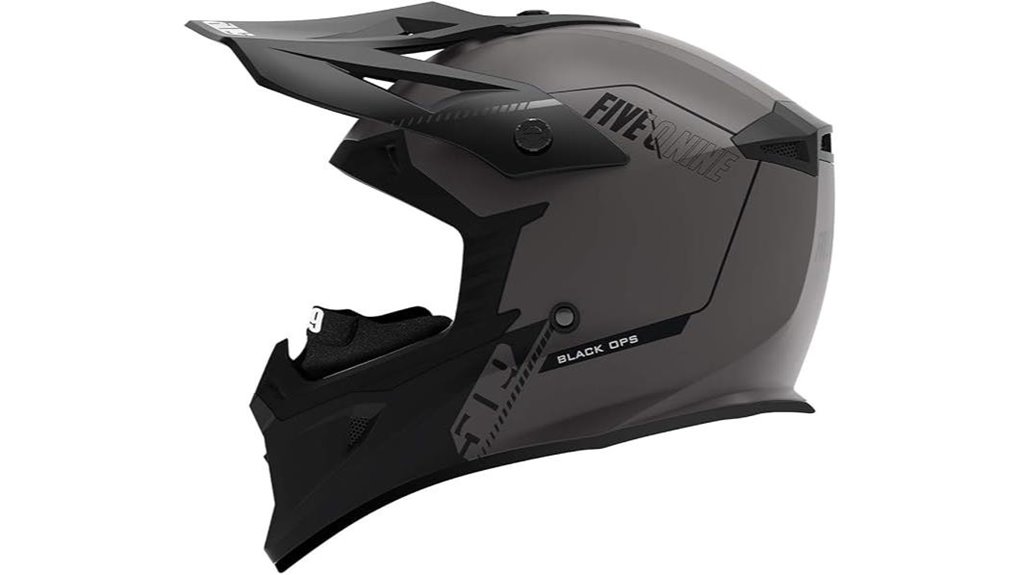
BEST OVERALL
The 509 Tactical is a DOT-approved snowmobile and snowbike helmet built around a polycarbonate shell with an EPS liner, and it meets FMVSS 218. Its defining feature is a class-leading eye port — the opening is unusually wide, which pays off on trails where you need to track terrain changes and oncoming sleds at the edge of your vision. It ships in six sizes from XS to 2XL across two outer shell molds, so larger sizes do not simply use thinner padding in the same shell. Adjustable ventilation and a removable cold-weather breath box let you dial airflow up on a hard climb and shut it down when the temperature drops, and the helmet is neck brace compatible. The premium liner is removable for cleaning.
Who Should Buy This: Riders who already own or plan to buy quality snow goggles, ride in genuinely cold conditions, and want maximum peripheral vision.
Who Should Avoid This: Riders who want an all-in-one helmet with a built-in shield, or who do not want the added cost of a separate goggle purchase.
Pros:
- DOT approved and meets FMVSS 218 impact testing standards
- Class-leading eye port for wide peripheral vision
- Six sizes across two shell molds for a more accurate fit
- Adjustable ventilation, removable cold-weather breath box, and neck brace compatibility
Cons:
- Goggles are required and sold separately, so budget for them
- Best sealing is with 509’s own goggle frames; other brands may leave gaps
- Open eye port design offers less wind protection than a shield if you ride without goggles
509 Delta R3L Ignite Snowmobile Helmet — Most Versatile
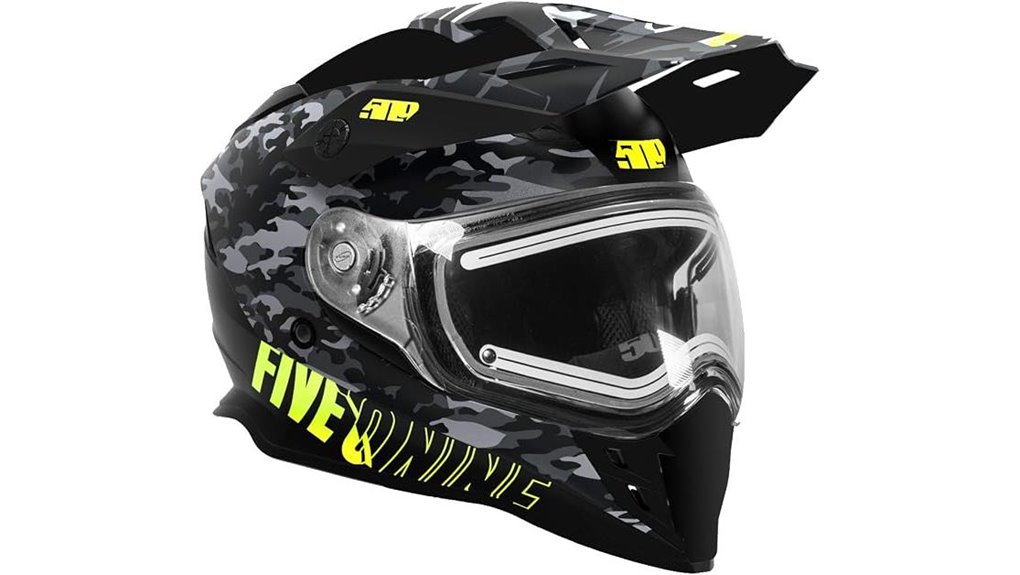
MOST VERSATILE
The Delta R3L Ignite is the adaptable pick here. Its modular design converts between dual sport, full, and open configurations, so the same helmet works for a groomed-trail run in the morning and a warmer afternoon where you want more airflow. A drop-down internal sun shield with an orange tint handles the low winter sun and flat light without swapping lenses, and the Fidlock magnetic chinstrap closure fastens with gloves on — a small thing that becomes a large thing at fifteen below. It carries DOT approval under FMVSS 218 plus ECE certification, which means it has passed two separate impact test regimes.
Who Should Buy This: Riders who face changing conditions in a single day and want one helmet that reconfigures instead of two helmets that do not.
Who Should Avoid This: Riders who want the lightest possible helmet, or who want a simple sealed full-face — modular helmets add hinges, latches, and weight.
Pros:
- Dual sport, full, or open configurations provide strong adaptability
- DOT and ECE certifications with FMVSS 218 compliance
- Drop-down internal sun shield handles glare without a lens swap
- Fidlock magnetic chinstrap is easy to operate with gloves on
Cons:
- Modular construction adds bulk and weight versus a fixed full-face
- Limited edition Black Camo styling will not suit every rider
- This specific listing is Large only, so check other listings for your size
Castle X Mode Dual Sport SV Helmet — Best Value Shield Helmet
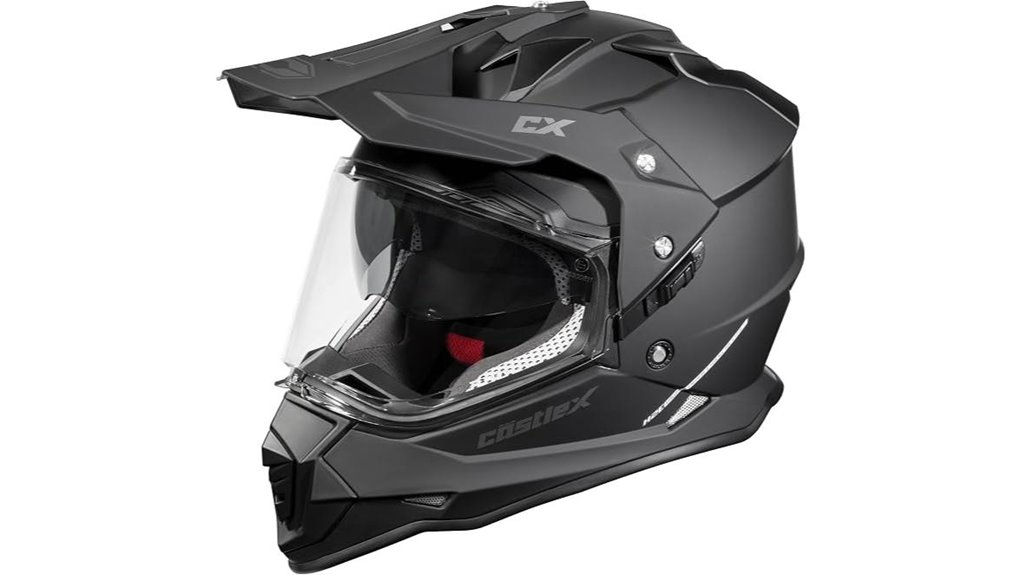
BEST VALUE
The Castle X Mode Dual Sport SV is the most straightforward helmet in this roundup, and for a lot of trail riders that is the point. It uses a hard polycarbonate shell over an EPS liner and carries both DOT and ECE certification, so it has cleared the same two test regimes as the more expensive Delta R3L. The dual sport profile gives you a peak and a shield in one package, and the streamlined shape is designed to stay settled at trail speed rather than lifting or buffeting when you turn your head into the wind. This listing covers the matte black finish in X-Large.
Who Should Buy This: Trail riders who want a certified, shield-equipped snow helmet without paying for modular hardware or a separate goggle setup.
Who Should Avoid This: Riders who ride in the deepest cold or at high exertion — a single-pane shield will fog more readily than a goggle setup, so confirm the shield type on the listing if fogging is your main concern.
Pros:
- DOT and ECE certified against two separate test standards
- Dual sport design covers trail riding without needing separate goggles
- Aerodynamic profile aimed at reducing lift and buffeting at speed
Cons:
- Matte black finish shows scuffs and fingerprints more easily
- This listing is X-Large only, so check sizing carefully
- Fewer cold-specific features than the goggle-based 509 Tactical
Factors to Consider When Choosing Snowmobile Helmets 2027: Warm, Safe Trail Picks
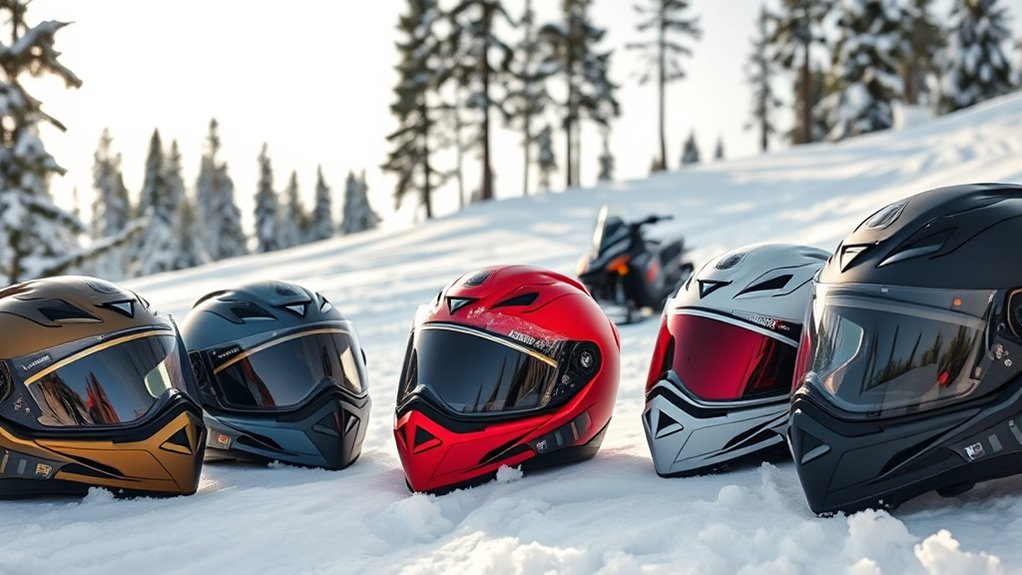
Choosing a snowmobile helmet for 2027 trail rides depends first on how you protect your eyes, since goggles and shields behave very differently in the cold. From there, insulation and warmth, safety certifications, ventilation and breath box design, and weight and fit all shape whether a helmet is still comfortable three hours into a ride.
Goggles Vs Shield
This is the first fork in the road. Goggle-style helmets have a large open eye port and rely on your goggles to seal against wind and snow. Because the goggle lens sits away from your face with its own vent path, this setup resists fogging better than almost anything else, and it is the warmest option in deep cold when paired with a balaclava. The trade-off is cost and matching: goggles are a separate purchase, and frames from other brands may not seal cleanly against the eye port. Shield-style helmets are simpler and cheaper overall, with nothing extra to buy and nothing to lose at a trail stop. Their weakness is fog, which is why dual-pane shields exist — two layers with an insulating air gap between them, working the same way a double-glazed window does. If you choose a shield helmet and ride in real cold, a dual-pane or heated shield is worth the upgrade.
Insulation And Warmth
When trail temperatures drop, insulation becomes a defining factor in helmet performance, with EPS and other insulating materials helping trap warmth against the cold. Cold-weather models often add extra insulating layers to hold heat longer during exposed rides. A snug fit matters as well, because reduced gaps limit cold air infiltration. A chin curtain — the fabric skirt at the base of the helmet — does more for warmth than most buyers expect, since it blocks the updraft of cold air coming off the windshield. Removable liners make cleaning easier and let you adjust insulation as conditions change. Ventilation should still be present, since controlled airflow helps moisture escape and prevents dampness from building inside the shell.
Safety Certifications
Safety certifications are the starting point for evaluating any helmet, because DOT and ECE ratings confirm a model has been tested for impact protection under a defined standard. DOT approval means compliance with Federal Motor Vehicle Safety Standard 218; in the United States, DOT certification operates largely on manufacturer self-certification with spot-check enforcement, so brand reputation still matters. ECE certification involves batch testing by an approved body across multiple impact conditions, which is why a helmet carrying both marks gives you more to go on than one carrying either alone. Certified helmets typically use polycarbonate shells with expanded polystyrene liners — the shell spreads the impact, the EPS crushes to absorb it. Treat certification as a floor, not a ranking: it separates tested helmets from novelty ones, but it does not tell you which of two certified helmets performs better.
Ventilation And Breath Boxes
Effective ventilation channels airflow through the shell, helping regulate temperature and reduce overheating during hard trail use. Adjustable vents matter more on a snow helmet than a street helmet, because you need to close them down when you stop moving and the wind chill takes over. Breath boxes add another layer of control by routing exhaled air down and away from the lens instead of straight up into it, which is the single biggest cause of fogging in cold conditions. If you wear a balaclava, check that it does not sit between your mouth and the breath box — a common mistake that channels warm breath straight up behind the lens and defeats the whole system. Removable breath boxes also simplify cleaning.
Weight And Comfort
Helmet weight and overall fit shape trail comfort, especially on long rides where extra mass adds neck strain over hours. Be careful with weight figures on retail listings — many show shipping weight including the box, which is why the same category of helmet can appear to range from two to six pounds. Most full-face snowmobile helmets land in a much narrower real-world band, and modular helmets sit at the heavier end because of their hinge hardware. Judge weight from the manufacturer’s own spec sheet rather than the listing header. Fit matters just as much: measure your head circumference above the eyebrows, compare it against the specific brand’s size chart rather than assuming your usual size, and check the fit with the balaclava you actually ride in. Interior liners made from moisture-wicking materials help manage sweat, and a helmet that comes in multiple shell molds will fit larger sizes better than one that just adds thinner padding.
Before You Buy: Quick Checklist
- Measured your head circumference and checked it against that brand’s chart, not a generic one
- Decided goggle-style or shield-style, and budgeted for goggles if goggle-style
- Confirmed the shield type on the listing if you ride in deep cold (single-pane, dual-pane, or heated)
- Confirmed the listing has your size and colour in stock before clicking through
- Checked whether a breath box and chin curtain are included or sold separately
- Verified the DOT or ECE certification is stated on the product listing itself
Frequently Asked Questions
Goggles or a Shield for Trail Riding?
Goggles generally win on fog resistance and warmth, because the lens sits away from your face with a dedicated vent path, and they seal tightly against the eye port when the frame matches the helmet. Shields win on convenience and total cost — nothing extra to buy, nothing to lose at a trail stop, and you can flip up for a conversation. Many riders who log long cold-weather miles end up on goggles; many riders doing shorter groomed-trail runs are happier with a shield.
Do Snowmobile Helmets Work With Heated Goggles?
Yes, snowmobile helmets can work with heated goggles if the fit, seal, and ventilation align properly. Compatibility depends on helmet shape, goggle strap placement, and power-cord routing. Some setups may cause pressure points or fogging if not matched well. Heated goggles improve visibility in cold conditions, but test the combination before riding to confirm comfort and safety.
Can I Wear a Ski Mask Under My Helmet?
Yes, a ski mask can usually be worn under a helmet if it is thin, smooth, and does not affect fit or block ventilation. It should sit comfortably without creating pressure points or pushing the helmet loose. A purpose-made balaclava or helmet liner is usually a better choice, since it is cut to sit correctly around a breath box. Thick fabric, seams, or bulky knots reduce both safety and comfort during trail riding.
How Often Should I Replace My Snowmobile Helmet?
Most manufacturers recommend replacement roughly every five years, since liner foam and shell materials degrade with age, sweat, and UV exposure. Replace immediately after any crash or hard impact, even without visible damage, because the EPS liner compresses permanently on the first hit. Changes in fit, exposed foam, cracked shells, and frayed straps all signal replacement.
Are Modular Helmets Good for Trail Riding?
Yes, modular helmets work well for trail riding when convenience matters. The chin bar lifts for quick breaks, conversation, or goggle adjustment without removing the helmet. They balance warmth, visibility, and protection well on groomed trails. The trade-offs are added weight and hinge hardware. Proper certification, correct fit, and a secure closure remain essential.
What Helmet Size Is Best for Long Rides?
The best helmet size for long rides is one that fits snugly without pressure points. It should stay stable when you shake your head, yet not squeeze the temples, forehead, or jaw. A proper fit reduces fatigue, improves warmth, and keeps noise down. Measure your head, check each brand’s own fit profile since shell shapes vary, and try it on with your balaclava before committing.
Conclusion
The best snowmobile helmets for warm, safe trail rides in 2027 balance certified protection, insulation, and clear vision without becoming a burden over a long day. Fogging is the failure most riders actually experience on the trail, which is why breath boxes, dual-pane shields, and goggle-friendly eye ports matter as much as the certification label.
Final Recommendation
If you ride in serious cold and already own good goggles, the 509 Tactical is the pick — the widest eye port here and the most complete cold-weather system. If your conditions change through the day, the 509 Delta R3L Ignite adapts without needing a second helmet. If you want a certified snow helmet that just works, the Castle X Mode Dual Sport SV gets you there for less.