

2000s cars were shaped by hybrid efficiency, the rise of SUVs and crossovers, electronic safety systems and retro styling, while sports cars became faster and more technical. This guide covers the design trends, the iconic models and the technology that defined the decade.
Quick Answer
2000s car design was shaped by four big forces: hybrid efficiency, the rapid rise of SUVs and car-based crossovers, stronger safety systems, and heritage-inspired styling. At the same time, sports cars became more technically sophisticated, while navigation, Bluetooth, and electronic controls moved closer to everyday use.
Key Traits of 2000s Car Design
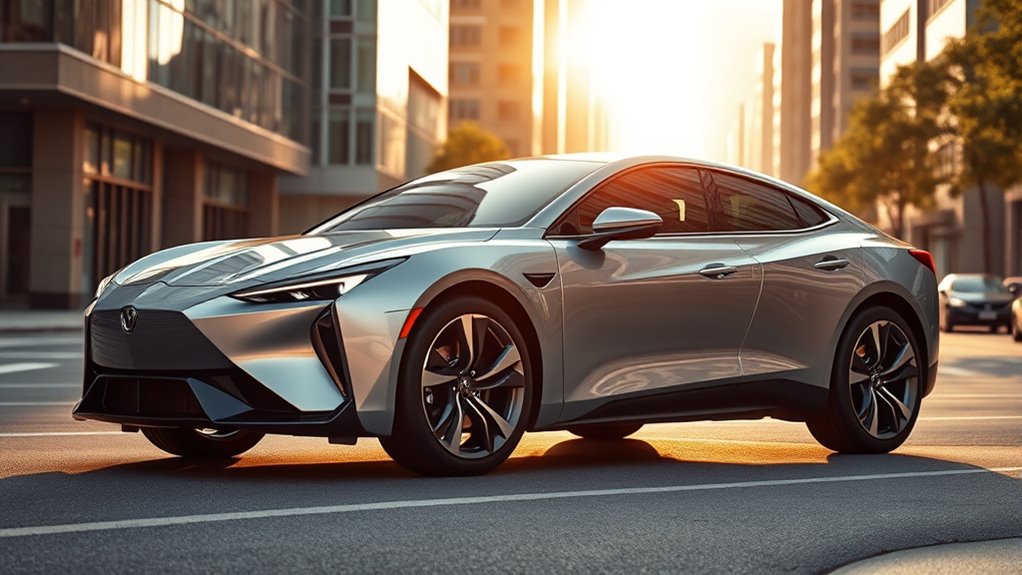
The defining traits of 2000s car design were not limited to body shapes. Automakers increasingly used styling, packaging, electronics, safety systems, and powertrain choices together, so a car’s design communicated what it was meant to do as clearly as its badge did.
Fuel efficiency became a visible design theme. Toyota’s redesigned Prius used a high-roof, tapered profile that Toyota called its triangular silhouette, giving the hybrid an appearance that was immediately different from conventional sedans.
Toyota confirms that the second-generation Prius ran from 2003 to 2009 and paired its distinctive shape with the Toyota Hybrid System II. Instead of hiding the technology inside an ordinary sedan, its exterior helped make efficiency part of the car’s identity.
Safety also became more integrated into vehicle engineering. Electronic stability control, advanced airbag systems, stronger occupant structures, and side-impact protection became increasingly important across the decade.
Cabins changed too. Factory navigation, Bluetooth connectivity, multifunction displays, steering-wheel controls, and more sophisticated audio systems became increasingly available, laying the groundwork for today’s connected interiors.
At the same time, buyers continued moving toward SUVs and car-based crossovers. Higher seating positions, useful cargo space, all-wheel-drive availability, and more car-like driving manners made these vehicles practical alternatives to sedans and traditional truck-based SUVs.
The Most Influential 2000s Car Styles
The most influential 2000s car styles came from several competing ideas rather than one dominant shape. Aerodynamic hybrids, compact crossovers, large luxury SUVs, retro-inspired cars, and sharply defined sports cars all became recognizable parts of the decade.
The Prius represented one direction: aerodynamic efficiency expressed through an unusual profile. Compact crossovers such as the Toyota RAV4 and Honda CR-V represented another, combining an elevated seating position with dimensions and road manners closer to a passenger car.
American design also became more assertive. The 2005 Chrysler 300 used an upright grille, high beltline, and strong proportions to stand apart from softer sedans of the period.
Meanwhile, the fifth-generation Ford Mustang returned to classic long-hood, short-deck proportions. The Volkswagen New Beetle, Mini, Chrysler PT Cruiser, and later Chevrolet Camaro demonstrated different versions of the same idea: a modern vehicle could borrow recognizable cues from an older one without recreating its engineering.
This variety is one reason the decade remains easy to recognize. Efficiency, utility, nostalgia, luxury, and performance were often expressed through clearly different visual identities rather than a single industry-wide design formula.
Sports Cars That Shaped the Decade
Sports cars of the 2000s combined rising power with better chassis control, stronger brakes, improved aerodynamics, and increasingly capable electronics. The decade produced everything from relatively accessible rear-wheel-drive coupes to mid-engine supercars, while Japanese, American, and European brands followed very different engineering paths.
The Nissan 350Z, Chevrolet Corvette C6, Ford GT, Honda S2000, Subaru Impreza WRX STI, Porsche 911, and Audi R8 all became recognizable examples of that range.
Performance Icons
Several performance cars became closely associated with the decade because each offered a distinct interpretation of speed. Some relied on high-revving naturally aspirated engines, others on V8 power, turbocharging, all-wheel drive, or a carefully balanced rear-wheel-drive chassis.
| Model | Key 2000s specification | Why it mattered |
|---|---|---|
| Nissan 350Z | 287-hp 3.5-liter V6 in the 2004 model | Made rear-wheel-drive Z-car performance accessible again. |
| Chevrolet Corvette C6 | 400-hp 6.0-liter LS2 V8 at launch | Combined major V8 performance with a more compact, refined Corvette package. |
| Porsche 911 GT3, 997 | 415 PS from its 3.6-liter engine in 2006 | Brought adaptive suspension and intense track focus to the GT3 formula. |
Nissan’s official 2004 350Z specifications list 287 horsepower and 274 lb-ft of torque from its 3.5-liter V6. The car also used four-wheel independent multilink suspension and offered a six-speed manual transmission.
Porsche records the 997-generation 911 GT3 as arriving in 2006 with 415 PS and Porsche Active Suspension Management as standard. That combination illustrates how electronic chassis control began supporting, rather than replacing, mechanical performance.
The Subaru Impreza WRX STI offered another formula: turbocharged power, all-wheel drive, and strong rally influence. The Ford GT revived a famous American name with a mid-engine layout and a supercharged V8.
Design And Innovation
Sports-car innovation in the 2000s was increasingly about the whole vehicle rather than engine output alone. Weight distribution, structural materials, adaptive suspension, aerodynamics, brake technology, and electronic control systems all became more visible parts of performance-car design.
The Audi R8 was a strong example. The first production R8 made its world premiere in 2006 with a mid-engine layout, a 4.2-liter V8 producing 420 PS, quattro all-wheel drive, and extensive aluminum construction.
The Corvette C6 became shorter overall than the C5 while retaining a long-wheelbase stance, and fixed headlights replaced the pop-up units used by previous generations. Its shape was cleaner and more compact without abandoning the Corvette identity.
The Nissan 350Z used a short-overhang, wide-stance shape and rear-wheel-drive proportions while incorporating modern stability control, tire-pressure monitoring on some versions, available navigation, and other technology that would have been unusual in earlier affordable sports cars.
Meanwhile, the 2005 Mustang demonstrated that performance engineering and heritage styling could work together. Its proportions referenced 1960s Mustangs, but its structure, safety systems, suspension, and cabin were designed for contemporary expectations.
How SUVs and Crossovers Went Mainstream
SUVs were already popular before 2000, but the decade strengthened their position and accelerated the move toward car-based crossovers. Buyers could increasingly get the higher seating position and flexible cargo area associated with an SUV without accepting all the weight, ride characteristics, or packaging of a traditional truck-based design.
The Ford Explorer remained an important mainstream SUV, while vehicles such as the RAV4, CR-V, Lexus RX, and Toyota Highlander helped establish the crossover formula.
Rise Of The SUV
The SUV’s rise was substantial enough to alter the overall U.S. new-vehicle mix. EPA historical data show that SUVs accounted for more than one-quarter of the new light-duty vehicle market from 2002.
The EPA’s 1975–2005 vehicle-trends report says SUV market share grew from less than 2% in 1975 to more than 25% from 2002 onward. That growth also influenced fleet fuel economy because SUVs of the period generally used more fuel than passenger cars.
The shift was not limited to rugged off-road vehicles. Luxury models such as the BMW X5 and Lexus RX showed that an SUV could also emphasize on-road comfort, premium interiors, and status.
Crossover Appeal Grows
Crossovers expanded the SUV idea by using passenger-car-style unibody construction and road-focused engineering. That made it easier to deliver the driving comfort, packaging efficiency, and everyday maneuverability buyers expected from a car while preserving the upright seating and cargo flexibility associated with an SUV.
Toyota describes the original RAV4 as an early vehicle that combined passenger-car characteristics with SUV utility. Its U.S. history notes that the vehicle arrived in 1996 with a unibody structure and helped establish what became the compact crossover category.
The Toyota RAV4 history explains how its lighter, smaller construction differed from the body-on-frame SUVs that dominated the market when it appeared.
During the 2000s, subsequent generations of the RAV4 and Honda CR-V became larger and more useful without abandoning this basic approach. The Ford Escape and Toyota Highlander also demonstrated how the crossover formula could work at different sizes.
Family Utility Meets Style
By the middle of the decade, family-oriented utility vehicles were no longer defined only by ruggedness. Designers increasingly combined flexible seating, cargo space, all-wheel-drive availability, smoother road manners, improved safety systems, and more polished interiors.
- Higher seating positions improved outward visibility for many drivers.
- Foldable rear seats made one vehicle useful for passengers or cargo.
- Navigation and entertainment options became more common in family vehicles.
- Car-based construction helped crossovers feel more familiar to sedan owners.
- Hybrid technology eventually reached SUVs, broadening the idea of what an efficient family vehicle could be.
This combination of utility and everyday comfort helped set the basic crossover template that remains familiar today.
How Technology Changed 2000s Car Design
Technology changed 2000s car design both visibly and underneath the body. Electronics increasingly controlled safety, engines, transmissions, suspension, climate systems, navigation, and cabin functions, while computer-based engineering gave manufacturers more tools for managing aerodynamics, packaging, crash performance, and structural stiffness.
One of the clearest safety changes was electronic stability control, or ESC. The system can brake individual wheels and adjust power when sensors detect that a vehicle is not following the driver’s intended path.
In 2007, the National Highway Traffic Safety Administration issued FMVSS No. 126, establishing a phase-in that ultimately required ESC on new light vehicles.
| Model year | NHTSA ESC phase-in requirement |
|---|---|
| 2009 | 55% of applicable production |
| 2010 | 75% |
| 2011 | 95% |
| 2012 | All covered light vehicles |
Airbag technology also advanced. Front airbags were already widespread before the decade began, but advanced occupant-sensing systems and side-impact protection developed further during the 2000s.
Inside the car, electronics became much more visible. Navigation screens, Bluetooth phone connections, digital information displays, keyless systems, and multifunction controls moved from expensive or unusual options toward broader availability.
The importance of software has continued growing since then. Many features that were separate electronic systems in 2000s cars are now coordinated through much more centralized computing architectures.
How Retro Styling Returned in the 2000s
Retro styling became one of the easiest 2000s design trends to recognize. Automakers used historic proportions, lighting shapes, grilles, rooflines, and other brand cues to make new cars feel familiar while building them on contemporary platforms with modern safety and comfort.
- Ford Mustang: The 2005 redesign revived classic long-hood, short-deck proportions and styling cues associated with 1960s Mustangs.
- Chrysler PT Cruiser: Its tall body, separate-looking fenders, and hot-rod influences gave a practical compact vehicle an intentionally nostalgic appearance.
- Mini: The BMW-era Mini enlarged and modernized the classic concept while retaining its compact visual identity and distinctive proportions.
- Volkswagen New Beetle: Although introduced before 2000, it became a prominent part of the decade and helped establish the commercial potential of modern heritage design.
- Chevrolet Camaro: Its late-decade return used proportions and details inspired by earlier Camaros while adopting modern engineering.
Volkswagen’s official New Beetle history traces the production car to the Concept 1 study and explains how designers Freeman Thomas and J Mays reinterpreted the original Beetle’s silhouette and details for a modern front-engine, front-wheel-drive platform.
The important point was not simply nostalgia. Heritage became a design tool that let automakers build instant visual recognition into an otherwise modern vehicle.
Why 2000s Cars Still Matter Today
Cars from the 2000s still matter because the decade established several expectations that now seem ordinary. Buyers increasingly expected useful safety electronics, better connectivity, efficient powertrain choices, SUV-like versatility, and stronger visual differentiation between different kinds of vehicles.
The Prius demonstrated that an efficient powertrain could shape the entire identity and silhouette of a car. Modern hybrids no longer need to look unusual, but the second-generation Prius showed that efficiency itself could become a design statement.
Crossovers proved that buyers liked combining an upright driving position and flexible cargo area with car-like behavior. That basic formula became one of the most important vehicle formats of the following decades.
The decade’s ESC adoption also shows how invisible engineering can change car design. Once electronic chassis systems became more capable and widespread, designers and engineers could build safety, stability, and performance around technologies that continuously interpreted driver and vehicle inputs.
Retro styling also left a lasting lesson: familiar heritage cues can make a completely modern vehicle recognizable at a glance.
Finally, the move toward digital cabins did not stop with navigation and Bluetooth. The International Energy Agency’s 2026 analysis of software-defined vehicles describes a continuing shift toward centralized computing and software-controlled functions. The digital transition visible in 2000s cars was an early stage of that much larger change.
Compare the decade with the 1990s and 1980s, or read about the classic Mini Cooper that the 2000s Mini updated.
Frequently Asked Questions
What defined 2000s car design?
2000s car design was defined by hybrid efficiency (the second-generation Prius), the rise of SUVs and crossovers, stronger electronic safety systems, and retro styling such as the 2005 Mustang and the Mini. Sports cars also became faster and more electronically sophisticated.
Why were retro cars so popular in the 2000s?
Automakers used familiar shapes from the past, such as the New Beetle, PT Cruiser, Mini and 2005 Mustang, to give new cars instant recognition while building them on modern platforms with current safety and comfort features.
When did electronic stability control become mandatory in the US?
NHTSA issued FMVSS No. 126 in 2007. It phased in electronic stability control starting with model year 2009 (55% of production) and covered all applicable light vehicles from model year 2012.
Which sports cars best represent the 2000s?
Common examples include the Nissan 350Z, Chevrolet Corvette C6, Honda S2000, Subaru Impreza WRX STI, Ford GT, Porsche 911 GT3 (997) and Audi R8. They show the range from affordable rear-wheel-drive coupes to mid-engine supercars.
Conclusion
The 2000s changed car design by making efficiency, electronic safety, crossover versatility, digital features, and heritage styling central parts of the product rather than side stories. From the Prius and RAV4 to the Corvette C6, 350Z, Mustang, and R8, the decade established ideas that continue to influence how modern vehicles look, work, and feel.
Sources
- Toyota Motor Corporation — Evolution of the Prius: Second-generation Prius dates, hybrid system, and triangular silhouette.
- U.S. Environmental Protection Agency — Light-Duty Automotive Technology and Fuel Economy Trends: Historical SUV market-share data.
- National Highway Traffic Safety Administration — FMVSS No. 126: Electronic stability control requirements and phase-in schedule.
- Toyota USA Newsroom — RAV4 History: Crossover design, unibody construction, and passenger-car characteristics.
- Nissan USA Newsroom — 2004 Nissan 350Z Press Kit: Engine output, suspension, transmissions, and technology.
- Porsche Newsroom — 911 GT3 History: 997 GT3 output and Porsche Active Suspension Management.
- Volkswagen Newsroom — New Beetle 1997–2010: Retro-design origins, production history, and styling details.
- International Energy Agency — Vehicle Software and Software-Defined Vehicles: Current software-defined vehicle architecture and digital vehicle trends.





[…] how styling and technology changed in neighbouring decades: 1980s cars and 2000s cars. Buying a 1990s car with OBD-II? A basic OBD2 scanner reads its fault codes, and fans of the era […]