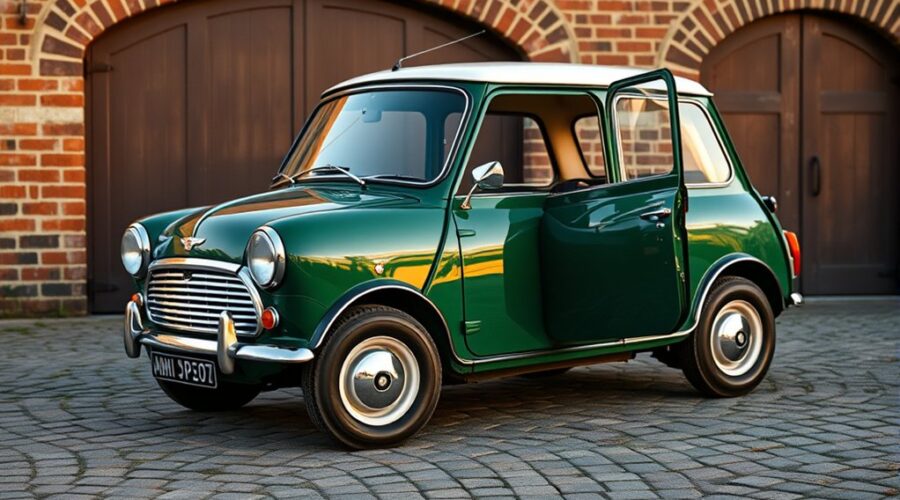
The classic Mini Cooper is the sporty version of the small British car that BMC launched in 1959, designed by Sir Alec Issigonis. It paired a transverse engine with front-wheel drive in a body just over three metres long, and the Cooper and Cooper S versions won the Monte Carlo Rally in the 1960s. This guide covers how it began, the key models and specs, and what to check if you want to buy one.
Classic Mini Cooper at a glance
| Item | Detail |
|---|---|
| Launch | 1959, as the Austin Seven and Morris Mini-Minor |
| Designer | Sir Alec Issigonis |
| Original engine | 848 cc four-cylinder, about 34 hp |
| Mini Cooper (1961) | 997 cc, 55 bhp, front disc brakes |
| Mini Cooper S (from 1963) | 1,071 cc, later 1,275 cc from 1964 |
| Rover-era Cooper (1990s) | 1,275 cc with fuel injection; 63 bhp in 1997 models |
| Production | 1959 to 2000, more than five million cars |
Figures come from the BMW Group classic Mini timeline and general reference sources. Output ratings changed between markets and years, so treat them as approximate.
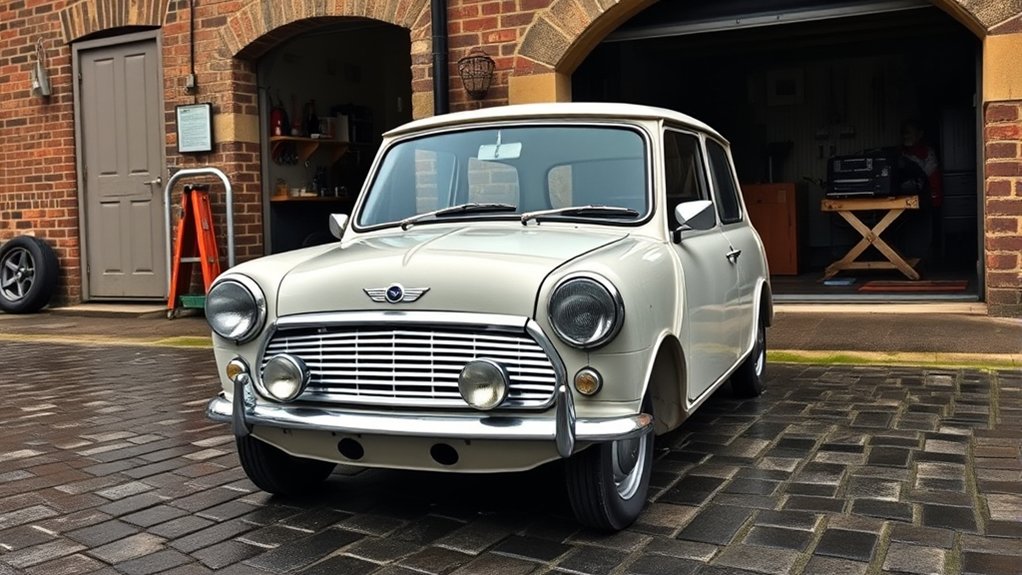
How the classic Mini Cooper began
Issigonis designed the Mini in response to the fuel shortages that followed the 1956 Suez Crisis. BMC wanted a small, economical car that still had room for four adults and their luggage.
His answer was an engine mounted sideways over the gearbox, with front-wheel drive. That layout freed most of the floor space for passengers and gave the small car good traction.
Racing car builder John Cooper saw the potential for a sporty version. The result was the 1961 Mini Cooper, with a 997 cc engine, 55 bhp and front disc brakes.
What made the Mini different
Every major choice served space or handling. The car was light, the wheels sat at the corners, and the suspension used rubber cones instead of conventional springs.
- Transverse engine: more cabin room in a tiny footprint.
- Front-wheel drive: better traction on wet, loose or icy roads.
- Rubber cone suspension: compact and firm, with sharp handling.
- Low weight: the car weighed well under a tonne, which helped acceleration, braking and cornering.
Mini Cooper and Cooper S rally history
The Cooper S arrived in 1963 with a 1,071 cc engine, and a 1,275 cc version followed in 1964. BMW’s own timeline quotes a 100 mph top speed and 0-60 mph in 13.5 seconds for the 1,071 cc car.
In rallying, the car’s short wheelbase and light weight suited narrow, slippery stages. The Monte Carlo Rally results were:
- 1964: Paddy Hopkirk won in a 1,071 cc Cooper S.
- 1965: Timo Mäkinen won.
- 1966: Mäkinen, Rauno Aaltonen and Hopkirk finished first to third, but the result was disputed over the lighting system.
- 1967: Aaltonen won.
For another rally icon, see our Audi Quattro rally car specs.
Classic Mini editions and body styles
The Mini range grew well beyond the saloon. Over its life it included estates, vans, pick-ups, the open Mini Moke (from 1965) and, under Rover in the early 1990s, a convertible.
The cars were revised over time. The Mark II arrived in 1967 with a new grille and a larger rear window, and Mark III cars followed with further changes. The basic layout stayed the same throughout.
Pop culture and customization
The Mini became a symbol of 1960s Britain. It appeared in films such as The Italian Job, and later in the TV character Mr. Bean’s car.
Owners also customized their cars heavily, and limited editions such as the Mini Paul Smith kept the name fashionable. For other screen cars, see cars of the movies.
How the Mini evolved after the classic Cooper
| Year | Model | Notes |
|---|---|---|
| 1959 | Mini (Austin Seven / Morris Mini-Minor) | 848 cc, about 34 hp |
| 1961 | Mini Cooper | 997 cc, 55 bhp |
| 1963-64 | Mini Cooper S | 1,071 cc, then 1,275 cc |
| 1990 | Rover relaunches the Cooper | Limited edition first, then standard |
| 1997 | Mini and Mini Cooper | 1,275 cc, multi-point injection, 63 bhp |
| 2001 | BMW-built MINI | New 1.6 L engines, a different car from the classic |
The 2001 MINI shares the look and the idea but not the engineering. For today’s range, see our Mini SUV specs guide.
Buying a classic Mini Cooper: what to check
- Rust: check the sills, floors, subframes, door bottoms and wheel arches first.
- Authenticity: many cars wear Cooper or Cooper S badges. Match chassis and engine numbers to the paperwork.
- Parts: mechanical parts are widely supported, but original trim and rare Cooper S components can be costly.
- Import and registration: in Canada, confirm Transport Canada’s import rules and your province’s safety inspection requirements before you buy a car from abroad.
If you like the idea of an older sports car, our classic sports car guide covers what counts as a classic and what to look for.
Frequently asked questions
When was the classic Mini Cooper first made?
BMC launched the Mini in 1959 as the Austin Seven and Morris Mini-Minor. The Mini Cooper, tuned with John Cooper, followed in 1961.
What engine did the original Mini have?
The 1959 Mini used an 848 cc four-cylinder A-series engine making about 34 hp. It drove the front wheels through a transverse layout.
What is the difference between a Mini Cooper and a Cooper S?
The 1961 Cooper had a 997 cc engine rated at 55 bhp and front disc brakes. The Cooper S, from 1963, used larger and more highly tuned engines, first 1,071 cc and from 1964 also 1,275 cc.
Did the Mini win the Monte Carlo Rally?
Yes. Paddy Hopkirk won in 1964, Timo Mäkinen in 1965 and Rauno Aaltonen in 1967. The 1966 result, where Minis finished first to third, was disputed over the headlights.
How many classic Minis were built?
More than five million were built between 1959 and 2000, according to BMW Group’s classic Mini timeline, which records the five millionth car in 1986.
What should you check before buying a classic Mini in Canada?
Check for rust in the sills, floors, subframes and wheel arches, and confirm that a Cooper or Cooper S is genuine and not a replica. If the car is imported, check Transport Canada’s import rules and your province’s inspection and registration requirements first.