

The 2000s reshaped the automobile through efficiency, safety, and digital convenience. Models such as the Toyota Prius, Chevrolet Corvette, and Porsche 911 reflected competing priorities: economy, performance, and engineering refinement. At the same time, SUVs and crossovers like the Honda CR-V moved from niche to mainstream, while retro styling revived familiar forms. The decade left a design legacy that still influences what drivers expect now, and some of its most important shifts remain underappreciated.
Key Traits of 2000s Car Design
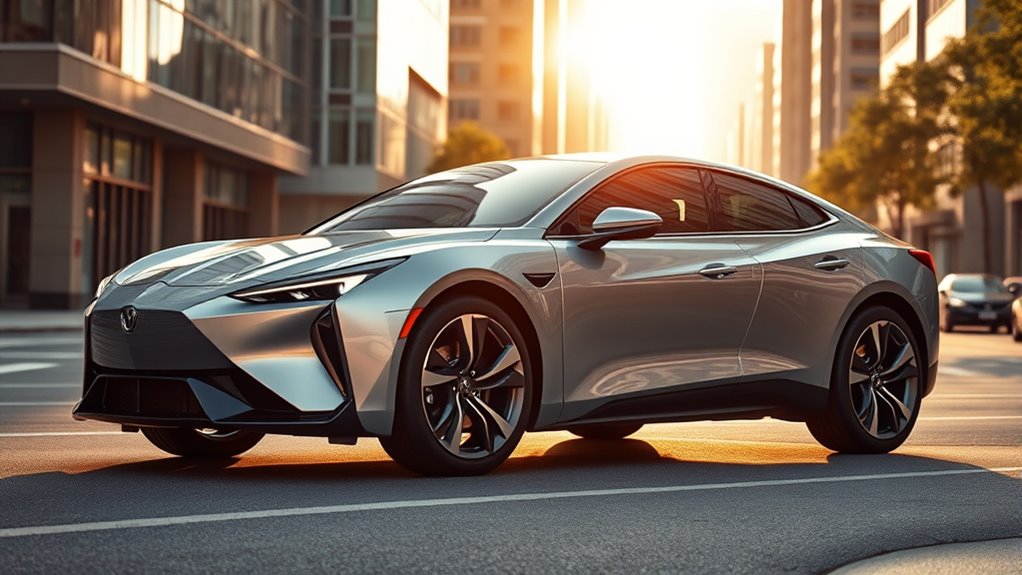
The 2000s marked a turning point in car design, as automakers increasingly balanced efficiency, safety, and technology in response to changing consumer priorities.
Across the decade, design trends shifted toward fuel efficiency, with hybrid pioneers such as the Toyota Prius redefining mainstream expectations and widening the space for eco-conscious mobility.
At the same time, advanced safety features, including electronic stability control and side-curtain airbags, became common, reflecting a market that demanded protection without sacrificing freedom of movement.
Advanced safety features became standard, giving drivers greater protection without compromising the freedom of movement.
Infotainment systems also expanded, adding navigation and Bluetooth connectivity and turning cabins into connected environments.
SUVs, including the Honda CR-V and Ford Explorer, grew in stature, helping shape the luxury SUV market and altering automotive history.
Meanwhile, iconic models such as the Subaru WRX and Chevrolet Corvette C6 showed that performance could coexist with modern restraint, giving the 2000s a distinctly hybrid character: pragmatic, technologically fluent, and socially responsive.
The Most Influential 2000s Car Styles
A defining style shift of the 2000s emerged from the collision of efficiency, utility, and image, as automakers used design to signal changing priorities in the market.
In this decade, automotive design moved in several directions at once. Hybrid vehicles, led by the Toyota Prius, made restraint and environmental consciousness visible, proving that progress could be styled rather than hidden.
At the same time, SUVs such as the Honda CR-V and Toyota RAV4 turned practicality into a dominant form, giving drivers a flexible, road-commanding presence.
Among iconic designs, the Chrysler 300 introduced bold, boxy authority to American sedans, while the 2005 Ford Mustang revived muscle cars through retro cues and modern performance.
Advanced technology, including electronic stability control and improved infotainment, reinforced the sense that style now included safety, connectivity, and choice.
Together, these forms made the 2000s a decade of expanded freedom.
Sports Cars That Shaped the Decade
The 2000s sports car landscape was defined by performance icons that balanced straight-line speed with sharper handling and broader technical ambition.
Models such as the Nissan 350Z, Ford GT, Chevrolet Corvette C6, Subaru Impreza WRX STI, and Honda S2000 each marked a distinct approach to design and engineering, from high-revving precision to turbocharged all-wheel-drive traction.
Together, they reflected a decade in which heritage, innovation, and measurable performance increasingly shaped the modern sports car.
Performance Icons
Few categories better captured the spirit of the 2000s than the decade’s performance icons, a group of sports cars that blended escalating power with increasingly refined engineering.
In automotive history, the Chevrolet Corvette and Ford GT stood as American benchmarks, while the Porsche 911 and Subaru Impreza WRX STi extended the decade’s reach from road to rally.
- Chevrolet Corvette: LS2 V8 engines brought 400 horsepower.
- Ford GT: supercharged V8s delivered sub-4-second sprints.
- Porsche 911: the 997 and GT3 preserved purity.
- Subaru Impreza WRX STi: turbocharged all-wheel-drive traction invited control.
The Nissan 350Z added a lightweight chassis and accessible pace, widening performance to more drivers.
Together, these machines signaled freedom through speed, balance, and mechanical purpose.
Design And Innovation
As the 2000s progressed, sports cars increasingly served as test beds for new ideas in packaging, materials, and power delivery. Models such as the Nissan 350Z and Chevrolet Corvette C6 demonstrated how lighter construction and improved aerodynamics could sharpen handling without sacrificing straight-line pace.
The Audi R8 arrived in 2006 with a mid-engine layout and aluminum frame, advancing design and innovation through automotive technology.
Porsche’s 911 Turbo (997) paired all-wheel drive with turbocharged performance, reinforcing an iconic model’s authority.
Ford’s 2005 Mustang blended classic cues with modern suspension and a V6 option, renewing muscle cars for a new generation.
Hybrid entries like the Honda CR-Z hinted that efficiency could coexist with freedom, speed, and purposeful style.
How SUVs and Crossovers Went Mainstream
During the 2000s, SUVs moved from niche utility vehicles into a dominant force in the U.S. market, aided by redesigned models such as the Ford Explorer and by the strong sales of the Honda CR-V and Toyota RAV4.
Crossovers gained traction by blending car-like comfort with truck-like practicality, meeting consumer expectations for safety, efficiency, and everyday versatility.
Rise Of The SUV
The 2000s marked the point at which SUVs moved from a niche preference to a dominant force in the U.S. auto market, with their share rising from about 22 percent in 2000 to more than 35 percent by 2005.
This SUV ascent reflected consumer preferences for cargo space, higher seating, and an image of mobility. The Ford Explorer, having already achieved mainstream recognition, posted peak sales above 400,000 units in 2000.
- Luxury models such as the BMW X5 and Lexus RX broadened demand.
- The Honda CR-V and Toyota RAV4 advanced fuel efficiency and practicality.
- Families valued versatility without surrendering everyday use.
- The automotive market reoriented toward larger, status-rich vehicles.
Crossover Appeal Grows
By the 2000s, crossovers had begun turning SUV popularity into a broader mainstream shift, with global sales climbing from 18 percent in 2000 to more than 30 percent by 2010.
The crossover emerged as a practical synthesis, answering consumer preferences for room, elevated seating, and flexible mobility without the bulk of older SUVs. Models such as the Honda CR-V, Toyota RAV4, and Ford Escape showed how car-based platforms could deliver easier handling, better fuel efficiency, and improved safety technology.
These design trends widened access to utility, especially in dense cities where agility mattered. As the automotive market adapted, automakers redirected investment toward crossovers, while traditional sedans lost ground.
The result was a structural change in the decade’s transportation landscape.
Family Utility Meets Style
As family buyers increasingly favored vehicles that combined practicality with image, SUVs and crossovers moved from niche utility to mainstream status in the 2000s. Market evidence showed family utility shaping demand, with the Toyota RAV4 and Honda CR-V aligning functionality with evolving design trends.
By mid-decade, SUVs exceeded 30% of U.S. sales, and models such as the Ford Explorer and Chevrolet Tahoe drew buyers through spacious interiors and advanced safety features.
- Third-row seating broadened use.
- Infotainment improved daily travel.
- All-wheel drive expanded confidence.
- Hybrid technologies, including the 2005 Toyota Highlander Hybrid, answered efficiency concerns.
This shift reflected more than fashion; it signaled a cultural preference for vehicles that offered mobility, autonomy, and comfort without surrendering style or environmental awareness.
How Technology Changed 2000s Car Design
Technology reshaped 2000s car design in ways that extended well beyond styling, as manufacturers increasingly built safety, efficiency, and connectivity into the vehicle itself.
In automotive history, car design became a technical discipline, with computer-aided design (CAD) enabling tighter tolerances, lighter structures, and more exact proportions for iconic models such as the BMW Z4 and Audi TT.
Safety features like electronic stability control and anti-lock braking systems moved from premium options to essential protections, expanding driver confidence and autonomy.
At the same time, hybrid vehicles, especially the Toyota Prius, reframed performance around fuel economy and lower emissions, signaling a broader liberation from petroleum dependence.
By decade’s end, infotainment systems with Bluetooth and GPS navigation had become common, linking occupants to information networks once reserved for offices.
Even SUVs such as the Honda CR-V and Ford Escape used technology to improve aerodynamics and efficiency, showing how innovation quietly remade everyday mobility.
How Retro Styling Returned in the 2000s
Retro styling returned to prominence in the 2000s as automakers deliberately mined their own histories to create vehicles that felt familiar yet distinctly contemporary. This retro styling reflected both market calculation and a broader longing for automotive heritage, offering consumers visual continuity amid rapid change and inviting nostalgia without abandoning modern safety or performance.
- The Ford Mustang and Chevrolet Camaro revived classic proportions, translating muscle-era cues into updated platforms.
- The Chrysler PT Cruiser, with 1930s-inspired lines, broadened the trend into practical compact transportation.
- The Volkswagen Beetle’s rounded silhouette and the Mini Cooper’s revived compact form turned heritage into globally legible design.
- Across the decade, bold colors, chrome details, and familiar shapes became tools of brand identity, helping manufacturers signal liberation through style while keeping the cars usable for everyday life.
Why 2000s Cars Still Matter Today
Beyond the era’s revived styling, 2000s cars remain significant because they reshaped what buyers expected from everyday vehicles.
The decade normalized hybrid efficiency, with the Toyota Prius turning environmental consciousness into a mass market choice and proving that economy could carry social meaning.
At the same time, automotive safety advanced quickly: electronic stability control and improved airbag systems moved from premium options to common safeguards.
Consumer preferences also shifted toward SUVs such as the Honda CR-V and Ford Escape, which balanced utility, comfort, and freedom of use.
Meanwhile, iconic models like the Chevrolet Corvette C6 and Ford Mustang GT showed that performance did not have to abandon modern technology.
Bluetooth, navigation, and early infotainment systems foreshadowed the connected cabin now taken for granted.
In historical terms, 2000s cars mark the moment when efficiency, protection, and digital convenience became mainstream expectations.
Frequently Asked Questions
What Are the Top Three Trends in the Automotive Industry?
Top three trends are electric vehicles, connected cars, and safety features, propelled by sustainability initiatives, hybrid technology, autonomous driving research, design innovations, and shifting consumer preferences toward efficiency, autonomy, and liberated mobility.
What Truck Will Last 500,000 Miles?
Toyota Tacoma or Tundra, Ford F-250/F-350, and Ram Cummins models show strongest Brand Reliability. Durability Factors, Maintenance Tips, Engine Longevity, Driving Habits, Mileage Tracking, Owner Experiences, Fuel Efficiency determine 500,000-mile freedom.
What Color Car Is the Hardest to Sell?
Yellow is generally hardest to sell, as car color psychology, resale value factors, market demand shifts, buyer preferences, color trends evolution, regional color popularity, luxury color choices, and accident visibility impacts favor neutrals.
What Are the Latest Trends in Car Design?
Like a river changing course, current car design favors electric vehicles, minimalist interiors, aerodynamic styling, smart technology, sustainable materials, bold colors, retro designs, and compact SUVs, reflecting efficiency, personalization, and liberated mobility.
Conclusion
Ultimately, 2000s cars reflected a decisive shift in automotive priorities: efficiency, safety, technology, and versatility. The decade produced enduring icons such as the Toyota Prius, Chevrolet Corvette, and Porsche 911, while SUVs and crossovers rapidly became the family vehicle of choice. One telling statistic captures the change: by the end of the 2000s, SUVs accounted for roughly one-third of U.S. vehicle sales, underscoring how quickly consumer tastes had evolved.