
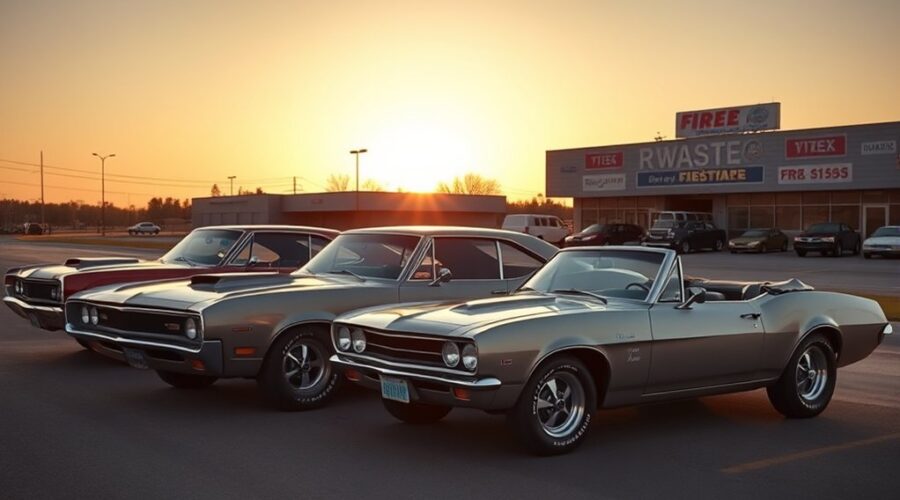
The 1960s served as a pivotal decade in American automotive history, marked by the emergence of muscle cars that combined performance with bold aesthetics. The 1964 Pontiac GTO is often recognized as the catalyst for this movement, introducing powerful V8 engines and aggressive designs. Subsequent models like the Dodge Charger and Chevrolet Chevelle SS further defined the era. However, the cultural impact and engineering challenges of these vehicles extend beyond mere specifications, prompting a closer examination of their lasting significance.
Key Takeaways
- The Pontiac GTO, launched in 1964, is considered the first true muscle car, featuring a powerful 389 V8 engine with 325 horsepower.
- Iconic models of the 1960s include the Chevrolet Chevelle SS 396 and Plymouth Road Runner, known for speed and aggressive styling.
- The 1966 Dodge Charger with a 426 HEMI V8 engine produced 425 horsepower, exemplifying the era’s performance capabilities.
- Cultural significance stems from their representation in films and music, symbolizing youthful rebellion and American identity during the 1960s.
- The muscle car era declined in the 1970s due to the oil crisis, stricter emissions standards, and changing consumer preferences for fuel economy.
The Birth of Muscle Cars: A 1960s Revolution
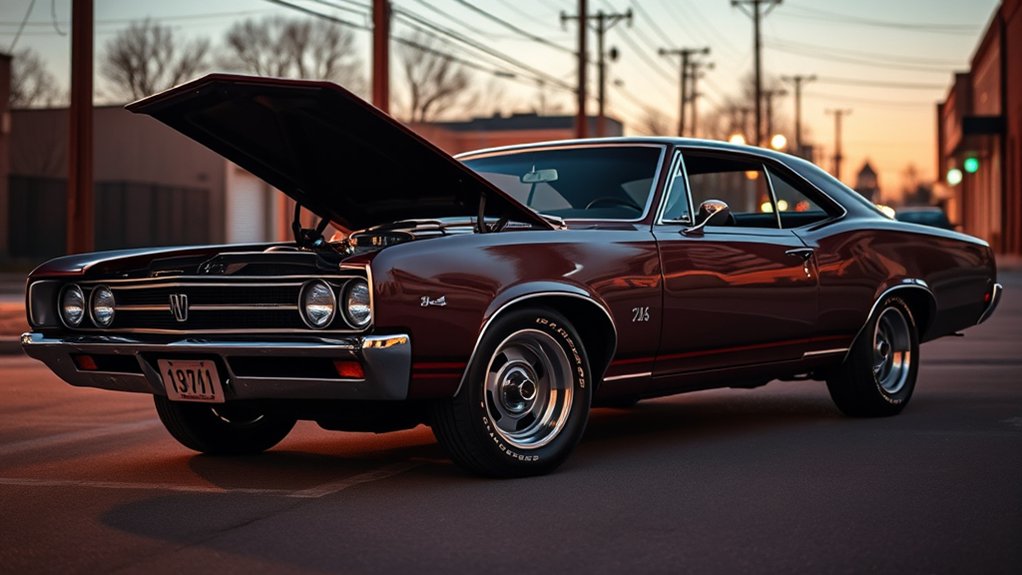
The 1960s marked a pivotal era in American automotive history, witnessing the emergence of muscle cars that would redefine performance standards. The 1964 Pontiac GTO is often credited as the first true muscle car, featuring a powerful 389 cubic inch V8 engine that produced 325 horsepower. This set a benchmark for performance that ignited a revolution in the automotive landscape. The mid-1960s saw a surge in popularity for high-performance two-door coupes, designed explicitly for street and drag racing. Innovations like the 1966 Dodge Charger, equipped with a 426 HEMI V8, epitomized American automotive power. Concurrently, the introduction of the pony car class, initiated by the 1965 Ford Mustang, showcased smaller V8 engines while catering to performance enthusiasts. By the decade’s end, muscle cars had evolved dramatically, reaching peak performance levels that captivated a generation and transformed the automotive industry.
Iconic Models That Defined the Era
The Chevrolet Chevelle SS 396 and the Plymouth Road Runner emerged as defining models of the 1960s muscle car era, each exemplifying unique characteristics that appealed to performance enthusiasts. The Chevelle SS 396, with its aggressive styling and powerful 396 cu in V8 engine, garnered attention for its impressive speed and quarter-mile capabilities. In contrast, the Road Runner, celebrated for its affordability and raw speed, showcased a 383 cu in V8 engine, solidifying its legacy as a symbol of performance at a competitive price point.
Chevy Chevelle SS Legacy
Muscle car enthusiasts often point to the Chevy Chevelle SS as a quintessential example of American automotive innovation in the 1960s. The 1970 model, equipped with the formidable LS6 engine, pushed boundaries with an astounding 450 horsepower, solidifying its status in the muscle car hierarchy. Known for its aggressive styling, the Chevelle SS featured a wide stance, bold front grille, and prominent hood scoops that highlighted its performance-oriented design. The 1969 version, with a 396 cubic inch V8 engine delivering up to 375 horsepower, became an emblem of the era’s horsepower wars. Combining affordability with performance, the Chevy Chevelle SS remains a coveted classic car, revered by collectors and a lasting symbol of American muscle car culture.
Plymouth Road Runner Features
Plymouth’s Road Runner emerged in 1968 as a groundbreaking model that redefined the muscle car landscape through its emphasis on performance and affordability. This no-frills muscle car boasted a standard 383 cubic inch V8 engine, generating 335 horsepower and achieving quarter-mile runs in approximately 14 seconds. Its distinctive “beep-beep” horn and cartoonish branding, inspired by the Looney Tunes character, enhanced its marketing appeal and cultural resonance. By 1970, the Road Runner’s top-performance option, the formidable 426 HEMI engine, elevated output to 425 horsepower, solidifying its status as one of the era’s most powerful vehicles. As a cultural icon, the Plymouth Road Runner holds a significant place in American automotive history, embodying the liberation and exuberance of the 1960s.
Key Performance Specs of 1960s Muscle Cars
The key performance specifications of 1960s muscle cars highlight the engineering advancements that fueled their popularity. With powerful V8 engines, such as the 389 cu in in the 1964 Pontiac GTO and the 426 HEMI V8 in the 1968 Dodge Charger, these vehicles achieved remarkable acceleration and speed metrics. Innovations in performance technology, alongside their formidable horsepower ratings, positioned these models as icons of automotive excellence during the era.
Key Engine Specifications
During the 1960s, a remarkable array of engine specifications defined the muscle car landscape, showcasing the era’s engineering prowess. These specifications not only highlighted the performance capabilities of the vehicles but also marked a significant evolution in automotive design.
- 1964 Pontiac GTO: 389 cubic inch V8 engine, 325 horsepower
- 1966 Dodge Charger: 426 HEMI V8 engine, 425 horsepower
- 1969 Chevrolet Chevelle SS: 454 cubic inch V8 engine, 450 horsepower
- 1968 Plymouth Road Runner: 383 cubic inch V8 engine, 335 to 390 horsepower
- 1967 Ford Mustang GT: 289 cubic inch V8 engine, approximately 271 horsepower
This diversity in muscle cars’ engine specifications not only captivated enthusiasts but also established benchmarks for performance during the decade.
Acceleration and Speed Metrics
Acceleration and speed metrics serve as critical indicators of performance regarding 1960s muscle cars, reflecting the engineering advancements of the era. Notable examples include the 1964 Pontiac GTO, which achieved 0 to 60 mph in approximately 6.6 seconds, driven by its robust 389 cu in V8 engine. The 1966 Ford Mustang GT closely followed with a similar acceleration time of 6.5 seconds. In terms of quarter-mile performance, the 1968 Plymouth Road Runner excelled with a time of around 13.2 seconds. The iconic 1969 Chevrolet Camaro ZL1, equipped with a formidable 427 cu in V8, completed the quarter-mile in an impressive 11.5 seconds. Ultimately, these metrics underscore the powerful engines and exhilarating speed that defined muscle car performance in the 1960s.
Notable Performance Innovations
Numerous performance innovations in 1960s muscle cars revolutionized the automotive landscape, showcasing remarkable engineering prowess. These vehicles were defined by their impressive power output and high performance, cementing their place in automotive culture.
- 1964 Pontiac GTO: 389 cu in V8, 325 hp, 0-60 mph in under 7 seconds.
- 1966 Dodge Charger: 426 HEMI engine, 425 hp, iconic for its raw power.
- 1969 Chevrolet Chevelle SS 396: 396 cu in V8, 375 hp, quarter-mile in approximately 13.5 seconds.
- 1967 Ford Mustang GT: 390 cu in V8, 320 hp, blending style with performance.
- 1968 Plymouth Road Runner: 383 cu in V8, 335 hp, budget-friendly, quarter-mile under 14 seconds.
These innovations not only enhanced speed but also shaped the identity of muscle cars for generations.
How Drag Racing Shaped Muscle Car Design
Drag racing revolutionized the design of muscle cars in the 1960s, compelling manufacturers to prioritize speed and performance. The era witnessed a surge in powerful V8 engines and lightweight designs, aimed at achieving faster quarter-mile times. The Pontiac GTO, often considered the first true muscle car, exemplified this trend with its 389 cu in engine generating 325 hp. Innovations such as hood scoops and performance-oriented gear ratios emerged, enabling vehicles like the 1968 Plymouth Road Runner to compete effectively on the strip. A “horsepower war” ensued, prompting advancements in engine technology, with iconic models like the 1970 Chevrolet Chevelle SS LS6 boasting an impressive 450 hp. Additionally, specialized models like the 1964 Dodge 330 Lightweight, equipped with a 426 HEMI engine, catered to competitive racers, encapsulating the essence of drag racing‘s influence on muscle car design.
What Challenges Did Muscle Cars Face in the 1970s?
As the fervor of drag racing waned in the early 1970s, muscle cars encountered a series of formidable challenges that threatened their existence. The landscape shifted dramatically due to several factors:
- The 1973 oil crisis caused soaring fuel prices, reducing the appeal of high-consumption muscle cars.
- Stricter emissions standards mandated by the Clean Air Act compelled manufacturers to lower engine compression ratios, diminishing horsepower.
- Insurance surcharges on high-horsepower vehicles made muscle cars increasingly unaffordable for the average American.
- The market trend shifted toward compact cars, epitomized by the 1974 Ford Mustang II, which eliminated V8 options.
- Rising operational costs combined with consumer preference for fuel economy led to the decline of many classic muscle car models by the end of the decade.
These challenges collectively marked a turning point, signaling the end of an era for the muscle car phenomenon.
Why 1960s Muscle Cars Were Culturally Iconic
The cultural significance of 1960s muscle cars transcended mere automotive engineering, embodying an era defined by youthful rebellion and individualism. The 1964 Pontiac GTO, heralded as the original muscle car, popularized the “smaller car, bigger engine” concept that captivated American culture. Iconic films like “Bullitt” and “American Graffiti” showcased these vehicles, solidifying their status as symbols of freedom and defiance among youth. The era’s horsepower wars, highlighted by the 1970 Chevrolet Chevelle SS with its staggering 450 hp, fueled public fascination and competitive spirit among manufacturers. Bold styling and aggressive designs, exemplified by the 1968 Dodge Charger, became emblematic of the period’s automotive aesthetic. In addition, music, such as “Little Deuce Coupe,” celebrated these muscle cars, embedding them deeper into the fabric of American pop culture. This confluence of rebellion, performance, and artistry rendered 1960s muscle cars culturally iconic.
The Legacy of 1960s Muscle Cars
Although often viewed through the lens of nostalgia, the legacy of 1960s muscle cars extends far beyond their immediate impact on automotive design and performance. These American icons not only defined a generation but also laid the groundwork for automotive innovation and cultural expression.
- The 1960s initiated the legendary “horsepower wars,” pushing performance boundaries.
- Models like the 1964 Pontiac GTO combined power and compact design, popularizing muscle cars.
- Aggressive styling became a hallmark, enhancing their street presence and appeal.
- Their representation in film and music solidified their status as symbols of rebellion and freedom.
- The rear-wheel drive configurations contributed to their dominance in drag racing.
This multifaceted legacy underscores how muscle cars transcended mere transportation, embodying a spirit of liberation and performance that continues to resonate today. Through their engineering and cultural significance, these vehicles forged a lasting imprint on both the automotive world and American identity.
Related Reading
Frequently Asked Questions
What Are Some Interesting Facts About Muscle Cars?
Muscle cars exemplify performance upgrades, featuring iconic models with diverse engine specifications. Their design evolution reflects racing heritage and cultural impact, while extensive aftermarket modifications fuel a robust collector’s market, celebrating these powerful automotive icons.
What Is Considered the Oldest Muscle Car in History?
The Oldsmobile Rocket 88, recognized as the oldest muscle car, pioneered engine innovations and design evolution, establishing performance benchmarks. Its cultural impact resonates through iconic models, influencing the collector’s market and shaping muscle car origins considerably.
What Is the Holy Grail of Muscle Cars?
The holy grail of muscle cars is often deemed the 1970 Chevrolet Chevelle SS 454, revered for its iconic status, performance specs, and high auction prices, enchanting the collector’s market alongside other legendary brands and models.
What Killed the Muscle Car Era?
The muscle car era faded like a once-vibrant sunset, extinguished by the fuel crisis, emissions regulations, soaring insurance costs, evolving consumer preferences, intensified market competition, and economic recession, leading to diminished performance standards and safety regulations.
Conclusion
In retrospect, the 1960s muscle car phenomenon exemplifies the paradox of American ingenuity: creating machines that devoured fuel as voraciously as the youth devoured freedom. As these roaring beasts captured hearts and wallets alike, they also paved the way for a future where speed and style became synonymous with rebellion. Ultimately, the legacy of muscle cars serves as a cautionary tale—a reminder that while horsepower may fuel dreams, it also ignites the inevitable consequences of excess.