The McLaren MP4/4 remains one of Formula 1’s most studied machines. Powered by Honda’s RA168E 1.5-liter turbocharged V6, it produced about 675 hp and weighed just 540 kg in race trim. Its carbon-fiber chassis, low drag bodywork, and sharp aerodynamics helped deliver 0–100 kph in 2.8 seconds and a 333 km/h top speed. Its numbers explain part of the story, but not all of it.
Key Takeaways
- The McLaren MP4/4 used a Honda RA168E 1.5-liter turbocharged V6, producing 675 hp and 313 ft⋅lbf of torque.
- It weighed just 540 kg, with a carbon-fiber monocoque chassis delivering exceptional strength and rigidity.
- Dimensions were 4.39 m long, 2.13 m wide, 0.94 m high, with a 2.88 m wheelbase.
- Performance included 0–100 kph in 2.8 seconds and a top speed of 333 km/h at Hockenheim.
- In 1988, it won 15 of 16 races, securing both championships and becoming an iconic Formula 1 benchmark.
McLaren MP4/4 Overview
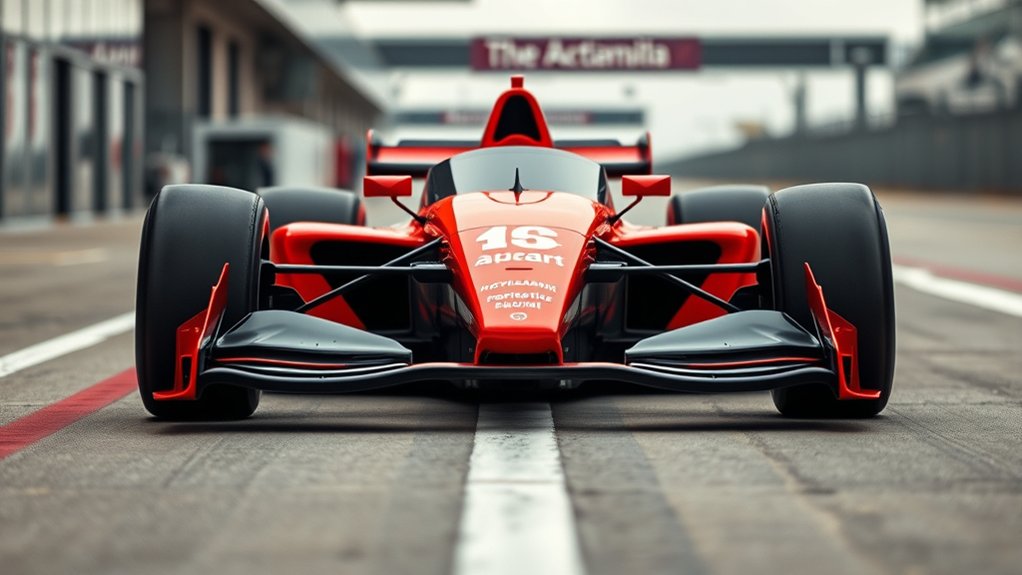
The McLaren MP4/4, introduced in 1988, was powered by a Honda RA168E 1.5-liter turbocharged V6 engine producing 675 hp at 12,500 rpm and 313 ft⋅lbf of torque at 10,000 rpm.
Beyond output, the McLaren MP4/4 stood out for its 540 kg mass, carbon fiber monocoque chassis, and sharply optimized aerodynamics. These elements supported exceptional performance, including 0 to 100 kph in 2.8 seconds and 0 to 200 kph in 5.6 seconds.
At Hockenheim, the car reached 333 km/h, demonstrating high-speed stability as well as straight-line efficiency.
During the 1988 season, the MP4/4 led 97.3% of laps, won 15 of 16 races, and secured both the Drivers’ Championship for Ayrton Senna and the Constructors’ Championship for McLaren.
Such results reflected a machine built not for compromise, but for decisive dominance through engineering precision and technical freedom.
MP4/4 Engine and Power
The McLaren MP4/4 used the Honda RA168E, a 1.5-liter turbocharged V6 designed to operate within FIA turbo regulations.
It delivered 675 hp at 12,500 rpm and 313 ft⋅lbf of torque at 10,000 rpm, with a 9.4:1 compression ratio supporting efficient high-boost performance.
This output gave the car its sharp acceleration and strong top-end speed, reinforcing its exceptional power-to-weight advantage.
Honda Ra168e Basics
At the heart of the McLaren MP4/4 sat Honda’s RA168E, a 1.5-liter turbocharged V6 with an 80-degree layout, engineered to deliver 675 hp at 12,500 rpm.
The Honda RA168E defined the McLaren MP4/4 by combining compact specifications with race-ready performance. Its 313 ft-lbf (424 Nm) at 10,000 rpm provided strong drive off corner exits, while the 2.5 bar boost limit kept the design within 1988 Formula 1 rules.
At 146 kg, the engine supported a lighter, more efficient chassis balance. This turbocharged unit formed the mechanical basis for the car’s dominance, helping secure 15 wins from 16 races.
In technical terms, the RA168E was a decisive factor in freeing the MP4/4 from compromise and maximizing competitive efficiency.
Turbo Power Output
Turbo output from the Honda RA168E gave the McLaren MP4/4 its defining performance edge, with the 1.5-liter turbocharged V6 rated at 675 hp (503 kW) at 12,500 rpm and 313 ft⋅lbf (424 Nm) at 10,000 rpm.
In mid-engine form, the package delivered a power-to-weight ratio near 1,249 bhp per ton, a figure that translated directly into hard acceleration and uncompromised performance.
The Honda RA168E was engineered for the turbo era, and peak output climbed to 685 hp at 12,300 rpm during qualifying trim.
For 1988, the engine also used an 84% toluene and 16% methanol fuel blend to maximize output.
The result was a liberated, race-winning power unit whose delivery defined the MP4/4’s dominance.
Torque And Rev Range
Alongside its headline horsepower, the Honda RA168E’s torque curve and operating range were central to the McLaren MP4/4’s performance profile. The 1.5-liter turbocharged V6 delivered 313 ft⋅lbf at 10,000 rpm, a band that supported forceful acceleration and sustained performance under race load. Its engine design, an 80-degree V layout, aided compact packaging and weight distribution. Peak power output arrived at 12,500 rpm, while maximum boost reached 2.5 bar, showing how rev range and pressure were tuned for freedom from drag-limited compromise.
| Metric | Value |
|---|---|
| Torque | 313 ft⋅lbf |
| Torque speed | 10,000 rpm |
With about 1,249 bhp per ton, the chassis converted torque into immediate motion, reaching 100 kph in 2.8 seconds.
MP4/4 Size and Weight
The McLaren MP4/4 carried a curb weight of 540 kg, a figure that supported its exceptional performance potential.
Its dimensions measured 4.39 meters in length, 2.13 meters in width, and 0.94 meters in height, with a 2.88-meter wheelbase.
The lightweight carbon fiber chassis and compact form contributed to stability, rapid acceleration, and efficient aerodynamic behavior.
Curb Weight
Weighing just 540 kg (1,190.5 lb), the McLaren MP4/4 ranks among the lightest Formula 1 cars ever built, a low curb weight that was central to its competitive advantage.
Its lightweight package used a carbon fibre chassis to reduce mass while preserving rigidity, directly supporting performance and control. The restrained mass improved responsiveness, helping the car accelerate from 0-100 kph in 2.8 seconds.
In this scenario, the dimensions and weight distribution were engineered for efficiency, not excess. Key effects included:
- reduced inertia in direction changes
- sharper throttle response
- improved braking efficiency
- enhanced stability under load
- better use of available power
This configuration reflected a technical pursuit of liberation through minimal mass and maximum effectiveness.
Dimensions
At 4.39 meters long, 2.13 meters wide, and 0.94 meters high, the McLaren MP4/4 presents an exceptionally low, compact profile designed for aerodynamic efficiency.
Its dimensions support minimal frontal area, reduced drag, and precise airflow management at speed. The 540 kg weight further reinforces its performance focus, allowing rapid response under acceleration, braking, and direction changes.
A carbon fiber chassis helps maintain structural rigidity while limiting mass, advancing both safety and agility. The wheelbase measures 2.88 meters, a figure that complements the car’s balanced layout without compromising nimble behavior.
Together, length, width, height, and weight form a tightly optimized package built to free the driver from unnecessary mass and maximize cornering performance on the track.
Wheelbase
Measuring 2.88 meters, or 113 inches, the McLaren MP4/4’s wheelbase supports the chassis balance needed for stable high-speed handling and effective cornering. This layout, paired with compact dimensions, gives the car notable handling stability and responsive turn-in.
The 540 kg curb weight further improves speed and agility, while the low-profile body aids aerodynamic efficiency. Its proportions are tightly controlled for race efficiency and driver freedom.
- Wheelbase: 2.88 m
- Curb weight: 540 kg
- Length: 4.39 m
- Width: 2.13 m
- Height: 0.94 m
The combination of short overhangs, ideal weight distribution, and reduced mass promotes rapid acceleration and strong downforce. In technical terms, the MP4/4’s wheelbase is a key contributor to its liberated pace and race-winning precision.
MP4/4 Acceleration and Top Speed
The McLaren MP4/4 delivered exceptional acceleration, reaching 0 to 40 kph in 1.3 seconds, 0 to 100 kph in 2.8 seconds, and 0 to 200 kph in 5.6 seconds. This performance was made possible by its turbocharged V6 powertrain and 540 kg lightweight chassis.
This acceleration reflected the efficiency of the V6 turbo engine, which translated engine output into immediate forward motion with minimal delay. The lightweight design reduced inertia, allowing the McLaren MP4/4 to exploit its performance potential across short and long straights.
At Hockenheim, the car recorded a top speed of 333 km/h, or 207 mph, placing it among the fastest machines of its era. Such figures were not merely numerical achievements; they represented mechanical freedom through speed, balance, and responsiveness.
In technical terms, the MP4/4 combined rapid launch performance with sustained high-speed capability, creating a package defined by precision, pace, and controlled aerodynamic efficiency.
Why the MP4/4 Was Unbeatable?
Unbeatable status came from a rare convergence of performance, reliability, and execution: the McLaren MP4/4 won 15 of 16 races in 1988 and led 97.3% of all laps, a level of control seldom matched in Formula 1.
The MP4/4 paired the Honda RA168E turbocharged V6 with a 540 kg chassis, delivering 675 hp at 12,500 rpm and 207 mph capability. That output translated into relentless pace, but the real edge was systems-level dominance.
- Ayrton Senna and Alain Prost maximized points and pressure.
- Race pace remained stable across long stints.
- Aerodynamics reduced drag and preserved speed.
- Honda reliability limited mechanical failures.
- Strategy converted raw speed into control.
In technical terms, the car compressed power, efficiency, and execution into a package that opponents could not sustainably challenge. Its dominance was not accidental; it was engineered, then exploited with precision.
MP4/4 Chassis and Aerodynamics
Carbon efficiency defined the McLaren MP4/4’s chassis philosophy, with a carbon-fiber monocoque that combined low mass with high structural rigidity. This lightweight chassis moved away from the older twin-tube layout toward a low-profile design that reduced frontal area and improved airflow under racing conditions.
Aerodynamics were further refined by lowering the engine crankshaft center by 28 mm, which helped package the car more tightly and enhance weight distribution. A three-axle gearbox contributed to balance, allowing the performance package to remain stable as speed increased.
The revised bodywork was engineered to cut drag while preserving downforce, a critical tradeoff in a formula built on speed and precision. Additional aerodynamic updates introduced at Silverstone showed the development path toward greater balance, despite early setup challenges.
Six chassis were built for 1988, and all survive today, reinforcing the MP4/4’s technical legacy and enduring significance.
MP4/4 Race Record and Championship Results
Across the 1988 Formula One season, the McLaren MP4/4 established an exceptional race record of 15 victories from 16 Grands Prix, a level of dominance reflected in its 97.3% lap-led statistic, with 1,003 of 1,031 laps led. The MP4/4 converted raw performance into results with technical efficiency and controlled pace.
- Ayrton Senna secured the Drivers Championship with 8 wins.
- Alain Prost added 7 wins and finished 3 points behind.
- McLaren claimed the Constructors Championship with 199 points.
- Ferrari, second, scored only 51 points.
The lone non-win came at Monza, where McLaren still finished 1st and 2nd.
That season’s record showed a machine engineered for liberation from error: decisive, repeatable, and difficult to challenge over race distance. The championship margin confirmed not only speed, but also consistency, reliability, and race management across varied circuits.
MP4/4 Legacy and Lasting Impact
The McLaren MP4/4 remains a defining reference point in Formula One because its 1988 campaign combined unprecedented race dominance with engineering innovation.
The MP4/4 led 1,003 of 1,031 laps, a 97.3 percent share that still measures as a statistical outlier. Winning 15 of 16 races, it converted pace into absolute control and secured both the Constructors Championship and Ayrton Senna’s Drivers Championship.
Its low-slung chassis, refined aerodynamics, and integrated packaging established a performance benchmark that altered design priorities across the sport.
The legacy of the MP4/4 extends beyond trophies; it demonstrated how disciplined engineering could compress resistance, maximize efficiency, and expand the limits of competition.
In motorsport culture, it remains a symbol of technical freedom achieved through precision rather than excess.
Its image persists in simulations, games, and enthusiast memory, where dominance is not treated as spectacle alone but as a case study in how superior architecture can reshape expectations and lasting impact.
Frequently Asked Questions
Was the Mclaren MP4 4 Fast?
Yes; the McLaren MP4/4 was exceptionally fast, setting a benchmark in speed comparison. Its aerodynamic design and engineering innovation shaped a dominant racing legacy, delivered intense driver experience, and secured major historical significance.
What Made the Mclaren MP4 4 so Good?
Aero Design, Engine Innovation, and Suspension Technology made it exceptional; Driver Dynamics and Race History amplified results; Championship Success followed from low drag, high grip, and relentless reliability, enabling domination and technical freedom on track.
How Many Mclaren MP4 4 Are There?
Six McLaren MP4/4 chassis exist. Production numbers were limited; race history and technical innovations amplified their significance. Design features, driver contributions, and legacy impact from Senna and Prost secured enduring Formula 1 liberation.
What Are the Dimensions of the Mclaren Mp4/4?
Dimensions: 4.39 m long, 2.13 m wide, 0.94 m high, with a 2.88 m wheelbase. Design features favor aerodynamic efficiency, weight distribution, suspension setup, tire specifications, and interior layout supporting liberation through precision.
Conclusion
To summarize, the McLaren MP4/4 stood as a finely tuned instrument of speed, where Honda’s 1.5-liter turbo V6, lightweight carbon-fiber construction, and highly efficient aerodynamics fused into an almost unequaled Formula 1 package. Its 15 victories from 16 races were not merely statistics, but proof of a machine that operated like a razor through air and time. The MP4/4 remains a benchmark, its legacy etched into motorsport as a reference point for dominance.