
Ford’s Explorer recall covers an estimated 774,696 SUVs from model years 2013 through 2017 because the rear toe-link assembly may fracture, especially after road salt exposure. That failure can reduce steering control and raise crash risk. Some owners have already reported injuries. The remedy is available at no cost, but the details matter, and the warning signs are not always obvious.
Key Takeaways
- Ford recalled about 774,696 Explorer SUVs from model years 2013–2017 for a rear toe-link corrosion defect.
- Road salt can fracture the rear toe link, causing rear-wheel misalignment, unstable handling, and increased crash risk.
- Owners may notice harder steering, unusual stiffness, clunking noises, or delayed response, especially at low speeds.
- Ford dealers will inspect and reprogram the power steering control module at no cost to reduce loss of steering assist.
- Owners should check recall status by VIN on NHTSA.gov or call Ford Customer Service at 1-866-436-7332.
What Is the Explorer Rear Toe-Link Recall?
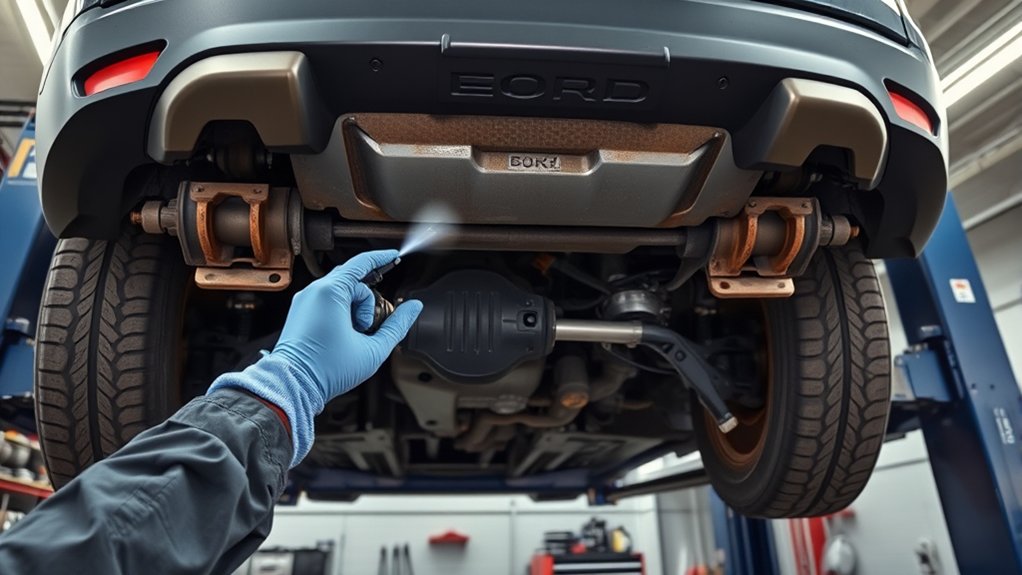
The Explorer rear toe-link recall covers approximately 774,696 Ford Explorer SUVs from model years 2013 through 2017 after road salt exposure was linked to possible fracture of the rear toe-link assembly. This Ford Explorer recalls action is a safety recall because a fractured rear suspension toe link can reduce steering control and raise crash risk. Six injury claims have been reported in connection with the condition. Warning signs include clunking noises, abnormal handling, and rear wheel misalignment, each indicating possible structural compromise. Ford dealers are directed to inspect the rear toe-link assembly and replace worn or seized parts with updated components at no cost to owners. Notifications began as early as August 23, 2021, signaling the need for prompt corrective action. The recall addresses a defect that can undermine vehicle stability and constrain safe travel, making timely inspection essential for drivers seeking reliable, uncompromised control over their vehicles.
Which Ford Explorer Models Are Affected?
Affected Ford Explorer SUVs include nearly 775,000 vehicles from model years 2013 through 2017, tied to a rear toe-link defect that can reduce steering control and increase crash risk. Ford Recall 21S32 identifies about 774,696 North American Explorer SUVs within that range as subject to inspection and repair. The affected Explorer population is not uniform across trim levels; the recall is defined by build period and component configuration rather than by optional equipment. Separate safety actions also cover certain 2017 to 2019 Ford vehicles, adding roughly 413,000 units in a related steering-control campaign. In each case, the concern involves the vehicle’s ability to maintain predictable directional response, a condition central to safe and independent mobility. Owners should verify their vehicle identification number through Ford or an authorized dealer to confirm recall status and determine whether the SUV is included in the current Explorer campaign or another related service action.
How a Broken Toe Link Affects Steering
A fractured rear toe link can shift rear-wheel alignment, disrupting vehicle stability and degrading steering control. In the Ford Explorer, the rear toe link maintains the rear wheels at the correct toe angle, allowing the chassis to track predictably. When this component breaks or weakens, the rear axle may steer itself unintentionally, creating instability during acceleration, braking, or cornering. That deformation can produce loss of steering control, especially in low-speed maneuvers that demand precise input. Corrosion, particularly in high-salt regions, can accelerate metal fatigue and raise the failure risk. As alignment drifts outside specification, handling becomes less predictable and crash exposure increases. Because the defect directly affects directional stability, safety recalls are used to address the hazard before further deterioration occurs. The condition is not cosmetic; it is a structural failure mode that can undermine safe vehicle operation and reduce a driver’s ability to command the vehicle’s path.
Warning Signs to Watch For
Warning signs may include increased steering effort, particularly at lower speeds, which can indicate reduced power assist. Unusual handling, stiffness, or delayed response can also suggest a steering system fault affecting control feel. Clunking noises or other abnormal sounds may point to suspension or steering component wear that warrants inspection.
Steering Effort Changes
Steering effort can rise noticeably in 2013-2017 Ford Explorers, especially at low speeds, if power steering assist begins to fail. This steering effort increase may signal loss of power steering assist linked to a ribbon cable pin misalignment that interrupts the motor position sensor signal. In the recall, dealers update the power steering control module to prevent assist loss while driving and restore safer control.
- Monitor for harder-than-normal turning
- Note any effort changes at parking speeds
- Treat intermittent stiffness as a warning
- Seek service promptly if symptoms appear
- Support recall repairs to preserve mobility
Reports cite 16 accidents and three minor injuries, underscoring that early detection matters for drivers seeking secure, unencumbered travel.
Unusual Handling Feel
Unusual handling feel can also point to rear suspension trouble in affected 2013-2017 Ford Explorers, especially when clunking noises, rear-wheel misalignment, or a change in steering response appears. Such unusual handling may indicate a problem with the rear suspension toe links, which help maintain wheel alignment and directional stability. If a cross-axis ball joint seizes, the toe link can fracture, reducing steering control and increasing the risk of a crash. Drivers may notice harder low-speed maneuvering, delayed response, or a vehicle that no longer tracks as expected. Because the recall covers about 774,696 vehicles, prompt attention is warranted. Owners observing these signs should contact a Ford dealer immediately for inspection and recall-related repairs, preserving control and supporting safer, more independent travel.
Warning Noise And Clunks
Clunking noises from the rear of affected 2013-2017 Ford Explorers can signal a seized cross-axis ball joint or deterioration in the rear suspension toe link, both of which may lead to misalignment and reduced steering control. This warning noise should be treated as a direct safety indicator, not a minor annoyance.
- Clunks during acceleration or turning
- Rear-end noise over bumps
- Unusual handling response
- Signs of suspension wear
- Immediate inspection recommended
NHTSA complaints confirm that repeated clunks often precede loss of control. If the sound intensifies, the vehicle may be operating with compromised rear suspension geometry. Prompt diagnosis preserves safety and supports informed ownership. Ignoring these sounds can allow mechanical failure to progress, increasing accident risk and limiting the driver’s ability to maintain freedom of movement.
How Dangerous Is the Recall?
The recall is considered potentially serious because nearly 775,000 Ford Explorer SUVs from model years 2013 through 2017 may experience an intermittent electrical fault that can disable power steering assist. The recall includes vehicles in which a disturbed connection can trigger sudden loss of power steering, while the mechanical steering linkage remains intact. Even without a structural break, the abrupt increase in steering effort can reduce control, especially at low speeds, in parking maneuvers, or during emergency avoidance. Ford has reported 16 accident allegations and three minor injury claims tied to the condition, indicating a measurable safety risk. The hazard is not constant, but its unpredictability makes it operationally significant. For drivers seeking autonomy and control over movement, any event that undermines maneuverability can erode confidence and freedom on the road. As a result, the defect is treated as a legitimate crash risk rather than a minor annoyance.
How Ford Will Repair the Problem
Ford will address the steering issue by having dealers reprogram the power steering control module in affected Explorer SUVs. This software update is intended to prevent loss of steering assist while driving and will be performed at no cost to owners. Affected vehicles are covered under the recall remedy through participating Ford dealers, with repair scheduling available once notifications are received.
Dealer Reprogramming Process
Authorized Ford dealers will reprogram the power steering control module on affected 2013-2017 Explorer vehicles to prevent intermittent loss of steering assist caused by conformal coat contamination at an electrical connection. This dealer reprogramming procedure is the prescribed remedy for affected vehicles and is performed at no cost, supporting driver autonomy and operational control.
- Dealer is the primary contact for service.
- Reprogramming corrects the steering assist fault.
- Owners receive recall notification letters.
- Ford Pickup & Delivery may be available.
- Availability depends on distance and vehicle status.
Approximately 774,696 vehicles are included. The process is intended to guarantee the update is executed correctly, with instructions provided for scheduling and completion.
Steering Module Update
As part of the recall remedy, the power steering control module on affected 2013-2017 Ford Explorer vehicles is updated to help prevent intermittent loss of steering assist during driving. The steering module reprogramming targets the electrical fault path linked to conformal coat contamination and ribbon cable misalignment, conditions that can interrupt communication and reduce assist. Ford dealer technicians perform the recalibration through the recall campaign, using diagnostic procedures to confirm the software revision and operational response. This service is intended to restore predictable steering performance and support driver control without altering the vehicle’s core hardware. For owners, the update represents a technical corrective action that reduces exposure to avoidable steering assist failure and reinforces accountability through documented recalls and dealer execution.
No-Cost Remedy Details
To address the risk of intermittent steering assist loss, affected 2013-2017 Ford Explorer vehicles will receive a no-cost update to the power steering control module through Ford authorized dealers. This no-cost remedy recalibrates software to reduce hazards linked to intermittent electrical connections and ribbon cable misalignment. Owners may schedule reprogramming with a local dealer; eligible vehicles may also use Pickup & Delivery service.
- Recall population: about 774,696 vehicles
- Model years: 2013 through 2017
- Repair cost: zero to owner
- Primary action: module reprogramming
- Objective: restore reliable steering assist and control
How to Check Your VIN for the Recall
Vehicle owners can verify whether a Ford Explorer is included in the steering issue recall by entering the VIN into the NHTSA recall search tool at NHTSA.gov. The National Highway Traffic Safety Administration database matches each Vehicle Identification Number to open safety actions, making it the primary reference for this recall. The affected population includes about 774,696 Ford Explorer models built from 2013 through 2017, a range associated with possible steering control loss. Ford also permits VIN-based status checks through Customer Service at 1-866-436-7332, providing an alternate verification channel. For independent confirmation, MotorSafety’s free vehicle lookup tool can be used to identify active recalls tied to the same VIN. Registered owners of affected vehicles should expect mailed notification letters from Ford, which describe the defect and the repair process. These verification methods allow owners to assess exposure efficiently and with minimal dependence on intermediaries, supporting informed and liberated decision making.
What Owners Should Do Next
Owners of affected Ford Explorer vehicles should promptly contact a Ford dealer to arrange a free update of the power steering control module, which is intended to reduce the risk of loss of steering assist while driving. This recall action applies to owners whose vehicles are identified by VIN as included in the campaign. The repair is offered at no cost and should be scheduled without delay to preserve safe, independent mobility.
- Verify recall status with MotorSafety’s free VIN lookup tool.
- Read the notification letter sent to the registered address.
- Confirm whether the vehicle qualifies for Pickup & Delivery service.
- Monitor Ford communications for follow-up actions or updated instructions.
- Keep service records after the recall repair is completed.
Owners should act decisively, as early completion of the remedy reduces exposure to steering-related failure and supports uninterrupted use of the vehicle.
Frequently Asked Questions
Which Year to Stay Away From Ford Explorer?
The 2013-2017 Ford Explorer years merit avoidance, especially 2016-2017. Ford Explorer reliability weakens there, and Common Explorer repairs often include steering faults. Explorer model comparisons generally favor other years for safer, more autonomous mobility.
Were Any Ford Explorers Recalled Due to Steering Issues?
Yes. Nearly 775,000 Ford Explorers from 2013–2017 were recalled for steering issues. The remedy supports steering malfunction prevention, vehicle safety enhancements, and owner recall responsibilities, with no-cost module reprogramming through dealers.
What Is the Biggest Complaint About the Ford Explorer?
The biggest complaint is recurring steering-related safety failures, which undermine the driving experience and confidence in safety features. Owners frequently seek maintenance tips, yet persistent recalls and repair doubts continue to signal unreliable engineering and reduced autonomy.
What Fords Are Being Recalled Right Now?
Currently recalled Ford models include 2013–2017 Explorer SUVs, their steering modules under a shadowed gear. The recall details involve a potential steering assist loss. Safety concerns focus on crash risk, with dealer repairs offered free.
Conclusion
To sum up, the Ford Explorer rear toe-link recall underscores how a single structural weakness can ripple into a serious safety risk, especially in vehicles exposed to harsh road conditions. Owners of affected 2013–2017 models should verify recall status by VIN without delay and seek the no-cost repair. When steering integrity depends on a small component, vigilance is not optional; it is the difference between routine travel and a preventable loss of control.