
Ford has recalled nearly 4.4 million vehicles over multiple safety defects that may affect trailer lighting, brake performance, and other critical systems. The affected models include certain F-150 and F-250 pickups, Escape SUVs, and Lincoln Corsair vehicles across several model years. Owners are being advised to verify their VINs and watch for service notices, because the underlying fault may not be obvious until a towing or braking problem appears.
Key Takeaways
- Ford has recalled about 4.4 million vehicles, including F-150, F-250, Escape, Maverick, and Lincoln Corsair models.
- The recall covers wiring, engine, and software defects that can cause power loss, fires, or trailer light and brake failures.
- Trailer system faults may trigger “Trailer Brake Module Fault” warnings and rapid turn-signal flashing while towing.
- Owners should check their VIN on Ford or NHTSA recall tools and watch for any do-not-drive advisory.
- Recall repairs are free at Ford or Lincoln dealers, with remote software updates, towing, mobile service, or loaners available.
Which Ford Models Are Affected?
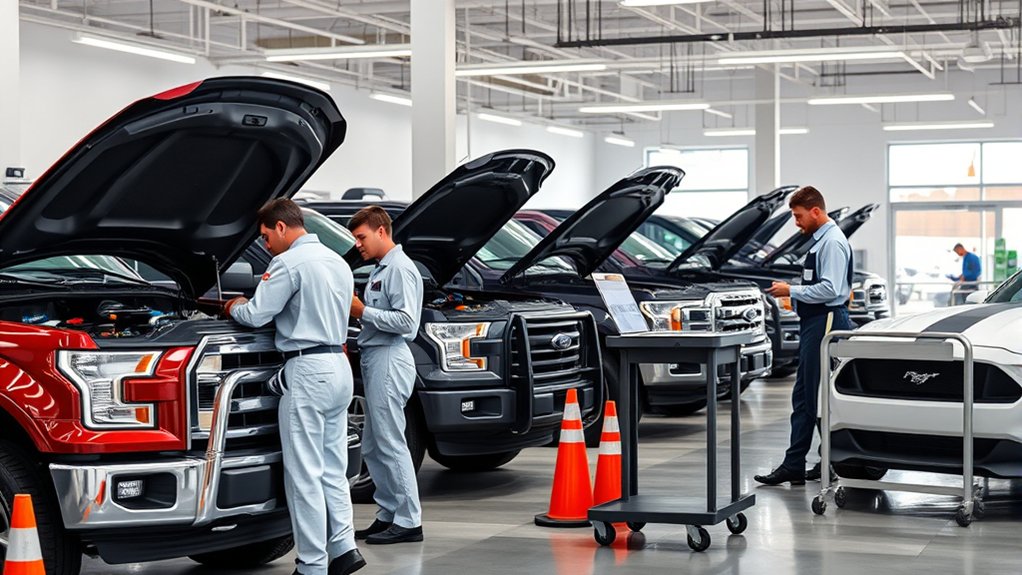
The recall encompasses nearly 4.4 million Ford vehicles across multiple model lines, including 2021 to 2026 F-150 and F-250 pickups, along with various SUVs and vans. Among the affected vehicles are the 2020 to 2023 Ford Escape, 2022 to 2023 Ford Maverick, and 2021 to 2023 Lincoln Corsair, which are included in Ford recalls tied to software-related defects. The total population also includes units with trailer lighting and braking system faults, extending the scope beyond pickups to utility vehicles and commercial vans. In parallel, 125,322 vehicles with 2.5-liter HEV and PHEV engines are identified as fire-risk cases associated with engine failure. Owners of affected vehicles should expect notification for inspections, software updates, and repairs at no charge. This corrective process is designed to reduce operational risk and restore safe use, supporting informed, independent vehicle use with minimal disruption.
What’s Causing the Ford Recall?
Multiple safety defects are driving the Ford recall, with different model groups affected by distinct failure modes. One set of concerns centers on wiring harness defects that can interrupt electrical continuity, causing intermittent or total power loss in Ford vehicles such as Mustangs and Explorers. Another, more severe issue involves premature engine failure in the 2020-2023 Ford Escape, 2022-2023 Ford Maverick, and 2021-2023 Lincoln Corsair. In those vehicles, component damage can trigger under-hood fires, localized melting, and other thermal hazards. Separately, a large software defect affects trailer lighting and brake control, creating malfunction risk across nearly 4.4 million vehicles. The underlying pattern is a breakdown in vehicle systems that should remain reliable under ordinary use. Ford is developing remedies, with some fixes expected by the third quarter of 2023. The recalls reflect a technical failure of design, integration, or calibration, not owner misuse, and they place safety control back in the hands of drivers.
How the Trailer Light and Brake Failure Happens
A software defect is interrupting communication between nearly 4.4 million Ford towing vehicles and their trailer lighting and brake systems when the vehicle is started, leaving trailer functions unavailable or unstable. In affected trucks, including many F-150 and F-250 models, the fault disrupts the control signal that links the tow vehicle to the trailer interface. When that link fails, trailer lights may not operate correctly, and trailer brakes may not respond as intended. The resulting instability can appear immediately after ignition, before towing begins. In some cases, the system may register a Trailer Brake Module Fault message and cause turn signals to flash rapidly, reflecting loss of normal lighting coordination. This malfunction reduces visibility for other road users and weakens braking control for the driver. Ford plans a remote software update in May to restore proper communication and return safe trailer operation.
Warning Signs Ford Owners May See
Ford owners may observe dashboard warning messages, including module fault alerts, that indicate possible trailer lighting or brake system defects. They may also notice unusual engine behavior such as abnormal noises, smoke, odors, or power loss, which can signal a serious mechanical or fire hazard. Changes in brake response or steering feel should be treated as critical indicators of a condition requiring immediate inspection.
Dashboard Warning Messages
Owners may encounter dashboard warnings that indicate active safety defects or emerging vehicle malfunctions, including a “Trailer Brake Module Fault” message tied to trailer-light and brake communication errors, rapid turn signal flashing caused by loss of towing-system communication, and engine-related alerts accompanied by unusual noise or power loss that require immediate shutdown. These recalls signal a software-related defect that can reduce braking coordination and elevate crash risk. When the engine displays warnings, smoke, or abnormal odor, the vehicle should be parked and turned off at once to limit fire exposure. Do-Not-Drive Advisories and recall notices on the instrument cluster are not advisory in a casual sense; they mark conditions requiring prompt repair. Owners seeking freedom from avoidable harm should treat every alert as a technical warning demanding immediate verification.
Unusual Engine Behavior
Unusual engine noise, such as knocking, ticking, or abrupt mechanical vibration, can indicate an impending engine failure and may precede fire-related hazards. Ford owners should treat unusual engine noises as a critical diagnostic cue, especially when accompanied by sudden power loss, visible smoke, or abnormal odors near the engine bay. These conditions may signal oil leakage, fuel vapor accumulation, or other faults that increase fire risk. If any unexpected engine behavior occurs, the vehicle should be parked safely and the engine shut off immediately to limit damage and preserve personal safety. Continued operation can intensify mechanical failure and expose occupants to hazardous heat or ignition sources. Prompt inspection by qualified service personnel is the appropriate response when these warning signs appear.
Brake And Steering Changes
Brake and steering changes can be early indicators of a serious safety defect, particularly when braking feels abnormal, steering becomes difficult, or dashboard warning lights illuminate. In recalled Ford vehicles, these symptoms may reflect failure in brake systems or steering control components. The 2026 Transit, E-Transit, and Maverick may suffer brake pedal pushrod detachment, which can eliminate braking capacity. The 2021–2025 Bronco may experience a fractured lower control arm, creating immediate loss of steering control. Unusual braking noises, increased effort at the wheel, or warning lamps warrant prompt inspection. Owners should review recall notices, verify vehicle status, and arrange repairs without delay. Early action preserves vehicle autonomy and reduces exposure to preventable crashes caused by degraded handling or total control loss.
What Safety Risks the Recall Creates
The recall poses a significant towing safety risk because a software malfunction can leave trailer lighting inoperative and trailer brakes compromised on affected Ford vehicles, particularly F-150 and F-250 pickups. In this safety recalls context, the fault is increasing the risk of rear-end collisions, sway events, and loss of trailer stability during transport. A Trailer Brake Module Fault message may appear, signaling communication loss and reduced control over towing equipment.
Ford’s trailer brake software fault can disable lights and brakes, increasing collision and stability risks while towing.
- Trailer lamps may fail to illuminate
- Following drivers may not detect braking
- Brake response may become inconsistent
- Visibility drops in rain, fog, or darkness
- Crash potential rises during load transfer
These conditions constrain safe operation and limit driver autonomy over towing tasks. No injuries or crashes have been linked to the defect, yet the operational hazard remains material. NHTSA advises maintaining trailer equipment in functional condition until the software issue is corrected.
How Ford Will Fix the Problem
Ford’s corrective plan centers on a remote, automatic software update designed to restore trailer lighting and brake function across the affected fleet of nearly 4.4 million vehicles, with owners to be notified once the remedy has been installed. This approach is intended to fix an issue without requiring most drivers to visit a service center, preserving time and reducing disruption. The recall affects vehicles with a software fault that can interrupt towing-related safety systems, so the update is the primary countermeasure. Owners who prefer not to wait may obtain free repairs at Ford or Lincoln dealers. For separate recalls involving the 2.5-liter HEV/PHEV engines in the Escape, Maverick, and Corsair, a fire-risk remedy remains in development and is expected in the third quarter of 2023. Ford is also providing ongoing status updates, while critical-safety recalls continue to receive free inspections and repairs to maintain safe vehicle operation.
How to Check Your VIN for Open Recalls
The vehicle identification number (VIN), a 17-character alphanumeric code, is typically located in the driver’s side doorframe or at the lower edge of the windshield. Once identified, the VIN can be entered into the NHTSA recall database or Ford’s recall tool to determine whether open recalls apply to the vehicle. These results provide model-specific recall status and support prompt completion of any required safety repairs.
Locate Your VIN
To check for open recalls, a vehicle owner must first locate the 17-digit Vehicle Identification Number (VIN), which appears on the driver’s side doorframe, at the lower corner of the windshield, and in purchase documents, the insurance card, or the registration form. The vehicle identification number is the primary identifier used for every recall record.
- Driver’s side doorframe
- Lower windshield corner
- Purchase documents
- Insurance card
- Registration form
Each location provides a reliable reference point. This code is alphanumeric, fixed to the vehicle, and necessary for accurate recall lookup. Because safety recalls do not expire, owners may verify status at any time, regardless of age or mileage. Federal law also requires recall repairs to be completed free of charge, supporting informed and independent action.
Search Recall Status
Once the 17-digit VIN has been located, owners can verify open recall status by entering that number into the NHTSA recall search tool or Ford’s recall lookup page. The search recall status process is direct: enter the VIN exactly as shown on the driver’s side doorframe, lower windshield corner, or purchase documents. Results will identify active safety recalls tied to the vehicle, including defects requiring free manufacturer repair under federal law. These recalls remain valid regardless of age or mileage. Owners may also cross-check insurance cards or registration forms carrying the VIN. For continuous monitoring, the SaferCar app can issue recall alerts. If a remedy was previously paid for, the owner may be eligible for a refund, depending on recall terms and repair timing.
What to Do If Your Ford Is Included
If a Ford vehicle is listed in a recall, the owner should verify the vehicle identification number through the NHTSA or Ford recall tool to confirm the affected recall status and associated repair details. This step determines whether the vehicle’s safety exposure requires immediate action. For Emissions Recalls, the same VIN review clarifies applicability and available compliance measures.
- Review the recall notice for exact model, year, and defect description.
- Check for any Do-Not-Drive Advisory before using the vehicle.
- Park outdoors and avoid operation if the advisory is active.
- Contact a local Ford dealer to arrange a no-cost safety repair.
- Retain owner notification letters and repair records for documentation.
If out-of-pocket expenses were incurred before notice, documentation should be preserved and discussed with the dealer to assess possible refund eligibility. Prompt verification and adherence to recall instructions reduce risk and support informed, autonomous decision-making.
Ford Recall Service, Repairs, and Refunds
Ford recall service provides no-cost repairs for all affected vehicles, regardless of purchase source, including private-party and out-of-state sales, as required by federal law. These repairs are performed to bring each vehicle into compliance and restore safe operation. When a Do-Not-Drive advisory is active, immediate action is required; Ford may arrange mobile service, towing, or a loaner vehicle during the repair process. Owners should verify recall status using the 17-digit VIN on the NHTSA website or Ford’s recall tool, which provides direct access to service details. Refunds may be available for qualifying out-of-pocket recall-related repairs already paid for by the owner. To pursue refunds, documentation and consultation with a Ford Dealer are typically required. The process is designed to remove financial barriers to safety, while preserving access to transportation. Timely completion of repairs supports compliance and reduces exposure to preventable harm.
Frequently Asked Questions
What Ford Models Are Being Recalled?
Ford model updates show recalls for 2021-2026 F-150, F-250, trucks, vans, SUVs, 2020-2023 Escape, 2022-2023 Maverick, 2021-2023 Corsair, plus Bronco, Explorer, Mustang, and 2018-2020 F-150. Recall impact remains significant.
Which Fords to Stay Away From?
Ford reliability issues make certain F-150 5.0L V8, 2013–2021 Escape and Fusion, 2004–2014 Mustang and Ranger, 2020–2023 Escape, 2022–2023 Maverick, and 2021–2023 Corsair models worth avoiding; Ford owner experiences report urgent repair needs.
What Is Ford Discontinuing in 2026?
Ford is discontinuing the EcoSport, Fiesta, and Fusion in its 2026 vehicle lineup, reflecting Ford future plans centered on electric vehicles, SUVs, and hybrids, while reducing internal combustion models and reallocating resources toward higher-demand segments.
What Ford Vehicle Has the Most Recalls?
The Ford F-150 has the most recalls, despite strong Ford reliability. Its recall history contrasts capability with software, braking, and lighting failures, underscoring that liberation from risk depends on precise engineering, not brand prestige.
Conclusion
The recall leaves a wide trail across Ford’s lineup, from F-150 and F-250 trucks to Escape and Corsair models, with wiring and software faults shadowing trailer lights and brakes. Owners are urged to verify their VINs, heed any do-not-drive notice, and arrange no-cost repairs promptly. Until the fix is completed, the affected vehicles remain under a cloud of risk, like a warning light glowing dimly on a dashboard at dusk.