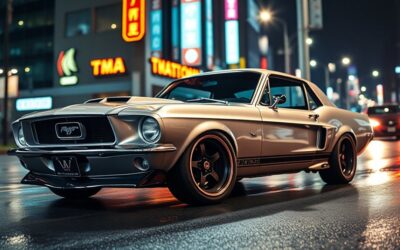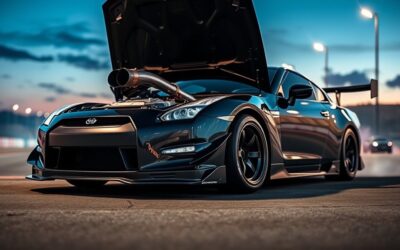
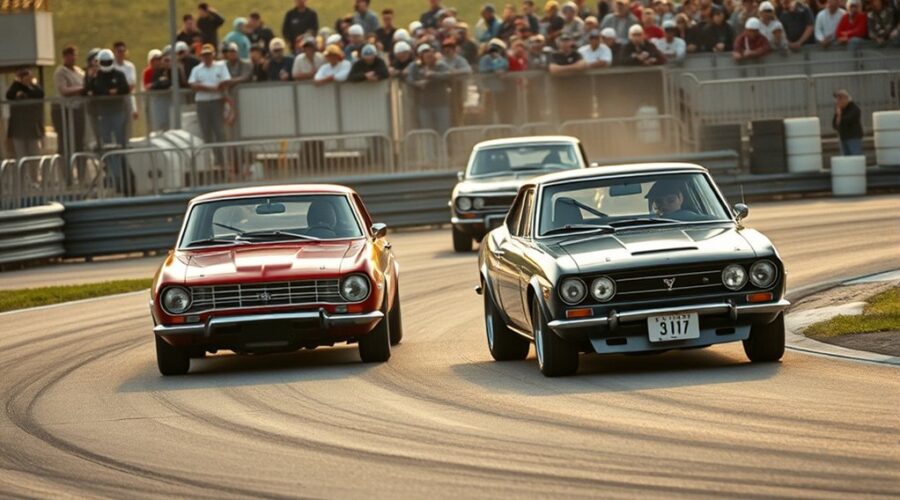
Japanese car racing developed through factory-backed efforts that combined reliability with aggressive engineering. Early programs such as Honda’s Team Yamato and later NISMO revealed how integrated chassis, aerodynamics, and powertrain design could reshape competition. Group A touring cars and GT machines then became proving grounds for engines like the RB26DETT and VTEC systems. The most significant models did more than win races; they defined a national technical standard that still invites closer inspection.
Key Takeaways
- Japan’s first factory race teams, like Honda’s Team Yamato, proved disciplined engineering and selective tuning could transform road cars into racers.
- Nissan’s NISMO and the R32 Skyline GT-R dominated Group A, winning 29 straight races and sweeping the 1991 Spa 24 Hours podium.
- Honda’s VTEC-powered Civics, especially the EG, evolved from Minor Touring cars into competitive JTCC entries exceeding 230 horsepower.
- Japanese race cars often paired engine and chassis as one system, using technologies like turbocharging, ATTESA AWD, and lightweight rotary power.
- Iconic models like the Toyota 2000GT, Mazda RX-7, and Nissan R390 GT1 established Japan’s credibility in touring, endurance, and GT racing.
Japan’s First Factory Race Teams
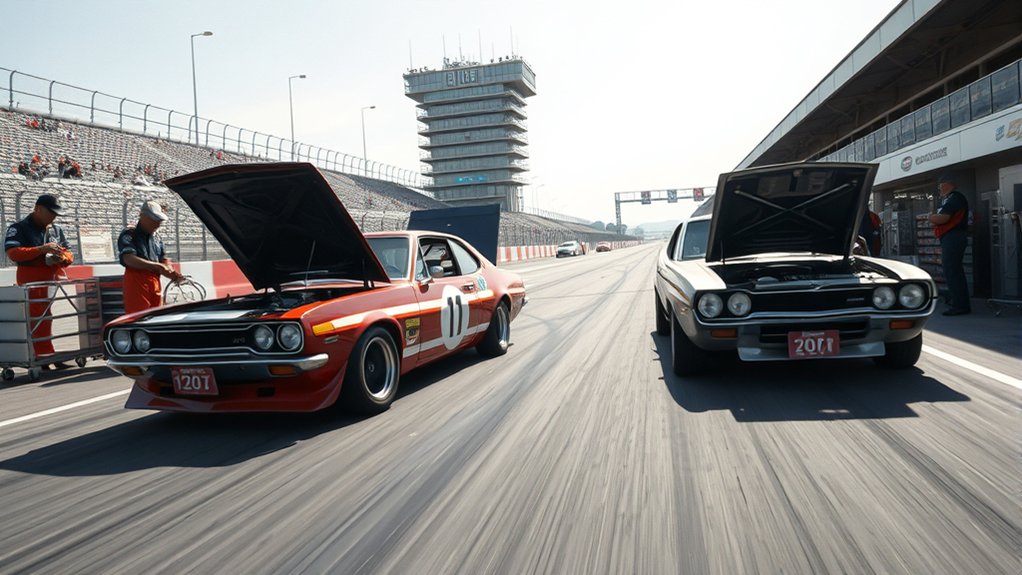
Japan’s first factory-backed race effort emerged in 1978, when Honda engineers formed Team Yamato to develop a competition version of the Civic for the track. The group is widely regarded as the first organized race unit supported by a Japanese carmaker, and it treated the Honda Civic SB1 as a technical test bed rather than a showroom product.
Its 1.3-liter engine, rated at 150 PS at 7,800 rpm, gave the compact chassis enough pace to challenge established rivals in the Minor Touring class. The project also demonstrated that a mass-market hatchback could be reengineered into a liberation tool for drivers seeking speed beyond conventional limits.
In this sense, the Civic became Honda’s first sports car in racing form, even without a dedicated coupe body. Later developments, including the VTEC system, built on this foundation, but Team Yamato established the model: disciplined engineering, selective tuning, and repeatable competition success.
NISMO and Honda Enter the Track
NISMO emerged in 1984 as Nissan’s dedicated motorsport arm and quickly converted factory backing into measurable results, first in endurance racing and then in Group A competition with the Skyline R32 GT-R, which dominated by winning all 29 races from 1990 to 1993.
That record reflected disciplined chassis development, turbocharged six-cylinder output, and rigorous race preparation.
In parallel, Honda built its program from Team Yamato in 1978, where the first racing Civic proved competitive in Minor Touring class championships.
The arrival of VTEC in the EF Civic in 1988 raised engine breathing efficiency and broadened usable power, helping Honda secure the 1990 manufacturers’ title.
By 1992, the EG Civic exceeded 230 horsepower and challenged rivals in JTCC, showing how compact platforms could be engineered for freedom through precision.
Both makers used motorsport to translate technical ingenuity into track authority.
Group A and GT Racing Take Over
By the mid-1980s, Group A had become the primary stage for manufacturers to prove production-based performance, and Nissan used the format to turn the Skyline GT-R into a benchmark.
In Group A, the R32 Skyline GT-R compiled an undefeated run from 1990 to 1993, while NISMO underscored its reach with the 1991 Spa 24 Hours, where the model finished 1st, 2nd, and 3rd. This sequence demonstrated disciplined factory execution and a clearly dominant platform.
The shift toward GT racing followed in 1993 with the launch of JGTC, where the Calsonic GT-R won the inaugural title.
Nissan continued with the R33 Skyline GT-R in 1995, adding victories against rivals such as the McLaren GT1.
The program then expanded to Le Mans through the R390 GT1 in 1997, finishing 3rd overall in 1998 and extending Japanese engineering credibility onto a global grid.
Engines and Chassis That Built Winners
A handful of Japanese performance cars established their racing reputations through tightly integrated engine and chassis design rather than raw displacement alone.
In each Japanese car, the engines were matched to chassis geometry for traction, balance, and durability under load. The Nissan R32 GT-R paired the RB26DETT with ATTESA all-wheel drive, giving Group A racers controlled power delivery.
Honda’s B16A used VTEC to widen the usable rev range in touring car competition.
Toyota’s 2000GT combined a 150-horsepower inline-six with an aluminum body and independent suspension.
Mazda’s RX-7 used a rotary engine to reduce mass and improve response.
Subaru’s EJ flat-four lowered center of gravity, proving decisive in World Rally.
- Traction stability
- Weight distribution
- High-rev efficiency
- Low polar moment
- Rally-winning composure
Japan’s Most Important Race Cars
Japan’s most important race cars were defined by how effectively they translated engineering solutions into competitive results, building on the same balance of traction, durability, and chassis control seen in earlier performance platforms.
The Toyota 2000GT introduced Japanese sports credibility with its 150-horsepower inline-six and disciplined aerodynamics.
The Skyline GT‑R, especially the R32, carried domination into Group A, using turbocharging and all-wheel drive to win every race from 1990 to 1993.
Honda’s Civic EF and EG models proved that VTEC and compact packaging could deliver manufacturers’ titles in touring car competition.
Mazda RX‑7 models demonstrated rotary efficiency and low mass, reaching over 180 mph at Bonneville and becoming a durable motorsport reference.
The Nissan R390 GT1 extended the field to endurance racing, pairing a V8 with advanced airflow to finish third at Le Mans in 1998.
Together, these machines showed how Japanese engineering enabled speed without surrendering control.
Frequently Asked Questions
What Is the #1 Cause of Death in Japan?
Cancer is Japan’s leading cause of death. Health statistics show the burden rising alongside the aging population, while lifestyle diseases and traffic safety concerns shape broader mortality patterns; it accounts for about 27% of fatalities.
What Is the Crappiest Car of All Time?
The Yugo GV is often judged the crappiest car of all time. Car Comparisons, Automotive Innovations, Cultural Impact, and Performance Metrics consistently rank it poorly for build quality, reliability, safety, and highway performance.
What Is the 3 Year Rule for Cars in Japan?
Japan’s 3-year rule mandates a Shaken vehicle inspection every three years after registration, checking safety, emission standards, and insurance requirements. For car ownership, it resembles a tollgate: costly, technical, and often prompting early resale.
What Is the Poor Man’s Supercar?
A poor man’s supercar is an affordable performance car delivering exotic-like excitement. For budget enthusiasts, iconic models such as the Nissan 350Z and Mazda MX-5 Miata, shaped by Japanese tuning, combine agility, power, and attainable cost.
Conclusion
From the first factory teams to the rise of NISMO and Honda, Japanese racing evolved through disciplined engineering rather than chance. Group A battles and GT campaigns revealed how chassis balance, turbocharging, and VTEC precision could be turned into measurable speed. Yet the story did not end with the R32 GT-R or RX-7. Each new platform carried another unanswered challenge, hinting that the next breakthrough was already waiting in the pit lane.