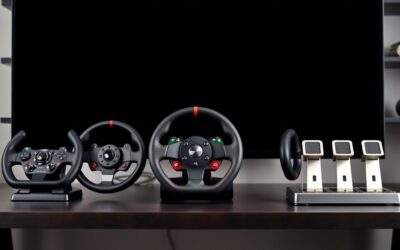
The F1 wheel is more than a steering device; it is a compact control system shaped by decades of motorsport development. Early versions were simple and large, while modern designs pack buttons, paddles, and displays into a small carbon-fiber frame. Every element serves a function, from brake balance to gear changes. Its evolution reveals how Formula 1 turned driver input into a highly engineered interface.
Key Takeaways
- F1 wheels combine steering with race-control functions, typically featuring about 25 buttons, switches, paddles, and a central display.
- Early F1 wheels were large, simple wooden or metal round wheels, while modern versions became compact multifunction command centers.
- Modern F1 wheels are usually 250–275 mm wide and built from carbon fiber and titanium for extreme lightness and rigidity.
- Key controls include brake balance, energy deployment, clutch operation, and shift paddles for rapid gear changes and race management.
- F1 wheel technology has influenced road cars through paddle shifters, multifunction controls, telemetry, and ergonomic performance-focused designs.
What Is an F1 Wheel?
An F1 wheel is a highly specialized driver interface that combines steering with extensive race-control functionality, typically incorporating about 25 buttons and switches alongside clutch and shift paddles.
This F1 steering wheel is not merely a turning device; it is a command center for strategic autonomy at racing speed. Its compact diameter, usually 250 to 275 mm, supports ergonomic control while limiting strain under power steering.
Built from advanced materials such as carbon fiber and titanium, the structure remains light, rigid, and resilient under severe loads. Multifunctional controls allow the driver to adjust brake balance, engine modes, and communication settings without surrendering concentration.
Each unit is custom-calibrated for individual hand geometry, driving style, and team strategy, reinforcing precision as a form of liberation. In technical terms, the wheel fuses mechanical control, electronic input, and human interface into one instrument.
F1 Wheel Evolution From 1950s to Today
From the 1950s through the 1960s, Formula 1 wheels were large, round, and mechanically simple, prioritizing direct steering input over onboard control.
As the decades progressed, diameter decreased and control complexity increased, with buttons, paddles, and integrated electronics converting the wheel into a functional driver interface.
Contemporary Formula 1 wheel design is compact and highly specialized, combining ergonomic shaping with extensive car-management controls and rapid-response geometry.
Early Round Wheels
In the 1950s and 1960s, Formula 1 steering wheels were large, typically 350–400 mm in diameter, and constructed from wood or metal to prioritize direct mechanical control with minimal supplementary input.
These early round wheels in the first Formula era reflected an unfiltered relationship between driver and machine, with steering wheels serving as simple levers of command. Their size supported leverage, while the rigid materials transmitted road texture and chassis load without mediation.
Few controls were present, so the driver’s freedom depended on tactile precision rather than electronics. Before later technological advancements, this layout favored clarity, strength, and mechanical honesty.
The design was austere, but it enabled disciplined control and immediate feedback, forming the baseline from which future wheel architecture would evolve.
Rising Controls Complexity
As Formula 1 technology advanced, steering wheels transformed from simple circular interfaces into increasingly dense control hubs.
In the 1950s, large 350–400 mm rims offered only direct steering, leaving drivers free from auxiliary management.
By the 1970s, diameter had fallen to 300–320 mm, and basic radio buttons appeared as chassis response sharpened.
The 1990s reduced size again to 280–300 mm, while paddles and extra buttons made the wheel a compact command center.
In the 2000s, 260–280 mm wheels integrated controls for car performance, approaching portable computing.
Today’s 250–275 mm units concentrate steering, controls, and performance settings, including DRS and energy management.
Each reduction in size reflects a liberation from mechanical simplicity toward precise, data-driven authority.
Modern Formula Wheel Design
Modern Formula 1 steering wheels evolved from simple wooden or metal rims of the 1950s, typically 350–400 mm in diameter, into highly engineered control interfaces optimized for rapid driver input.
By the 1970s, diameter fell near 300 mm, and lightweight aluminum enabled basic radio controls.
In the 1990s, composite materials reduced mass further while adding paddles and buttons, turning wheels into multifunctional control centers.
During the 2000s, ergonomic shaping and carbon fibre composite construction improved grip, reduced inertia, and strengthened driver-car communication.
Modern F1 steering wheels measure roughly 250–275 mm and integrate extensive car-management systems, from energy deployment to brake bias.
Their compact geometry supports swift steering response, giving drivers greater operational freedom and precision under extreme load, where every millisecond matters.
Inside an F1 Wheel’s Buttons and Display
An F1 steering wheel integrates roughly 25 buttons and switches, arranged to give immediate access to brake bias, differential settings, DRS, and power unit modes.
Its display and 15 shift indicator LEDs provide real-time operating data, guiding shift points as the driver uses the paddles dozens of times per lap.
The layout functions as a compact control interface, optimized for precision, rapid input, and race-specific adjustments.
Button Layout
Inside the wheel, the control interface is arranged with unusually dense functionality, typically combining about 25 buttons and switches with a central display and 15 shift indicator LEDs.
This button layout places critical controls within immediate reach, allowing rapid changes to brake balance, differential settings, and Power Unit modes. The strat switch governs performance maps, so energy deployment can be adapted to circuit conditions without delay.
Drivers may actuate controls up to 50 times per lap, making tactile efficiency essential. The assembly relies on carbon fiber and titanium, with lightweight materials chosen to preserve strength while limiting mass.
Many components are manufactured in-house, supporting precise ergonomics and consistent feel. Every element serves operational freedom through direct, unmediated access to machine behavior.
Display Functions
The central display on an F1 steering wheel functions as a compact telemetry interface, presenting real-time information such as tire temperatures, fuel levels, and engine performance so the driver can adjust strategy without hesitation.
On modern steering wheels, this screen condenses critical race data into an immediate readout, reducing cognitive load at extreme speed. It supports informed decisions across changing conditions and complements the broader control suite.
- Shift indicator LEDs mark ideal change points with visual precision.
- The Drag Reduction System (DRS) status appears clearly during overtaking phases.
- Telemetry feedback aids rapid adaptation to tire and power-unit behavior.
Integrated with around 25 inputs, the display helps preserve freedom of action by letting the driver interpret performance instantly, without distraction or delay.
Driver Controls
Mounted on the wheel rim are roughly 25 buttons and switches, each assigned to a specific racing function such as brake bias, differential adjustment, power-unit modes, strat switch inputs, and DRS activation.
On the steering wheel, these controls allow the driver to reshape balance and energy delivery without surrendering focus. The shift paddles are used about 50 times per lap, while 15 shift indicator LEDs signal ideal change points.
The strat switch alters engine output to match race demands, enabling tactical freedom under pressure. Ergonomic placement, refined through driver feedback, keeps commands accessible at speed.
Carbon fibre and titanium construction supports precision, and in-house manufacturing limits tolerance error. Together, the interface turns mechanical control into disciplined autonomy, enabling rapid adaptation.
How F1 Wheels Control Brake Balance and Modes
F1 steering wheels incorporate multiple dedicated controls that let drivers continuously refine brake balance, brake migration, and engine braking to match evolving track conditions.
These steering wheels give F1 teams a direct interface for managing deceleration with precision, reducing understeer or rear lockup as grip changes. Brake balance adjustments shift bias forward or rearward, while brake migration alters that bias through a corner, improving stability under load. Engineers relay target settings by radio, and drivers respond lap by lap.
- Five buttons enable rapid brake-related mode changes.
- Balance shifts reflect cornering demand and tire wear.
- Clutch paddles support controlled starts and pit exits.
This architecture grants drivers measurable control, not dependence on fixed presets. By tuning modes in real time, they preserve braking efficiency, protect tires, and sustain pace without surrendering adaptability.
F1 Wheel Materials: Carbon Fibre and Titanium
Built from carbon fibre composites and titanium hardware, an F1 steering wheel is engineered for maximum stiffness, low mass, and resistance to thermal and mechanical stress. Carbon fibre dominates the structure because it delivers high strength without burdening performance. A resin matrix binds the layers, forming a composite able to endure heat, vibration, and load cycles. Titanium is selected for paddles, fasteners, and buttons where precision and wear resistance matter.
| Material | Function |
|---|---|
| Carbon fibre | Main structural shell |
| Titanium | Control components and hardware |
| Resin composite | Heat and stress tolerance |
| In-house parts | Tight quality control |
This pairing supports rapid driver input while preserving durability. Hundreds of parts are integrated with exacting tolerances, many produced in-house to protect performance and consistency. The result is a control interface that remains light, strong, and responsive, enabling liberated, efficient command on track without unnecessary mass or compromise.
Why F1 Wheels Are Small and Square
Modern F1 steering wheels are intentionally compact, typically measuring about 250–275 mm across, because the smaller diameter allows faster, more accurate steering input at racing speeds. This small diameter reduces hand travel, enabling sharper steering adjustments with less delay and greater control. The square or butterfly form further improves ergonomics, letting drivers reach controls without releasing grip during high-load corners.
- Small diameter supports rapid corrections in unstable conditions.
- Squared edges free space for integrated controls and data interfaces.
- Reduced frontal area contributes to aerodynamics and lower drag.
Power steering technology has made such compact packaging practical by limiting physical effort, while the wheel’s shape functions as a command center for vehicle management.
The result is a tool designed for liberation from unnecessary motion: precise, efficient, and optimized for elite performance.
Paddle Shifters and Faster Gear Changes
Paddle shifters transformed Formula 1 gear changes by replacing the slower, more physically disruptive manual lever with a system that can be operated instantly from the steering wheel. Ferrari first adopted paddle shifters in 1989, establishing a control method that reduced shift time and preserved driver focus.
Because both hands remain on the wheel, the F1 car’s stability improves during acceleration, braking, and corner entry, where every fraction of a second matters. Modern steering wheels integrate complex paddle shifters capable of repeated engagement, sometimes about 50 times per lap, reflecting the density of racing inputs.
Shift indicator LEDs further refine the process by signaling ideal shift points, allowing the engine to deliver maximum performance and efficiency. The result is a liberated, low-drag workflow: gear changes become faster, cleaner, and less mentally taxing, while the driver retains continuous command of the F1 car’s dynamics under extreme load.
How F1 Wheel Tech Entered Road Cars
As Formula 1 wheel systems matured, their core technologies began migrating into road cars, where paddle shifters, multifunction controls, and telemetry-derived interfaces improved both convenience and performance. This transfer of F1 steering wheel technology was not cosmetic; it redefined driver-vehicle interaction through faster inputs and clearer feedback.
In premium road cars, telemetry systems enabled real-time monitoring of drivetrain behavior, helping engineers refine calibration and drivers understand limits with greater autonomy. Adjustable brake balance, once reserved for race strategy, entered high-performance models to let users shape corner entry and stability.
- Ergonomic layouts reduced distraction and improved reach.
- Carbon-fiber components lowered mass while increasing rigidity.
- Electronic controls expanded handling precision without sacrificing daily usability.
These adaptations translated track-derived freedom into road use, giving drivers more direct control over performance variables.
5 F1 Wheel Facts That Explain The Tech
The technical character of an F1 steering wheel becomes clear through a few core facts that define its function on track.
Modern steering wheels carry about 25 buttons and switches, giving control over brake bias, differential settings, and DRS activation without surrendering focus. Their 250 to 275 mm diameter supports rapid inputs, while power steering limits physical strain and preserves control.
Built from advanced materials such as carbon fibre, fiberglass, and titanium, each unit remains light yet structurally resilient.
Built from carbon fibre, fiberglass, and titanium, each wheel stays light while remaining exceptionally strong.
Drivers can engage shift paddles roughly 50 times per lap, and 15 shift indicator LEDs guide timing for maximum efficiency.
Annual redesigns reflect driver feedback, so ergonomics and interface logic evolve with circuit demands. This constant refinement turns the wheel into a compact command center, enabling precise, liberated performance under extreme pressure.
Frequently Asked Questions
What Technologies Have Been Used in Formula 1?
Formula 1 has used Hybrid power systems, Aerodynamic advancements, and Data telemetry, alongside carbon-fiber construction, KERS, DRS, and safety devices like the halo. These technologies optimize speed, efficiency, control, and driver protection.
Why Did F1 Stop Pit Girls?
F1 stopped pit girls to align with cultural shifts, improve gender equality, and modernize pit crew dynamics. The change responded to fan reactions and broader liberation-focused values, replacing spectacle with professional, inclusive promotional practices.
What Is the 75% Rule in F1?
It denotes a measured curtailment: if a Grand Prix completes under 75% of scheduled distance, full points vanish and half points are allotted. This race strategy, shaped by rule changes and safety regulations, preserves competitive legitimacy.
Is the Number 69 Allowed in F1?
No, the number 69 is generally not allowed in F1. F1 number significance, driver number preferences, and historical number controversies shape FIA restrictions, which exclude offensive or inappropriate choices and preserve standardized driver identifiers.
Conclusion
From simple wooden rims to compact control hubs, the F1 wheel now functions as a driver’s primary interface with the car. Modern designs typically measure 250 to 275 mm across and can carry roughly 25 inputs, reflecting the sport’s demand for speed, precision, and real-time strategy. Its evolution shows how motorsport engineering increasingly favors data, ergonomics, and rapid decision-making, turning a steering wheel into one of the most sophisticated controls in racing.