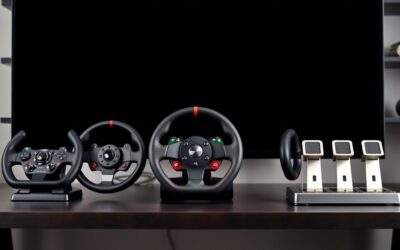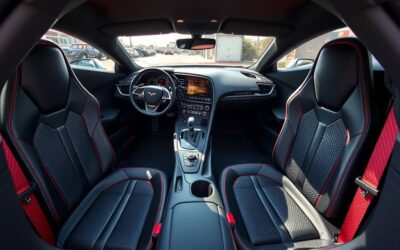
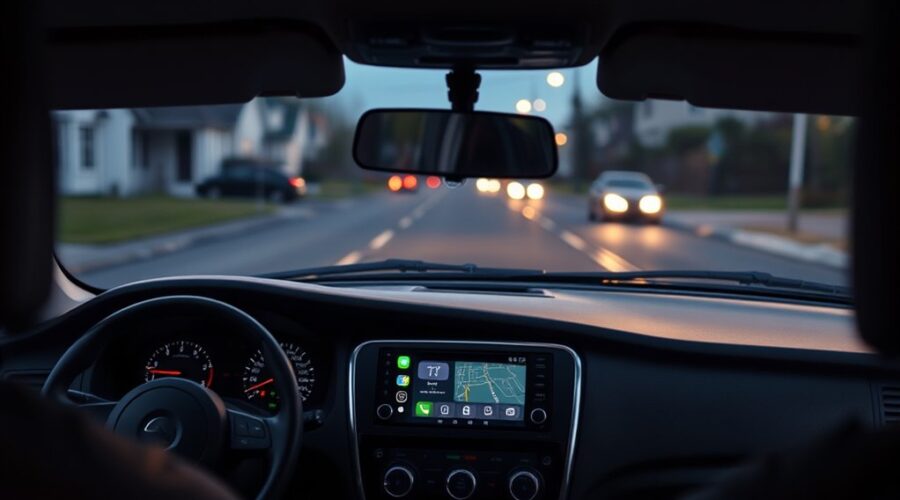
CarPlay screens for old cars появились as a practical retrofit for vintage dashboards, combining modern smartphone integration with legacy vehicle systems. These units typically add a 7- to 10-inch display, wired or wireless connectivity, and voice-controlled access to navigation, media, and calls. Installation and compatibility vary widely by model, which makes hardware choice critical. The real question is how much functionality an older car can gain without compromising its original character.
What Is a CarPlay Screen for Old Cars?
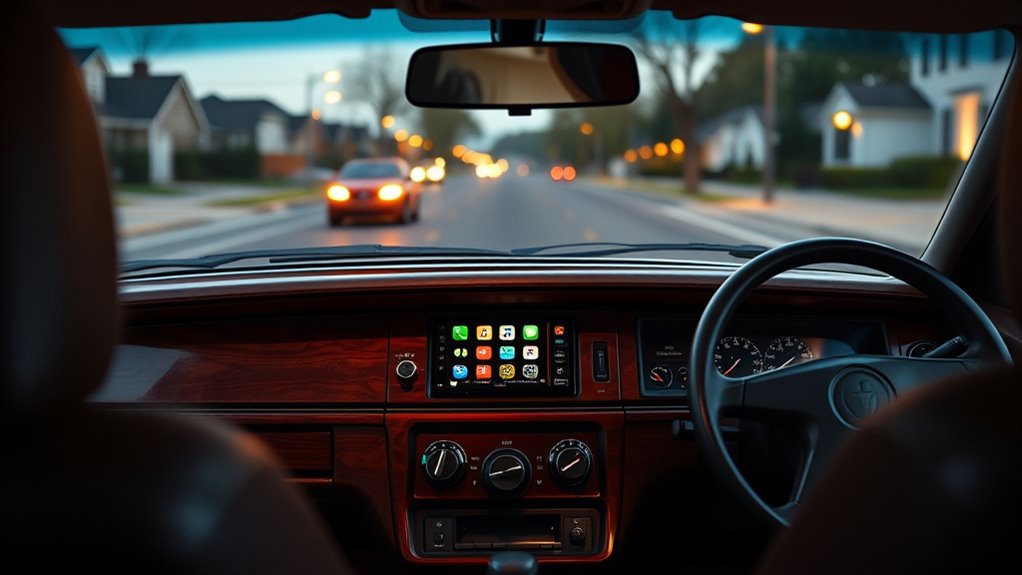
A CarPlay screen for old cars is an aftermarket display system that adds Apple CarPlay compatibility to older vehicles, enabling access to navigation, music, calls, and messaging through a smartphone interface.
It functions as an aftermarket device that bridges legacy dashboards with CarPlay and Apple CarPlay services, without requiring a factory infotainment unit. Most models include Bluetooth capabilities, supporting wireless iPhone pairing and reducing cable dependence.
A touch display, usually 7 to 10 inches, provides direct control over maps, audio, and communication functions. Installation options depend on the vehicle and owner preference: some units replace the existing head unit, while others use a smart car stereo screen with limited wiring changes.
Devices designed for older vehicles may also add FM transmission and USB ports for broader connectivity. This configuration gives drivers a practical, technically current interface, increasing control over in-car functions while preserving the vehicle’s original structure.
Why Upgrade an Older Car With Carplay?
Upgrading an older car with CarPlay brings modern smartphone integration to legacy dashboards, giving drivers direct access to navigation, music, calls, and messaging on the vehicle’s display. Apple CarPlay improves connectivity while preserving freedom from phone handling. In older cars, this upgrade adds hands-free calling and voice control, reducing distraction and supporting safer, more autonomous travel. Aftermarket options simplify adoption; many units install with minimal modification and fit hundreds of models.
| Benefit | Effect | Result |
|---|---|---|
| Navigation | Phone maps on screen | Faster route access |
| Calling | Voice commands | Hands-free calling |
| Messaging | Dictation support | Less distraction |
| Music | App integration | Better control |
| Value | Modernized cabin | Higher resale value |
For drivers seeking liberation from outdated interfaces, the upgrade delivers practical utility without replacing the vehicle. It extends the useful life of older cars and updates daily operation with a cleaner, more responsive digital environment.
Wired vs Wireless CarPlay Screens
Wired and wireless CarPlay screens differ mainly in connection method, installation demands, and day-to-day convenience. Wired CarPlay uses a USB cable, giving a stable data path from iPhone to the head unit. Wireless CarPlay pairs by Bluetooth and then moves data over Wi‑Fi, reducing cable dependence.
- Installation: wired setups are often plug-and-play; wireless units can raise installation complexity, especially in aftermarket retrofits.
- Compatibility: wireless CarPlay depends on head unit hardware and iPhone compatibility, with iPhone XR or later commonly supported; wired CarPlay is broader across older cars.
- Performance: wired links usually deliver better audio quality and lower latency, while wireless models may trade some fidelity for freedom.
Both improve user experience by integrating maps, calls, and media into the car interface, letting drivers reclaim cabin space and mobility without sacrificing core iPhone access.
What Makes a Good CarPlay Screen?
A good CarPlay screen combines size, clarity, and connectivity to make in-car use practical and safe.
A CarPlay screen should use a responsive touchscreen between 7 and 9 inches, giving drivers clear access to maps, music, and messaging without excessive distraction. High-resolution displays improve legibility in bright light and at night, supporting precise reading of navigation prompts and menu options.
Reliable wireless connections, paired with wired support, broaden iPhone compatibility and reduce cable dependence. Integration with vehicle controls, including knobs and buttons, preserves freedom of action by limiting repeated screen taps.
Built-in features such as Bluetooth connectivity and FM transmitters strengthen audio output and hands-free calling, making the system more complete.
A well-designed unit balances interface speed, visibility, and control access, so the user can manage travel and media with less friction. It should also respond quickly to touch inputs, ensuring efficient use in moving vehicles.
CarPlay Screen Installation Options
CarPlay screen installation in older cars generally falls into two categories: wired integration methods and wireless mounting options.
Wired setups usually involve aftermarket head units and more involved wiring, while wireless units such as smart car stereo screens simplify installation by minimizing vehicle modification.
This choice affects both setup complexity and total cost, which can range from a few hundred dollars to over $1,000.
Wired Installation Methods
When a vehicle is equipped with a wired CarPlay screen, the iPhone typically connects through the car’s USB port to provide a stable data link for audio and control input. This wired installation suits older drivers seeking dependable, unrestricted access.
Most CarPlay screens in aftermarket CarPlay setups require removal of the factory head unit and integration with the vehicle’s audio system and wiring harness. Installation costs usually range from $100 to $300, depending on system complexity and labor.
Professional installation is often recommended for older cars to preserve function and alignment. Some units also let users customize the interface and app layout for clearer control.
- Stable USB port connection
- Complex head unit replacement
- Professional installation for integration
Wireless Mounting Options
Wireless CarPlay screens offer older vehicles a practical upgrade path through Bluetooth-based connections that eliminate the need for physical cables.
In wireless CarPlay setups, older cars gain freedom from clutter while retaining access to navigation, media, and calls.
Mounting options include CD player adapters, dash suction cups, and smart stereo screens, each affecting installation complexity differently.
Aftermarket wireless CarPlay kits often pair automatically at startup, reducing setup time and supporting a seamless user experience.
A responsive touchscreen improves interaction, as seen in units like the Carpuride 901, where applications remain easy to reach.
These configurations let drivers modernize without extensive vehicle modifications, preserving the original dashboard while expanding functionality.
How to Check CarPlay Screen Compatibility
Compatibility checks begin with confirming both the vehicle and the iPhone meet CarPlay requirements: the car should have a USB port and be a 2016-or-later model or use an aftermarket head unit with CarPlay support, while the phone should be an iPhone 5 or newer running iOS 7.1 or later.
Connection type and integration requirements should then be verified, including whether the screen uses factory USB connectivity or needs an aftermarket wiring setup.
Manufacturer documentation, user manuals, and model-specific online reviews provide the most reliable confirmation before installation.
Vehicle And iPhone Match
To confirm CarPlay screen compatibility, the vehicle and iPhone must both meet Apple’s requirements: an iPhone 5 or later running iOS 7.1 or newer, and a car model listed among the more than 800 vehicles that support CarPlay.
Apple CarPlay works in many 2016 and later models, while older cars can add CarPlay through aftermarket head units or upgrade screens. Compatibility depends on the vehicle’s infotainment design and factory configuration, so verification is essential before purchase.
- Confirm iPhone model and iOS version.
- Check the vehicle list and trim-specific compatibility.
- Consult a dealer or installer before you connect your iPhone.
Aftermarket head units and Carpuride-style solutions expand access, helping drivers reclaim modern interface freedom without replacing the entire car.
Connection Type And Requirements
Once the vehicle and iPhone model have been confirmed, the next check is the connection method required by the CarPlay screen. Compatibility depends on the infotainment system and the connection type it supports.
A wired setup usually needs a USB port and an iPhone 5 or later. Wireless CarPlay requires a compatible head unit with Bluetooth capability. Most vehicles from 2016 onward support CarPlay, but the exact model should be verified in the manual or with a dealer.
For older cars, aftermarket screens can bypass limited factory hardware and provide a direct interface without major modifications. Devices such as the Carpuride W901 are designed for this purpose.
The result is practical access to smartphone functions, giving drivers a freer, more autonomous cabin experience.
Common CarPlay Screen Problems
Common CarPlay screen problems usually fall into a few predictable categories, starting with connection failures caused by an accessible iPhone requirement, faulty USB cables, or incompatible ports.
On many CarPlay screen setups, connection issues appear when the phone remains secured, so accessing it first often restores the link.
- Update iOS and CarPlay software to reduce audio lag and app delays.
- Restart the infotainment systems, or perform a soft reset if the screen freezes.
- Verify compatibility issues by checking app compatibility with OEM systems and enabling Siri voice control with proper permissions.
These faults rarely reflect failure of the CarPlay screen itself; they more often indicate software friction, accessory mismatch, or configuration error.
A detached diagnostic approach helps users regain reliable access to navigation, communication, and media without dependence on unstable interfaces.
Best CarPlay Screen Features for Older Cars
After addressing connection and compatibility issues, the focus shifts to the features that make a CarPlay screen genuinely useful in older cars.
Wireless Apple CarPlay removes cable clutter and supports a cleaner, more liberated cabin layout. A responsive touchscreen interface, often around nine inches, gives direct access to Apple CarPlay controls, music, calls, and messaging without relying on aging factory buttons.
Wireless Apple CarPlay clears cable clutter and puts music, calls, and messages at your fingertips.
An FM transmitter remains valuable where factory audio inputs are limited, routing sound through the existing speakers with minimal installation. Customization options let drivers reorder apps and refine the interface from iPhone settings, reducing friction and keeping essential functions visible.
Support for third-party navigation apps improves route choice and independence from built-in systems. Some units also add smart home control, such as garage door access, from the dashboard.
Taken together, these features modernize the driving experience while preserving the vehicle.
Frequently Asked Questions
Is There an Apple Carplay Screen Suitable for Old Cars?
Yes, several aftermarket solutions suit old cars, offering Apple compatibility options, though installation challenges and vehicle compatibility issues vary. User interface differences, sound system integration, and cost considerations shape selection, with wireless screens often simplifying upgrades.
What Are Some Hidden Features of Apple Carplay?
Apple CarPlay hides Voice Control, Custom Wallpapers, App Integration, Navigation Shortcuts, Siri Commands, Music Management, and Dashboard Widgets. These features streamline access, reduce distraction, and give drivers more autonomy over navigation, media, and connected devices.
Why Is Carplay Being Phased Out?
CarPlay is being phased out because automakers see CarPlay limitations, integration challenges, and control over software updates as barriers. Market trends favor proprietary systems, shaped by user adoption, consumer preferences, and future alternatives, enabling monetization.
What Is the Oldest Car to Have Apple Carplay?
The oldest Apple CarPlay car is the 2014 Ferrari FF. Carplay compatibility began there, despite installation challenges. Vintage vehicle upgrades later used aftermarket solutions, wireless connectivity options, and improved user interface design, shaping future technology trends.
Conclusion
A CarPlay screen for an old car pairs vintage hardware with modern software, a sharp contrast that defines the upgrade. It can replace outdated radios with touch navigation, voice control, and safer hands-free calling, yet it also introduces installation, compatibility, and wiring constraints. Wired units favor reliability; wireless models favor convenience. The best systems balance screen quality, fit, and stability, proving that preserving an older vehicle and modernizing its cabin need not be opposing goals.