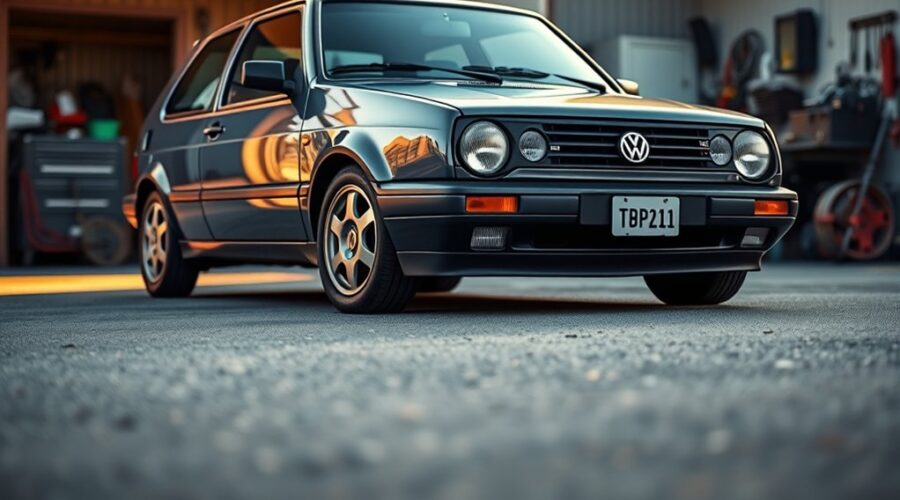
The MK3 Volkswagen Golf stands out with its impressive array of powertrains, ranging from a 1.4L engine to the robust 2.8L VR6. Performance metrics reveal the 1.8L GTI variant achieving 0-60 mph in about 8.5 seconds, reflecting its sporty appeal. With dimensions that enhance stability and versatility, the MK3 Golf accommodates various lifestyles. However, its reputation is built not just on specs but also on features and accolades that deserve closer examination.
Key Takeaways
- The MK3 Volkswagen Golf offers a range of engines from 1.4 L I4 (59 hp) to a 2.8 L VR6 (174 hp), including a 1.9 L TDI diesel.
- The GTI variant achieves 0-60 mph in approximately 8.5 seconds, with a top speed of around 130 mph.
- Dimensions include a wheelbase of 2,471 mm, overall length of 4,074 mm, and luggage capacity between 11.3 to 40.7 cubic feet.
- Available body styles include three-door and five-door hatchbacks, an estate (Variant), Cabrio, and sedan variants (Vento/Jetta).
- The MK3 Golf earned a 4-star Euro NCAP rating, featuring optional anti-lock brakes and dual front airbags for enhanced safety.
Engine Options and Performance Metrics
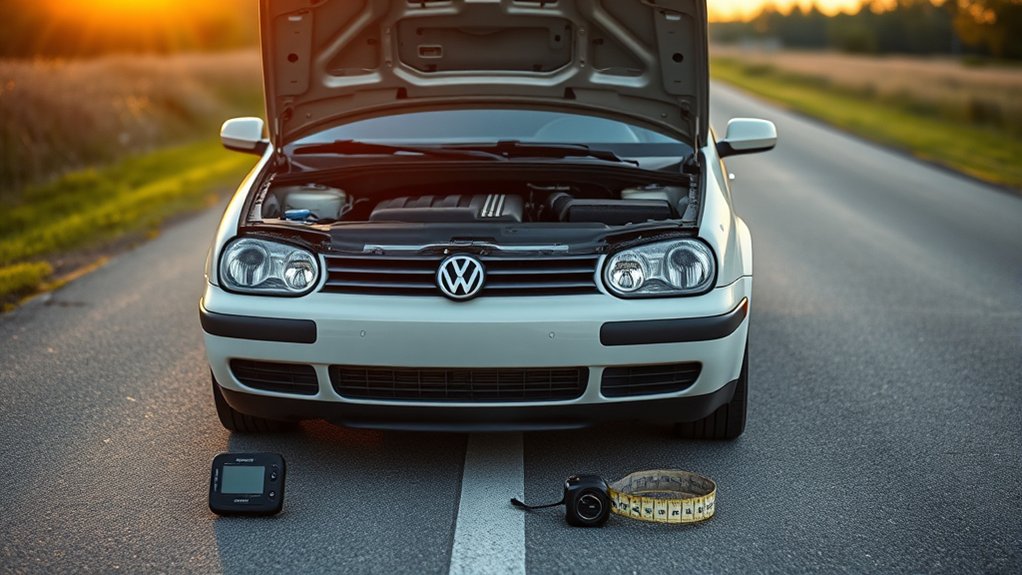
The MK3 Volkswagen Golf impressively showcases a diverse lineup of engine options, catering to various driving preferences and performance needs. Ranging from the modest 1.4 L I4 producing 59 hp to the robust 2.8 L VR6 generating 174 hp, the Golf offers something for every enthusiast. The 1.8 L I4 engine variant, particularly favored in the 16-valve GTI, delivers an exhilarating 150 PS, making it a standout choice for performance seekers. Additionally, the 1.9 L TDI diesel engine guarantees durability and impressive fuel efficiency, appealing to long-distance drivers. For those who crave speed, the 2.0 L GTI variant boasts a 0-60 mph time of approximately 8.5 seconds and a top speed of around 130 mph. This spectrum of engine options not only highlights the Golf’s versatility but also empowers drivers to choose their ideal driving experience.
Transmission Choices and Driving Experience
Transmission choices play an essential role in defining the driving experience of the MK3 Volkswagen Golf. With options including a 4-speed automatic and both 4-speed and 5-speed manuals, the Golf caters to diverse driving preferences. The 5-speed manual, particularly in performance models like the GTI, enhances driver engagement, fostering a sportier experience. Conversely, the 4-speed automatic excels in daily commuting, offering ease of use without sacrificing performance.
| Transmission Type | Key Features | Suitable For |
|---|---|---|
| 4-speed Automatic | Easy to use, efficient | Daily commuting |
| 4-speed Manual | Engaging, responsive | Enthusiasts |
| 5-speed Manual | Sporty, enhanced control | Performance models |
| FWD Layout | Stable handling | Everyday driving |
| Performance Tuning | Optimized for acceleration | Sporty driving |
The MK3 Golf’s transmission choices greatly influence its overall driving dynamics, offering liberation through tailored experiences.
Dimensions: Size and Space Considerations
The Volkswagen Golf Mk3 features a wheelbase that enhances stability and interior space, measuring 2,471 mm for early models and slightly longer at 2,474 mm for those produced later. With an overall length of 4,074 mm and a compact width, the Mk3 balances roominess with maneuverability, making it suitable for urban driving. The hatchback’s versatile three-door and five-door options, combined with practical luggage space, further underline its utility for both passengers and cargo.
Wheelbase and Overall Length
Dimensions play an essential role in defining the practicality and appeal of a vehicle, and the MK3 Volkswagen Golf exemplifies this with its well-considered measurements. The vehicle features a wheelbase of 2,471 mm for models from 1991 to 1995, slightly increasing to 2,474 mm for those produced between 1996 and 1999. Its overall length measures 4,074 mm, contributing to its compact design.
| Feature | Measurement | Notes |
|---|---|---|
| Wheelbase | 2,471 mm (1991-1995) / 2,474 mm (1996-1999) | Stability and handling |
| Overall Length | 4,074 mm | Compact yet spacious |
| Width | 1,694 mm | Provides stability |
| Height | 1,422 mm (1991-1995) / 1,428 mm (1996-1999) | Slight variation |
These dimensions guarantee a practical approach to everyday use, enhancing the Golf’s appeal in various driving contexts.
Interior Space and Layout
Interior space in the MK3 Volkswagen Golf is thoughtfully designed to maximize comfort and functionality. With dimensions of 4,074 mm in length, 1,694 mm in width, and 1,422 mm in height, this compact hatchback offers a spacious environment. The wheelbase of 2,471 mm guarantees stability while enhancing the interior space, making it ideal for both passengers and cargo. Luggage capacity ranges from 11.3 to 40.7 cubic feet, providing versatility depending on the rear seat configuration. The improved soft-touch materials elevate the overall ambiance, contributing to a refined driving experience. Available in both 3-door and 5-door variants, the MK3 Golf enhances accessibility, allowing for a practical and liberating journey for all occupants.
How the MK3 Golf Compares: Variants and Body Styles
While examining the MK3 Volkswagen Golf, one quickly discovers its versatility through a variety of body styles and engine options. Available as a three-door and five-door hatchback, estate (Variant), and Cabrio, the MK3 Golfs cater to diverse preferences. The sedan variant, known as the Vento in Europe and Jetta in North America, further expands its appeal.
| Body Style | Engine Options |
|---|---|
| Three-Door Hatchback | 1.4 L I4 to 2.8 L VR6 |
| Five-Door Hatchback | Golf GTI 16V (150 PS) |
| Estate (Variant) | Golf GTD (diesel variant) |
With a wheelbase of 2,471 mm and overall dimensions of 4,074 mm in length, the MK3 Golf balances practicality with performance. Special editions like the 20th Anniversary GTI and Harlequin highlight its collectible nature, making the MK3 Golf a favored choice among enthusiasts.
Key Safety and Technology Features of the MK3 Golf
The MK3 Volkswagen Golf set a benchmark for safety and technology in the compact car segment during its era. With features such as optional anti-lock brakes, dual front airbags, and reinforced structures, it prioritized occupant protection and security. Additionally, innovations like a central locking system and child safety seat anchor points reflected Volkswagen’s commitment to enhancing both safety and convenience for families.
Safety Features Overview
Safety is paramount in the design of the Mk3 Volkswagen Golf, which showcases a range of features aimed at protecting its occupants. This model earned a commendable 4-star rating in Euro NCAP crash tests, underscoring its robust safety structure. Standard safety features include dual front airbags, while optional anti-lock braking systems (ABS) enhance braking performance. Crumple zones are ingeniously integrated to absorb impact energy, greatly improving passenger safety during collisions. The inclusion of seatbelts with pre-tensioners guarantees minimal slack in an accident, better securing occupants. Additionally, advanced features for its time, such as a rear child safety lock and optional side airbags, solidify the Mk3 Golf’s reputation as a family-friendly vehicle, prioritizing safety above all.
Technology Innovations Included
Remarkably, the Mk3 Volkswagen Golf was a pioneer in integrating advanced technology features that greatly enhanced both safety and driver experience. Among the notable technology innovations included were optional anti-lock braking systems (ABS) and dual airbags, which elevated occupant protection. The introduction of the 1.9 L TDI diesel engine in 1993 provided exceptional fuel efficiency and long-range capabilities, marking a significant step forward. Additionally, a refined dashboard design and improved sound insulation contributed to a quieter ride. The innovative electronic ignition system enhanced engine performance through precise spark timing, while the MacPherson strut front suspension offered superior handling. Together, these advancements positioned the Mk3 Golf alongside contemporary VR6 cars, showcasing Volkswagen’s commitment to innovation and driving dynamics.
Awards and Recognition of the MK3 Golf
While many vehicles come and go, the MK3 Volkswagen Golf stands out as a significant contender in automotive history, particularly for its accolades. Its recognition includes prestigious awards that underscore its impact and desirability.
- European Car of the Year (1992): Celebrated for innovation and design.
- What Car? Car of the Year (1992): A symbol of quality and performance.
- Best Family Car (1997): Acknowledged by Which? Magazine for family-friendly features.
- Benchmark for Hot Hatches: Performance variants like the GTI set new standards.
- Legacy of Practicality and Enjoyment: Continues to captivate enthusiasts and collectors alike.
The awards and recognition of the MK3 Golf reflect its perfect balance of practicality, efficiency, and driving pleasure, ensuring its status as a cherished classic in today’s automotive landscape.
Common Maintenance Issues and Ownership Tips
Understanding the common maintenance issues associated with the MK3 Volkswagen Golf is crucial for prospective and current owners alike. Rust often presents a significant concern, particularly in the tailgate, windscreen frame, and lower front wings, necessitating thorough inspections for corrosion. Moreover, the cooling system components, including the radiator and thermostat, should be regularly checked to prevent overheating, especially in the 1.4L and 1.6L variants.
Suspension bushings and mounts typically wear out around 80,000 miles, adversely affecting handling and ride quality; consequently, regular assessments are advisable. Electrical issues, such as slow electric window motors and malfunctioning immobilizers, may arise, requiring detailed inspections of wiring and switches. Finally, owners of the 2.0L GTI and VR6 models must pay heightened attention to the idle stabilization valve and cam chain to guarantee peak performance, making awareness of these common maintenance issues pivotal for a satisfying ownership experience.
Top Performance Upgrades for Your MK3 Golf
For those looking to elevate their MK3 Volkswagen Golf’s performance, several upgrades can greatly enhance both power and handling. Enthusiasts can liberate their driving experience through strategic enhancements that focus on efficiency and responsiveness.
Elevate your MK3 Volkswagen Golf’s performance with strategic upgrades for enhanced power and responsive handling.
- Performance exhaust system: Boosts horsepower and delivers a sportier sound, especially for VR6 variants.
- Upgraded intake system: Improves airflow, enhancing engine efficiency, particularly beneficial for the 2.0L GTI model.
- Aftermarket suspension components: Performance shock absorbers and springs enhance handling and ride comfort.
- Larger diameter wheels: 15-inch BBS Solitude wheels improve grip and aesthetic appeal.
- ECU remap: Optimizes fuel delivery and ignition timing, greatly increasing power output for 1.8 and 2.0 engines.
What to Watch for as an Owner?
Owning an MK3 Volkswagen Golf requires vigilance to guarantee its longevity and performance. Key areas to monitor include the cooling system, particularly in the 1.4 and 1.6L engines, where overheating can lead to severe engine damage. Rust is another crucial concern; common vulnerability spots include the tailgate, wheel arches, and underbody, necessitating regular inspections due to the Mk3’s age-related corrosion.
Suspension components, especially the front struts and rear axle bushes, typically show wear around 80,000 miles, impacting both handling and ride quality. Electrical systems are also prone to failure; ensuring window motors and central locking work properly can save future headaches. Finally, for owners of VR6 models, maintaining engine components is essential to avoid issues like cam chain rattle, ensuring the vehicle remains reliable and enjoyable. Being proactive in these areas will enhance the ownership experience of the beloved Volkswagen Golf Mk.
Related Reading
Frequently Asked Questions
Are Mk3 Golfs Reliable?
Mk3 Golfs are generally reliable, especially when properly maintained. Maintenance tips include regular inspections for rust and electrical components, ensuring longevity and performance. With care, many can surpass 200,000 miles, showcasing their durability.
How Much Is a Mk3 Golf Worth?
The worth of a Mk3 Golf typically ranges from £1,000 to over £5,000, influenced by market trends, condition, and rarity. Enthusiasts increasingly value well-preserved models, reinforcing their status as modern classics in the automotive landscape.
What Year to Stay Away From a VW Golf?
Maneuvering the MK3 Golf landscape, one should steer clear of the 1995 model. Engine issues and quality concerns from earlier years create a rust-prone vessel, steering enthusiasts towards more reliable alternatives for liberation in their driving experience.
Is a Mk3 Golf a Classic?
Yes, the Mk3 Golf undeniably possesses classic appeal, particularly its GTI and VR6 variants. As a modern classic, it attracts collectors due to its performance, unique styling, and limited production, enhancing its value and desirability.
Conclusion
In conclusion, the MK3 Volkswagen Golf stands as a versatile icon, blending performance with practicality. With a range of powertrains and body styles, it caters to diverse driving needs. Its accolades speak volumes, echoing the appreciation of enthusiasts and casual drivers alike. As one reflects on its legacy, the MK3 Golf remains a tribute to engineering excellence, inviting owners to embrace both its history and the journey ahead—where the road is as important as the car itself.