Concept cars have profoundly influenced the automotive landscape, serving as a canvas for innovation and creativity. These prototypes often introduce advanced technologies and design philosophies that challenge conventional norms. From the 1938 Buick Y-Job to modern electric models, each concept car reflects shifting consumer expectations and societal values. As the industry continues to evolve, understanding the historical context and technological advancements of these vehicles becomes essential. What implications do these innovations have for the future of transportation?
Key Takeaways
- Concept cars, like the 1938 Buick Y-Job, introduced pioneering features such as electric windows and hidden headlights, shaping modern automotive design.
- The Alfa Romeo BAT series focused on aerodynamics, with BAT7 achieving a remarkable drag coefficient of 0.19, influencing fuel efficiency in future models.
- Innovations like the Chrysler Turbine Car explored alternative energy sources, while the Cadillac Sixteen showcased luxury performance with its 1,000 horsepower V16 engine.
- Modern concept cars integrate advanced digital technology, enhancing user experience through connectivity, smart interfaces, and autonomous capabilities.
- Inclusivity in design is increasingly prioritized, reflecting societal values and accommodating a diverse range of users in the evolving automotive landscape.
Iconic Concept Cars and Their Impact on the Industry
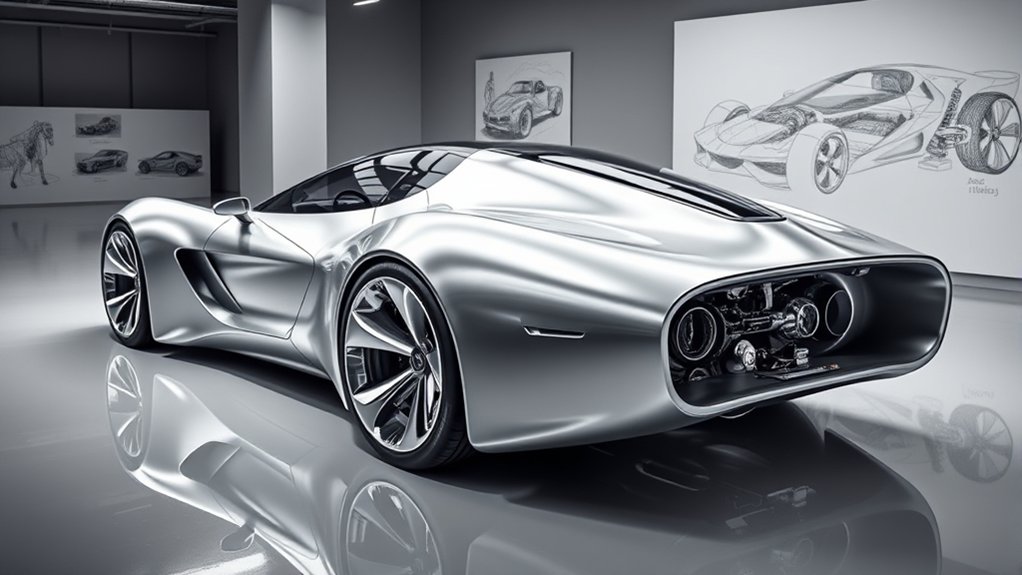
Throughout automotive history, several iconic concept cars have greatly influenced industry standards and design philosophies. The 1938 Buick Y-Job, crafted by Harley Earl, is often hailed as the first concept car, introducing innovative designs such as electric windows and hidden headlights. This paved the way for future advancements. In the 1950s, Alfa Romeo’s BAT series prioritized aerodynamic efficiency, with the BAT7 achieving a remarkable coefficient of drag of 0.19, highlighting a shift towards fuel-efficient vehicles. The 1963 Chrysler Turbine Car explored the potential of gas turbine engines, though it faced practical limitations. Fast forward to 2003, the Cadillac Sixteen showcased a groundbreaking 13.6-liter V16 engine, embodying the brand’s commitment to performance and futuristic styling. Each of these vehicles not only set benchmarks but also inspired subsequent generations in the quest for innovation in electric cars and beyond.
The Evolution of Concept Cars
The evolution of concept cars reflects a continuous journey of innovation and design within the automotive industry. From the groundbreaking features of the 1938 Buick Y-Job to the modular approaches seen in the 1982 Italdesign Capsula, these vehicles have consistently pushed boundaries and set trends. Each iteration not only showcases technological advancements but also influences the broader landscape of automotive design and functionality.
Pioneering Designs and Innovations
Concept cars have long served as a canvas for automotive innovation, showcasing groundbreaking designs and technologies that often foreshadow future production models. The 1938 Buick Y-Job, heralded as the first concept car, introduced features such as electric windows and hidden headlights, which have since become standard. Similarly, the 1961 Ford Gyron exemplified pioneering designs with its gyroscopic technology, while Chrysler’s 1963 Turbine Car pushed boundaries with its gas turbine engine, despite fuel economy challenges. Fast forward to the 2003 Cadillac Sixteen, boasting a powerful 13.6-liter V16 engine, a reflection of luxury car aspirations. The 2016 Rolls-Royce 103EX envisioned electric vehicles with autonomous capabilities, further indicating the transformative potential of concept cars in shaping the automotive landscape.
Impact on Automobile Industry
Transforming the automotive landscape, concept cars have greatly influenced the evolution of the automobile industry by serving as incubators for technological advancements and design innovations. Historical models like the 1938 Buick Y-Job and the 1953 Lincoln XL-500 introduced pivotal features that evolved into mainstream production vehicles. Aerodynamic designs, showcased by the Alfa Romeo BAT series, enhanced fuel efficiency, while the Chrysler Turbine Car explored alternative engine technologies, setting the stage for future innovations. More recently, concepts such as the 2015 Mercedes-Benz F015 highlight the industry’s shift toward electric powertrains and autonomous driving. These vehicles not only showcase groundbreaking styling elements but also embody the automotive world’s commitment to sustainability and a reimagined future, influencing trends for generations to come.
Innovations That Defined Concept Cars
The innovations in concept cars have consistently set the tone for automotive design and technology. From the pioneering features of the 1938 Buick Y-Job to the high-performance capabilities of the 2003 Cadillac Sixteen, each model has introduced groundbreaking advancements. These revolutionary design elements and technological breakthroughs have not only influenced future vehicles but also shaped consumer expectations in the automotive industry.
Revolutionary Design Features
Revolutionary design features have long served as the hallmark of concept cars, shaping the future of automotive innovation. The 1938 Buick Y-Job, recognized as the first concept car, introduced hidden headlights and electric windows, paving the way for modern aesthetics. The 1953 Lincoln XL-500 further advanced design with its push-button automatic transmission and glass roof, anticipating future technologies like car phones. In the domain of aerodynamics, the Alfa Romeo BAT series achieved a remarkable drag coefficient, while the 1968 Alfa Romeo Carabo’s wedge shape and Scissor Doors influenced the iconic Lamborghini Countach. The 2003 Cadillac Sixteen showcased a departure from conventional norms with its powerful V8 engine, highlighting how revolutionary design features can redefine the trajectory of mass production in automotive history.
Groundbreaking Technological Advancements
Groundbreaking technological advancements have continually redefined the landscape of concept cars, pushing the boundaries of what is possible in automotive design. The 1938 Buick Y-Job introduced features like electric windows and hidden headlights, setting a precedent for future innovations. By the 1953 Lincoln XL-500, push-button automatic transmission and air conditioning became integral to modern comfort. The 1957 Ford Nucleon envisioned a car made with a nuclear reactor, reflecting a daring exploration of alternative power sources. Meanwhile, the 1963 Chrysler Turbine Car showcased a gas turbine engine, emphasizing durability despite fuel economy challenges. The 2003 Cadillac Sixteen further revolutionized the sports car segment with its staggering 1,000 horsepower V16 engine, marking a new era in luxury performance and design language.
Key Technologies in Concept Cars
Concept cars serve as a canvas for automotive innovation, showcasing technologies that often redefine industry standards. These vehicles exemplify new designs and groundbreaking technologies that shape the vision of the future for cars. Historically, innovations such as the gas turbine engine in the 1963 Chrysler Turbine Car and the push-button automatic transmission in the 1953 Lincoln XL-500 set benchmarks in performance and usability. Modern concept cars often incorporate features like:
Concept cars embody the forefront of automotive innovation, setting new benchmarks in design and technology for the future of mobility.
- Electric windows and advanced interior ergonomics
- Lightweight carbon fiber materials for enhanced efficiency
- Autonomous driving capabilities aimed at redefining user experience
The 2003 Cadillac Sixteen, with its potent 1,000 horsepower V16 engine, and the fully autonomous 2016 Rolls-Royce 103EX reflect the shift toward electric powertrains and performance engineering. As automotive design evolves, these technologies signal the future direction of mobility, merging functionality with visionary aesthetics in cars of the future.
How Concept Cars Shape the Future of Transportation
As manufacturers explore innovative technologies and designs, concept cars play a pivotal role in shaping the future of transportation. These experimental vehicles, like the Mercedes-Benz Vision EQXX, showcase advancements in electric powertrains and autonomous driving, setting the groundwork for future production models. The legacy of pioneering figures like Harley Earl, who introduced the 1938 Buick Y-Job, continues to influence modern automotive design, emphasizing features such as electric windows and aerodynamic designs. The 1953 Alfa Romeo BAT series exemplifies how aerodynamics enhances vehicle efficiency and performance, critical in today’s eco-conscious market. Additionally, as the industry shifts toward sustainable materials, concept cars are increasingly focused on eco-friendly innovations, as seen in the fully autonomous Rolls-Royce 103EX. These vehicles not only redefine luxury transportation but also inspire a new era of mobility that prioritizes performance, sustainability, and advanced technology.
Social Trends Influencing Concept Car Design
The evolution of concept car design increasingly mirrors prevailing social trends, particularly in response to environmental and lifestyle shifts. As society grapples with pressing issues such as climate change and urbanization, new designs prioritize sustainability and user-centric functionality.
- Emphasis on electric and hybrid technologies addresses environmental concerns.
- The rise of autonomous vehicles reflects a demand for convenience and enhanced safety.
- Modular designs cater to diverse mobility needs, supporting urban lifestyles.
Additionally, the integration of digital technology fosters connectivity, aligning with consumer expectations for entertainment and interaction. Social movements advocating for inclusivity have further influenced car design, prompting manufacturers to create vehicles that accommodate a broader range of users. As these trends converge, the future of concept car design emerges as a dynamic tapestry, weaving together innovation, accessibility, and environmental responsibility, ultimately liberating the automotive experience for all.
Related Reading
Frequently Asked Questions
What Are the Key Features of Concept Cars?
Key features of concept cars include futuristic design, innovative technology, enhanced performance capabilities, and potential market influence. They emphasize environmental sustainability, gather consumer feedback, and undergo a dynamic design process to shape future automotive trends.
Which Concept Car Is Considered the Best?
In the domain of automotive innovation, the 2015 Mercedes-Benz F015 stands out as the best concept car, embodying futuristic design and innovative technology, greatly impacting market trends and consumer reactions while reflecting the brand’s visionary aspirations.
Is a Concept Car a Real Car?
A concept car is not a real car in the conventional sense; it serves as a prototype for design innovation, showcasing future technology and automotive trends while addressing manufacturing challenges and gauging consumer feedback for market impact.
What Was the First Concept Car?
The 1938 Buick Y-Job emerged as the first concept car, epitomizing prototype design and automotive innovation. Its engineering challenges and market impact reshaped consumer perception, paving the way for design evolution and future trends in automotive aesthetics.
Conclusion
In the grand theater of automotive evolution, concept cars serve as visionary harbingers, echoing the aspirations of a society in flux. Much like Daedalus crafting wings for Icarus, these prototypes embody the delicate balance between innovation and caution. As they illuminate pathways toward sustainable and connected transportation, their influence extends beyond mere aesthetics, guiding the industry through uncharted territories. Ultimately, concept cars challenge us to dream and redefine the very essence of mobility in an ever-changing world.