The Lancia Delta Hatchback combines compact 5-door packaging with a focused performance setup. Its 2.0-liter turbocharged engine, especially in Evoluzione II form, delivers up to 215 horsepower through 4-wheel drive, while keeping weight at 1300 kg and length at 3900 mm. That gives it a strong balance of pace, grip, and urban practicality. The details behind its transmission, interior, and HF variants add more to the picture.
Lancia Delta Hatchback at a Glance
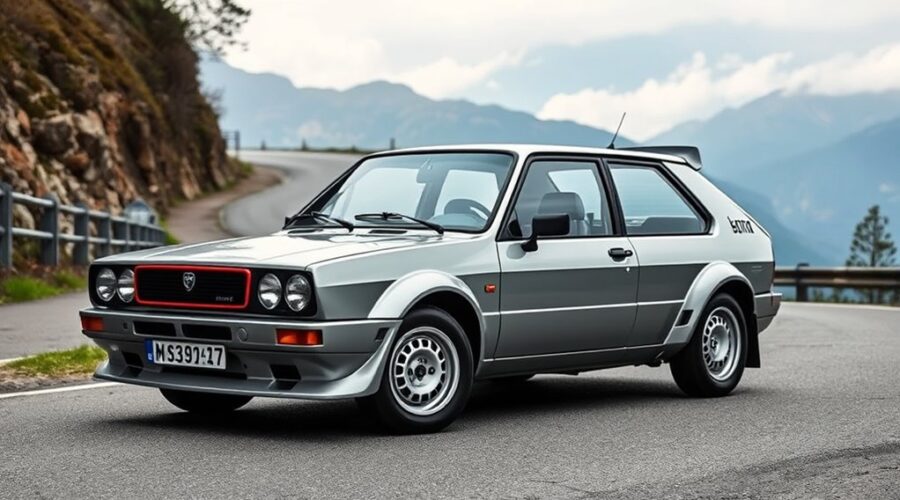
The Lancia Delta Hatchback is a 5-door model with seating for 4 or 5 and a kerb weight of 1300 kg (2866 lb). Its compact dimensions, including a 3900 mm length, support agile packaging and controlled mass distribution.
The model is closely tied to the Lancia Delta Integrale, a name associated with disciplined engineering and rally victories that reshaped its reputation. A turbocharged engine gives the hatchback its defining urgency, while the Evoluzione II form reaches 215 PS and a top speed of 216 km/h (134 mph).
Acceleration to 60 mph in about 6 seconds confirms strong performance capabilities for a road car of this size. With a 57-litre fuel tank, it combines usable range with the forceful character expected from an era of motorsport-led development.
Lancia Delta Hatchback Powertrain Options
Powertrain choice defined much of the Lancia Delta’s character, ranging from modest 1.1 L, 1.3 L, 1.5 L, 1.6 L, and 2.0 L petrol engines to diesel variants, alongside turbocharged units such as the 1.6 L turbo I4 and 1.9 L turbo I4. These engine options used a 4-cylinder in-line layout, with all models paired to four-wheel drive for traction.
| Variant | Output | Note |
|---|---|---|
| Base petrol | 1.1-2.0 L | Broad range |
| Turbo I4 | up to 6,200 rpm | Stronger response |
| Lancia Delta HF Integrale | 182-215 hp | Performance icon |
The Lancia Delta HF Integrale centered on a turbocharged 2.0 L engine, rising from 182 horsepower to 215 horsepower in Evoluzione II trim. Transmission choices included 4-speed manual, 5-speed manual, and 3-speed automatic. Performance metrics were notable: about 161.44 PS per tonne and roughly 6 seconds to 60 mph, showing how regulated hardware could still enable spirited freedom.
How the Lancia Delta Hatchback Drives
With its turbocharged 2.0 L engine producing up to 215 bhp in Evoluzione II form, the Lancia Delta Integrale reaches 60 mph in about 5.7 seconds and delivers a sharp, responsive driving character.
The Delta uses all-wheel drive to put power down cleanly, improving traction and stability on demanding surfaces. Steering is quick, giving the Integrale immediate turn-in and a sense of controlled momentum.
Its handling is distinctive: the car tends to understeer on corner entry, then rotate into oversteer on exit, so a skilled driver can shape the line with precision. A Torsen rear differential helps separate acceleration from braking forces, sharpening response and confidence.
Low turbo lag keeps boost available early, especially in 8-valve versions that reach 62 mph in 6.6 seconds. The result is an agile, energetic hatchback that feels engineered for freedom, not passivity.
Lancia Delta Hatchback Dimensions and Weight
Compact proportions define the Lancia Delta Hatchback’s physical footprint, with a length of 3,900 mm that suits urban use and tight roads. These dimensions keep the Lancia Delta Hatchback agile without sacrificing practical presence.
Its kerb weight of 1,300 kg (2,866 lb) gives a controlled balance between mass and responsiveness, supporting a composed drive and efficient use of output. The 0.415 drag coefficient helps the body move through air with less resistance, reinforcing efficiency at speed.
A 10.40 m turning circle improves maneuverability, allowing confident parking and narrow-gap movement with minimal effort. The 7½J x 15-inch wheels provide a stable platform for wider tires, contributing to grip and steering precision.
Lancia Delta Hatchback Transmission Choices
Transmission choices for the Lancia Delta Hatchback ranged from a 4-speed manual and 5-speed manual to a 3-speed automatic, allowing the model to suit different driving needs.
Earlier cars used the 4-speed manual as a straightforward, efficient option for daily use. The 5-speed manual transmission became the preferred fit for performance models, delivering tighter ratios, stronger acceleration, and higher top-speed potential.
This setup suited turbocharged engine versions, where controlled power delivery mattered more than relaxed cruising. In the Delta HF Integrale Evoluzione, the gearbox was tuned to exploit boost and traction, supporting the car’s rally success and sharper response.
The 3-speed automatic offered easier operation, but it was less focused on outright pace. Overall, the range reflected a practical engineering approach: accessible mobility for standard models, and precise mechanical control for drivers seeking more freedom, especially in the hotter Delta variants.
Lancia Delta Hatchback Interior and Cargo Space
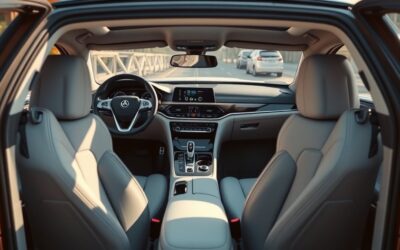
The Lancia Delta’s 5-door hatchback layout supports 4 to 5 occupants, with a cabin arranged for practical access and everyday usability.
Trim choices such as grey Alcantara and multicolour Harlem wool cloth add a distinct mix of refinement and sport-oriented character, while the yellow-scale instrumentation and auxiliary gauges reinforce its technical focus.
Cargo capacity remains suitable for regular use, aided by the hatch opening and the overall packaging efficiency of the body design.
Cabin Layout and Seating
Inside the Lancia Delta Hatchback, a 5-door cabin layout provides seating for up to five occupants with generous legroom and headroom.
The cabin layout supports practical interior packaging, giving the front seats and rear bench clear space for daily use and long-distance travel.
Controls are positioned for driver engagement, with an intuitive dashboard and easily reached switches that reduce distraction and support confident operation.
Comfort is reinforced by supportive seating and a broad sense of openness, while auxiliary gauges for boost, oil, and water keep critical data visible at a glance.
The rear compartment remains usable for luggage, aided by the efficient 57-liter fuel tank and a structure suited to disciplined, independent mobility.
Materials and Trim
Material selection in the Lancia Delta Hatchback reinforces its blend of functionality and sport-oriented character. Upholstery choices include grey Alcantara and multicolour Harlem wool cloth, giving the cabin a durable, premium surface. Distinctive yellow-scales instrumentation and auxiliary gauges for boost, oil, and water supply precise data, keeping the driver informed and engaged.
– Optional Recaro seats in the Delta HF 4WD add lateral support.
Cargo space remains practical for daily use within the hatchback layout. Polyester-resin three-piece bumpers are notable design elements with structural durability.
Together, these materials and trim details support a focused driving environment. The Lancia approach emphasizes control, tactile quality, and useful space without excess ornamentation, aligning interior finish with liberated, performance-minded intent.
Cargo Capacity and Access
With a seating capacity of four to five occupants, the Lancia Delta hatchback pairs compact interior packaging with practical cargo access. The cargo area is shaped for efficient loading capacity, while the hatch opening grants clear access to rear cargo space for luggage, tools, or sport gear. Its practical layout supports daily mobility without sacrificing utility, and the 57-liter fuel tank extends range for longer escapes.
| Feature | Detail | Benefit |
|---|---|---|
| Seats | 4-5 | Flexible use |
| Cargo area | Hatchback load bay | Easy loading |
| Kerb weight | 1300 kg | Balanced handling |
The cabin’s materials remain refined, but the emphasis here is access: open the hatch, load, and depart.
Lancia Delta Hatchback Design Details
Designed by Giorgetto Giugiaro, the Lancia Delta combines a practical five-door hatchback layout with a sharply styled body, highlighted by a distinctive three-piece polyester resin bumper and an aerodynamic profile that yields a drag coefficient of 0.415.
The Lancia Delta’s design elements balance utility and visual tension, giving the hatchback a controlled sporty aesthetic without excess. Giorgetto Giugiaro shaped clean surfaces, crisp lines, and compact proportions to support everyday use while preserving road presence.
Giugiaro’s clean lines and compact proportions give the Delta practical elegance with a restrained, purposeful sporting edge.
- Three-piece bumper construction reduces visual mass and strengthens the front and rear signatures.
- Bulged wheel arches on HF Integrale models create space for wider tires and a more assertive stance.
- Interior materials such as grey Alcantara and multicolored Harlem wool cloth add tactile quality and a refined cabin feel.
This design approach reflects functional freedom: efficient packaging, distinctive form, and detailed craftsmanship working in unison.
Delta HF and Integrale Specs
The Delta HF Integrale sharpens the Lancia Delta formula with a turbocharged 2.0-liter 16-valve engine, reaching up to 215 horsepower in Evoluzione II trim and 0-60 mph in 5.7 seconds.
The Lancia Delta HF pairs this turbocharged engine with all-wheel-drive, giving the hatchback the control needed for demanding stages and unrestricted driving. Its performance capabilities were reinforced by advanced suspension geometry and a Torsen differential at the rear, which improved traction under acceleration and cornering load.
The result was not just quick road pace but proven rally dominance, including six consecutive World Rally Championship titles from 1987 to 1992.
At 3,900 mm long and 1,300 kg kerb weight, the car remained compact and purposeful, while a 0.415 drag coefficient supported aerodynamic efficiency.
A power-to-weight ratio of about 161.44 PS per tonne underlined its competitive edge, reflecting a machine engineered for discipline, grip, and speed.
Lancia Delta Hatchback Key Specs at a Glance
The Lancia Delta Hatchback pairs a turbocharged 2.0-litre engine with 4WD in the HF Integrale variant, delivering 200 PS and strong traction.
Its performance figures include a 216 km/h top speed and a 0-60 mph time of 6 seconds, supported by a 161.44 PS/tonne power-to-weight ratio.
Dimensionally, it measures 3900 mm in length, weighs 1300 kg, and carries a 57-litre fuel tank with a drag coefficient of 0.415.
Powertrain Basics
Powered by a turbocharged 2.0-liter engine, the Lancia Delta Hatchback delivers up to 215 horsepower in Evoluzione II form and 232 lb-ft of torque.
This is enough to cut 0-60 mph time to 6 seconds and reach a top speed of 216 km/h (134 mph).
This package reflects a compact, liberated chassis tuned for control, not excess.
Unlike a front wheel drive layout, the Delta uses 4-wheel drive to distribute traction more effectively, supporting confident acceleration on varied surfaces.
- Turbocharged 2.0 L engine
- 232 lb-ft torque output
- 4-wheel drive traction system
With a 1300 kg kerb weight, 0.415 drag coefficient, and 57-litre fuel tank, the hatchback balances efficiency, stability, and usable range.
Performance Figures
Performance figures for the Lancia Delta Hatchback highlight how its turbocharged 2.0-liter engine and 4WD layout translate into real-world pace and control.
In later Evoluzione II tune, output rises to 215 horsepower, giving the hatchback sharp acceleration to 60 mph in 5.7 seconds. That performance is reinforced by a 134 mph top speed in Delta HF Integrale form, confirming its rally-bred capability.
A weight-to-power ratio of 2.800 helps the car respond quickly to steering and throttle inputs, supporting confident driving on demanding roads. The 4WD system adds traction and stability, letting the turbocharged powertrain deliver its force cleanly when grip is limited.
Together, these figures show a compact machine built for speed, control, and freedom.
Dimensions And Weight
Measured proportions give the Lancia Delta Hatchback a compact footprint, with an overall length of 3900 mm and a kerb weight of 1300 kg (2866 lb).
These dimensions support agile road behavior while preserving practical cabin space. The turning circle of 10.40 metres aids low-speed maneuvering, especially in dense urban settings. A 57-litre fuel tank extends range, reducing dependence on frequent stops and reinforcing independent travel.
- Length: 3900 mm
- Kerb weight: 1300 kg
- Turning circle: 10.40 m
Aerodynamic efficiency is assisted by a drag coefficient of 0.415, while 7½J x 15-inch wheels complement the chassis with responsive handling.
Together, these specs define a hatchback balanced for freedom, control, and everyday utility.
Frequently Asked Questions
What Made the Lancia Delta so Special?
It stood out through Lancia heritage, Rally success, Design legacy, Turbo technology, and Iconic status: a Giugiaro hatchback, AWD traction, and championship-winning Integrale variants that fused technical ingenuity with liberation from ordinary driving limits.
Is the Lancia Delta a Reliable Car?
It is moderately reliable, especially with careful Delta maintenance. Lancia reliability depends on rust prevention, cambelt service, and unmodified engines. Owner experiences suggest strong long term durability, though common issues demand thorough inspection before purchase.
Which Lancia Has a Ferrari Engine?
The Lancia Stratos carries a Ferrari-derived 2.4-liter V6, a notable Lancia Ferrari Engine Collaboration delivering Performance Enhancements, Racing Heritage, and Engineering Marvels. Its liberated, mid-engine design made it a rally icon.
What Car Went 0-60 in 2.5 Seconds on Gravel?
The Ford Fiesta RS WRC reportedly achieved 0-60 in about 2.5 seconds on gravel, aided by gravel traction, tire technology, and off road capabilities, making its rally performance exceptional in acceleration tests.
Conclusion
Overall, the Lancia Delta Hatchback confirms the theory that compact dimensions and relatively low mass can magnify performance when paired with a turbocharged 2.0-liter engine and 4-wheel drive. Its 1300 kg curb weight, 215 horsepower in Evoluzione II form, and 134 mph top speed support that view. The package is not only quick, but also mechanically cohesive, with practical 5-door usability and sharp handling reinforcing its reputation as a focused hatchback.