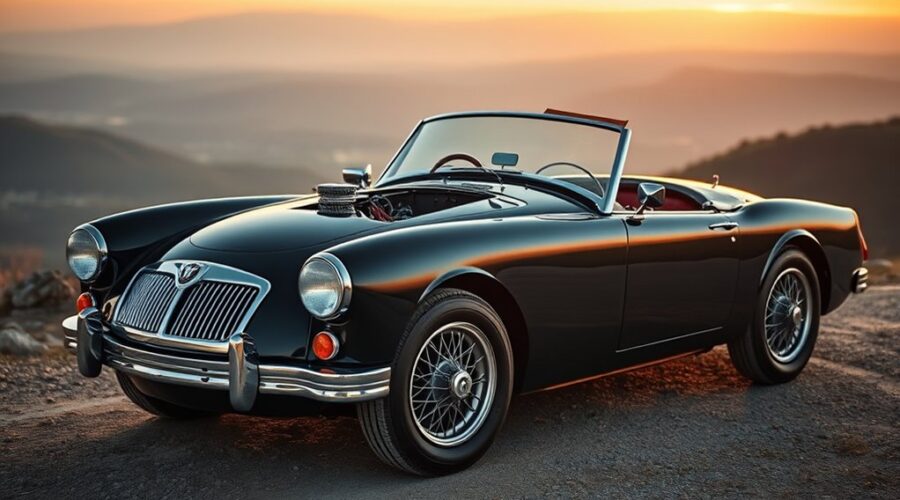
The MG TC remains one of the most recognizable T-Series models, with its 1,250cc XPAG inline-four, 54.5 bhp output, four-speed manual gearbox, and rear-wheel drive setup. It reached 60 mph in about 22.7 seconds and a top speed of 78 mph, while measuring 140 inches long and weighing 1,735 lbs. Its production figures and place in MG history raise a wider question about how it compares with the TD and TF.
Which MG T-Series Is the Best Buy?
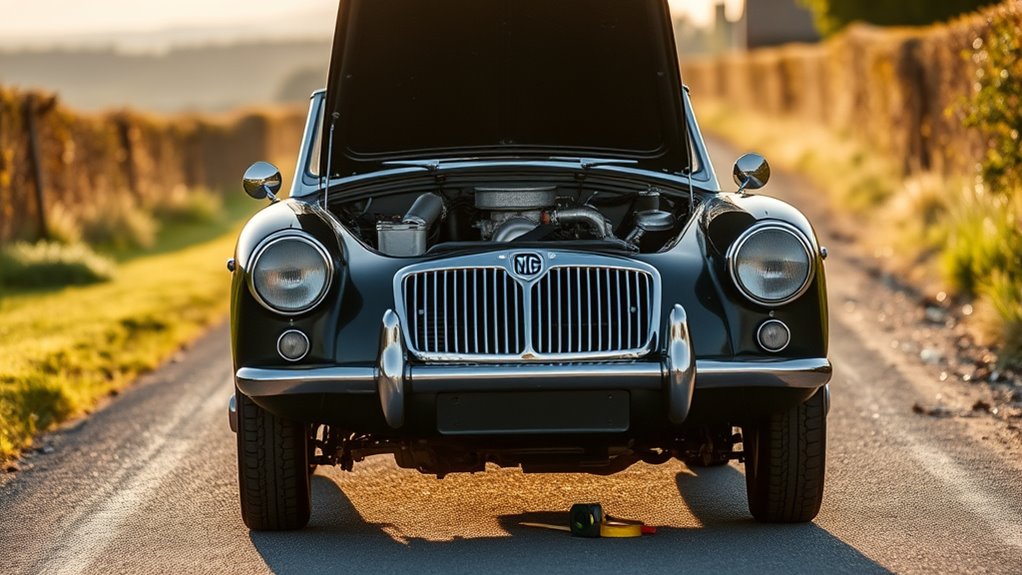
Among the MG T-series cars, the MG TD is generally regarded as the best buy because it combines classic styling with improved practicality. The MG TD, with 29,664 units built, offers improved ergonomics and independent front suspension, giving it a more usable character than the earlier MG TC.
For buyers seeking an accessible entry into liberated open-air motoring, this balance of comfort, control, and authenticity is significant. The TC remains notable for its pre-war feel, but its 1,250cc engine and 54 hp limit performance.
The TD better serves everyday use and broad ownership appeal, making it the preferred T-series choice for many enthusiasts. Its chassis and cockpit layout support easier driving without sacrificing period charm.
The TD suits everyday use best, combining easier driving with enduring period charm.
Among these cars, the MG TD is frequently identified as the best buy because it delivers the strongest combination of heritage, practicality, and straightforward maintenance.
How the MG TC, TD, TF, and TF 1500 Compare
The MG TC, TD, TF, and TF 1500 show a clear progression in power, packaging, and performance.
The MG TC pairs historical significance with a 1250cc engine making 54 hp, but its 0-60 mph time of about 22 seconds leaves it the least quick.
The MG TD keeps the same displacement and similar output, yet its wider cockpit and improved ergonomics favor more usable motoring, even though acceleration is around 23.5 seconds.
The MG TF advances the formula with 57 hp and a near 19-second sprint to 60 mph, adding a more modern visual stance.
The TF 1500 extends the line further with a 1466cc engine and 63 hp, cutting the benchmark to roughly 16.5 seconds.
In aggregate, the series moves from heritage to greater efficiency, comfort, and liberated road performance.
MG TC Engine and Drivetrain
The MG TC uses a 1,250cc inline four-cylinder XPAG engine rated at 54.5 bhp at 5,200 rpm, giving the car its period-correct performance character.
Power is routed through a four-speed manual transmission with no synchro on first gear and a rear-wheel-drive layout.
Twin SU carburetors support fuel delivery and response, while 0 to 60 mph acceleration of about 22.7 seconds reflects the car’s vintage drivetrain setup.
XPAG Engine Basics
Powered by the XPAG inline-four, the MG TC’s engine displaces 1,250 cc and delivers 54.5 bhp at 5,200 rpm through an overhead-valve layout and twin SU carburetors.
This inline-four engine reflects compact British engineering aimed at usable power output and responsive motoring, with a 7.25 to 7.5:1 compression ratio supporting efficient combustion.
The configuration favored mechanical simplicity and accessible serviceability, qualities valued by drivers seeking unrestrained motion.
- XPAG unit: 1,250 cc
- Power output: 54.5 bhp
- Peak speed: 5,200 rpm
- Valve gear: OHV design
- Fuel system: twin SU carburetors
Transmission And Gearing
Gear selection in the MG TC is handled by a 4-speed manual transmission, with first gear left unsynchronized and consequently best engaged with double-clutching for smoothness.
This manual gearbox reflects period practice, demanding deliberate driver input and rewarding mechanical sympathy. Its ratios are arranged to suit the 1,250cc XPAG four-cylinder’s modest output, allowing the car to reach about 78 mph while covering 0-60 mph in roughly 22 seconds.
The rear axle ratio is chosen to support brisk acceleration and a lively character rather than relaxed cruising. In combination with the drivetrain, the layout delivers direct response and a sense of liberation through active control.
Ignition And Fuel System
With its 1,250cc XPAG inline four producing 54.5 bhp at 5,200 rpm, the MG TC uses a twin SU carburetor arrangement to meter fuel efficiently and support the engine’s period performance character.
The ignition system relies on contact points and a Lucas Q12 coil, with spark plug gaps set between .020 and .022 inches for reliable firing. The SU electric fuel pump maintains steady delivery, helping the engine respond cleanly under load.
Its firing order, 1,3,4,2, and anti-clockwise rotor rotation promote smooth combustion and balanced operation.
- twin SU carburetors
- points-type ignition system
- Lucas Q12 coil
- SU electric fuel pump
- firing order 1,3,4,2
MG TC Performance, Speed, and Fuel Use
The MG TC’s 1,250cc inline four produces 54.4 bhp at 5,200 rpm, supporting a top speed of about 78 mph.
Acceleration to 60 mph takes roughly 22 seconds, reflecting the performance characteristics of a lightweight vintage sports car.
Fuel consumption is rated at around 28 mpg imperial, or about 10.1 L/100 km.
Top Speed
Although modest by modern standards, the MG TC reaches a top speed of approximately 78 mph, which made it a lively performer in period use. Its top speed reflects the MG T-Type’s light structure, compact 1,250cc inline-four, and restrained aerodynamic profile.
In objective terms, the car’s performance was shaped by mechanical simplicity rather than outright force, offering a direct and unfiltered driving character.
- Approximately 78 mph maximum speed
- 54.5 bhp at 5,200 rpm
- 1,250cc inline-four engine
- Four-speed manual transmission
- Fuel use: about 28 mpg (imp)
This combination supported independent road travel with modest fuel demand and a clear, liberated feel behind the wheel.
Acceleration Times
Acceleration from 0 to 60 mph takes approximately 22.7 seconds, reflecting the MG TC’s modest output and period-correct mechanical layout.
These acceleration times place the MG TC firmly in the slow but engaging class of pre-war sports cars, where performance was shaped more by lightweight construction and driver involvement than outright speed.
Its 1,250cc inline-four develops 54.5 bhp at 5,200 rpm, and the four-speed manual, lacking synchromesh on first gear, demands deliberate shifts.
That mechanical interaction suits an audience seeking liberation through unfiltered control.
Rather than rapid thrust, the MG TC delivers measured acceleration that emphasizes responsiveness, simplicity, and historical authenticity.
In objective terms, the car’s performance reflects its era: modest, purposeful, and mechanically direct, with no attempt to mimic modern expectations of pace.
Fuel Consumption
Fuel consumption in the MG TC aligns with its modest performance and lightweight design, as the 1,250cc inline four-cylinder engine returns approximately 28 mpg imperial, or 23.3 mpg US, equivalent to 10.1 L/100 km.
This fuel consumption figure reflects an era when efficiency and character were balanced more simply. The twin SU carburetors support responsive fuel delivery, helping the MG TC deliver usable performance without excessive thirst.
- 54.5 bhp at 5,200 rpm
- 0-60 mph in about 22.7 seconds
- Top speed near 78 mph
- Classic sports car tuning
- Efficiency suited to relaxed touring
MG TC Dimensions, Weight, and Cabin Space
The MG TC presents a compact sports car profile, measuring 140 inches in length and 56 inches in width. In MG dimensions terms, the weight is equally notable: an unladen 1,735 lbs, or about 787 kg, keeping the car light enough to favor responsive use.
The cabin is necessarily snug, reflecting the vehicle’s small footprint, yet the seat area is nearly 4 inches wider than in the earlier MG TB, offering a modest gain in room. This limited space supports a direct, stripped-back driving environment rather than comfort-led travel.
Right-hand drive layout places the driver in the traditional British position, reinforcing period authenticity. Outside, skinny 19-inch wheels complete the visual package, preserving the model’s classic proportions without adding bulk.
MG TC Suspension, Brakes, and Wheels
Suspension tuning on the MG TC combines traditional leaf springs at both axles with hydraulic lever arm dampers, a setup that improves ride control without abandoning the car’s period-correct character. This suspension arrangement gives the lightweight roadster a firmer, more settled response over uneven surfaces, while preserving the direct, unfiltered feel sought by drivers who value mechanical freedom.
- Front and rear leaf springs keep the chassis simple and durable.
- Hydraulic dampers add control during compression and rebound.
- Lockheed 9-inch drum brakes serve all four wheels.
- The braking system delivers adequate stopping power for its era.
- Skinny 19-inch wheels support agility and reduce rolling mass.
Together, the suspension, brakes, and wheels create a balanced package: comfort remains acceptable, handling stays lively, and road feel is preserved.
The result is a chassis setup that reflects the MG TC’s original intent, offering accessible performance with minimal complexity.
MG TC Styling, Cabin, and Equipment
Classic roadster proportions define the MG TC’s styling, with flowing fenders, a body-on-frame structure, and cut-down doors that reinforce its pre-war character while keeping the car visually light.
The MG TC uses skinny 19-inch wheels to preserve its vintage stance and sharpen the open-air sporting profile.
Skinny 19-inch wheels preserve the MG TC’s vintage stance and enhance its airy sporting profile.
Its cabin is deliberately minimal, with a snug two-seat arrangement and limited legroom that reflects the car’s era rather than modern comfort priorities.
The dashboard is simple and functional, using basic gauges to present essential operating data without visual clutter.
This restrained layout supports an uncluttered driving environment, emphasizing mechanical clarity and driver involvement.
Trim and equipment remain sparse, but the result is a coherent retro aesthetic that suits enthusiasts seeking a direct, unfiltered experience.
In combination, the styling, cabin, and equipment underline the MG TC’s purpose as a lightweight classic built for character, accessibility, and freedom on the road.
MG TC Production History and Key Facts
Produced from 1945 to 1949, the MG TC marked Morris Garages’ return to sports-car manufacturing after a six-year interruption caused by World War II, with total output reaching 10,001 units.
Built by the MG Car Company, it evolved from the pre-war T series MG TB, yet adopted a body widened by nearly 4 inches to improve occupant space and road usability.
Its postwar pricing, listed at £412 10s. 0d in 1947, positioned the car within an accessible market. Demand was strongest in Commonwealth nations and the United States, where nearly 2,000 exports helped ignite enthusiasm for British sports cars.
Production peaked in 1948, exceeding 3,000 units, before the MG TD superseded it in 1950.
- 10,001 built
- 1945–1949 production
- Widened body shell
- Strong U.S. demand
- TD replacement in 1950
Frequently Asked Questions
What Are the Key Differences Between the MG TD and MG TC?
MG TD versus MG TC: the TD adds independent front suspension, synchromesh transmission, wider cockpit, and greater production volume, while the TC remains lighter, more austere, and closer to MG racing history in MG model comparisons, reflecting MG design evolution.
Which MG Engine Is Best?
The best MG engine depends on goals; for usable power and MG engine reliability, the 1.8 K-series often leads. Like a well-cut key, MG engine upgrades and MG performance tuning unleash greater freedom and flexibility.
What Are the Disadvantages of MG Cars?
MG cars can have reliability issues, higher maintenance costs, and weak safety ratings. Their cramped cabins, dated brakes, and unsynchronized transmissions further reduce comfort and confidence, especially for drivers seeking practical, liberated mobility.
What Are the Dimensions of the MG TC?
No stone unturned: the MG TC measures 140 inches long, 56 inches wide, with a 94-inch wheelbase and 45-inch track. MG TC History, MG TC Restoration, and MG TC Collectibility reflect its compact, liberated proportions.
Conclusion
In the MG T-Series lineup, the TC stands as the bridge between prewar charm and postwar usability. Its 1,250cc XPAG engine, four-speed manual, and rear-wheel-drive layout give it modest but lively performance, while its compact dimensions and light 1,735-pound curb weight keep it agile. With 10,001 built from 1945 to 1949, the TC remains a small but bright beacon in MG history, its simplicity and character still resonating today.