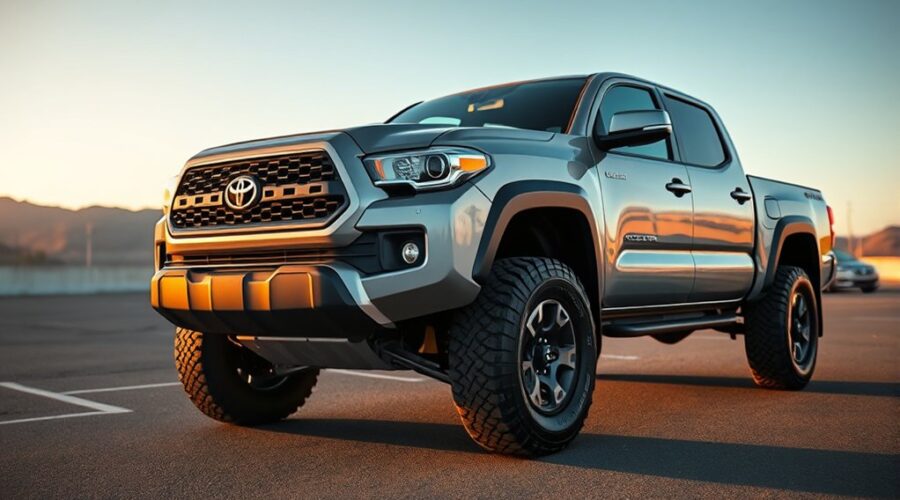
The Toyota Tacoma stands out for its mix of powertrain options, towing capability, and compact truck dimensions. Depending on cab and bed configuration, overall length, cargo room, and maneuverability can change noticeably. Ground clearance, payload, and towing figures also vary by trim. Those differences matter for daily driving, job-site use, and off-road travel, especially when space is limited or hauling demands rise. The details become more revealing when each specification is compared side by side.
Key Takeaways
- The Toyota Tacoma uses a turbocharged 2.4-liter four-cylinder engine with up to 278 horsepower and 317 lb-ft of torque.
- Maximum towing capacity reaches 6,500 pounds, while the hybrid version is rated to tow 6,000 pounds.
- Standard payload capacity is 1,705 pounds, with the hybrid model slightly higher at 1,710 pounds.
- Dimensions include a 131.9-inch wheelbase, 74.4-inch width, and lengths of 212.3 or 225.5 inches depending on configuration.
- Ground clearance is about 9.4 inches, or 9.6 inches on TRD Pro, supporting strong off-road capability.
Toyota Tacoma Dimensions at a Glance
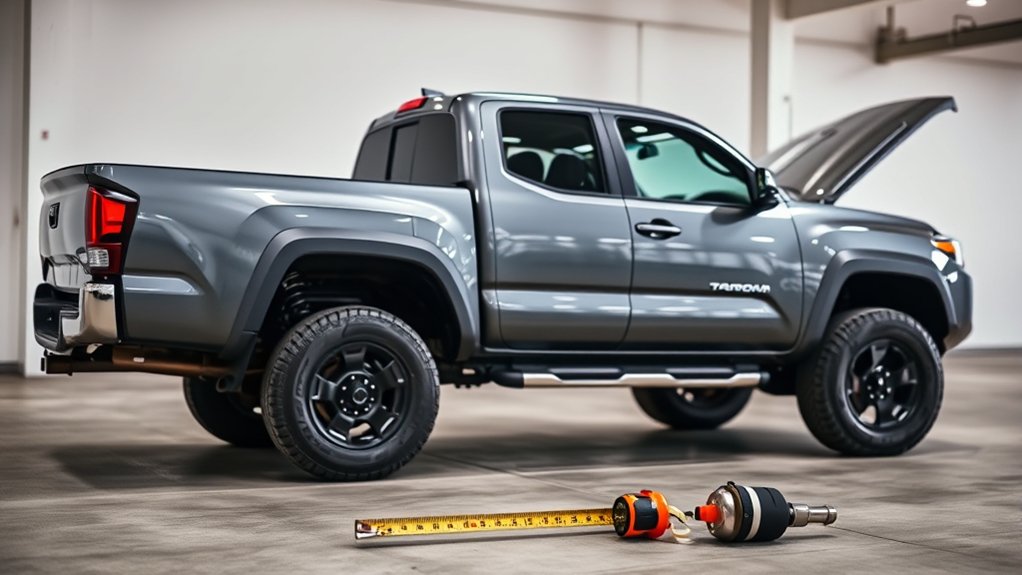
The 2026 Toyota Tacoma offers two distinct bed configurations and a corresponding range of body dimensions to suit different use cases.
The Toyota Tacoma standard-bed model measures 212.3 inches in overall length, while the long-bed version extends to 225.5 inches, increasing cargo flexibility. Bed lengths of 60.5 inches and 73.7 inches support varied hauling demands without compromising the truck’s core packaging.
Standard and long beds stretch Tacoma versatility, offering 60.5 or 73.7 inches of hauling space.
Height is listed at 70.6 inches, and width at 74.4 inches, giving the pickup a substantial stance. A 131.9-inch wheelbase underpins stability, helping the chassis remain composed on paved routes and uneven terrain.
Ground clearance is approximately 9.4 inches on most trims and 9.6 inches on the TRD Pro, reinforcing off-road capability.
These dimensions position the Tacoma as a practical, adaptable platform for users seeking space, clearance, and control.
How Long Is the Toyota Tacoma?
The 2026 Toyota Tacoma measures 212.3 inches in standard-bed form and 225.5 inches with the long bed, placing its length within the mid-size pickup range.
Bed and cab combinations alter the truck’s packaging, with a 5-foot bed at 60.5 inches, a 6-foot bed at 73.7 inches, and both Access Cab and Double Cab layouts maintaining similar overall proportions.
These dimensions are relevant to garage fit considerations, especially when evaluating clearance for longer bed configurations.
Tacoma Overall Length
With a 2026 overall length of 212.3 inches in standard-bed form and 225.5 inches with the long-bed configuration, the Toyota Tacoma remains firmly within the midsize pickup category while offering practical cargo and cabin proportions.
The Toyota Tacoma’s footprint supports confident urban use and trail freedom.
- Standard length enables easier parking in typical 20-foot garages.
- Long-bed length increases total vehicle span without leaving the midsize class.
- The platform’s dimensions help preserve about 9.4 inches of ground clearance for off-road clearance.
Across its size evolution, Tacoma length has expanded to meet modern utility demands while avoiding full-size bulk.
That balance helps drivers maintain maneuverability, loading practicality, and access to varied terrain.
Bed And Cab Sizes
Measured by configuration, Toyota Tacoma length changes with bed and cab selection. The 2026 Tacoma offers two bed sizes: a 5-foot bed at 60.5 inches and a 6-foot bed at 73.7 inches.
These choices set overall length at 212.3 inches for the standard-bed model and 225.5 inches for the long-bed version. Cab layout also matters. The Access Cab is the shorter arrangement, while the Double Cab extends to the longer dimension, delivering more interior space without altering the truck’s functional purpose.
Height is about 70.6 inches, and width is 74.4 inches. Ground clearance remains near 9.4 inches on most models, with 9.6 inches on the TRD Pro, preserving capability and a more liberated path over rough terrain.
Garage Fit Considerations
When evaluating garage fit, the 2026 Toyota Tacoma’s length should be the starting point: it ranges from 212.3 inches with the standard bed to 225.5 inches with the long bed, so garage depth must be checked against the truck’s overall footprint.
Most standard garages, near 20 feet deep, can accommodate these dimensions, but clearance varies by layout.
- Height: At about 70.6 inches, overhead clearance should be verified for door tracks and low fixtures.
- Width: The 74.4-inch body needs enough side space for doors and movement.
- Access: Extra room supports bed use, cab entry, and equipment storage.
Careful measurement preserves garage fit and freedom of use, preventing constrained parking or obstructed access.
Tacoma Length by Cab Style
The 2026 Toyota Tacoma is offered in an Access Cab measuring 212.3 inches long and a Double Cab measuring 225.5 inches, creating a clear size difference between the two body styles.
Both cab configurations can be paired with 5-foot or 6-foot beds, allowing the overall footprint to be adjusted for cargo needs and passenger priority.
For garage fit considerations, the shorter Access Cab generally presents fewer parking constraints, while the longer Double Cab requires more attention to total vehicle length.
Access Cab Length
Built for a balance of utility and maneuverability, the Toyota Tacoma Access Cab measures 212.3 inches in overall length and pairs with a 6-foot bed.
As an access cab, this mid-size truck configuration preserves a shorter footprint for easier urban navigation while supporting practical hauling demands. The layout uses smaller rear seats, shifting emphasis toward cargo volume and road agility rather than maximum passenger capacity.
- 212.3-inch length supports tighter parking and better street use.
- 6-foot bed expands load space for tools, gear, and materials.
- Occasional rear seating adds flexibility without compromising bed utility.
This specification serves drivers seeking a freer, more adaptable truck profile for work, travel, and everyday use.
Double Cab Length
Measuring 225.5 inches in overall length, the 2026 Toyota Tacoma Double Cab is the longer cab-style option and is designed to prioritize passenger space along with utility.
This double cab configuration expands interior volume for families or crews requiring greater rear-seat accommodation. It may be matched with either a 5-foot or 6-foot bed, allowing the truck to balance cargo management with cabin capacity.
In dimensions, the Tacoma Double Cab measures 74.4 inches wide, supporting a planted stance and predictable road manners. Most models provide about 9.4 inches of ground clearance, which aids trail use and uneven-surface travel.
The result is a versatile, technically efficient package that combines practical hauling flexibility, interior freedom, and off-road-ready proportions in one body style.
Garage Fit Tips
Garage fit becomes a practical consideration once Tacoma cab and bed combinations are selected, since overall length changes noticeably by configuration.
The 2026 Tacoma measures 212.3 inches with the standard bed and 225.5 inches with the long bed, so garage dimensions should be checked before purchase. Most standard garages, near 20 feet deep, can accommodate these lengths, but older structures may not.
- Access Cab suits urban use and tighter spaces.
- Double Cab increases cabin room while keeping 5-foot or 6-foot bed options.
- Tacoma’s bed height is 19.1 inches, which affects loading clearance in confined garages.
Measured planning preserves convenience and protects independent mobility.
Verify door swing, wall clearance, and maneuverability to guarantee unrestricted access.
Tacoma Length by Bed Size
The 2026 Toyota Tacoma is offered with two bed lengths that directly affect overall vehicle size: a 5-foot bed measuring 60.5 inches and a 6-foot bed measuring 73.7 inches. This bed size choice alters Tacoma length in a measurable way, with the standard configuration totaling 212.3 inches and the long-bed version reaching 225.5 inches.
The Access Cab paired with the 6-foot bed matches the Double Cab with the 5-foot bed at 212.3 inches, showing how cab and bed packaging set final dimensions. Ground clearance remains practical across the lineup, at about 9.4 inches for most models and 9.6 inches for the TRD Pro.
Those proportions support urban maneuvering, trailer use, and garage compatibility, since both body lengths fit within a typical 20-foot garage depth. For buyers seeking a freer, more capable truck layout, the Tacoma’s dimensional range offers clear flexibility without sacrificing structural balance.
Toyota Tacoma Bed Sizes and Cargo Space
The 2026 Toyota Tacoma is available with two bed lengths, a 5-foot bed measuring 60.5 inches and a 6-foot bed measuring 73.7 inches, giving buyers distinct cargo capacity options.
Bed dimensions remain practical across configurations, with an approximate 19.1-inch bed height and 41.5-inch width supporting varied load arrangements.
Overall length ranges from 212.3 inches to 225.5 inches, which makes garage fit and maneuverability important considerations alongside cargo space.
Tacoma Bed Lengths
Available in two bed configurations, the 2026 Toyota Tacoma offers a 5-foot bed measuring 60.5 inches and a 6-foot bed measuring 73.7 inches, giving buyers a choice between greater maneuverability and increased cargo capacity.
These bed sizes suit a mid-size pickup engineered for practical independence. The bed height is 19.1 inches, supporting straightforward loading and unloading. Overall length reaches 212.3 inches with the shorter bed and 225.5 inches with the longer bed.
Bed width measures 41.5 inches, allowing flexible placement of equipment and supplies. Ground clearance is about 9.4 inches on most models, improving approach to rough terrain and bed access.
- Short bed: easier urban handling
- Long bed: expanded utility
- High clearance: off-road freedom
Cargo Space Dimensions
With two bed sizes, the 2026 Toyota Tacoma provides practical cargo flexibility: a 5-foot bed measuring 60.5 inches and a 6-foot bed measuring 73.7 inches.
Bed height is 19.1 inches and bed width is 41.5 inches, creating a usable cargo space for tools, gear, and materials.
The longer configuration extends overall length to 225.5 inches, while the standard bed keeps the truck at 212.3 inches.
Ground clearance remains approximately 9.4 inches on most models, or 9.6 inches on the TRD Pro, supporting access over uneven terrain.
Maximum payload capacity reaches 1,705 pounds, giving the Tacoma the ability to carry substantial loads with disciplined efficiency.
These dimensions reflect a truck designed to balance freedom of movement with practical hauling capability.
Garage Fit Considerations
Garage fit becomes an important consideration once the Tacoma’s cargo dimensions are understood, since the truck’s footprint varies by bed configuration.
For garage fit considerations, the 2026 Tacoma measures 212.3 inches overall length with the 5-foot bed and 225.5 inches with the 6-foot bed. Width is 74.4 inches and height is 70.6 inches, dimensions that usually align with standard 20-foot garages, though older structures may impose tighter clearance.
The 19.1-inch bed height supports accessible loading without increasing the roofline.
- Verify interior garage depth against overall length.
- Check side clearance for mirrors, door swing, and maneuvering.
- Confirm ceiling and threshold space before parking or storage.
These measurements help owners preserve practical freedom while keeping cargo utility uncompromised.
Ground Clearance and Off-Road Stance
Ground clearance is a defining element of the 2026 Toyota Tacoma’s off-road stance, with most models sitting at approximately 9.4 inches and the TRD Pro rising slightly to about 9.6 inches. This ground clearance supports obstacle clearance, steeper approach geometry, and improved underbody protection in terrain where independence from the pavement matters.
For TRD Off-Road models, the elevated ride height contributes to measured confidence over ruts, rocks, and uneven trails, while preserving enough stability for controlled handling. The Tacoma’s suspension architecture is tuned to keep articulation usable without sacrificing agility, so the truck remains responsive in narrow or technical environments.
Combined with its durable chassis components, the elevated stance helps the vehicle absorb repeated impacts and sustain heavy-duty off-road use. The result is a practical balance: clearance for liberation from restrictive surfaces, and a footprint that still allows precise maneuvering when the route demands it.
Tacoma Trim Differences That Affect Size
Beyond its off-road stance, the 2026 Toyota Tacoma’s size is shaped by cab and bed configuration, with clear differences between the Access Cab and Double Cab trims. Across trim levels, dimensions remain controlled, yet the body length changes notably.
The Access Cab measures 212.3 inches and uses a 6-foot bed, creating a more compact footprint for drivers seeking efficient mobility and urban freedom. The Double Cab extends to 225.5 inches and pairs with either a 5-foot or 6-foot bed, offering more passenger and cargo space without altering width or height considerably.
- Access Cab: shorter overall length, practical for tighter routes.
- Double Cab: longer cabin, broader utility for occupants.
- Shared specs: 74.4-inch width, about 70.6-inch height, and 19.1-inch bed height support consistent handling and loading.
Most models sit near 9.4 inches of ground clearance, with TRD Pro at about 9.6 inches.
How Tacoma Size Affects Parking and Garages
The 2026 Toyota Tacoma’s exterior dimensions directly influence how it fits into parking spaces and enclosed structures. Tacoma’s length spans 212.3 inches with the standard bed and 225.5 inches with the long bed, so maneuverability declines as wheelbase and rear overhang increase in confined lots.
Tacoma’s length affects parking ease, with the long bed reducing maneuverability in tight lots.
Its 74.4-inch width demands careful alignment to avoid contact with neighboring vehicles or painted lines, especially where stall geometry is narrow. At 70.6 inches tall, the truck may clear many modern garages, yet older parking decks with reduced overhead clearance can be restrictive.
Ground clearance near 9.4 inches improves trail capability, but steep ramps can create approach or breakover concerns during entry and exit. Standard garages around 20 feet deep can usually contain the truck, though door swing and rear access still require margin.
Drivers seeking practical freedom should verify dimensions before using tight urban parking or enclosed storage.
Tacoma Towing and Payload Specs
With a maximum towing capacity of up to 6,500 pounds and a payload rating of 1,705 pounds, the 2026 Toyota Tacoma is engineered for both recreational hauling and light-duty work.
Its towing capacity supports trailers, boats, and utility loads, while the payload capacity accommodates cargo, tools, and gear in the bed. Advanced towing technologies help improve control, stability, and driver confidence under load, reducing operational strain.
Multiple configurations, including varied bed lengths and cab styles, allow the truck to be adapted to different hauling demands without sacrificing capability.
- Maximum towing capacity: 6,500 pounds.
- Payload capacity: 1,705 pounds.
- Hybrid towing capacity: 6,000 pounds; payload capacity: 1,710 pounds.
This technical balance enables practical freedom for users who require a truck that can move resources efficiently, respond to changing tasks, and remain mechanically composed in demanding conditions.
Which Toyota Tacoma Fits Your Needs?
Choosing the right 2026 Toyota Tacoma depends primarily on cab and bed configuration, intended workload, and driving environment. The Access Cab with a 6-foot bed suits operators needing cargo length without excessive exterior size, while the Double Cab offers greater passenger room and a 5-foot or 6-foot bed for broader utility.
This model year uses a turbocharged 2.4-liter four-cylinder rated at up to 278 horsepower and 317 lb-ft of torque, giving balanced performance for commuting, jobsite use, and trail access. The maximum towing capacity of 6,500 pounds supports trailers, equipment, and recreational hauling. Payload reaches 1,705 pounds, which benefits users moving tools or supplies.
Ground clearance near 9.4 inches on most trims improves clearance over rough terrain while preserving road practicality. Selection should thus prioritize space, towing demands, and off-road exposure, allowing the truck to remain versatile without compromising function or driver autonomy.
Frequently Asked Questions
What Is Toyota’s Biggest Weakness?
Toyota’s biggest weakness is its four-cylinder, turbocharged truck strategy, which raises doubts about Toyota reliability, fuel efficiency, and long-term durability amid market competition; design innovation helps, yet skepticism persists, especially versus stronger V8-based alternatives.
What Toyota Truck Has the Best Engine?
The Tacoma’s i-FORCE MAX is widely viewed as Toyota’s best truck engine, delivering 326 horsepower and 465 lb-ft of torque. In engine comparisons, its performance ratings lead, while oversized cooling supports durable, liberated hauling confidence.
What Are the Key Features of Toyota Pickup Trucks?
Toyota pickup trucks emphasize towing capacity, off road capability, interior features, and safety ratings. They combine turbocharged or hybrid powertrains, configurable cabs, advanced infotainment, and driver-assistance systems for capable, versatile, and liberated daily use.
Is a Tacoma as Big as a F150?
No; the Tacoma is smaller. In this F150 comparison, Tacoma dimensions show a mid-size truck: about 212.3 inches long, 74.4 inches wide, and 70.6 inches tall, versus the larger, full-size F-150’s broader, taller range.
Conclusion
In the 10,000 Toyota Truck specs, capability and constraint sit side by side. The Tacoma’s turbocharged 2.4-liter powertrain, 6,500-pound towing limit, and 9.4-inch ground clearance suggest rugged utility, while cab and bed variations reveal the compromises required by different uses. Length, cargo space, and trim all reshape its footprint. Together, the figures show a truck engineered not for one task alone, but for the practical balance between work, maneuverability, and off-road readiness.