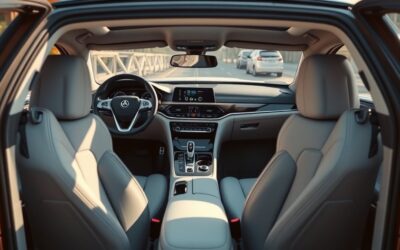

The 2027 Hyundai Elantra arrives with a full redesign, sharper styling, and larger dimensions that should improve cabin and trunk space. Engine choices are expected to include a 2.0-liter base setup, a turbocharged 1.6-liter N Line variant, and a hybrid rated above 54 mpg combined. Inside, the cabin gains a larger screen and Gleo AI assistant, while updated safety tech points toward stronger crash-test results. The full picture still has a few important details to sort out.
Key Takeaways
- The 2027 Elantra gets a full redesign with a squarer “Art of Steel” look and larger exterior dimensions.
- Standard power comes from a 147-hp 2.0-liter engine, while the N Line uses a 201-hp turbo 1.6-liter.
- A hybrid version is expected with about 155 hp and more than 54 mpg combined, emphasizing efficiency.
- Interior upgrades include larger screens, physical controls, ambient lighting, dual wireless charging, and more rear-seat space.
- Safety tech should include automatic emergency braking, lane-keeping assist, blind-spot monitoring, and other advanced driver aids.
What’s New on the 2027 Hyundai Elantra?

The 2027 Hyundai Elantra arrives as a full redesign, adopting a new “Art of Steel” look with a squarer profile and split headlamps with slim daytime running lights. This redesigned sedan gains a cleaner stance and more confident road presence, signaling a broader shift in identity.
The 2027 Hyundai Elantra also grows in dimensions, stretching 55 mm longer, 30 mm wider, and adding a 30 mm longer wheelbase for better rear-seat space and a more open cabin.
Inside, the interior is updated with a larger instrument cluster, a prominent center screen, and retained physical climate and media controls for direct use. Technology advances through Pleos Connect, which adds a generative AI assistant to streamline interaction.
The powertrain lineup is broader, while performance is aimed at balancing efficiency with everyday responsiveness. Overall, the package presents a more liberated, modern, and practical compact car.
2027 Hyundai Elantra Powertrains
2027 Hyundai Elantra powertrains span three main setups, starting with a standard 2.0-liter four-cylinder rated at 147 hp, moving to a turbocharged 1.6-liter engine making 201 hp in the N Line, and topping out with a hybrid system estimated at 155 hp.
The Hyundai Elantra keeps front-wheel drive across the lineup, pairing the gas engine with a CVT and the N Line with a 7-speed dual-clutch transmission. The hybrid powertrain uses two motors and Smart Regenerative Braking 3.0 to improve fuel economy, with a target of more than 54 mpg combined.
The Elantra stays front-wheel drive, with a CVT, dual-clutch N Line, and hybrid efficiency topping 54 mpg combined.
Each powertrain is calibrated for accessible performance and efficient daily use rather than excess. For drivers seeking freedom from fuel stops, the hybrid stands out, while the turbo model adds stronger response.
An upcoming Elantra N is expected to adopt a new 2.5-liter turbocharged engine, signaling further focus on performance without abandoning the model’s practical, efficient character.
How Quick Is the 2027 Hyundai Elantra?
Acceleration is respectable across the 2027 Hyundai Elantra lineup, though each version targets a different balance of speed and efficiency.
The standard 2.0-liter powertrain reaches 0-60 mph in about 8.4 seconds, which is sufficient for everyday performance without excess strain. The hybrid variant, using a new two-motor powertrain, posts a near-identical 0-60 mph time of roughly 8.7 seconds while emphasizing fuel savings.
For drivers seeking more forceful response, the turbocharged 1.6-liter engine in the N Line delivers quicker punch and a more energetic feel. At the top of the range, the Elantra N is expected to sprint from 0-60 mph in as little as 4.7 seconds with the automatic transmission, placing it firmly in high-performance territory.
2027 Hyundai Elantra Size and Rear Seat Space
Beyond its performance figures, the 2027 Hyundai Elantra also grows in ways that matter for everyday use, with a 55 mm longer body, a 30 mm wider stance, and a wheelbase stretched by 30 mm over the previous model.
These dimensions expand cabin space and give the Hyundai Elantra a roomier profile without changing its compact-sedan purpose. Rear seat legroom is improved, allowing passengers to sit with less constraint on longer journeys.
The redesigned interior adds more headroom and shoulder room for rear occupants, supporting a calmer, less compressed passenger experience. The larger footprint also helps the back seat feel more open and usable, especially when paired with the longer wheelbase.
Cargo capacity figures remain unconfirmed, but the added size points to better storage potential once testing is complete.
2027 Hyundai Elantra Design Inside and Out
The 2027 Hyundai Elantra adopts a bolder exterior look, with a squarer silhouette, split headlamps, and slim daytime running lights that give the compact sedan a more futuristic presence. As a redesigned model, the Elantra presents a sharper stance without abandoning everyday practicality.
| Feature | Detail |
|---|---|
| Exterior | Squarer body, split lighting, slim DRLs |
| Cabin | Rounded edges, ambient lighting, wide console |
| Space | More rear passenger space and better comfort |
Inside, the interior design feels cleaner and more open, aided by a prominent infotainment system and a simplified instrument cluster. The layout keeps physical controls for climate and media, preserving straightforward operation. Rounded surfaces and ambient lighting add a calmer, more liberated atmosphere. A wide center console with dual wireless charging supports daily ease, while increased dimensions improve rear passenger space with more legroom, headroom, and shoulder room.
2027 Hyundai Elantra Tech and Screens
The 2027 Hyundai Elantra introduces the Pleos Connect system, built on Android Automotive software to support a more responsive in-car interface.
A standard 12.9-inch touchscreen anchors the cabin, with an optional 14.6-inch display available for added visibility and function.
The setup also includes the Gleo generative AI assistant, along with wireless Apple CarPlay and Android Auto for seamless smartphone integration.
Pleos Connect System
Pleos Connect brings a cleaner, more advanced cabin interface to the 2027 Elantra, centered on a standard 12.9-inch touchscreen with an available 14.6-inch display for greater visibility and ease of use.
Pleos Connect positions the infotainment system around a voice assistant, with Gleo handling spoken requests and reducing menu dependence.
Bluetooth support, wireless Apple CarPlay, and Android Auto widen smartphone integration without cables.
Over-the-air updates keep the software current, while a phone-based digital key adds practical access.
Hyundai retains physical controls for climate and media functions, preserving direct operation for drivers who prefer immediate, tactile control.
The result is a balanced digital environment that modernizes cabin interaction while keeping essential functions accessible and straightforward.
Screen Sizes And AI
Alongside its cleaner dashboard layout, the 2027 Hyundai Elantra’s screen strategy centers on a standard 12.9-inch touchscreen, with an available 14.6-inch upgrade for added visibility and easier operation. A prominent 17-inch display also streamlines the cabin, replacing the old cluster. The infotainment system, Pleos Connect, adds an AI chatbot, Gleo, for voice guidance that reduces menu dependence and supports freer interaction.
| Feature | Meaning |
|---|---|
| screen sizes | Larger interfaces improve legibility |
| 9-inch touchscreen | Entry-level simplicity remains relevant |
| 6-inch display | Compact secondary information appears |
| AI chatbot | Gleo enables hands-free control |
Bluetooth, wireless Apple CarPlay, Android Auto, and over-the-air updates further reinforce flexibility.
2027 Hyundai Elantra Safety and Hybrid MPG
The 2027 Hyundai Elantra is expected to continue with key safety tech updates, including automatic emergency braking, lane keep assist, blind-spot monitoring, Navigation-based Smart Cruise Control 2, and Pedal Misapplication Safety Assist.
These driver assist features are projected to support strong safety ratings and potential IIHS recognition.
The Elantra Hybrid is also expected to stand out with over 54 mpg combined and a new two-motor powertrain producing about 155 horsepower.
Safety Tech Updates
Expected safety-tech upgrades on the 2027 Hyundai Elantra include Navigation-based Smart Cruise Control 2 and Pedal Misapplication Safety Assist, both aimed at improving confidence in everyday low-speed and highway driving.
Standard equipment is expected to include automatic emergency braking, lane-keeping assist, and blind-spot monitoring, supporting stronger crash-avoidance coverage.
The model’s safety awards profile should benefit from the 2026 IIHS TOP SAFETY PICK designation, which reflects performance under stricter testing.
Enhanced driver-assist technologies are also likely to expand protection without adding complexity. For buyers seeking freedom from stress, these updates could make the compact sedan feel more secure and easier to trust.
The Elantra is also expected to retain fuel-efficient options, reinforcing its appeal as a practical, modern choice.
Hybrid Fuel Economy
Hyundai’s safety story for the 2027 Elantra is paired with strong efficiency credentials, especially in the hybrid model.
The new Elantra Hybrid uses a two-motor system rated at an estimated 155 horsepower, bringing smoother response without sacrificing fuel economy. Hyundai is targeting over 54 mpg combined, a figure that keeps the sedan competitive in the compact segment.
Smart Regenerative Braking version 3.0 helps reclaim energy during deceleration, supporting longer travel between stops. The current hybrid already posts 51 mpg city and 58 mpg highway, with a Blue trim range near 594 miles.
That efficiency gives the Elantra Hybrid a clear value case against Honda Civic and Toyota Corolla hybrids, where efficient mobility remains central to driver freedom.
Driver Assist Features
Advanced driver-assist technology is set to play a major role in the 2027 Hyundai Elantra, with Navigation-based Smart Cruise Control 2 and Pedal Misapplication Safety Assist expected to improve confidence during both highway travel and low-speed maneuvers.
These driver-assist technologies are likely to be joined by automatic emergency braking, lane keep assist, and blind-spot monitoring as standard equipment.
Hyundai’s SBW P-position emergency braking system should add another layer of protection, helping support stronger safety ratings.
The Elantra Hybrid is expected to pair these safety gains with efficient operation, giving drivers a freer, calmer experience without sacrificing practicality.
Building on prior IIHS TOP SAFETY PICK recognition, the 2027 model appears positioned to maintain a high standard for occupant protection and everyday reassurance on the road.
Frequently Asked Questions
What Are the Key Design Changes for the 2027 Hyundai Elantra?
The 2027 Hyundai Elantra’s design evolution brings sharper exterior styling, interior upgrades, and technology enhancements, plus possible safety features, color options, and performance tweaks. Its squarer silhouette, split lamps, flush handles, and angular rear appear more liberated.
Is an Elantra a Fast Car?
No, the Elantra is not generally a fast car. Elantra acceleration is respectable, Elantra top speed modest, and Elantra engine options prioritize efficiency. Elantra handling dynamics, Elantra vs. competitors, Elantra performance reviews, and Elantra driving experience remain competent.
Is a Hyundai Elantra as Big as a Toyota Camry?
No, it remains smaller. Elantra dimensions comparison shows a compact sedan beside the Camry’s midsize frame; Camry interior space, Hyundai trunk capacity, Elantra weight ratio, Toyota legroom analysis, sedan size differences, driving experience evaluation.
What Is the Disadvantage of the Hyundai Elantra?
Disadvantage: who wants a sedan with Elantra reliability issues? It may have interior space limitations, engine performance concerns, safety ratings comparison gaps, fuel efficiency trade offs, maintenance cost factors, and weaker resale value trends.
Conclusion
To sum up, the 2027 Hyundai Elantra arrives like a sharpened pencil stroke on a familiar page, bringing a cleaner design, larger proportions, and more room to breathe. Its lineup spans efficient commuting to livelier turbocharged performance, while the hybrid model stands out with excellent fuel economy. Inside, the cabin gains a more modern feel with upgraded tech and safety systems. Overall, the Elantra remains a practical sedan, now with a more polished edge.