To change spark plugs, work on a cool engine, clean each plug well, remove the coil or wire boot, and unscrew the old plug. Confirm the replacement part and gap, start the new plug by hand, tighten it to the manufacturer’s torque, then reconnect the ignition parts and check for a smooth idle. The job is easy to moderate on most engines, but access varies.
At a glance
- Difficulty: easy to moderate; depends on engine access.
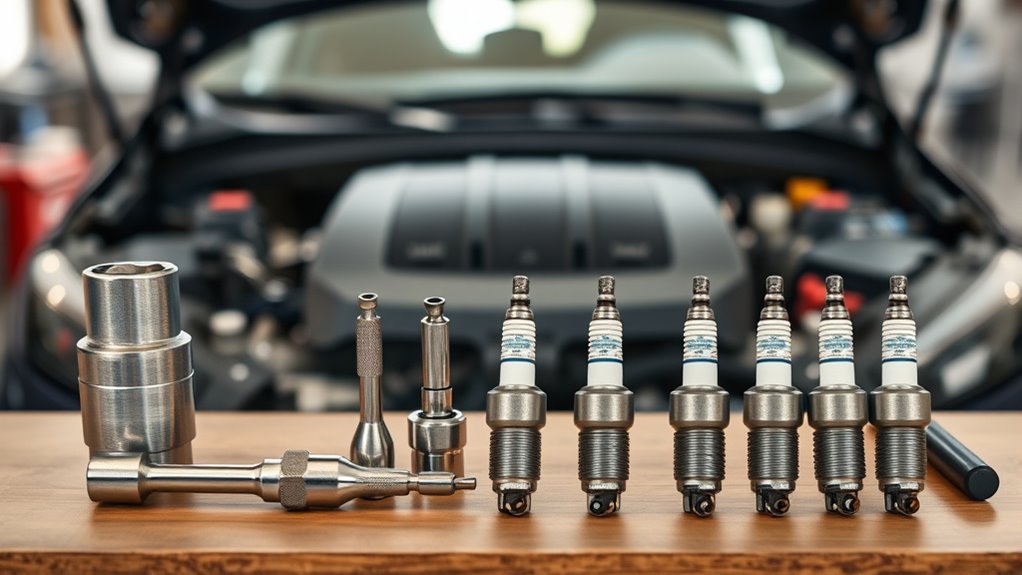
- Tools: spark plug socket, ratchet, extensions, torque wrench, gap gauge, compressed air or a vacuum.
- Key rules: cool engine, correct plug, hand-start, correct torque.
Tools and parts you need
- Spark plug socket. Common sizes are 5/8 in and 13/16 in; confirm yours.
- Ratchet and extensions, plus small hand tools for covers or coil bolts.
- Torque wrench, because over- and under-tightening both cause problems.
- Gap gauge, if the plug maker permits checking the gap.
- Compressed air or a vacuum to clean the plug wells.
Anti-seize is not a standard tool. Some plug makers, such as Autolite, say not to lubricate the threads because it changes the torque-to-clamping-force relationship. Follow your plug maker’s instructions.
Find the right spark plug
- Identify your exact engine and check the owner’s manual or service data for the plug type, gap and torque.
- If the manual lacks a part number, use the manufacturer’s parts lookup or a plug maker’s application catalogue.
- Check the new plugs for cracked insulators, bent electrodes or damaged threads.
- Confirm every plug in the set is the same correct part number.
A plug can fit the hole and still be wrong. Heat range, reach and electrode design matter. For picks, see our guide to the best spark plugs.
How to remove old spark plugs
- Let the engine cool and switch the ignition off. Check your service procedure on whether to disconnect the battery, as it can affect some modules.
- Remove any engine cover blocking access.
- Pull the wire by its boot (twist gently first), or unplug the coil connector, remove its bolt and lift the coil out.
- Blow debris out of the plug well.
- Fit the socket squarely and turn counterclockwise with steady pressure.
- Keep each plug labelled by cylinder and inspect it.
Warning: if a plug binds, stop. Forcing it can strip the cylinder-head threads and turn a simple job into a major repair.
Work on one cylinder at a time to avoid mixing up wires and coils. Heavy oil fouling, a damaged insulator or severe wear can point to a problem beyond normal plug replacement.
How to gap spark plugs
Check the gap before installation, and only adjust if the plug maker allows it. Many modern plugs come pre-gapped. DENSO says its iridium plugs usually do not need re-gapping and warns not to let a gapping tool touch the iridium center electrode or porcelain.
- Find the specified gap for your engine and plug.
- Measure with the recommended type of gauge.
- If adjustment is permitted, bend only the ground electrode, never the center electrode.
- Measure again before installing.
How to install spark plugs without cross-threading
- Place the plug in the socket and lower it into the well.
- Turn it clockwise by hand until it spins smoothly for several threads. If it binds, back out and restart.
- Seat it finger-tight, then tighten to the specified torque or turning angle, as NGK instructs.
- Refit the coil or wire boot firmly and latch the connector.
Do not add extra tightening after the wrench reaches the specified value. A torque wrench helps; see our torque wrench guide.
Test the engine after installation
| Check | What to look for |
|---|---|
| Idle | Smooth, with no new shaking or stalling |
| Noise | No ticking or popping |
| Warning lights | No new or flashing check-engine light |
| Road test | Normal acceleration without hesitation |
If it runs rough, recheck coil connectors and boot seating first. A flashing check-engine light can mean an active misfire, and driving on can damage the catalytic converter. AAA lists rough idle, hard starting, misfires, poor mileage and hesitation as possible signs of spark plug trouble. If poor mileage is your concern, our fuel injector cleaner guide covers another fix.
Frequently asked questions
Can I change spark plugs myself?
Yes, on many engines. You need the correct plugs, the right tools, and vehicle-specific gap and torque information. Engines needing major intake removal or with seized plugs may be better left to a professional.
Should I use anti-seize on spark plugs?
Not by default. Some plug makers say to install their plugs dry because lubricant changes tightening characteristics. Use it only if the vehicle or plug manufacturer directs.
Do I need to gap new spark plugs?
Check the gap against your engine’s specification. Many plugs come pre-gapped, and fine-wire iridium or platinum plugs usually should not be adjusted.
What are the signs of a bad spark plug?
Misfires, rough idle, hard starting, hesitation, weak acceleration, poor fuel economy or a check-engine light are common signs.
How tight should spark plugs be?
Follow the torque or turning angle specified for your engine and plug. Both over-tightening and under-tightening can cause problems.
Is changing spark plugs a hard job?
It is usually easy to moderate. Difficulty depends on access, such as covers or intake parts in the way, and on whether any plugs are seized.