
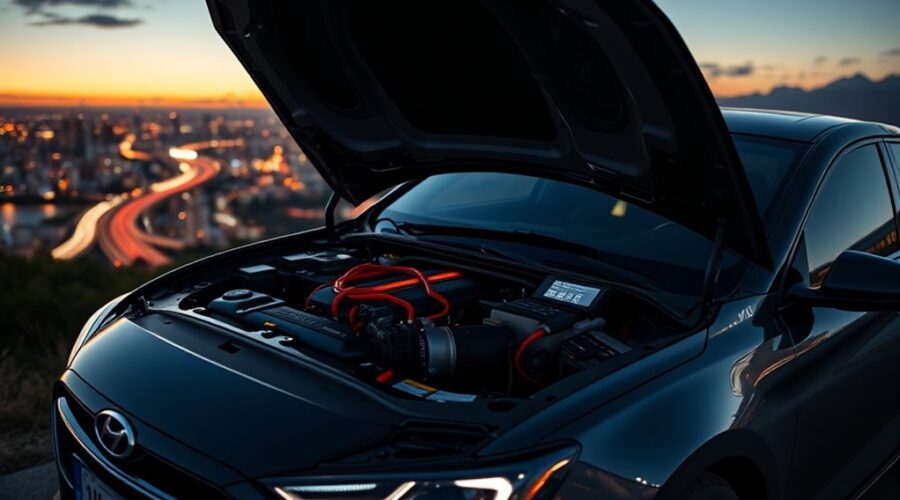
The Toyota Prius remains a benchmark among high-MPG hybrids, with about 57 MPG and a long record of efficient urban use. Its lead comes from hybrid system tuning, regenerative braking, and low curb weight, all of which reduce fuel demand in stop-and-go traffic. Yet the Prius is not alone. Hyundai and Kia have close rivals, and the real differences appear in powertrain design, battery strategy, and ownership tradeoffs.
Key Takeaways
- Toyota Prius leads mainstream hybrids at about 57 MPG, making it the benchmark for fuel efficiency.
- Other top MPG hybrids include the Hyundai Elantra Hybrid at 54 MPG and Kia Niro Hybrid at 53 MPG.
- Hybrids improve efficiency through regenerative braking, electric assist, idle engine shutoff, and lighter, aerodynamic designs.
- City driving benefits most because electric motors handle stop-and-go traffic efficiently and recover energy during braking.
- Used hybrid buyers should check battery health, maintenance history, corrosion, and test-drive for warning lights or unusual noises.
Which Hybrid Gets the Best MPG?
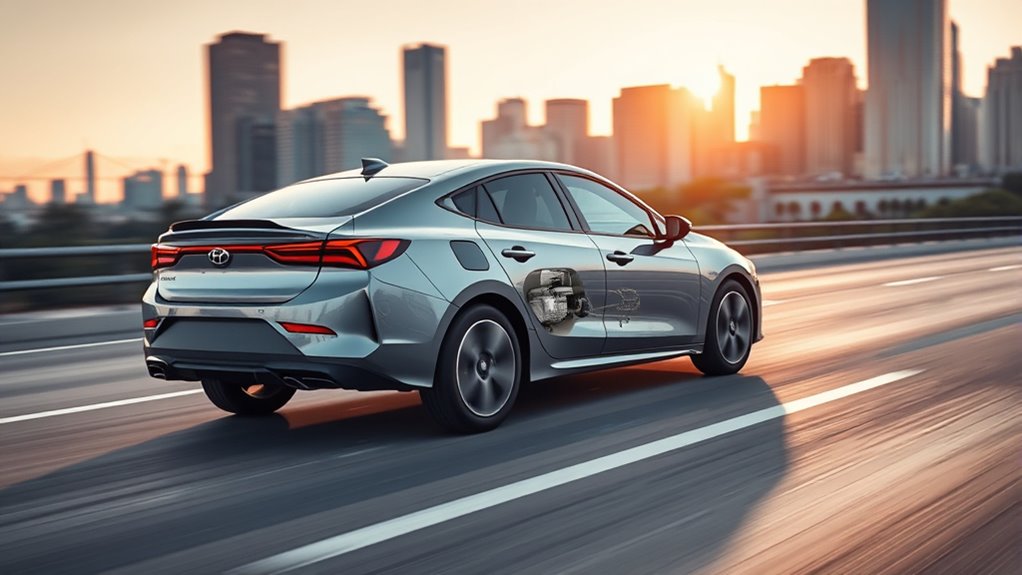
When comparing the hybrids with the best MPG, the Toyota Prius stands out as the clear leader, with a combined rating of 56 MPG in 2026 and a long-standing reputation for exceptional efficiency supported by advanced regenerative braking.
This Most MPG Hybrid benchmark reflects mature hybrid technology, where electric assistance and engine optimization work together to reduce fuel consumption. The Prius remains the reference point for fuel economy, while the Hyundai Elantra Hybrid follows at 54 MPG, offering near-leading MPG ratings in a streamlined sedan package.
This benchmark reflects mature hybrid technology, where electric assistance and engine optimization work together to reduce fuel consumption.
The Kia Niro Hybrid posts 53 MPG, combining compact-SUV utility with efficient operation. Below these models, the Honda Accord Hybrid at 48 MPG and the Ford Escape Hybrid at 44 MPG show how design priorities can affect efficiency outcomes.
For drivers seeking liberation through lower fuel use, the ranking is clear: higher MPG ratings translate directly into fewer refueling stops and greater energy independence.
Why the Toyota Prius Leads
The Toyota Prius maintains a clear MPG advantage, with latest models reaching 57 MPG through an optimized hybrid powertrain and efficient energy management.
Its lightweight structure, low-drag aerodynamics, 1.8-liter engine, lithium-ion battery, and regenerative braking system work together to improve efficiency and battery utilization.
Reliability, low maintenance costs, and proven hybrid technology further reinforce its position as a leading high-MPG vehicle.
Prius MPG Advantage
With a standout 57 MPG rating, the Toyota Prius sets the benchmark for hybrid fuel economy by pairing a 1.8-liter engine with an electric motor in an optimized hybrid system. This hybrid architecture gives the Toyota Prius a clear MPG advantage without sacrificing usable performance or reliability, supporting efficient mobility for drivers seeking autonomy.
| Metric | Prius Value | Effect |
|---|---|---|
| Fuel economy | 57 MPG | Lower fuel use |
| Powertrain | 1.8L + electric motor | Balanced output |
| Regenerative braking | Energy recovery | Battery support |
| 0-60 mph | 7.7 seconds | Confident acceleration |
| Reliability | High ratings | Durable ownership |
Regenerative braking further improves efficiency by recapturing deceleration energy, reinforcing the Prius as a technical leader among hybrid vehicles.
Hybrid Efficiency Factors
Building on its 57 MPG advantage, the Toyota Prius leads among hybrids through a combination of low vehicle mass, an efficient gasoline-electric powertrain, and a streamlined aerodynamic profile that minimizes drag.
Its hybrid system coordinates a 1.8-liter engine with a lithium-ion battery, allowing strong fuel economy and frequent electric power at low speeds. Regenerative braking captures kinetic energy during deceleration and returns it to storage, extending range without external input.
- Lightweight structure reduces energy demand.
- Aerodynamic design cuts resistance at speed.
- Battery-assisted operation improves hybrid efficiency.
These factors shape a restrained driving experience that prioritizes motion with less waste.
Continuous refinement of battery technology and mass reduction has kept the Prius a benchmark for hybrid efficiency, illustrating how disciplined engineering can widen practical freedom from fuel dependence.
Reliability And Tech Features
Consistent 57 MPG efficiency is only part of the Toyota Prius’s appeal; its reputation is also reinforced by dependable engineering, low maintenance costs, and a hybrid battery designed for long service life, often beyond 100,000 miles.
This reliability supports drivers seeking independence from frequent repairs and fuel stops. At low speeds, regenerative braking recovers energy during deceleration, improving fuel efficiency and reducing wear on friction brakes.
The Prius also integrates advanced safety technologies, including adaptive cruise control and lane-keeping assist, to support confident travel.
Inside, a 12.3-inch touchscreen with wireless Apple CarPlay and Android Auto improves technology access and user experience.
Together, these systems form a cohesive package: efficient, durable, and practical for those prioritizing mobility, control, and lower ownership costs.
How Hybrid Tech Improves MPG
Hybrid systems improve MPG by pairing the gasoline engine with an electric motor that supplies low-speed and acceleration torque, reducing engine load when efficiency is poorest.
Regenerative braking captures kinetic energy during deceleration and converts it into electricity, which recharges the battery instead of wasting energy as heat.
This electric assist, combined with engine shutoff at idle, allows the vehicle to consume less fuel in stop-and-go driving and maintain higher overall fuel economy.
Regenerative Braking Gains
Regenerative braking gives hybrids a measurable efficiency advantage by capturing kinetic energy that would otherwise be lost as heat during deceleration and converting it into electricity to recharge the battery.
In hybrid vehicles, this energy recovery supports fuel economy and improves MPG ratings, especially in city driving where repeated stops are common. The system reduces load on the gasoline engine, allowing more efficient operation without excess consumption.
- Roughly 10% more energy can be recovered than in traditional vehicles.
- Brake wear declines, lowering maintenance costs over time.
- Models such as the Toyota Prius use advanced regenerative systems to reach 57 MPG.
This architecture lets drivers reclaim wasted motion, turning braking into a controlled source of efficiency rather than an energy penalty.
Electric Assist Efficiency
Electric assist improves MPG by allowing the gasoline engine to operate under lighter load while an electric motor supplies torque during acceleration and low-speed travel.
In a hybrid, this division of labor lets fuel be used more selectively, improving fuel economy in city driving where stop-and-go conditions punish conventional vehicles.
Regenerative braking then recovers kinetic energy, converting it into electricity for later use.
Smaller electric systems, paired with aerodynamic bodies and lightweight materials, reduce drag and demand.
The result is higher combined mileage, as seen in vehicles such as the Prius and Elantra Hybrid.
Top MPG Hybrids to Compare
Among the top MPG hybrids to compare in 2025, the Toyota Prius sets the benchmark at 57 MPG, followed closely by the Hyundai Elantra Hybrid at 54 MPG and the Kia Niro Hybrid at 53 MPG.
These economy leaders define modern fuel economy, giving drivers more autonomy from frequent refueling and rising costs. The best hybrid cars now span multiple segments, from sedans to hybrid SUVs, expanding access to fuel-efficient vehicles without sacrificing utility.
These economy leaders expand fuel-saving choices across sedans and SUVs, reducing refueling stops without sacrificing everyday utility.
- Toyota Prius: 57 MPG, class-leading efficiency
- Kia Niro Hybrid: 53 MPG, 42.0 cubic feet cargo capacity
- Honda Accord Hybrid: 48 MPG, 0-60 mph in 6.6 seconds
The Honda Accord Hybrid balances efficiency with acceleration, while the Ford Escape Hybrid adds compact SUV practicality at 44 MPG.
Together, these models illustrate how engineering can reduce dependence on fuel while preserving choice, function, and mobility.
Why Hybrids Excel in City Driving
The strong MPG figures of leading hybrids become even more valuable in urban use, where stop-and-go traffic favors their core efficiency advantages. In city driving, fuel economy among hybrids rises because electric motors handle low-speed motion and reduce reliance on gas vehicles. During acceleration, the motor adds torque smoothly, limiting fuel waste.
| Condition | Hybrid Response | Result |
|---|---|---|
| Low speed | Electric drive | Less fuel use |
| Braking | Regenerative braking | Energy recapture |
| Acceleration | Motor assist | Higher efficiency |
| Traffic stops | EV operation | Better fuel economy |
This cycle lets hybrids can recover energy that conventional drivetrains lose as heat. In dense traffic, regenerative braking repeatedly restores charge, supporting future movement without extra gasoline. The Toyota Prius illustrates the effect, reaching up to 57 MPG in city conditions. Such performance shows why hybrids are technically optimized for urban mobility, where their systems convert congestion into measurable efficiency and greater freedom from fuel dependence.
What to Check Before Buying Used
Before purchasing a used hybrid, a thorough evaluation of battery health is essential, since hybrid batteries typically last 100,000 to 150,000 miles, with some units extending beyond 200,000 miles. A buyer should request a vehicle history report and compare maintenance records to verify consistent service and accident exposure. This evidence helps judge reliability and reveal hidden abuse.
- Inspect hybrid components for corrosion, leakage, or irregular wear.
- Confirm a detailed inspection was completed by a reputable dealer.
- Review warranty options for battery and inverter coverage.
Attention should also be given to warning lights, unusual noise, and state-of-charge behavior during test drive conditions.
Because repair costs for high-voltage systems can be substantial, any defect should be treated as a negotiating factor or a reason to walk away. Careful evaluation preserves autonomy, limits financial exposure, and supports an informed purchase.
Hybrid vs. Plug-In Hybrid
Hybrid vehicles pair a gasoline engine with an electric motor and rely on regenerative braking to recover energy while driving, which typically supports fuel economy above 45 MPG in sedans and around 35 MPG in SUVs. In the hybrid vs. plug-in hybrid comparison, traditional hybrids recharge automatically, so freedom from outlets comes with dependable fuel savings and simpler operation. Plug-in hybrid electric vehicles use larger battery packs and improved technology, enabling 25 to 50 miles of electric travel before the gasoline engine starts, often delivering better performance in short urban trips. Their efficiency depends on charging habits.
| Type | Charging | Range |
|---|---|---|
| Hybrid | Self-recharge | No plug |
| PHEV | External | 25-50 mi |
| Hybrid | Strong fuel economy | Reliable |
| PHEV | Electric commute | Flexible |
| Both | Lower emissions | Less fuel |
Without regular charging, PHEVs may lose efficiency, while hybrids preserve consistent fuel economy. The choice hinges on access, distance, and desired autonomy.
Frequently Asked Questions
Which Hybrid Has the Highest MPG?
The Toyota Prius has the highest MPG among hybrids, delivering exceptional fuel efficiency through advanced hybrid technology, eco friendly benefits, driving habits, battery lifespan, engine performance, cost savings, and promising future developments.
Which Hybrid Has the Least Problems?
Toyota Prius typically shows the least problems, praised by reliable models, user reviews, and expert opinions. With maintenance tips, warranty coverage, and attention to common issues, its long term performance and owner satisfaction remain strong.
Which Car Gets 70 MPG?
No mainstream car currently achieves 70 mpg; the closest prioritize fuel efficiency through eco friendly technology and hybrid advantages. Driving habits affect battery lifespan, maintenance tips, cost savings, and future innovations may improve results.
How to Get the Best MPG in a Hybrid?
Maximizing MPG in a hybrid depends on proving a simple theory: disciplined driving habits, fuel efficiency tips, tire pressure, weight reduction, maintenance practices, route planning, and hybrid technology together preserve engine performance and extend liberation through efficiency.
Conclusion
In the hybrid market, the Toyota Prius remains the benchmark, with its 57 MPG rating illustrating how aerodynamic design, regenerative braking, and efficient power management can work together like a well-tuned relay team. One commuter once described a Prius as “a car that sips fuel while traffic sleeps,” a fitting image for its city efficiency. As rivals such as the Hyundai Elantra Hybrid and Kia Niro Hybrid improve, hybrids continue to prove that economy and practicality can coexist.