The 2027 OBD2 scanner market has a clear mix of professional-grade tools and simple everyday readers. Some models focus on bidirectional control and deep service functions, while others emphasize app support and ease of use. A few also promise access to repair databases and broader system coverage. The differences may seem subtle at first, but they can decide which scanner actually fits a driver’s needs.
TOPDON ONE Bidirectional Scan Tool, 10.1″ Professional Diagnostic Tool
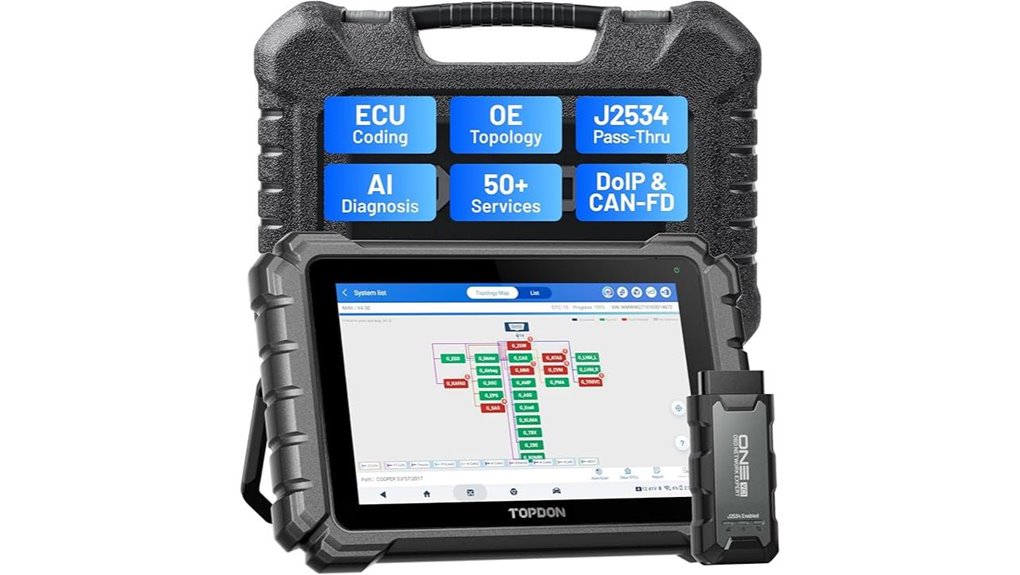
The TOPDON ONE Bidirectional Scan Tool is a strong fit for professional technicians and advanced DIYers who need dealer-level diagnostics in a portable 10.1-inch Android tablet. It combines bidirectional control, OE topology mapping, and more than 50 service functions, including DPF regeneration, ABS bleeding, TPMS reset, and throttle adaptation. Dual WiFi delivers faster communication than Bluetooth, while J2534 pass-thru support extends OEM software use. CAN-FD, DoIP, and broad brand coverage improve compatibility. Advanced ECU coding, guided functions, and Topfix AI add depth.
Best For: Professional technicians and advanced DIYers who want a portable, dealer-level diagnostic tablet with bidirectional control, advanced coding, and broad vehicle coverage.
Pros:
- 10.1″ Android 12 touchscreen with fast dual WiFi and J2534 pass-thru support
- Over 50 service functions plus OE topology mapping, guided functions, and bidirectional diagnostics
- Strong compatibility with newer vehicles thanks to CAN-FD, DoIP, and major-brand coverage
Cons:
- Full functionality and latest vehicle support depend on ongoing software updates/subscription renewal
- Advanced features like coding and special functions may be more than casual DIY users need
- Vehicle-specific functions and coverage can vary by make, model, and software access levels
Bosch OBD 1200 Scan Tool with CodeConnect
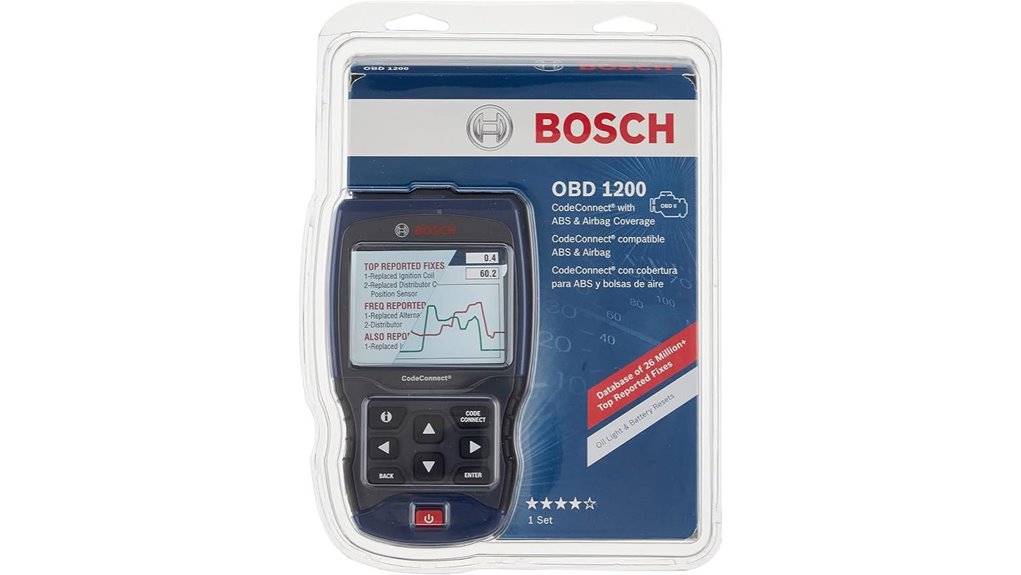
Bosch OBD 1200 stands out for drivers who want verified repair guidance. It works with 1996 and newer import, domestic, diesel, and hybrid vehicles using OBD II and CAN, plus many 1994 and 1995 OBD II-compliant models. CodeConnect links diagnostic trouble codes to a database of more than 26 million verified fixes, helping interpret check engine, ABS, and airbag warnings. The tool also supports oil light resets on many BMW and GM vehicles, battery resets for select late-model BMW, Mini Cooper, and Ford trucks, and airbag code coverage across several major brands.
Best For: Drivers and DIY mechanics who want a compatible, easy-to-use scan tool with verified repair guidance for engine, ABS, and airbag issues across a wide range of vehicles.
Pros:
- Works with most 1996+ OBD II/CAN vehicles, including import, domestic, diesel, hybrid, and some 1994–1995 compliant models.
- CodeConnect offers access to over 26 million verified fixes to help interpret trouble codes and warning lights.
- Includes useful reset features such as oil light and battery resets for select BMW, GM, Mini Cooper, Ford, and Hyundai models.
Cons:
- Oil light reset and battery reset functions are limited to specific vehicle makes and model years.
- Airbag and ABS coverage is broad, but not full-system diagnostic coverage for every vehicle.
- Best results depend on having the specific supported model; compatibility and features can vary by car.
BlueDriver OBD2 Scanner Bluetooth, No Subscription, ABS SRS TPMS
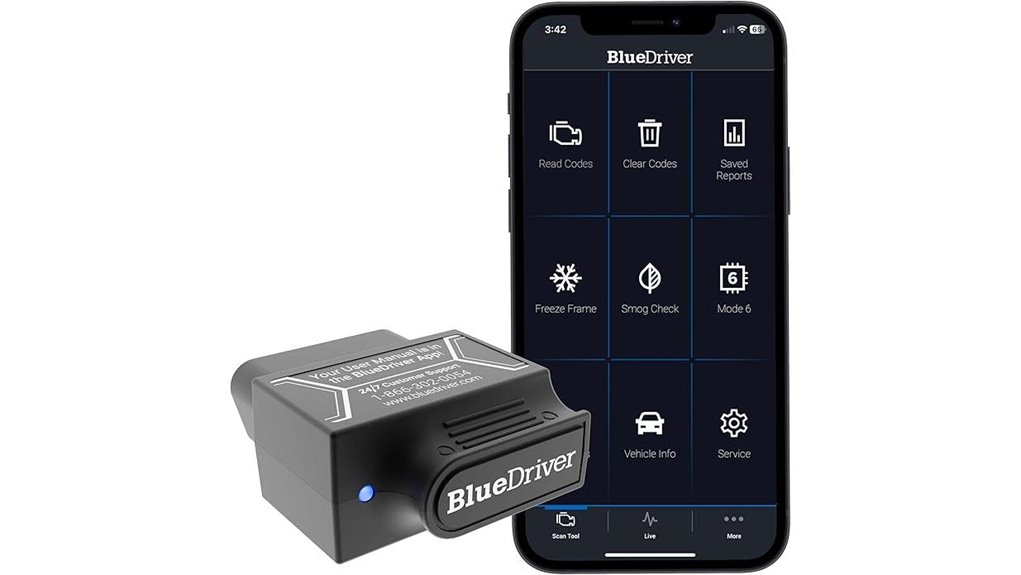
BlueDriver suits drivers who want Bluetooth diagnostics without subscription fees. This wireless OBD2 scanner plugs into the vehicle’s port and pairs with an iOS or Android app for cord-free use. It supports gas vehicles from 1996 and newer in North America, with broad coverage for GM, Ford, Stellantis, Toyota, Honda, Nissan, Mazda, Subaru, Hyundai, Mercedes-Benz, BMW, and VW. Beyond check engine codes, it reads and clears ABS, SRS, airbag, TPMS, and transmission faults, while also showing live data, freeze frames, smog readiness, and Mode 6 results. Verified fix reports are included.
Best For: Drivers in North America who want a no-subscription Bluetooth OBD2 scanner for checking engine, ABS, SRS, TPMS, and transmission issues from their phone.
Pros:
- No subscription fees; one-time purchase includes full access.
- Broad vehicle compatibility with strong coverage for many popular makes and models.
- Reads and clears advanced codes plus live data, freeze frames, smog readiness, and verified fix reports.
Cons:
- Works only with gas vehicles 1996+ in North America.
- Requires a smartphone or tablet with the BlueDriver app.
- Limited to OBD2 diagnostics, so it won’t replace full dealer-level tools for every vehicle system.
FIXD Bluetooth OBD2 Scanner – Car Diagnostic Check Engine Code Reader
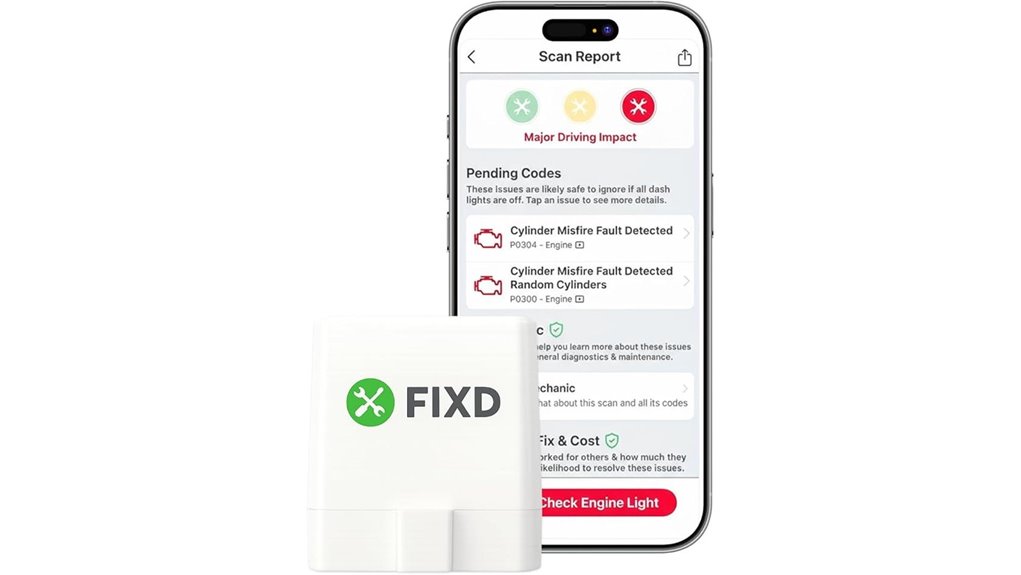
FIXD Bluetooth OBD2 Scanner suits drivers who want simple check-engine diagnostics without technical guesswork. It reads Check Engine lights, enhanced codes, and more than 39,000 issues across thousands of vehicles. The free app translates faults into clear explanations, helping users validate repairs and reset codes with confidence. It also flags serious problems and maintenance reminders for safer driving. Bluetooth connectivity supports iPhone and Android, while one app can manage multiple vehicles, save scan history, track mileage, and share results. OBD2 compatibility covers 1996+ gasoline and hybrid vehicles, plus 2006+ diesel models.
Best For: Drivers who want an easy-to-use Bluetooth OBD2 scanner for quick check-engine diagnostics, simple app-based explanations, and basic vehicle maintenance tracking without technical expertise.
Pros:
- Reads check-engine lights, enhanced codes, and 39,000+ issues across thousands of vehicles
- Free app gives clear explanations, maintenance reminders, and repair validation support
- Works with iPhone and Android and can manage multiple vehicles in one app
Cons:
- Best features may require the free 14-day premium trial to access repair recommendations and live mechanic support
- Limited to OBD2-compatible vehicles, so older cars may not work
- Diagnostic help is simplified, so advanced users may want a more professional-grade scanner
MOTOPOWER OBD2 Scanner Code Reader Diagnostic Tool
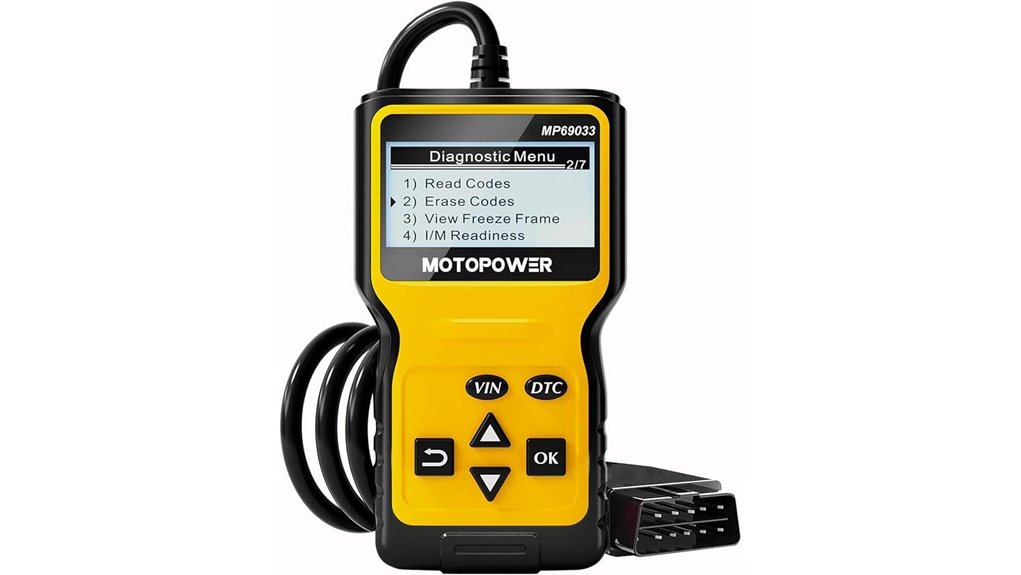
The MOTOPOWER MP69033 suits drivers who want a simple, affordable code reader. This yellow OBD2 scanner works with all OBD II protocol cars since 1996 and supports nine protocols for many US, EU, and Asian vehicles. It reads and erases codes, shows freeze frame data, I/M readiness, vehicle information, live data, speed, load, coolant temperature, and engine speed. A built-in DTC library helps with fault identification. The 2.8-inch backlit LCD, six buttons, and direct OBD power make use straightforward. It does not handle ABS, airbag, or oil service codes.
Best For: Drivers who want an affordable, easy-to-use OBD2 code reader for basic engine diagnostics and live data on most 1996-and-newer OBD II vehicles.
Pros:
- Reads and erases engine codes with a built-in DTC lookup library for quick fault identification
- Supports freeze frame data, I/M readiness, vehicle information, and live data such as speed, coolant temperature, and engine speed
- Simple to use with a 2.8-inch backlit display, six navigation buttons, and no battery required
Cons:
- Cannot read or clear ABS, airbag, or oil service light codes
- Only covers OBD2 systems, so it won’t diagnose non-OBDII modules
- Basic design and features may be too limited for users who need advanced diagnostics
ANCEL BD310 Bluetooth OBD2 Scanner & Code Reader
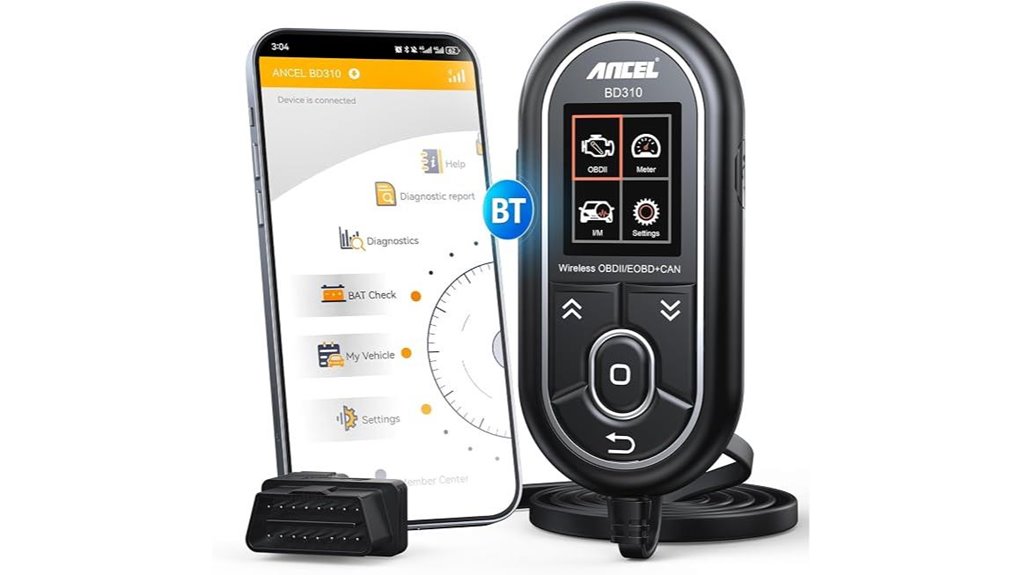
ANCEL BD310 suits drivers who want wired reliability and Bluetooth convenience in one compact tool. This 2-in-1 scanner works with all 1996+ vehicles and supports iPhone and Android devices. It reads and clears check engine codes, then explains DTCs in plain English. I/M readiness checks help confirm emissions status before inspection. Live data, EVAP tests, and all 10 OBDII modes add depth. It also tracks battery voltage, performance, coolant temperature, acceleration, and braking. A smart HUD shows speed, RPM, and voltage. Lifetime app updates and a one-year warranty strengthen its value.
Best For: Drivers who want a compact, beginner-friendly OBD2 scanner with both wired reliability and Bluetooth app convenience for checking codes, emissions readiness, and live vehicle data.
Pros:
- Works with all 1996+ vehicles and supports both iPhone and Android.
- Reads and clears codes, shows plain-English DTC explanations, and includes I/M readiness checks.
- Offers live data, battery voltage monitoring, performance tracking, and a smart HUD display.
Cons:
- Full advanced diagnostics may still be limited compared with professional-grade scan tools.
- Best features depend on using the companion app, so the experience may vary by phone.
- No mention of support for manufacturer-specific or ABS/SRS systems.
OBDLink MX+ OBD2 Bluetooth Scanner for iPhone, Android, and Windows
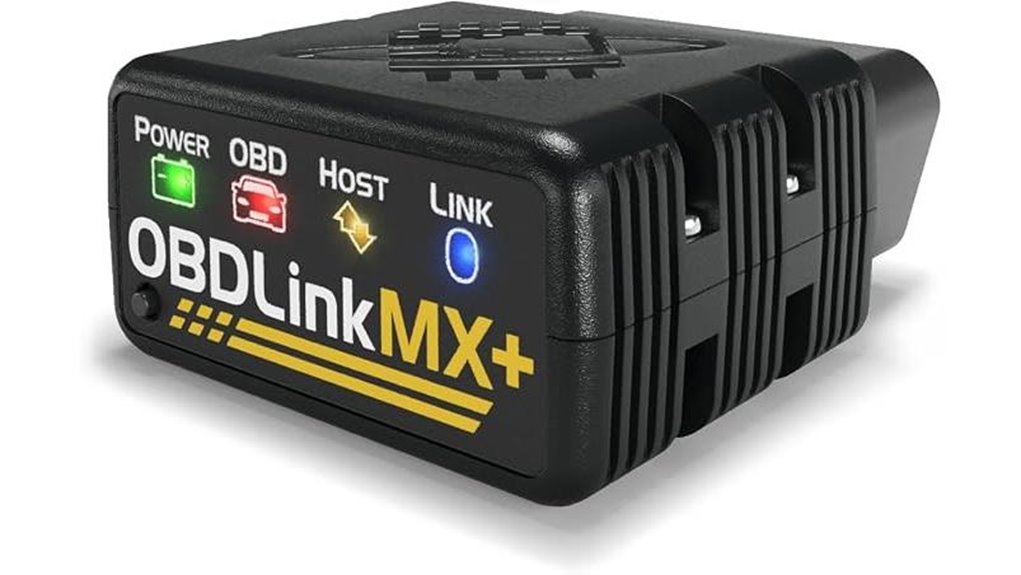
OBDLink MX+ suits drivers needing broad app compatibility and deeper diagnostics. It works with iPhone, Android, and Windows PCs, and pairs well with apps such as FORScan, Torque, BimmerCode, Dashcommand, AlfaOBD, and Carista. As a professional-grade Bluetooth scanner, it clears check engine lights and provides live data from systems including ABS, SRS, and TPMS. Enhanced OEM support covers Ford, GM, Mazda, Nissan/Infiniti, Toyota/Lexus/Scion, Honda, Hyundai, and Kia. Built-in over-voltage and battery-drain protection add confidence, while firmware updates help maintain performance. Vehicle compatibility should be verified before purchase.
Best For: Drivers who want a versatile Bluetooth OBD2 scanner with strong app compatibility, deeper diagnostics, and broad support for popular vehicle brands.
Pros:
- Works with iPhone, Android, and Windows PCs
- Supports popular apps like FORScan, Torque, BimmerCode, Dashcommand, AlfaOBD, and Carista
- Includes enhanced OEM support plus over-voltage and battery-drain protection
Cons:
- Vehicle compatibility and features should be checked before buying
- Some advanced functions depend on the app and vehicle brand
- More capable than basic scanners, so it may be more than casual users need
ANCEL FX2000-US OBD2 Scanner, 4-System Car Diagnostic Tool with Live Data
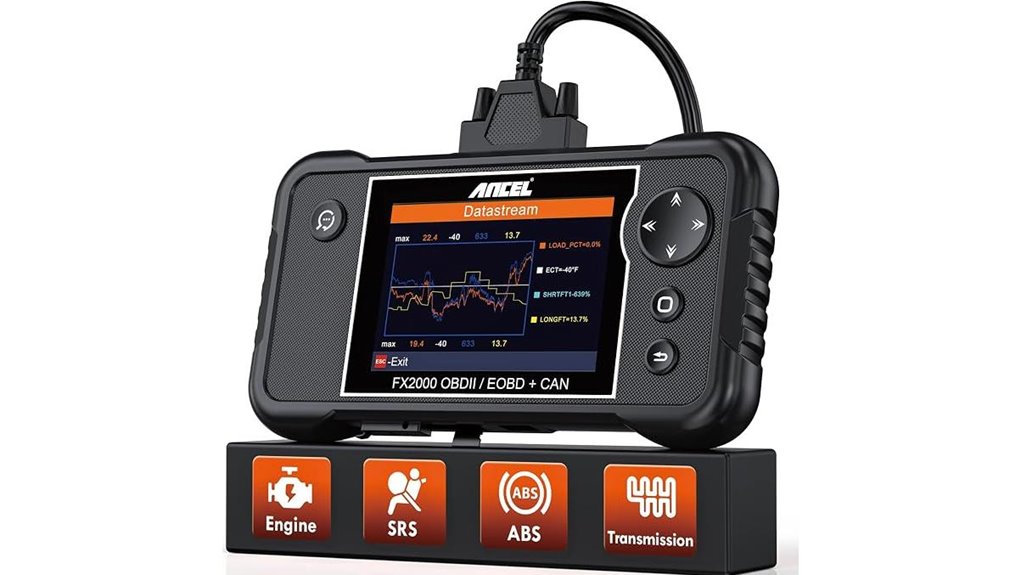
Ideal for DIY drivers, the ANCEL FX2000-US scans engine, ABS, SRS, and transmission faults. It supports most 1996-and-newer OBD2-compliant cars, SUVs, and light trucks, making it broadly useful for household garages. Beyond reading and clearing codes, it offers freeze-frame data, I/M readiness checks, and built-in DTC definitions for faster troubleshooting. Live data streams show current operating conditions, helping users track symptoms and discuss findings with mechanics. Setup is straightforward through the OBDII port, menus are simple, and free lifetime updates add value, though system coverage varies by vehicle.
Best For: DIY drivers and home mechanics who want an easy-to-use 4-system OBD2 scanner for checking engine, ABS, SRS, and transmission issues on most 1996-and-newer vehicles.
Pros:
- Reads and clears codes for engine, ABS, SRS/airbag, and transmission systems
- Includes useful OBDII functions like freeze-frame data, I/M readiness, and built-in DTC definitions
- Free lifetime software updates with no subscription fees
Cons:
- ABS, SRS, and transmission coverage varies by vehicle make, model, and year
- Not a full professional-grade diagnostic tool for every vehicle system
- Best suited for basic to intermediate DIY diagnostics rather than advanced repair work
Innova 5610 OBD2 Bidirectional Scan Tool
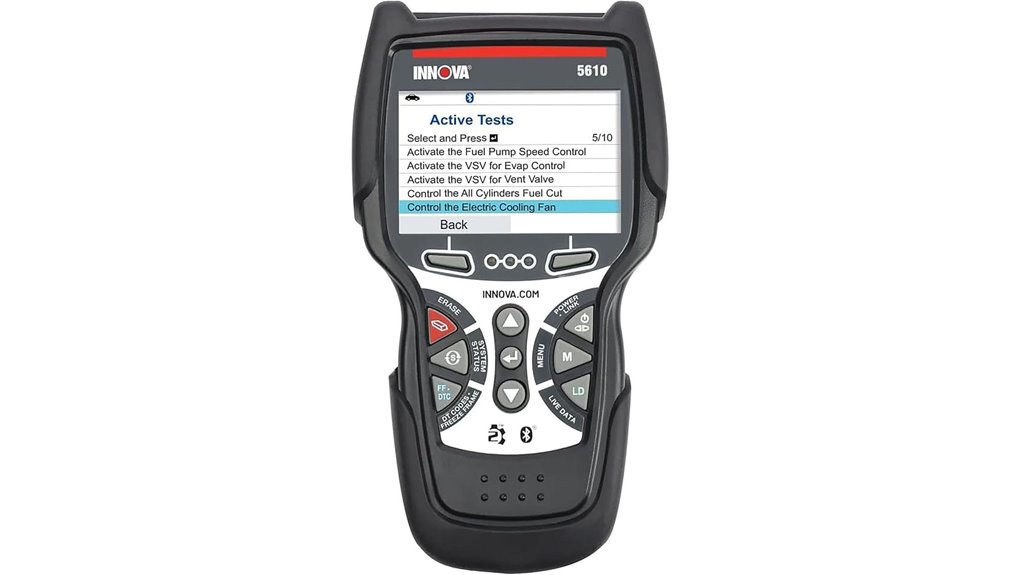
The Innova 5610 suits drivers who need dealer-style diagnostics without dealership prices. This bidirectional OBD2 scan tool delivers enhanced data for ABS, SRS, transmission, and engine systems, helping with tougher troubleshooting jobs. It also supports special reset functions for dealership-level relearn procedures. Bidirectional controls can activate tests such as fuel pump operation and electronic parking brake retraction. Compatible with most 1996-2023 OBD2 vehicles, though coverage varies by make and model. English, Spanish, and French menus improve usability. Free updates, RepairSolutions2 support, and ASE-certified assistance add value.
Best For: DIY mechanics and car owners who want dealer-style diagnostic and bidirectional testing features for select 1996–2023 OBD2 vehicles without paying dealership prices.
Pros:
- Offers enhanced live data for ABS, SRS, transmission, and engine systems.
- Includes bidirectional controls and special reset functions for advanced troubleshooting and relearn procedures.
- Provides free updates, RepairSolutions2 app support, and ASE-certified customer assistance.
Cons:
- Coverage is not universal and varies by vehicle make and model.
- Some advanced functions may not be available on all compatible vehicles.
- Best suited for users who need more than basic code reading, so it may be overkill for simple check-engine tasks.
Factors to Consider When Choosing OBD2 Scanners 2026: Tested Diagnostic Tools for Cars
Choosing an OBD2 scanner in 2026 starts with vehicle compatibility, since not every tool supports every make, model, or system. Diagnostic depth, wireless connectivity, bidirectional controls, and update requirements also shape how effective the scanner will be for real-world use. A tested tool should balance these features with the user’s repair needs and budget.
Vehicle Compatibility
Vehicle compatibility is one of the first things to verify, since most OBD2 scanners are built for vehicles that follow the OBD II protocol, especially models from 1996 onward in North America and 2000 onward in Europe and Asia. Compatibility is not uniform, however. Some scanners are limited to certain makes and models, while others support a wider mix of gasoline, diesel, and hybrid vehicles. Coverage can also differ by system, with many tools focusing on engine diagnostics while offering optional support for ABS, SRS, and transmission modules. Newer vehicles may require scanners that understand advanced protocols such as CAN-FD and DoIP. Before buying, the scanner’s specifications should be checked carefully to confirm support for the vehicle’s year, brand, and required functions.
Diagnostic Depth
Diagnostic depth separates a basic code reader from a genuinely useful scan tool, because it determines how much of the vehicle’s electronics the scanner can access and interpret. Strong scanners do more than read engine faults; they also reach transmission, ABS, and SRS modules, which speeds fault isolation. Models with bidirectional control can trigger tests and commands, helping confirm whether a component responds correctly. Broader vehicle coverage and manufacturer-specific functions improve accuracy by matching the scanner to particular makes and models. A robust database of verified DTC fixes adds practical guidance beyond code retrieval. Live data monitoring is equally important, since intermittent problems often appear only in sensor trends and operating conditions, not as stored faults.
Wireless Connectivity
Wireless connectivity has become a practical advantage in modern OBD2 scanners, letting users run diagnostics through Bluetooth or WiFi instead of a tethered cable. This setup supports real-time data access while reducing clutter under the hood and around the cabin. Many scanners now pair with smartphones, tablets, and computers, giving users more flexibility for viewing live data and reviewing results on preferred screens. Faster links, including dual WiFi systems, can move data more quickly than standard Bluetooth, improving responsiveness during use. Some advanced models also use wireless connections for software updates and cloud database access, keeping diagnostic information current without manual downloads. For buyers comparing tools, wireless performance matters as much as scan coverage because it affects convenience, speed, and platform compatibility during everyday diagnostics.
Bidirectional Controls
Bidirectional controls give an OBD2 scanner the ability to send commands to a vehicle’s systems, not just read data, making active tests far more efficient. This capability lets technicians trigger components such as fuel pumps, windows, and other actuators to verify operation in real time. It is especially valuable in advanced diagnostics, where confirming a fault often requires direct interaction with the system instead of passive data review. Many scanners with this feature can also reset electronic parking brakes or start vehicle-specific service routines, which supports thorough maintenance. Higher-end models may include dealership-level reset procedures, extending usefulness beyond basic trouble code retrieval. By shortening the path from symptom to confirmation, bidirectional control can reduce diagnostic time and improve repair accuracy.
Update Requirements
Update requirements are a major factor when choosing an OBD2 scanner, because software support directly affects long-term accuracy and compatibility. Many scanners include a free first year of updates, giving users access to current vehicle data and protocol changes before any ongoing cost begins. After that period, some brands offer subscription plans, while others charge per update or limit newer features behind paid access. Lifetime update policies can be especially appealing, since they reduce future expenses and help preserve usefulness over time. Even when no subscription is active, core diagnostic functions often continue to work. Regular updates remain important because they help the tool communicate with newer models and maintain reliable results. Subscription-based repair databases can also improve troubleshooting speed and accuracy.
App Ecosystem
Beyond software update policies, the app ecosystem is another key factor in evaluating OBD2 scanners for 2026. A strong ecosystem gives access to real-time data, DTC definitions, and vehicle-specific repair information, helping the scanner move beyond basic code reading. Compatibility with popular diagnostic apps also matters, since it can facilitate live data monitoring and deeper diagnostics across different vehicle brands. User-friendly interfaces are equally important, especially when they present codes in plain language and streamline navigation for professionals and DIY users alike. Some platforms extend value further through cloud-based databases that collect verified fixes and repair guidance. Together, these capabilities improve diagnostic accuracy, broaden functionality, and help the scanner remain useful as vehicles and diagnostic methods continue to evolve.
Support And Warranty
Support and warranty form the safety net behind an OBD2 scanner purchase, especially in 2026 where software and compatibility needs can change quickly. Longer warranty periods often signal stronger manufacturer confidence and reduce risk for buyers. Reliable support matters too; 24/7 service, live chat, and phone help can shorten downtime when troubleshooting vehicle codes or app issues. Firmware updates and software upgrades should be checked, since they can extend device usefulness and improve compatibility over time. A money-back guarantee or clear return policy adds another layer of protection, letting users test the scanner with less concern. User reviews also deserve attention, because they reveal how responsive and effective customer support really is in practice.
Frequently Asked Questions
Which Scanner Works Best for Electric Vehicles?
For electric vehicles, a scanner with EV-specific support works best, especially one that reads battery management, inverter, charging system, and manufacturer-specific codes. A bidirectional professional tool, such as an Autel MaxiSys or Launch X-431 with EV coverage, is typically strongest. Generic OBD2 readers often miss EV data. Compatibility with the vehicle’s make matters most, since many electric systems require brand-level diagnostics beyond standard emissions functions.
Do All OBD2 Scanners Support European Car Models?
European exceptions exist. No, not all OBD2 scanners support European car models. Many basic readers handle generic emissions codes, but some European vehicles use manufacturer-specific protocols, extra modules, or region-specific connectors. A capable scanner should list compatible brands such as BMW, Mercedes, Volkswagen, or Volvo. Verifying protocol support and software coverage before purchase prevents frustrating failures and faulty readings on imported or specialized models.
Can I Use One Scanner on Multiple Vehicles?
Yes, one scanner can usually be used on multiple vehicles, provided each vehicle supports the scanner’s connector and protocol. Most OBD2 scanners are designed for broad compatibility across different makes and models, including many cars, trucks, and SUVs. However, some advanced features may vary by vehicle brand or year. It is wise to confirm compatibility before use, especially with older vehicles, diesel models, or specialized systems.
How Often Should I Update Scanner Software?
Scanner software should be updated whenever the manufacturer releases a stable update, ideally every few months. Some may think updates matter only when a tool fails, but regular updates improve vehicle coverage, fix bugs, and maintain compatibility with newer models. If the scanner is used rarely, checking before major diagnostics is usually enough. For professional or frequent use, monthly checks are sensible. Immediate updates are best after major firmware or app changes.
Are Wireless OBD2 Scanners More Reliable Than Wired Ones?
Wireless OBD2 scanners are not inherently more reliable than wired ones; wired models usually provide steadier power and a more consistent connection, while wireless units offer greater convenience and mobility. Reliability depends on build quality, protocol support, and app performance. In harsh environments or during extended diagnostics, wired scanners often have the advantage. For casual use and quick checks, a quality wireless scanner can be sufficiently dependable.
Conclusion
Ultimately, the best OBD2 scanner depends on how deeply a driver wants to diagnose. A weekend mechanic may be fine with a simple code reader, while a serious DIYer may prefer the TOPDON ONE or Innova 5610 for bidirectional control. Think of it like choosing a flashlight: a keychain light helps you find the door, but a spotlight reveals the whole room. In 2027, smarter scanners make car troubleshooting faster, clearer, and far less intimidating.