
Motorcycle action cameras in 2027 offer riders more than simple footage. The latest models balance sharp video, steady stabilization, and rugged builds for changing road conditions. Some lean toward wide 360-degree capture, while others focus on reliable 4K and 5.3K performance. With waterproofing and mounting options now common, the real question is which camera fits each style of ride best. That choice becomes clearer next.
Insta360 ONE RS Twin Edition Action Camera
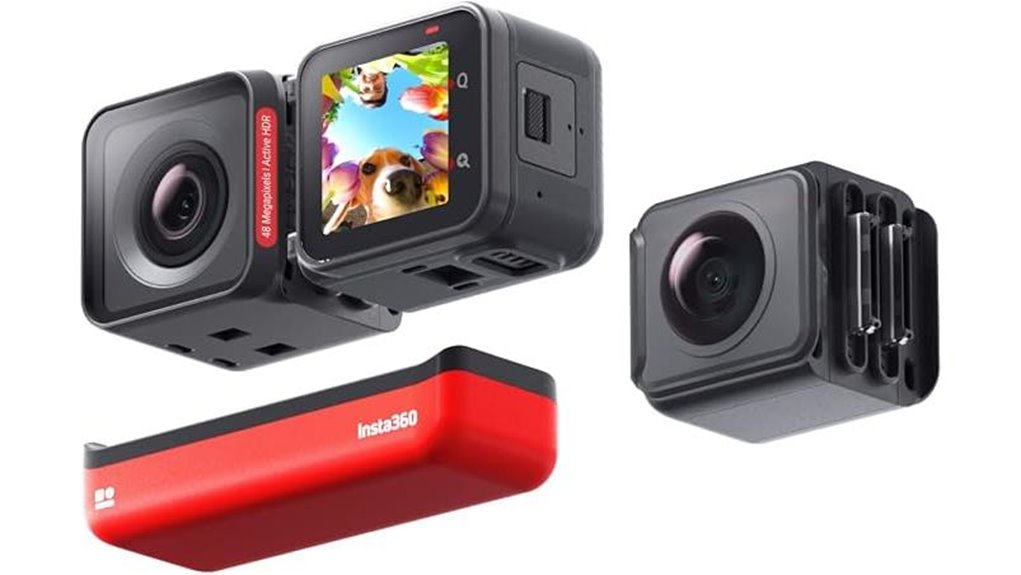
The Insta360 ONE RS Twin Edition is best suited for riders who want both versatility and high-end image quality in a single compact camera, since it combines a 4K Boost Lens for sharp wide-angle footage with a 5.7K 360 Lens for creative, immersive shots. It also records 48MP photos, HDR action video, and 6K widescreen clips. FlowState stabilization keeps footage smooth, while AI editing reduces post-production effort. Weighing 163 g, it remains portable and waterproof for varied conditions. Wi-Fi, Bluetooth, and microSD support improve usability. The invisible selfie stick feature adds unique 360-degree perspectives.
Best For: Riders and action users who want a compact, waterproof camera that combines high-quality 4K and 360-degree shooting with strong stabilization and easy editing.
Pros:
- Dual-lens system offers both a sharp 4K Boost Lens and a creative 5.7K 360 Lens.
- FlowState stabilization and AI editing help produce smooth footage with less effort.
- Lightweight 163 g design with Wi‑Fi, Bluetooth, and microSD support makes it easy to carry and use.
Cons:
- 360-degree and high-resolution modes may require more post-processing for best results.
- Battery life and storage needs can be demanding for long shoots.
- The modular design may be less convenient than a single fixed-lens action camera.
AKASO Brave 7 LE 4K Action Camera

With dual screens and solid stabilization, the AKASO Brave 7 LE suits riders who value easy framing. It records 4K video at 30fps and captures 20MP photos, while 6-axis EIS 2.0 helps steady rough-road footage. The front and rear color displays, plus a 2-inch rear touch screen, simplify composition and review. IPX7 weather resistance handles rain and spray, and the included housing allows dives to 131 feet. Time-lapse, burst, fast motion, and digital zoom add flexibility. Two 1350mAh batteries, a remote, and mounting kits support longer rides and varied setups.
Best For: Riders, vloggers, and action-sport users who want a rugged 4K camera with dual screens, strong stabilization, and flexible mounting options.
Pros:
- Shoots 4K video at 30fps and 20MP photos for solid overall image quality.
- Dual front and rear color screens with a 2-inch touch display make framing and review easy.
- Includes useful extras like two batteries, a remote, waterproof housing, and mounting kits.
Cons:
- Image quality is limited to 4K at 30fps, which may feel basic compared with higher-end action cameras.
- Battery life can still be a concern during extended shooting despite the extra battery.
- Best underwater performance requires the included housing, adding bulk for water use.
GoPro HERO12 Black Waterproof Action Camera with 5.3K60 Video

Riders chasing ultra-sharp helmet footage will appreciate the GoPro HERO12 Black’s 5.3K60 recording and HyperSmooth 6.0 stabilization. Its 1/1.9-inch CMOS sensor captures 27MP stills, while HDR preserves detail in bright skies and shaded roads. The waterproof, rugged body handles rain and dust, and the 33-foot rating suits wet rides. A water-repelling lens cover helps limit flare. The compact design mounts easily, and the Enduro battery supports up to 70 minutes at 5.3K60. USB-C, Wi-Fi, Bluetooth, and cloud upload streamline sharing.
Best For: Riders, outdoor adventurers, and content creators who want rugged, waterproof action footage with excellent stabilization and high-resolution video.
Pros:
- Shoots sharp 5.3K60 video with 27MP photos and HDR support for strong detail in varying light.
- HyperSmooth 6.0 stabilization helps keep helmet, bike, and action shots impressively smooth.
- Waterproof to 33ft, compact, and equipped with Wi‑Fi, Bluetooth, USB-C, and cloud upload for easy sharing.
Cons:
- 5.3K60 recording time is limited to about 70 minutes on the included battery.
- Small action-camera form factor means the display and controls can be less convenient than larger cameras.
- Premium features may be more than casual users need if they only shoot basic footage.
Insta360 X3 Bullet Time 360 Action Camera

Insta360 X3 suits motorcyclists who want a 360-degree camera with effortless reframing. Its dual 1/2-inch 48MP sensors capture 5.7K Active HDR 360 video and 72MP stills, while the AI-powered app makes angle selection simple after the ride. FlowState stabilization and 360 Horizon Lock help keep footage smooth and level on rough roads. A 2.29-inch touchscreen streamlines control, and the waterproof body adds practical durability. Single-lens mode also delivers 4K at 30fps or 2.7K MaxView for wide action-cam coverage, plus Me Mode at 60fps and 8K timelapses.
Best For: Motorcyclists and action-sports creators who want a durable 360 camera with easy reframing, strong stabilization, and versatile shooting modes.
Pros:
- 5.7K 360 Active HDR video with 72MP stills delivers sharp, flexible footage.
- FlowState Stabilization and 360 Horizon Lock help keep rides smooth and level.
- Single-lens, Me Mode, and 8K timelapse options add useful shooting versatility.
Cons:
- 360 footage requires post-capture reframing, which adds editing time.
- Single-lens mode tops out at 4K 30fps, which may feel limiting for some users.
- Waterproof and rugged, but not as compact or simple as a standard action camera.
GoPro Max Lens Mod 2.0 (HERO12 Black) – Official GoPro Accessory, Black

Designed for HERO12 Black, the GoPro Max Lens Mod 2.0 suits riders seeking a wider, more immersive POV. It adds ultra-wide digital lens options, reaching a 177° field of view and turning the camera into a stronger POV tool for ride footage. It also records sharp 4K60 video while Max HyperSmooth keeps stabilization steady across video modes. Vertical capture expands the view by 48% without rotating the camera or adding mounts. The package includes the lens mod, protective caps, and a cleaning cloth.
Best For: HERO12 Black riders and action shooters who want an ultra-wide, highly stabilized POV lens for more immersive footage.
Pros:
- Expands field of view up to 177° for a broader, more immersive perspective.
- Max HyperSmooth stabilization helps keep video steady across modes.
- Vertical capture adds 48% more view without needing to rotate the camera or add mounts.
Cons:
- Designed specifically for HERO12 Black, so it has limited compatibility.
- Best suited for users who want a wide POV look; it may not fit every shooting style.
- As an accessory lens mod, it adds an extra component to carry and maintain.
Insta360 X4 Air Creator Bundle 8K 360 Camera
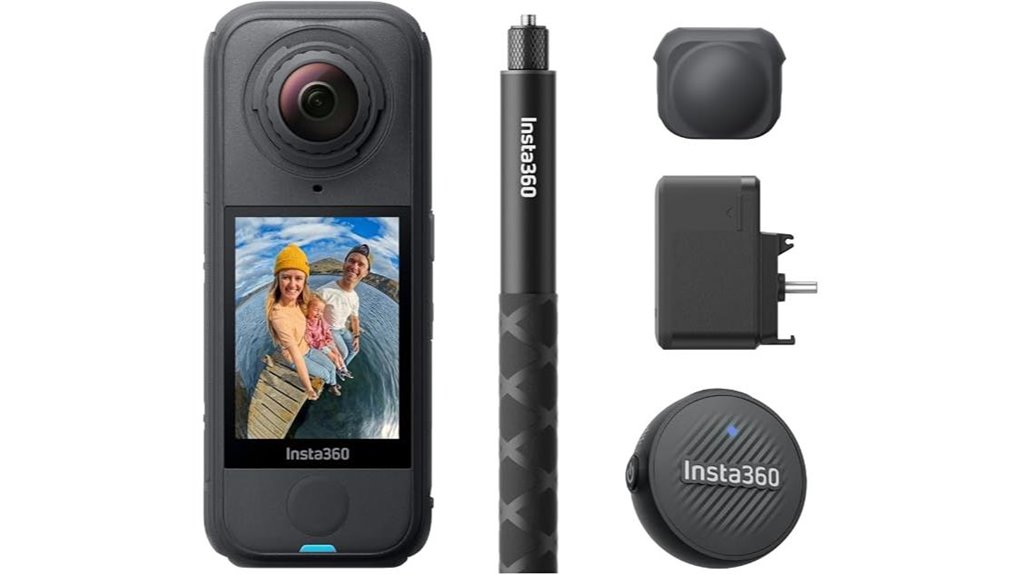
With 8K 360-degree capture and FlowState stabilization, it suits riders who want flexible, post-ride editing. The Insta360 X4 Air Creator Bundle is a compact 165g camera in Graphite Black, built around dual lenses and a CMOS sensor for 8K video at 30fps. Its Shoot First, Frame Later workflow lets riders reframe footage in the app, while the AI-powered editing tools streamline production. Replaceable lenses add durability for road use, and the invisible selfie stick enables third-person angles. USB connectivity, smartphone and tablet support, AAC audio, and micro SD V60 storage round out the package.
Best For: Riders and action-capture creators who want a lightweight 8K 360 camera with easy post-shoot editing and versatile mounting perspectives.
Pros:
- 8K 360-degree video with FlowState stabilization delivers smooth, flexible footage.
- Shoot First, Frame Later and AI editing make reframing and production easier.
- Replaceable lenses and the invisible selfie stick support durable, creative use.
Cons:
- Invisible selfie stick is sold separately, adding extra cost.
- 360-style editing may take time for beginners to learn.
- Best results may require compatible micro SD V60 storage and mobile app workflow.
Factors to Consider When Choosing Motorcycle Action Cameras 2026: Ride Footage Picks

When comparing motorcycle action cameras for 2026 ride footage, video resolution and stabilization quality are key to capturing clear, steady clips on the move. Waterproof rating and mounting flexibility also matter, since cameras must handle changing weather and different bike setups. Battery life rounds out the decision, especially for longer rides where reliable recording is essential.
Video Resolution
Video resolution plays a major role in how much detail a motorcycle action camera can capture, especially for riders who want crisp footage of fast-moving roads and scenic routes. Higher resolutions such as 5.3K, 5.7K, and 8K preserve finer texture than 1080p or 4K, which can matter when recording road signs, landscapes, and cockpit details. A 5.7K camera can deliver strong clarity and vibrant color, making it well suited to scenic rides. For action-heavy scenes, 4K at 60fps offers smooth, detailed motion. Some cameras also let users pull 24.7MP still images from 5.3K video, adding versatility. HDR support further improves visibility in bright skies and darker shadows, helping footage retain balance across changing light conditions on the road.
Stabilization Quality
Stabilization quality can make the difference between watchable ride footage and a shaky blur, especially on high-speed runs or rough roads. High-quality systems such as FlowState Stabilization help keep motorcycle footage smooth over bumps, vibration, and rapid changes in direction. Advanced options like HyperSmooth 6.0 are valuable because they reduce image cropping while preserving detail and clarity, which matters when framing a moving road scene. Horizon leveling also improves results by keeping the horizon steady even if the camera tilts during a turn or over uneven pavement. Electronic Image Stabilization, including 6-axis EIS 2.0, adds another layer of compensation for shocks and vibration. The best cameras maintain strong stabilization across multiple shooting modes, delivering consistent performance in varied ride scenarios.
Waterproof Rating
A solid waterproof rating is essential for motorcycle action cameras, since exposure to rain, spray, and sudden weather changes is part of the ride. A minimum IPX7 rating is a practical baseline, offering protection against rain and splashes, while IP68 models add resilience for deeper submersion and accidental drops into water. Depth capability should be checked carefully; many cameras can operate at 33 feet, or 10 meters, making them better suited to consistently wet conditions. Rugged construction matters as well, because waterproofing alone does not guarantee survival after impacts. Lens coatings that repel water also improve clarity by reducing flare and visual artifacts when droplets collect on the glass. Together, these traits help a camera remain dependable in harsh weather and unpredictable riding environments.
Mounting Flexibility
Mounting flexibility is a key factor because it lets riders position a camera for the best possible angle, whether that means a helmet, handlebar, or chest-mounted setup. Universal mounting systems matter because they let one camera work with many accessories, including helmet mounts, handlebar clamps, and chest harnesses. This compatibility makes it easier to adapt the camera to different motorcycles and filming styles. Some 360 cameras also support an invisible selfie stick, which can create clean, elevated views without blocking the ride. Compact, lightweight bodies are preferable because they reduce wind resistance and stay steadier at speed. Replaceable mounting options add convenience as well, since riders can switch quickly between setups to match the road, trail, or desired perspective.
Battery Life
Battery life becomes the next practical consideration once the camera is mounted and ready to ride. For motorcycle action cameras, endurance determines whether a full session is captured without interruption. A useful benchmark is at least 70 minutes of continuous recording at demanding settings such as 5.3K60, especially for extended highway runs or all-day tours. Some models use advanced batteries that can last roughly twice as long as standard packs, reducing the need for frequent swaps. Power-saving tools such as automatic shut-off and standby modes help preserve charge when the bike pauses. Quick battery changes are valuable, and cameras that permit simultaneous charging and recording offer the most flexibility, particularly when external power is available on longer trips.
Low-Light Performance
Low-light performance becomes a key factor when motorcycle footage extends into night rides, tunnels, or overcast conditions. Cameras that handle darkness well can preserve detail, color, and motion without turning footage into a grainy blur. Larger sensors, such as 1/1.9″ CMOS units, generally collect more light and improve clarity in dim scenes. Wide apertures, including f/1.34 designs, also help by letting more light reach the sensor, which supports cleaner images and better depth. HDR and advanced stabilization can further reduce noise and keep headlights, road markings, and passing scenery usable. Models with dedicated low-light modes deserve attention because they can adjust exposure and processing for difficult conditions, making them more reliable for night riding and mixed-light environments.
App Editing Tools
App editing tools can make a motorcycle action camera far more practical by cutting post-production time and simplifying the path from raw clip to shareable ride video. Many current models include AI-driven editing that assembles polished footage with little skill required. Automatic highlight creation can scan a ride and surface the strongest moments for quick sharing. Companion apps often support reframing, which lets riders adjust angles after filming and improve storytelling without reshooting. Built-in stabilization also matters, because smoother footage reduces the amount of manual correction needed later. Preset filters and effects add a finished look with minimal effort. For riders who value speed and convenience, strong app editing support can be as important as image quality, especially when content is meant for social platforms or frequent trip recaps.
Frequently Asked Questions
How Do Helmet Cameras Affect Motorcycle Aerodynamics?
Helmet cameras can slightly disrupt motorcycle aerodynamics by adding drag and creating more wind noise, especially when mounted high on the helmet. Their effect is usually small at lower speeds, but it can become noticeable on faster rides or with bulky mounts. Smooth, compact cameras placed close to the helmet surface tend to reduce turbulence. Any added weight may also alter helmet balance, though handling changes are typically minor.
Can Action Cameras Legally Record Audio While Riding?
Yes, action cameras can record audio while riding, but legal limits vary by place. Some jurisdictions require consent from one or all parties before capturing voices, especially conversations at stops or during group rides. Wind-whipped whispers and whirring wheels may be recorded, yet riders should check local wiretapping, privacy, and helmet-law rules. Posting audio publicly can create extra legal exposure, even when the recording itself was lawful.
What Memory Card Speed Is Best for Long Rides?
For long rides, a U3, V30 microSD card is usually the best choice, with UHS-I support and sufficient capacity. It handles 4K video reliably, keeps up with sustained recording, and balances speed with heat and battery efficiency. For higher bitrates or 5.3K footage, a V60 card may be safer, though it is often unnecessary. Reliability, endurance, and genuine-brand cards matter more than extreme peak speed during recording.
How Do You Prevent Lens Fogging in Cold Weather?
Lens fogging is prevented by keeping the camera lens warmer and drier than the surrounding air. A rider may use anti-fog inserts, a breathable lens cover, or a slight protective shield that reduces direct cold airflow. The camera should be acclimated slowly before use, and moisture inside the housing should be removed with desiccant packs. Lens cloths and pre-warmed gear also help maintain clarity during cold-weather rides.
Which Mounts Work Best on Sport Bikes?
Like a compass fixed in a storm, the best mounts on sport bikes are those that stay steady at speed. Chin mounts on full-face helmets usually give the most natural view, while top helmet mounts offer a broader angle. Handlebar and fork stem mounts add stable, low-vibration footage. For fairing or tank setups, rigid adhesive mounts work well if properly secured and checked often.
Conclusion
To sum up, the best motorcycle action cameras for 2027 offer riders a strong mix of durability, image quality, and mounting flexibility. From the versatile Insta360 ONE RS Twin Edition to the reliable GoPro HERO12 Black and the creative power of the Insta360 X4 Air, each option serves a different riding style. Choosing the right camera is like picking the perfect helmet: it should fit the journey, protect the experience, and deliver confidence on every mile.