Choosing garage flooring in 2027 means balancing durability, moisture protection, and ease of upkeep. The Armor All Garage Floor Mat, G-Floor Ribbed Vinyl Protector Mat, and SnapLock RaceDeck Diamond tiles each offer a different answer to that problem. One focuses on absorbency, another on rugged vinyl performance, and the third on modular installation. The real difference appears when daily wear, spills, and long-term use enter the picture.
Armor All Garage Floor Mat 17′ x 7’4″, Waterproof Garage Flooring, USA Made
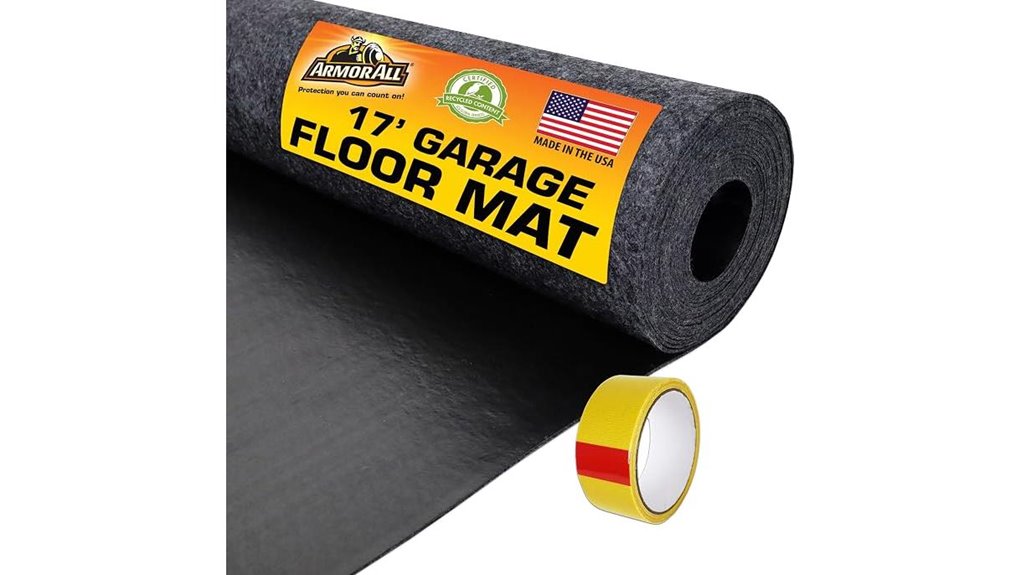
The Armor All Garage Floor Mat, measuring 17′ x 7’4″ and made in the USA, is a strong option for homeowners who want an easy way to protect a garage floor while adding a cleaner, more finished look. It helps shield concrete from oil leaks, spills, tire marks, cracks, and stains. The mat uses an absorbent non-woven polyester top layer with recycled content and a waterproof polyolefin backing. A slip-resistant base helps hold it in place. Installation is simple with double-sided tape, and the mat can be cut to fit without fraying. Cleanup is equally straightforward.
Best For: Homeowners who want an easy-to-install, USA-made garage floor mat that protects against spills and stains while making the space look cleaner and more finished.
Pros:
- Absorbent top layer helps protect floors from oil leaks, spills, tire marks, and stains.
- Waterproof backing and slip-resistant base add durability and help keep the mat in place.
- Can be cut to fit without fraying, and cleanup is simple with vacuuming, hosing, or power-washing.
Cons:
- Initial wrinkles from packaging may take time to relax.
- Color may vary between dye lots.
- Large size may still require careful surface prep and placement for the best fit.
G-Floor Garage Flooring Ribbed Vinyl Protector Mat
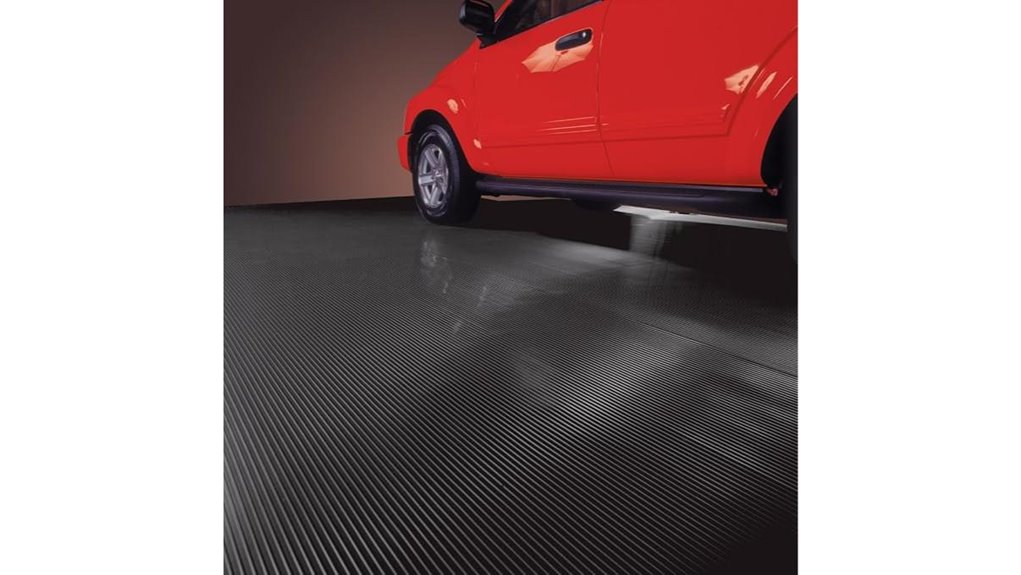
Built for heavy-duty spaces, the G-Floor Ribbed Vinyl Protector Mat suits homeowners and businesses needing durable coverage. Measuring 7’6″ x 17′ in Midnight Black, it features a ribbed channel surface that helps manage moisture and debris. Constructed from pure polyvinyl without layers or fillers, it is designed to resist breakdown and remain waterproof over time. Installation is straightforward: it can be rolled out, then trimmed with a utility knife for a custom fit. Made in the United States, it includes a manufacturer’s limited lifetime warranty and supports industrial-strength use.
Best For: Homeowners and businesses needing a heavy-duty, waterproof garage flooring solution that’s easy to install and trim to size.
Pros:
- Durable pure polyvinyl construction without layers or fillers helps resist breakdown over time.
- Ribbed channel surface helps manage moisture and debris in busy spaces.
- DIY-friendly roll-out installation with a utility knife for custom fitting.
Cons:
- Large 7’6″ x 17′ size may require careful measuring and trimming for the right fit.
- Best suited for utilitarian coverage rather than decorative flooring styles.
- Installation still requires a utility knife and some hands-on effort.
SnapLock RaceDeck Diamond 12″x12″ Interlocking Garage Tiles, 48pk, Black

SnapLock RaceDeck Diamond tiles suit homeowners wanting a durable, DIY garage floor upgrade. These 12″x12″ black interlocking tiles use a patented diamond substructure and high-impact copolymer construction to handle harsh residential garage conditions. Their PowerLock Technology secures each piece without tools, glue, or extra help, making installation efficient. The design supports rolling loads above 80,000 pounds while allowing air and moisture to escape beneath. A slip-resistant diamond plate surface improves traction, and cleanup stays simple with a mop or shop vac. They also interlock with other RaceDeck tiles for flexible layouts. Made in the USA, they serve global markets.
Best For: Homeowners and DIYers looking for a durable, easy-to-install garage flooring upgrade with strong traction and low-maintenance cleanup.
Pros:
- Tool-free interlocking installation with PowerLock Technology makes setup quick and straightforward.
- Durable high-impact copolymer construction supports heavy rolling loads and resists harsh garage conditions.
- Slip-resistant diamond surface is easy to clean and helps handle moisture, dirt, and oil.
Cons:
- 12″x12″ tiles may require more pieces and time to cover a larger garage floor.
- Premium garage tile systems can be more expensive than basic floor coverings.
- Best suited for garage and utility spaces, so it may not fit every aesthetic or indoor use case.
Factors to Consider When Choosing Garage Flooring 2026: Durable Options Compared

When comparing durable garage flooring options, material durability and load-bearing strength are key measures of long-term performance. Waterproof protection, slip resistance, and ease of installation also affect how well each option fits daily use. A careful review of these factors helps narrow the choice to flooring that can handle both wear and practical demands.
Material Durability
Material durability remains one of the most important factors in choosing garage flooring, as the surface must resist constant wear from heavy vehicles, dropped tools, and daily foot traffic. Polyvinyl and copolymer materials are often selected because they provide strong, long-lasting resistance to impacts, abrasion, and repeated loading. Their performance becomes especially valuable in garages exposed to extreme temperature swings, where weaker materials may crack or warp over time. Chemical resistance also matters, since contact with automotive fluids and cleaning agents can gradually degrade inferior surfaces. In addition, slip-resistant textures improve traction, helping maintain safer conditions under demanding use. Flooring systems with sturdy construction preserve their appearance and structural integrity longer, making durability a practical priority for garages that experience frequent activity and harsh conditions.
Waterproof Protection
Waterproof protection is another key factor in garage flooring selection because it helps block spills, oil leaks, and moisture from reaching the concrete below. This barrier reduces staining, limits long-term damage, and helps keep the space cleaner. Materials such as polyvinyl and waterproof polyester fabric offer strong resistance to liquid penetration, making them practical choices for garages exposed to frequent messes. Some options also include slip-resistant backing, which supports safety while helping the flooring stay in place during use. To preserve performance, regular spot cleaning and occasional power-washing can maintain both appearance and waterproof integrity. When paired with proper care, waterproof garage flooring can deliver lasting protection and dependable everyday use in demanding conditions.
Installation Ease
Installation ease is an important factor because many garage flooring options are designed for straightforward DIY setup, with roll-out mats and interlocking tiles that can be installed without professional help. This simplicity appeals to users who want to improve a garage quickly without scheduling contractors. Some products use double-sided tape or require only basic trimming with a utility knife, which makes fitting around edges and corners manageable. Interlocking tiles often snap together without tools or adhesives, supporting fast assembly and later removal if needed. Clear installation instructions are commonly included, helping users achieve a secure layout even with limited experience. Certain materials also tolerate minor floor irregularities, reducing preparation demands and making installation more practical on varied garage surfaces.
Load Bearing Strength
Load-bearing strength is a key measure of how well garage flooring can support heavy vehicles, tools, and equipment without cracking, shifting, or deforming. In garage settings, it determines whether a surface can handle repeated stress from parked cars, lifts, and stored machinery. High-performance copolymer flooring can sustain rolling loads above 80,000 pounds, which makes it suitable for demanding applications. Pure polyvinyl materials, with no layers or fillers, often offer stronger resistance to breakdown under pressure. Interlocking tile systems also improve capacity by spreading weight across multiple tiles instead of concentrating it in one area. Proper installation is essential, and routine maintenance helps preserve structural performance over time, especially where heavy use occurs regularly.
Slip Resistance
Slip resistance is a critical consideration in garage flooring because wet or oily surfaces can quickly create hazardous conditions. Traction should consequently guide material selection, especially where vehicles, tools, and foot traffic share the same space. Textured surfaces, including ribbed vinyl and diamond plate patterns, improve grip and help limit slipping. Mats with slip-resistant backing also stay better positioned, reducing unwanted movement during use. Some high-performance flooring systems are designed to let moisture escape rather than remain trapped on the surface, which further lowers risk after spills or snowmelt. Cleaning away oil and debris is also important, since buildup can weaken traction over time. A well-chosen surface balances durability with dependable footing in daily garage use.
Maintenance Requirements
Maintenance requirements can be a deciding factor when comparing garage flooring options, since some mats and tiles need little more than a quick vacuum, hose rinse, or mop to stay in good shape. Many garage flooring products are designed for routine care rather than intensive upkeep, which helps keep cleaning time low. Surfaces that resist stains from oil, dirt, and other common garage messes are especially practical because they hold their appearance longer. Slip-resistant finishes can also simplify upkeep by limiting debris buildup. Some materials may show brief wrinkles after installation, but these usually settle with time. For lasting results, occasional spot cleaning and removing standing water with a squeegee can help preserve both appearance and durability over the long term.
Custom Fit Options
Custom fit options matter because a garage floor has to match both the room’s layout and how it is used. Many garage flooring products are designed to be cut easily, which helps them follow unusual dimensions without fraying or splitting at the edges. Mats and tiles often support DIY installation, so a homeowner can achieve a neat result with few tools and little adhesive. Interlocking tiles add another layer of flexibility, since the layout can be rearranged or expanded later if needed. Some systems also include accessories such as double-sided tape to keep the flooring secure and reduce shifting during use. These features improve appearance while also strengthening protection against spills, stains, and wear in heavily used areas.
Garage Versatility
A garage floor can do more than protect concrete; with the right material, it can turn the space into an exercise room, playroom, or entertainment area. In multi-use garages, versatility depends on surfaces that support shifting needs without sacrificing comfort or safety. Absorbent mats can conceal flaws while creating a softer area for workouts or children’s activities. Slip-resistant finishes matter where pets or kids move through the space, reducing the risk of falls. Some flooring systems also allow simple rearrangement, so the layout can change for gatherings, storage, or hobbies. Beyond function, the best options help manage moisture and improve air circulation, which supports a healthier converted garage. That balance of adaptability, safety, and environmental control makes the floor central to garage versatility.
Frequently Asked Questions
How Do Garage Floors Handle Heavy Vehicle Jack Stands?
Garage floors handle heavy vehicle jack stands best when the surface is strong, level, and properly supported. Concrete usually performs well, but it can crack or dent if the load is concentrated on small feet. Rubber pads, plywood, or stand mats help spread weight and protect coatings. Epoxy or sealed floors resist staining, yet they do not increase structural strength. If the slab is damaged, professional inspection is wise.
Can Garage Flooring Reduce Tire Noise Inside the Space?
Yes, garage flooring can reduce tire noise inside the space. Softer or insulated materials, such as rubber tiles, cushioned epoxy systems, or foam-backed mats, absorb vibration and lessen rolling sound better than bare concrete. They also reduce echo, making the garage quieter overall. Performance depends on thickness, installation quality, and tire type, with denser surfaces offering less noise control than resilient ones.
Which Flooring Options Work Best in Humid Climates?
Epoxy-coated concrete, porcelain tile, and interlocking polypropylene tiles work best in humid climates because they resist moisture and mildew. In one flooring study, nearly 60% of premature garage-floor failures were linked to trapped water. That statistic highlights why drainage and vapor barriers matter. Detached observers note that sealed surfaces outperform porous ones, while rubber mats can help but may retain dampness if ventilation is poor or spills are frequent.
How Often Should Garage Flooring Be Cleaned or Resealed?
Garage flooring should be cleaned weekly or biweekly, depending on traffic, spills, and debris. A deeper wash is often needed monthly. Resealing frequency depends on the material: epoxy and polyaspartic coatings may last several years, while concrete sealers often need renewal every one to three years. Regular inspection for wear, stains, and moisture helps determine when maintenance is due, preserving durability, appearance, and resistance over time.
Are Garage Flooring Materials Safe for Pets and Children?
Garage flooring materials can be safe for pets and children when selected and installed carefully. Non-slip, low-VOC, and non-toxic options reduce exposure to fumes, sharp edges, and chemical residues. Sealed concrete, rubber tiles, and quality epoxy systems are often safer choices than damaged or dusty surfaces. Regular cleaning and prompt repair of cracks or spills further improve safety, helping prevent slips, paw irritation, and skin contact risks.
Conclusion
So, after the noble quest through garage flooring, the verdict is clear: one may choose the plush, spill-loving Armor All mat, the stoic G-Floor vinyl ribbed protector, or the SnapLock RaceDeck tiles, which snap together with the enthusiasm of tiny consumer-grade knights. Each promises durability, waterproof virtue, and a safer footing—because apparently garages now deserve better treatment than most living rooms. In 2027, the humble garage floor has finally entered its era of dramatic self-importance.