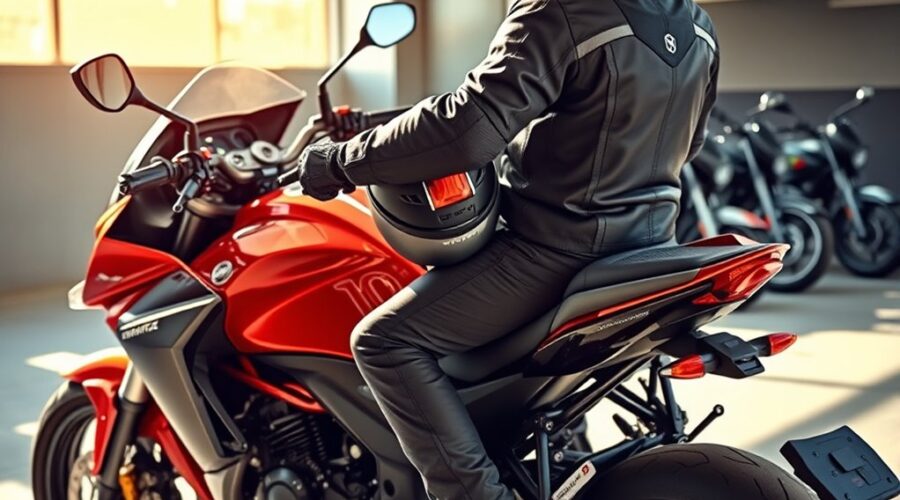
Yes, automatic transmission motorcycles do exist, and they are more common than many riders expect. Systems such as Honda’s DCT, scooter-style CVT units, and newer AMT setups remove the need for a manual clutch while still managing gear changes efficiently. They can reduce fatigue, simplify city riding, and change how a bike feels on the road. The details, however, vary sharply by system and model.
Key Takeaways
- Yes, automatic transmission motorcycles exist, using systems that shift gears without manual clutch operation.
- Common types include DCT, CVT, and AMT, each offering different levels of automation and control.
- Honda, BMW, Yamaha, KTM, and Can-Am all offer or plan automatic motorcycle models.
- Automatic bikes reduce fatigue and stall risk, making them especially appealing for beginners and commuting.
- They can cost more, weigh more, and offer fewer model choices than traditional manual motorcycles.
What Is an Automatic Motorcycle?
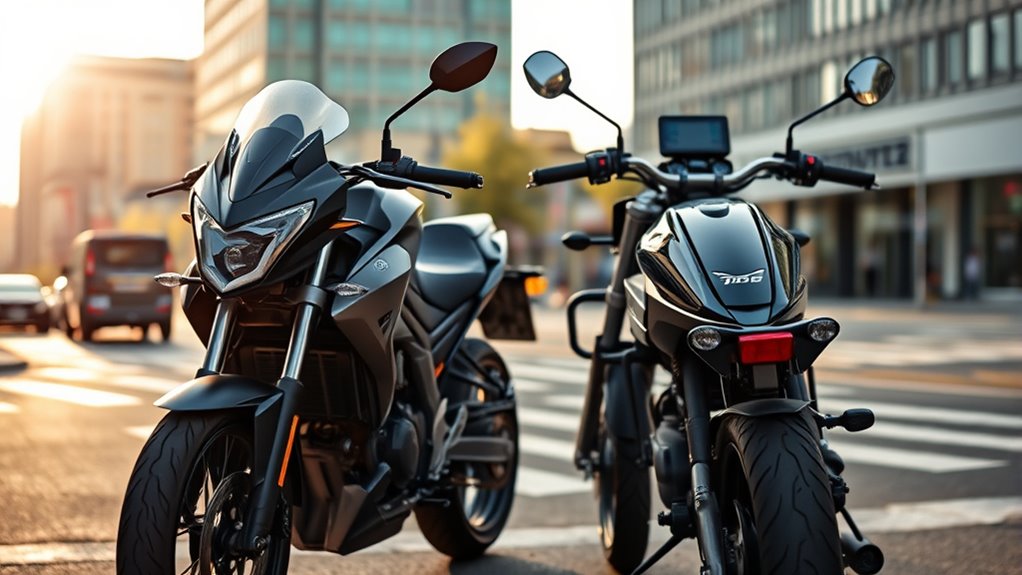
An automatic motorcycle uses advanced transmission systems to shift gears without manual clutch operation, improving ease of riding and control.
In automatic motorcycles, the rider is freed from repeated gear changes, which can reduce workload and increase focus on steering, braking, and road awareness.
One common design is Honda’s Dual Clutch Transmission, or DCT, used in models such as the Gold Wing and Africa Twin. This system can provide a riding experience that feels smooth and adaptable, and some versions also allow manual transmission-style input when desired.
Compared with a conventional manual transmission, the automatic format supports new riders by simplifying operation and lowering the learning burden.
It also appeals to experienced riders who value convenience, consistency, and accessibility.
As manufacturers expand offerings, automatic motorcycles are becoming a practical option for those seeking liberation from clutch-based control without sacrificing performance or versatility.
How Do DCT, CVT, and AMT Work?
Though all three systems automate shifting, DCT, CVT, and AMT do so in different ways.
DCT uses two clutches, one handling odd gears and the other even gears, so the next ratio is preselected and shifts occur with minimal power interruption. This gives an automatic transmission feel with fast, controlled engagement, and riding modes such as Drive and Sport can alter shift strategy.
CVT works differently: pulleys and a belt vary continuously, producing an infinite spread of ratios and smooth acceleration without fixed shift points. The rider experiences uninterrupted pull, which can reduce effort and simplify control.
AMT keeps the basic manual gearbox but replaces clutch lever operation and shift input with automated control; manual override may still remain available.
In practice, CVT and AMT lower the learning curve, while DCT adds performance-focused precision.
Which Motorcycle Brands Offer Automatics?
Honda remains the most established name in automatic motorcycles, with DCT equipped models such as the Gold Wing, Africa Twin, Rebel 1100, and NC750X.
Beyond Honda, BMW now offers the Automated Shift Assistant on the R 1300 GS Adventure, while Yamaha has introduced Y-AMT on models including the MT-09 and MT-07.
KTM is preparing an AMT system for the 1390 Super Adventure S Evo, and Can-Am continues to use CVT drivetrains on the Ryker and Spyder.
Honda DCT Models
Among automatic motorcycles, Honda’s Dual Clutch Transmission (DCT) remains the benchmark system, introduced in 2010 and now fitted to models such as the Gold Wing, Africa Twin, and Rebel 1100. Honda offers automatic models that use DCT technology to deliver clutch-free shifts, supporting better riding with less effort and more control.
| Model | DCT Type | Key Benefit |
|---|---|---|
| Gold Wing | Tourer DCT | Relaxed long-distance cruising |
| Africa Twin | Adventure DCT | Smooth off-road shift |
| Rebel 1100 | Cruiser DCT | Easy urban handling |
Approximately two-thirds of Gold Wings sold since 2018 use DCT, showing strong rider acceptance. The system preserves manual-style engagement while reducing fatigue, a practical route to freedom without sacrificing precision or pace.
Other Automatic Brands
Several major brands now offer automatic or semi-automatic motorcycle systems beyond Honda’s DCT.
BMW’s Automated Shift Assistant (ASA) on the R 1300 GS Adventure shifts automatically while preserving manual override, giving riders control without clutch work.
Yamaha’s Y-AMT on the MT-09 and MT-07 delivers a simpler automatic motorcycle experience, reducing effort in traffic and on long rides.
KTM plans AMT for the 2025 1390 Super Adventure S Evo, with paddle shifters and Park gear for added convenience.
Can-Am uses CVT on Ryker and Spyder models, favoring stability and ease over traditional shifting.
Together, these systems expand rider freedom, making two- and three-wheel travel more accessible, less fatiguing, and technically diverse for varied preferences.
Honda DCT Models Riders Know
Since 2010, Honda’s Dual Clutch Transmission has delivered automatic shifting without a manual clutch, and its best-known DCT models span multiple riding categories. For riders seeking liberation from lever work, the system appears across touring, adventure, and commuter machines.
The automatic Honda Africa Twin DCT uses the technology to maintain traction and control in rough terrain, while the Gold Wing has become a flagship example; roughly two-thirds sold since 2018 use DCT, underscoring strong touring demand.
- Gold Wing DCT: long-distance comfort with automated shifts
- Honda Africa Twin DCT: adventure-oriented performance off-road
- Rebel 1100 DCT and NC 750X DCT: approachable, practical, urban-friendly
The Rebel 1100 DCT supports new riders with simpler operation, and the NC 750X DCT adds daily commuting utility. Together, these models show that Honda DCT is not niche hardware; it is a broad, technical answer for riders who want control, convenience, and a lighter cognitive load.
What Automatic Motorcycles Feel Like to Ride
Automatic motorcycles, especially those with Dual Clutch Transmission, tend to feel seamless and immediate, with throttle response that is smooth and almost electric in its directness.
The absence of clutch control removes a mechanical task, so attention shifts to balance, line choice, and traffic flow. On the road, gear changes happen with little interruption, creating a relaxed ride that feels controlled rather than busy.
In stop-and-go city use, the bike starts and settles cleanly, reducing strain at low speeds. On machines such as the Honda Africa Twin, selectable modes can preserve automatic behavior or return manual control when terrain or preference demands it.
For riders accustomed to conventional bikes, the first moments may feel unusual, yet the interface quickly becomes intuitive. Many describe the result as freeing: less effort spent managing shifts, more awareness of the machine, the pavement, and the open route ahead.
Are Automatic Motorcycles Good for Beginners?
Automatic motorcycles are generally well suited to beginners because they remove clutch coordination and manual gear selection from the riding task.
This simplified control scheme reduces the learning curve, allowing new riders to concentrate on steering, braking, and road awareness.
Models such as the Honda Rebel 1100 DCT and NC750X DCT further support novice confidence with smooth power delivery and forgiving operation.
Beginner-Friendly Control
For new riders, automatic motorcycles can greatly reduce the complexity of learning to ride by eliminating manual clutch operation and gear changes.
On automatic bikes, beginner-friendly control comes from a system that removes the demands of a manual transmission, allowing attention to stay on steering, braking, and road awareness. This often supports riding confidence, especially in traffic or at low speeds.
- Smooth power delivery helps reduce abrupt input errors.
- Predictable shifting supports steadier control and calmer responses.
- Less hand and foot workload can reduce fatigue on longer rides.
Models such as the Honda Rebel 1100 DCT and NC750X DCT show how automatic systems can serve novice riders seeking practical freedom without mechanical distraction.
Learning Curve Advantages
Learning curve advantages are a major reason automatic motorcycles appeal to beginners. By removing manual clutch work and gear-shifting, automatic motorcycles reduce operational complexity and shorten the learning curve.
New riders can concentrate on steering, braking, lane positioning, and traffic awareness instead of coordinating clutch and throttle inputs. This lowers fatigue and supports control in stop-and-go conditions, where manual bikes can feel demanding.
The absence of stalling risk also creates a more forgiving training environment, which can strengthen confidence and accelerate skill development.
Among motorcycles available, models such as the Honda Rebel 1100 DCT and Gold Wing DCT illustrate this beginner-friendly design.
Even some electric motorcycles follow the same principle, offering a simplified path to two-wheel freedom and smoother early riding experiences.
Automatic Motorcycle Pros and Cons for Riders
While automatic motorcycles can make riding less demanding, they also change the tradeoffs riders must consider. For riders seeking freedom from a clutch, automatic motorcycles deliver a calmer interface and fewer coordination demands than a manual transmission.
The pros and cons are clear:
- Reduced fatigue and smoother attention: less shifting lets the rider focus on traffic, line choice, and hazard detection.
- Lower stall risk and easier starts: this helps beginners who are still building control.
- Flexibility with DCT: some systems offer automatic and manual modes, combining simplicity with rider input.
Drawbacks remain. Automatic bikes may be less precise in slow-speed technical maneuvers and tight corners, where fine control matters.
Purchase prices are often higher, and repairs can be more complex because the systems use specialized hardware. Model availability is also narrower than with conventional motorcycles.
Manual vs. Automatic Motorcycles: Which Is Better?
Choosing between manual and automatic motorcycles depends on riding priorities, experience level, and intended use. A manual machine gives complete control over gear selection, which can improve precision in technical riding and deliver a more engaged, liberated feel.
However, it demands coordination between clutch and shift inputs, and that burden can become tiring in traffic.
An automatic motorcycle, including models with Honda DCT, removes clutch work and streamlines shifts, making long rides smoother and reducing fatigue. It also helps new riders by simplifying the learning curve and eliminating stall risk.
The tradeoff is higher weight, higher purchase price, and a smaller market. In North America, about 80% of motorcycles sold remain manual, so selection is broader.
For riders seeking ease, comfort, and access, automatic is compelling; for those prioritizing direct control and wider choice, manual still leads. An electric motorcycle can further reduce transmission complexity.
What to Check Before Buying One
Before purchasing an automatic transmission motorcycle, the buyer should identify which system best matches intended use: DCT for dual-clutch shifting, AMT for automated gear changes, CVT for continuously variable operation, or electric powertrains with no traditional gearbox.
Next, the buyer should weigh automatic transmission benefits against mass and handling; some models are heavier, which can reduce maneuverability in tight traffic or on rough roads.
- Match the riding style to the drivetrain, prioritizing freedom from clutch work without sacrificing control.
- Perform a test ride in city congestion and at highway speed to judge comfort, response, and low-speed behavior.
- Review warranty coverage, parts availability, and community feedback, since complex repairs can be costly and rider reports often reveal recurring faults.
A careful comparison supports a more liberated, efficient choice, especially for riders seeking ease, consistency, and reduced fatigue.
Frequently Asked Questions
Do Any Harleys Have Automatic Transmissions?
Yes, some Harley models use Transmission types that feel automatic, especially LiveWire’s single-speed system. Most Harley models remain manual. Riding experience becomes simpler, though Performance comparison favors conventional controls for many traditional riders.
Why Are Automatic Motorcycles Not Popular?
Automatic motorcycles stay niche because consumer preferences favor manual control, despite easier riding experience. Transmission types like DCT add cost and weight, while market trends, limited models, and reduced skill involvement discourage broader adoption.
What’s the Cheapest Automatic Motorcycle?
The cheapest automatic motorcycle is the Venom KPV 150 at $2,399.99. Compared with scooter options, its transmission types, riding experience, and maintenance costs appeal to riders seeking simpler control and practical liberation.
Is It Easier to Ride an Automatic Motorcycle?
Yes—automatic motorcycles often are easier to ride; studies show beginners can reduce control errors considerably. The riding experience simplifies gear shifting, shortens the learning curve, and improves safety considerations, though some control tradeoffs remain.
Conclusion
Automatic transmission motorcycles do exist, using DCT, CVT, or AMT systems to remove manual clutch operation while still delivering controlled gear changes. Honda remains the best-known example, with models like the Africa Twin and Gold Wing, while other brands offer similar solutions in select markets. For example, a commuter rider in heavy traffic may find a DCT bike far less fatiguing than a manual. Overall, they suit riders prioritizing convenience, smoothness, and ease of use.