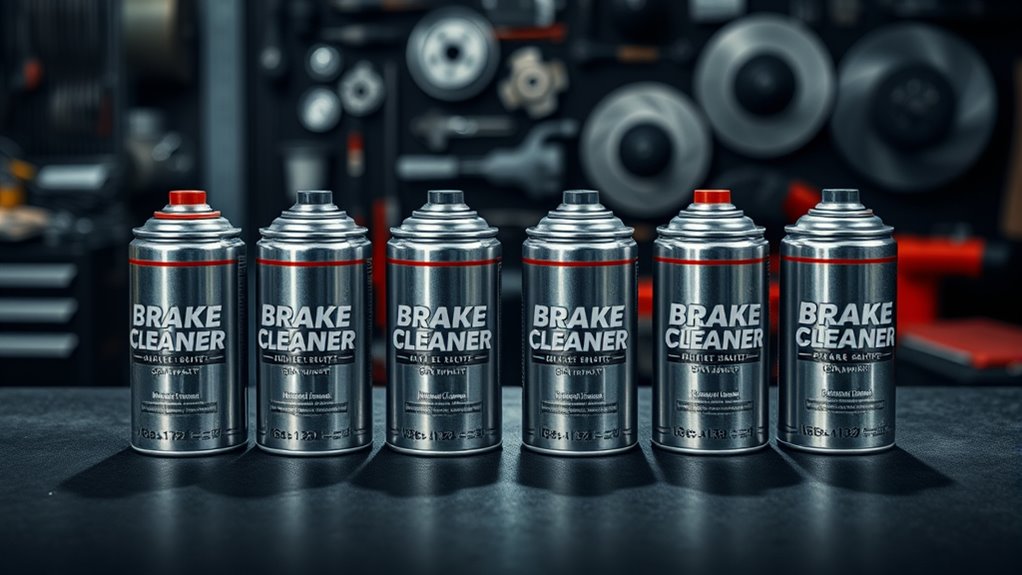
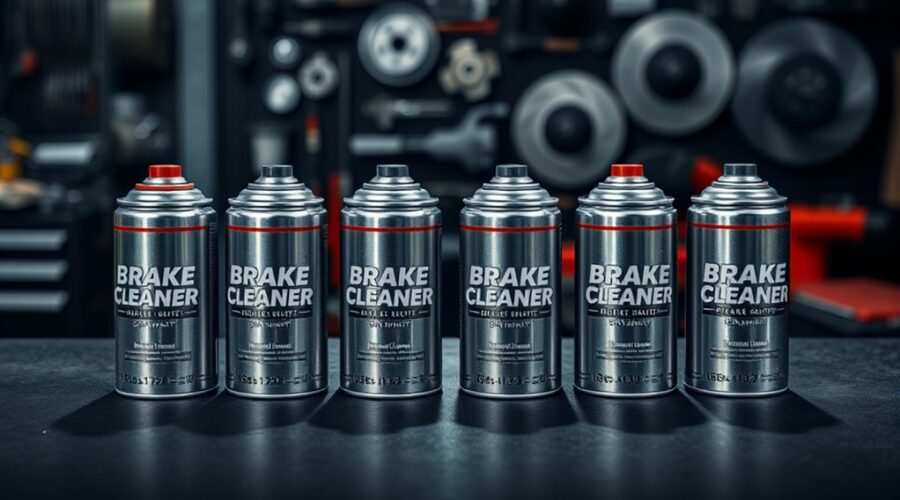
Choosing the right brake cleaner in 2027 will come down to speed, residue control, and safety on different materials. CRC Brakleen, Johnsen’s 2417, 3M High Power, and Berryman 2420 each bring a different balance of power and compliance. Some are better for fast shop work, while others suit careful cleaning on sensitive parts. The trade-offs are not always obvious, and the final choice may depend on one detail many buyers overlook.
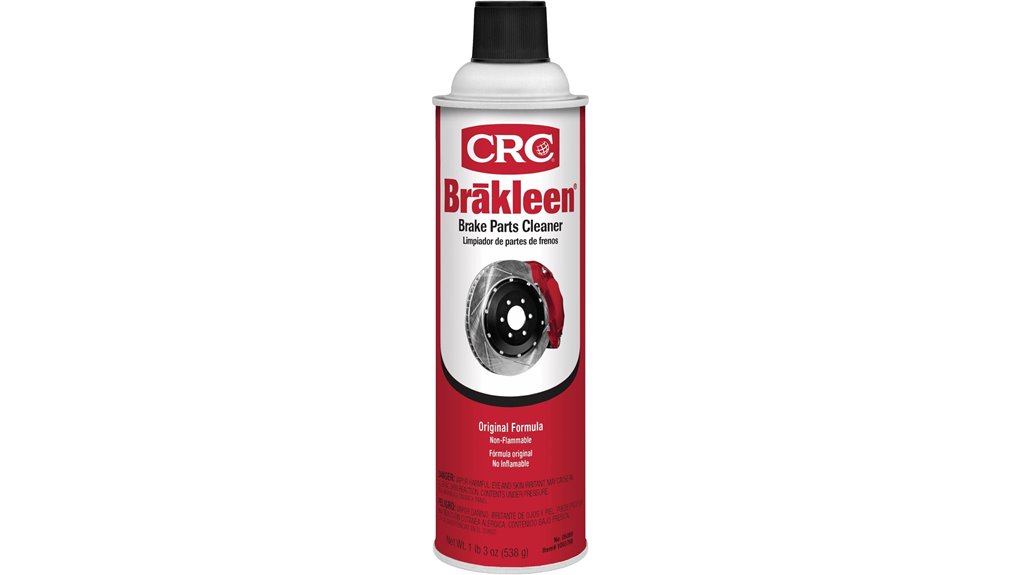
CRC Brakleen Brake Parts Cleaner Spray – Non-Flammable – 19 oz

CRC Brakleen Brake Parts Cleaner Spray stands out as a practical choice for those who need a fast-acting, non-flammable cleaner for brake parts, linings, and pads. The 19 oz spray uses the original brake parts cleaner formula to strip away grease, brake dust, brake fluid, oils, and other contaminants. Its non-flammable composition adds a safety advantage in workshop settings. It is designed for targeted cleaning performance rather than general-purpose use. Availability is restricted, however, as it is not for sale in California, New Jersey, or Catalina Island, which limits access for some buyers.
Best For: Mechanics and DIY users who need a fast-acting, non-flammable brake parts cleaner for targeted cleaning of brake components.
Pros:
- Quickly removes grease, brake dust, brake fluid, oils, and other contaminants
- Non-flammable formula adds a safety advantage in workshop settings
- Original brake parts cleaner formula is effective for brake parts, linings, and pads
Cons:
- Not for sale in California
- Not for sale in New Jersey
- Not available for sale in Catalina Island
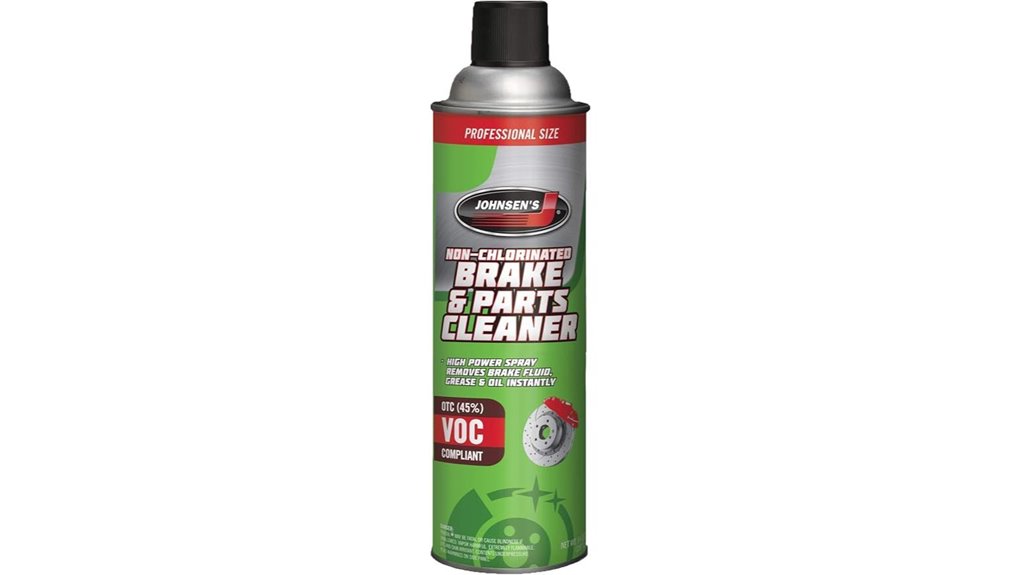
Johnsen’s 2417 OTC Compliant Non-Chlorinated Brake Cleaner – 14 oz.

Johnsen’s 2417 suits mechanics needing a non-chlorinated, non-flammable cleaner. This 14 oz aerosol is unscented and designed to remove oil, grease, brake fluid, and other contaminants from metal surfaces. It works on ABS, disc, and drum brakes, offering residue-free cleaning for service work where precision matters. The OTC-compliant formula aligns with regulated use, while the Johnsens brand lists model 2417 and part number 2417. Customer feedback has been positive overall, and a 30-day return guarantee applies to eligible purchases.
Best For: Mechanics and DIY users who need a non-chlorinated, non-flammable brake cleaner for ABS, disc, and drum brakes on metal surfaces.
Pros:
- Effectively removes oil, grease, brake fluid, and other contaminants.
- Residue-free, making it suitable for precision brake service work.
- OTC-compliant formula with positive customer feedback and a 30-day return guarantee for eligible purchases.
Cons:
- Only 14 oz., so frequent users may go through it quickly.
- Designed primarily for metal surfaces, limiting versatility for other materials.
- Aerosol format may not be ideal for users who prefer pump or bulk cleaners.
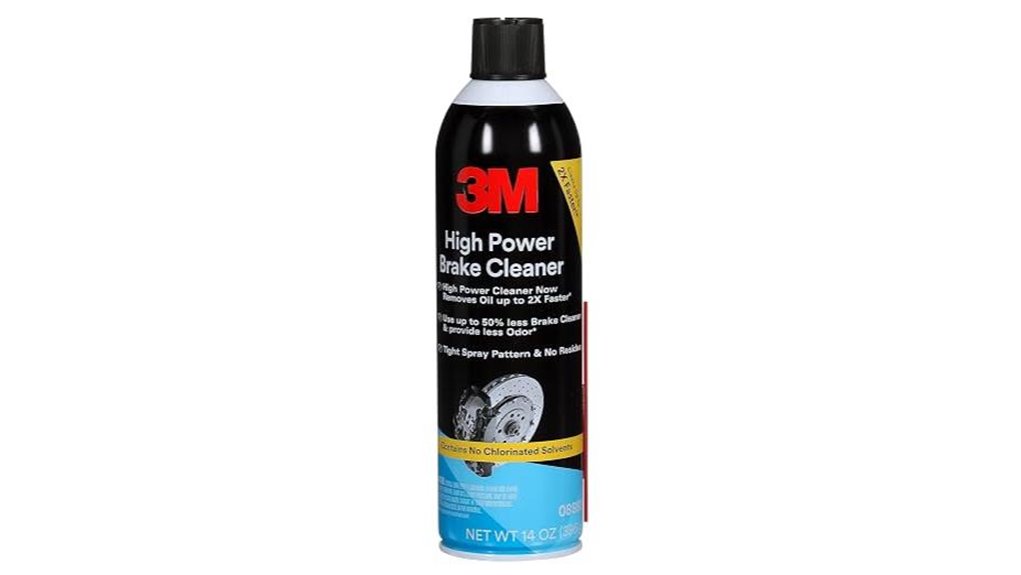
3M High Power Brake Cleaner, 08880, 14 oz Net Wt

3M High Power Brake Cleaner, 08880 suits mechanics needing fast, residue-free brake cleaning. The 14 oz spray uses high-pressure flushing action to strip brake dust, solvents, greases, and oils from metal surfaces. According to product claims, it removes oil 2X to 8X faster than conventional cleaners while using 50% to 90% less product. Its large ergonomic actuator delivers a concentrated stream for targeted cleaning. The formula is intended for braking systems and components, helping reduce squeal and chatter. This 3M cleaner emphasizes efficiency, control, and strong cleaning performance in one compact can.
Best For: Mechanics and DIYers who need a fast, residue-free brake cleaner for metal brake components and other greasy automotive parts.
Pros:
- High-pressure spray delivers strong, targeted cleaning action.
- Removes brake dust, oil, grease, and solvents quickly and efficiently.
- Uses less product than conventional cleaners while leaving no residue.
Cons:
- Primarily designed for metal brake components, so it’s less versatile for non-automotive surfaces.
- The strong spray may require careful use in tight or delicate areas.
- Solvent-based formula may not be ideal for users seeking a milder cleaner.
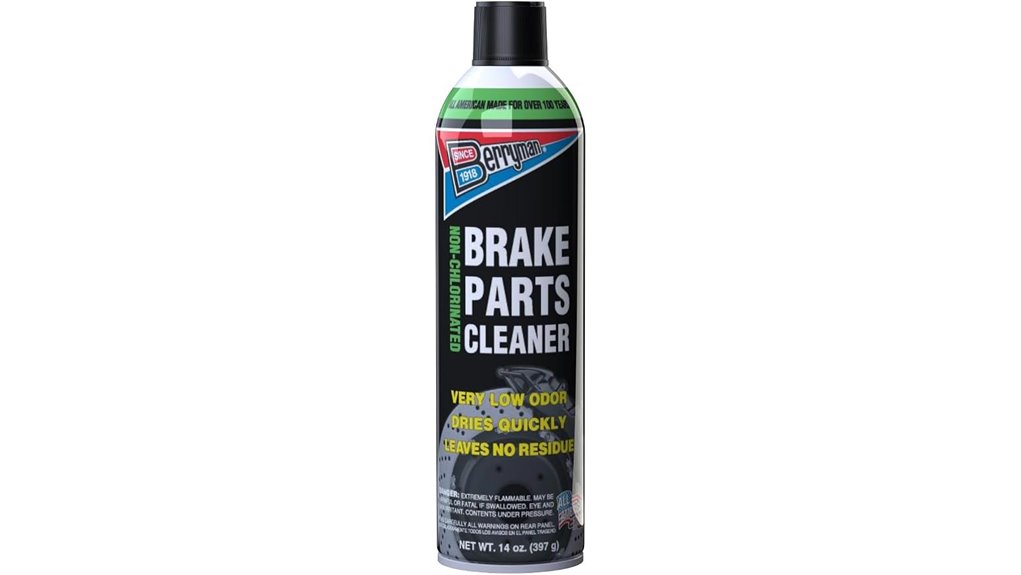
Berryman 2420 Non-Chlorinated Brake Parts Cleaner, 14-Ounce

Berryman 2420 suits users who need a fast-drying, residue-free cleaner for general brake maintenance. This 14-ounce, non-chlorinated formula has a universal fit and a very low flash point of -104.0 degrees Celsius, supporting quick evaporation during service. It cleans brake linings, disc pads, rotors, drums, cylinders, springs, clutches, and CV joints, making it useful across many repair tasks. The cleaner is designed to leave no residue after application. It is not for use in California or Utah, so buyers should confirm regional compliance before purchase or shop use.
Best For: DIYers and auto repair users who need a fast-drying, residue-free brake parts cleaner for general maintenance and multi-component cleaning.
Pros:
- Cleans a wide range of parts, including brake linings, pads, rotors, drums, cylinders, springs, clutches, and CV joints
- Dries quickly and leaves no residue
- Non-chlorinated formula with universal fit
Cons:
- Not for use in California or Utah
- Very low flash point may require careful handling
- Aerosol size is only 14 ounces, so frequent jobs may need multiple cans
Factors to Consider When Choosing Brake Cleaners 2026: Fast, Residue-Free Picks

When choosing brake cleaners in 2026, cleaning speed and a residue-free finish remain the first priorities for reliable results. Flammability rating, surface compatibility, and spray pressure also shape how safely and effectively a product performs. A strong pick balances fast evaporation with enough control to clean parts without leaving film or damaging nearby materials.
Cleaning Speed
Cleaning speed is a key factor in choosing brake cleaners in 2026, especially for service jobs where fast turnaround matters. Formulation has a major effect on performance, with some cleaners removing oil and grime 2X to 8X faster than standard products. High-pressure spray designs can further improve efficiency by driving solvent into tight areas and lifting contaminants quickly from brake components. Non-chlorinated formulas often dry faster, which helps shorten wait times between cleaning and reassembly. Actuator size also matters; larger spray heads can deliver a stronger, more controlled application, reducing effort and speeding coverage. In busy shops, these design and chemistry differences can translate into less downtime, smoother workflow, and more consistent service intervals without sacrificing practical handling during routine brake maintenance.
Residue-Free Finish
A residue-free finish is essential because any leftover film on brake components can trap dirt and dust, increasing wear and undermining braking effectiveness over time. For brake cleaners, this quality matters because it helps prevent contamination and preserves consistent performance after each application. High-quality formulas are designed to evaporate quickly and leave no film on pads, rotors, or surrounding parts. That clean surface supports better contact between brake pads and rotors, which can improve braking response and reliability. Residue-free products also reduce the chance of harmful substances lingering on components. Some options are non-chlorinated, offering a cleaner profile with lower environmental impact while still delivering a spotless finish. When selecting a cleaner, residue-free performance should remain a primary standard.
Flammability Rating
Flammability rating deserves close attention, since brake cleaners vary from non-flammable to highly combustible formulas. Non-flammable products are often preferred for enclosed work areas because they reduce fire risk during application. These versions typically use alternative solvent systems designed to limit ignition hazards while still delivering effective cleaning. Many regulations require clear flammability labels, helping users recognize which products demand extra caution. That labeling supports compliance with workplace safety standards and encourages informed product selection. Choosing a non-flammable brake cleaner can improve overall shop safety by minimizing potential fire hazards around brake systems and nearby equipment. It also helps protect personnel and supports environmental responsibility when handling volatile chemicals.
Surface Compatibility
Surface compatibility is a key consideration when selecting a brake cleaner, since different formulas may interact differently with metal, rubber, and plastic components. Non-chlorinated products are often favored because they tend to be safer across a broader range of surfaces, lowering the chance of harming sensitive parts. For metal brake components, residue-free formulas are especially valuable, as leftover film can interfere with braking performance and maintenance results. Compatibility should always be confirmed against manufacturer guidance, because some cleaners are unsuitable for specific brake designs or materials. Choosing a product made for brake systems improves cleaning effectiveness and can support longer component life. Careful matching of cleaner and surface helps maintain function, reduce damage risk, and preserve the reliability of the braking system.
Spray Pressure
Pressure plays a major role in brake cleaner performance, especially when stubborn grease and brake dust must be removed quickly and completely. Higher spray pressure helps dislodge compacted grime more efficiently, making it easier to lift brake dust and oily buildup from tight areas. It can also reduce the total amount of cleaner required, which saves time and product. However, pressure should remain controlled, since excessive force may create overspray and unnecessary mess. Many modern brake cleaners use ergonomic actuators to deliver a focused, powerful stream that improves accuracy during application. This balance is especially important for residue-free formulas, which depend on strong spray delivery to expel contaminants fully without leaving harmful traces behind.
Legal Restrictions
Legal restrictions can shape which brake cleaners are available in a given market, since some products are limited or banned in states such as California and New Jersey because of environmental rules. These rules may bar certain chemical formulations, reducing access to some non-chlorinated or flammable cleaners in specific regions. Product legality can also hinge on flash point, as lower values often trigger tighter controls. Because requirements vary by state, buyers should verify local compliance before sourcing or using any cleaner. This is especially important for businesses that purchase in volume, since noncompliant products can create legal and safety problems. Checking labels, safety data sheets, and regional regulations helps guarantee that selected brake cleaners meet current standards while remaining suitable for lawful sale and use.
Brake System Types
Brake system type should guide cleaner selection, because disc brakes, drum brakes, and ABS each have different cleaning needs. Disc brakes rely on pads clamping a rotor, so cleaners must strip brake dust and road grime without leaving film that can reduce stopping power. Drum brakes use shoes inside a drum, making penetrating formulas useful for dissolving grease and accumulated debris in confined spaces. ABS-equipped vehicles demand extra care, since electronic sensors and control components can be affected by residue; residue-free sprays help avoid interference and preserve function. Matching the cleaner to the system supports consistent braking, protects sensitive parts, and may extend component life. In 2026, system compatibility remains a practical filter for choosing fast, effective brake cleaners.
Frequently Asked Questions
Can Brake Cleaner Damage Rubber Seals?
Yes, brake cleaner can damage rubber seals, especially if the product is not labeled safe for rubber or if it is used repeatedly. Some formulas strip oils from elastomers, causing swelling, hardening, cracking, or loss of flexibility. A detached assessment would note that brief incidental contact may not always cause immediate failure, but regular exposure raises risk. Compatibility should always be checked before use around seals, gaskets, and boots.
Is Brake Cleaner Safe on Painted Surfaces?
It is generally not safe on painted surfaces; brake cleaner can strip clear coat, dull finishes, and lift fresh paint. In practice, the theory that a quick spray is harmless is often false, because the solvent is designed to dissolve grease aggressively. If contact occurs, a brief wipe may limit damage, but sensitive or aged paint can still stain or peel. Testing on a hidden spot remains the safest approach.
How Long Does Brake Cleaner Take to Dry?
Brake cleaner usually dries in minutes, often within 1 to 5 minutes, depending on the formula, temperature, airflow, and how much was applied. Fast-evaporating types can seem dry almost immediately, while heavier applications may take a bit longer. It is generally best to wait until all visible moisture and odor have disappeared before handling the part, since residual solvent can still affect surfaces or performance.
Can Brake Cleaner Remove Adhesive Residue?
Yes, brake cleaner can often remove adhesive residue, especially fresh or light residue on metal or glass. It may soften sticky buildup and help lift it away with a cloth or scraper. However, it is not ideal for all surfaces, particularly painted plastic, rubber, or finished materials, which may be damaged. For stubborn residue, a dedicated adhesive remover usually works more reliably and safely.
Does Brake Cleaner Expire Over Time?
Yes, brake cleaner can expire over time. Studies on stored solvents show roughly 20% of aerosol products lose performance after several years, especially if cans are damaged or poorly sealed. In brake cleaner, propellant loss, evaporation, or contamination can reduce effectiveness and leave more residue. A detached observer would note that unopened cans often last longer, while opened or corroded containers should be tested carefully before use and replaced if needed.
Conclusion
In 2027, brake cleaners remain essential for safe, efficient maintenance, and the leading options continue to balance power with practical use. CRC Brakleen, Johnsen’s 2417, 3M High Power, and Berryman 2420 each offer reliable cleaning for different repair needs. One striking industry statistic: brake-related maintenance accounts for a significant share of routine shop chemical use, underscoring how crucial these products are. Choosing the right cleaner can improve performance, speed, and shop safety.