The best paint gun for beginners doing car panels is a gravity-feed HVLP gun with a 1.3 to 1.4 mm tip for clearcoat and basecoat, such as the CARTMAN H827P, paired with a compressor that can supply its rated airflow. For small touch-ups, the Dynastus 125 cc gun is easier to handle. The compressor, not the gun, is usually what limits a first-time painter.
Disclosure: As an Amazon Associate we earn from qualifying purchases. If you buy through links on this page we may earn a commission at no extra cost to you.
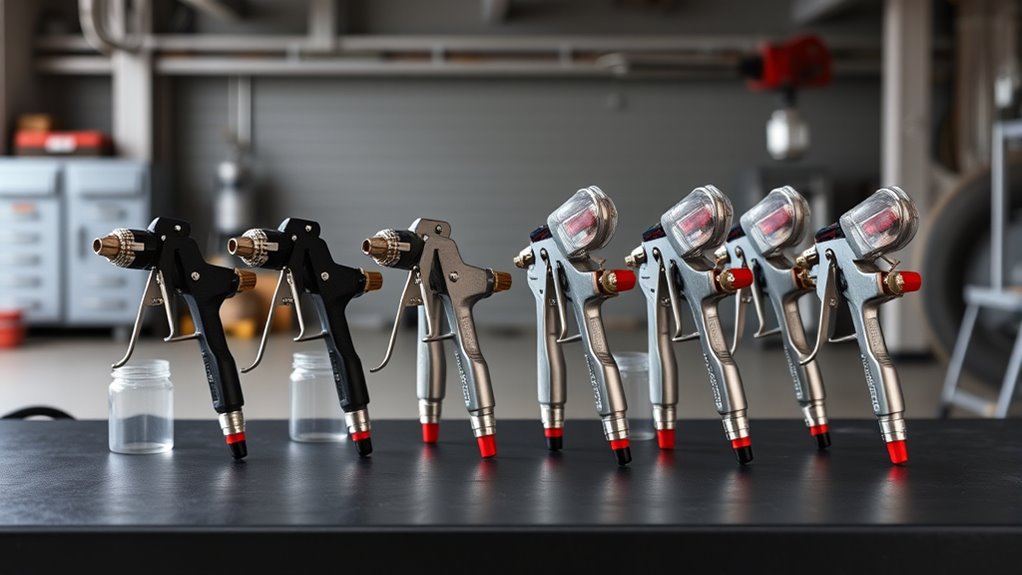
This guide is based on manufacturer and retailer descriptions, not hands-on testing. Air pressure and airflow figures are listing claims, so check them against your compressor. If you want guns aimed at experienced painters, see our pro-level paint gun picks.
Quick comparison
| Model | Type and size | Use | Link |
|---|---|---|---|
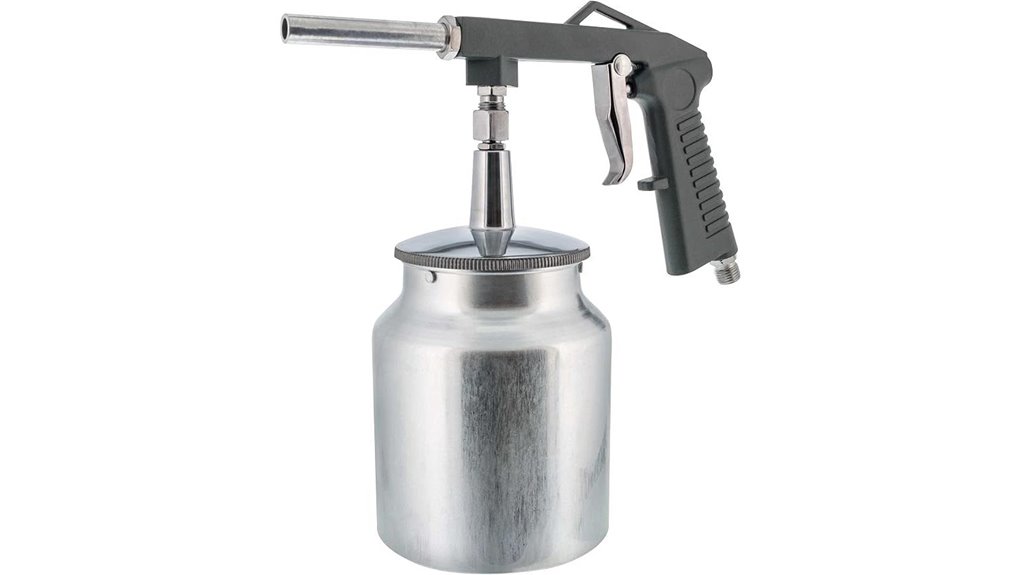 TCP Global undercoating gun |
Suction feed | Undercoating, bed liner | Check price on Amazon |
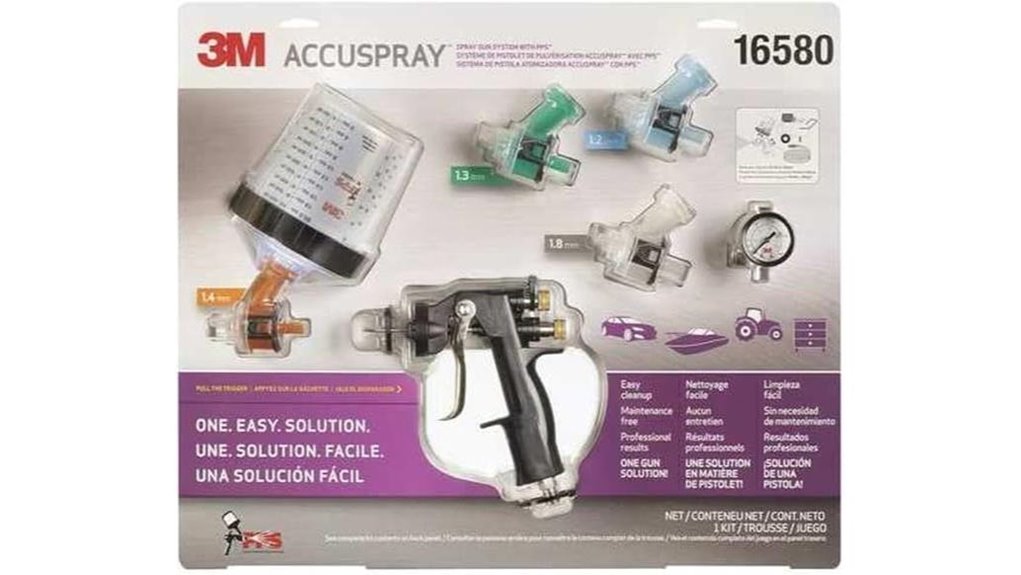 3M Accuspray ONE 16580 |
HVLP, 22 oz cup, liners | Panels, primer | Check price on Amazon |
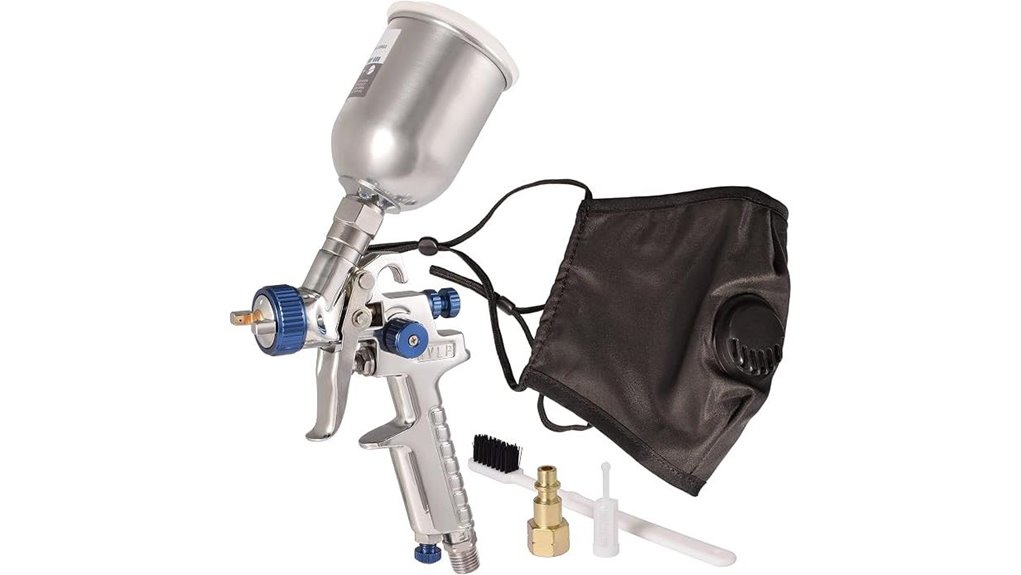 Dynastus touch-up HVLP |
Gravity, 125 cc cup | Small repairs | Check price on Amazon |
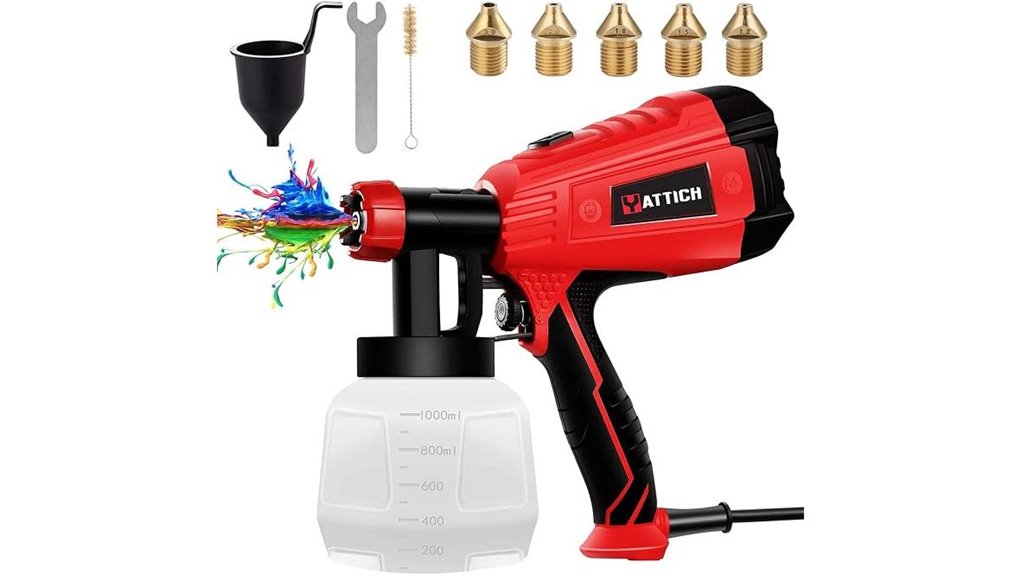 500W HVLP sprayer YT-191 |
Electric, 5 nozzles | General projects | Check price on Amazon |
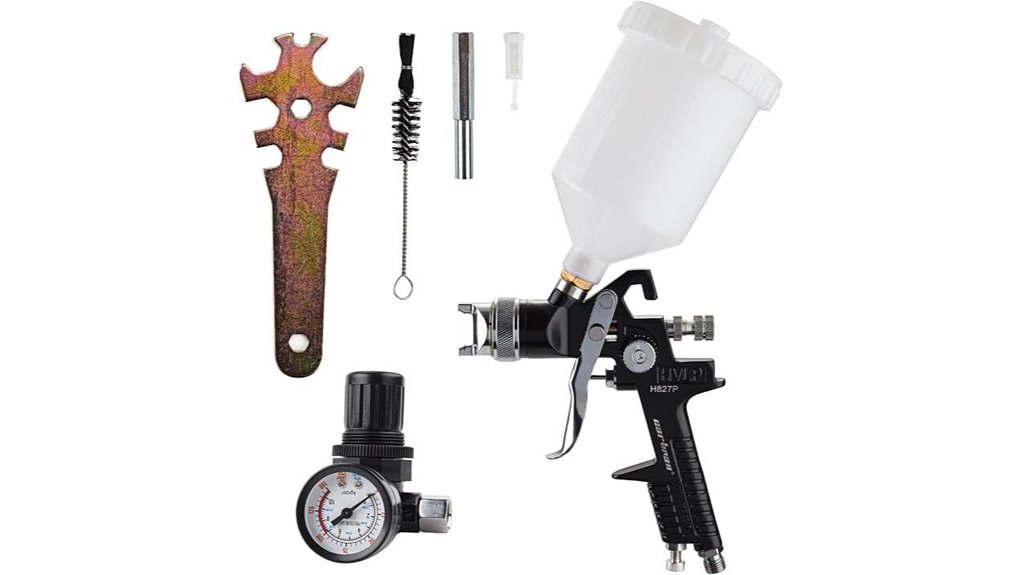 CARTMAN H827P |
Gravity, 1.4 mm, 20.2 oz | Basecoat and clear | Check price on Amazon |
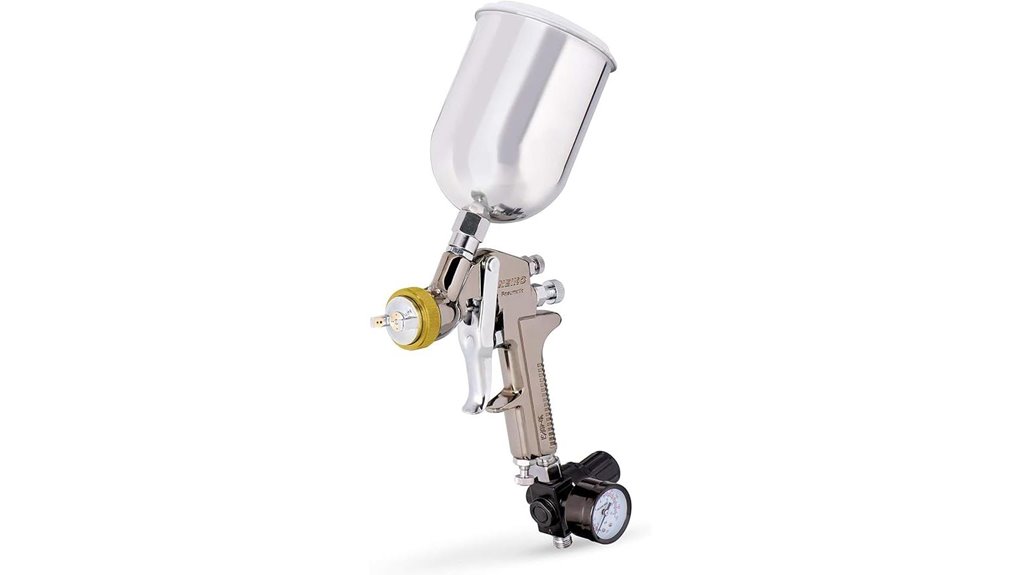 NEIKO 31215A |
Gravity, 1.7 mm, 600 cc | Primer and general paint | Check price on Amazon |
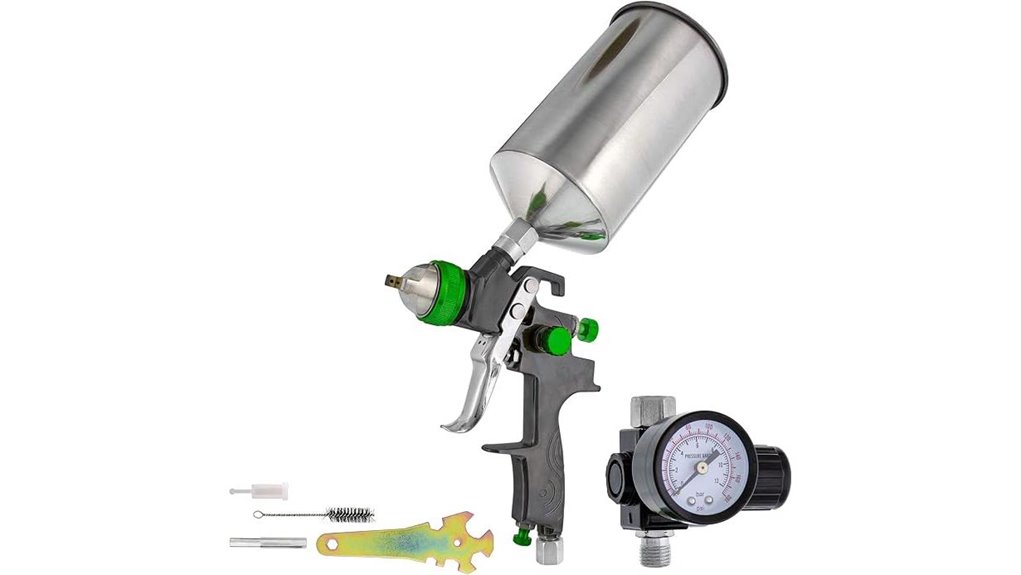 TCP Global 2.5 mm HVLP |
Gravity, 2.5 mm, 1 L | Primer and single-stage | Check price on Amazon |
TCP Global air undercoating spray gun
This is a suction-feed undercoating gun for rust proofing, chip guard and truck bed liner, not for finish paint. The listing says it takes standard US 1 quart cans and bottles, and is not compatible with UPOL or Custom Coat 1 liter bottles.
Best for: underbody coatings, not body panels.
- Pros: light aluminum body, texture and viscosity control.
- Limits: not for basecoat or clearcoat.
See the TCP undercoating gun on Amazon
3M Accuspray ONE 16580
A lightweight HVLP gun with a disposable liner system (PPS), four nozzle sizes and a 22 oz cup per the listing. The liners cut cleaning time. The listing notes it is intended for industrial or occupational use only, so check suitability and local rules before buying for home use.
Best for: people who want quick clean-up between colours.
- Pros: light, minimal cleanup, can spray at angles.
- Limits: needs a compressor, and liners and heads are ongoing costs.
See the 3M Accuspray on Amazon
Dynastus touch-up HVLP gun
A small gravity-feed gun with a 125 cc cup and separate fluid, pattern and air controls. The listing calls for a compressor of at least 3/4 hp, but check airflow (CFM) rather than horsepower. It suits small repairs and parts, not whole cars.
Best for: bumper scuffs, mirrors, trim and small panels.
- Pros: small and easy to control, three adjustments.
- Limits: tiny cup means frequent refills.
See the Dynastus gun on Amazon
500W HVLP paint sprayer (YT-191)
An electric sprayer with five nozzle sizes (1.2 to 3.0 mm), three spray patterns and a 1000 ml container. Electric units of this type do not need a compressor, but they are mainly aimed at general painting like fences and furniture. Test on scrap first, because automotive basecoat and clear usually need finer atomization.
Best for: general jobs and rough touch-ups where no compressor is available.
- Pros: no compressor needed, five nozzles, detachable for cleaning.
- Limits: unlikely to give a show finish on a car.
See the YT-191 sprayer on Amazon
CARTMAN H827P HVLP gun
A 1.4 mm gravity-feed HVLP gun with a 20.2 oz cup, composite body and an included air regulator. The listing mentions a recommended 3.5 bar pressure and up to 85% transfer efficiency, which are maker claims. The 1.4 mm tip is a common size for base and clear.
Best for: first car panel jobs with base and clear.
- Pros: sensible tip size, regulator included, separate adjustments.
- Limits: needs a compressor and some practice to dial in.
See the CARTMAN H827P on Amazon
NEIKO 31215A HVLP gun (1.7 mm)
A gravity-feed gun with an all-steel body, 600 cc aluminum cup and a gauge or regulator. The listing quotes about 40 PSI inlet, 10 PSI at the cap and 4.5 CFM. A 1.7 mm tip suits primer and thicker materials better than fine clear.
Best for: primer and general painting.
- Pros: metal build, cup and gauge included.
- Limits: 4.5 CFM demand may exceed a small pancake compressor.
TCP Global professional HVLP gun (2.5 mm)
A 2.5 mm gravity gun with a 1 liter aluminum cup, listed for primer and single-stage work. A 2.5 mm tip is generally for thicker materials like primer, and finer tips are normally used for base and clear. It is more gun than most beginners need.
Best for: primer or thick single-stage paint on larger jobs.
- Pros: large cup, adjustable controls.
- Limits: tip size is wrong for fine clear, and a large cup is heavy to hold.
See the TCP professional gun on Amazon
How to choose a paint gun for beginners
- Tip size: about 1.2 to 1.4 mm for base and clear, about 1.7 to 2.0 mm for primer, 2.5 mm and up for thick fillers.
- Gravity feed: the cup sits on top, uses less air and is easier to control than suction feed.
- Compressor: check the gun’s CFM at its working pressure and choose a compressor that exceeds it. Our automotive paint guide covers the paints to pair with these guns.
- Controls: separate fluid, fan and air adjustments help you tune the spray.
- Safety: wear an organic-vapour respirator, gloves and eye protection, spray in a ventilated space and keep ignition sources away.
First spray tips
- Practise on a scrap panel or cardboard to set fan width and fluid flow.
- Keep the gun about 15 to 20 cm (6 to 8 in) from the surface, square to it, and move at a steady speed.
- Overlap each pass by about half and use thin coats, respecting flash time.
- Clean the gun straight after use, since dried paint clogs passages.
For paint repairs and chips, see our touch-up paint kits as an alternative to spraying.
Frequently asked questions
What spray pattern size is best for beginners?
A fan about 15 to 20 cm (6 to 8 in) wide at the right distance is a good starting size for panels. Adjust it on a test sheet before you touch the car.
How much air pressure does a beginner HVLP gun need?
HVLP guns are designed for about 10 PSI at the air cap, which usually means a higher inlet pressure with the trigger pulled. Use the pressure printed in your gun’s manual and check it with a gauge.
Can I use a car paint gun with water-based paint?
Only if the gun is rated for waterborne coatings. Use clean, dry air and clean the gun well afterwards.
How often should I clean a paint gun?
After every use, and between colours or products. Dried paint in the nozzle and passages ruins the spray pattern.
Do I need a separate air compressor?
Most guns here are pneumatic and need a compressor that delivers the gun’s CFM at working pressure. The YT-191 is an electric sprayer that does not need one.
Which tip size should I choose?
About 1.3 to 1.4 mm suits base and clear, 1.7 to 2.0 mm suits primer, and 2.5 mm suits thick primers and fillers. Always check the paint maker’s recommendation.