The Honda Civic manual transmission has changed from a simple economy-car setup into a defining feature for many drivers. Since 1972, Honda has paired the Civic with 5-speed and 6-speed gearboxes across multiple generations, while the Si trim added a stronger performance focus in 1986. Engine output, shift quality, fuel economy, and trim choices all vary by era, and the differences matter more than many buyers expect.
Honda Civic Manual Transmission Basics
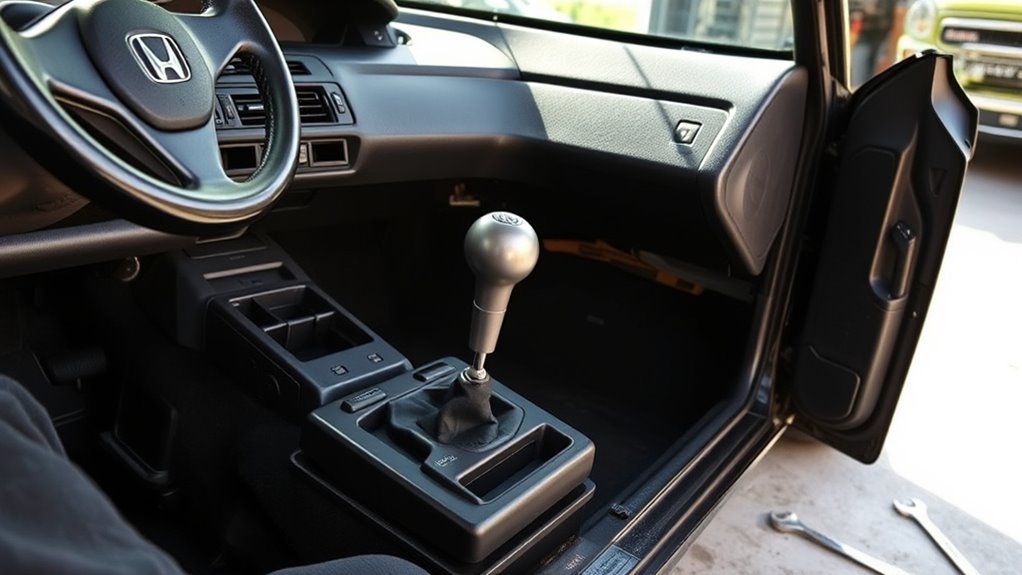
Since its first generation, the Honda Civic has offered a manual transmission option, beginning with early 4-speed setups that emphasized driver engagement and control.
Across the compact car’s lineup, the manual transmission became a defining choice for drivers who wanted direct command over gearing and throttle response.
In the fifth-generation Si models, a 1.6-liter SOHC VTEC engine worked with a 5-speed manual, strengthening performance and sharpening driving dynamics.
The eighth-generation Civic Si later adopted a 6-speed manual, improving shift speed and acceleration while preserving the connected feel many enthusiasts value.
By 2022, the Civic Si continued this approach with a 6-speed manual and automatic rev-matching, blending tradition with modern precision.
Throughout its evolution, the Honda Civic manual has remained more than an option; it has represented driver engagement, mechanical clarity, and a measure of freedom for those who prefer active participation behind the wheel.
Manual Civic History by Generation
The first generation of the Honda Civic introduced a manual transmission option in 1972, establishing the model’s early focus on driver control and engagement.
Across later generations, the Civic manual evolved from basic economy-oriented setups to more refined 5-speed and 6-speed configurations, reflecting changes in performance and efficiency.
Notable Si models, including the fifth, sixth, eighth, and eleventh generations, marked key milestones by pairing manual gearboxes with increasingly capable engines.
First-Gen Manual Origins
Introduced in 1972, the first-generation Honda Civic included a manual transmission that paired closely with its 1,169 cc engine, rated at 50 to 52 horsepower, and helped define the model’s early focus on fuel efficiency and driver engagement.
In the first-generation Honda Civic, this manual transmission gave enthusiasts a direct, unfiltered driving experience uncommon among compact cars of the period.
The 1974 update increased displacement to 1,237 cc, while the gearbox remained a favored choice for those seeking control and responsiveness.
By 1975, the CVCC engine improved combustion efficiency without requiring a catalytic converter, reinforcing the Civic’s practical independence.
That foundation carried into the second-generation Civic and, later, the VTEC engine era, where manual variants continued to support a more liberated driving experience.
Civic Manual Evolution
Honda Civic manual history developed steadily across generations, beginning with a 4-speed manual transmission in 1972 that established the model’s early emphasis on driver engagement and fuel efficiency.
Across later Civic generations, Honda refined the manual transmission to serve changing demands without losing accessibility.
The fifth-generation Si adopted a 1.6-liter SOHC VTEC engine and 5-speed manual, improving performance and driving dynamics.
In the sixth generation, the Si used a 1.6-liter engine with 160 hp and a standard 5-speed manual, appealing to drivers seeking control.
The eighth-generation Si advanced to a 2.0-liter engine and 6-speed manual, adding sharper response.
The eleventh-generation Civic continues with a 6-speed manual and automatic rev-matching, preserving a liberated, engaging driving character for enthusiasts.
Si Manual Milestones
Arriving in 1986, the Civic Si marked Honda’s first move into the performance compact segment, pairing a 1.5-liter SOHC engine with 91 horsepower and a manual-focused driving character.
The Honda Civic Si soon became a reference point among performance models, especially as the fourth-generation car added a 1.6-liter engine, 108 hp, and revised suspension for sharper handling and performance.
In 1992-1995, VTEC technology raised output to 125 hp, strengthening its place in the Civic lineup across body styles.
The eighth-generation Civic Si, from 2006-2011, used a 2.0-liter engine and a 6-speed manual transmission.
In 2022, a 1.5-liter turbocharged engine and rev-matching six-speed manual further improved response while preserving fuel economy and driver control.
Honda Civic Manual Engine and Gearbox Specs
The Honda Civic manual lineup has paired varied engine outputs with closely matched gearbox designs across generations, from early 1.2-liter units to the 2022 1.5-liter turbocharged engine producing 200 hp.
Civic Si models have added performance-focused engines, including the 2.0-liter DOHC version with 197 hp and the eighth-generation model’s limited-slip differential.
Gearbox ratios, particularly in 6-speed manual setups such as the 2022 Civic Si with rev-matching, have played a central role in how the car delivers acceleration and drivability.
Manual Engine Specs
Across its generations, the Civic’s manual engine and gearbox combinations have ranged from modest early units to more performance-focused setups, beginning with a 1.2-liter engine in the first model and later expanding to 1.5-liter and 2.0-liter options in stronger variants.
In the Civic Si, manual transmission pairing has remained central to performance, with VTEC technology improving output and efficiency in later engine options. The 2022 Civic uses a 1.5-liter turbocharged engine producing 200 hp, showing how the compact car balances restraint and capability.
Earlier SOHC engines were simpler, while the 2020 Civic Si added a limited-slip differential to sharpen handling characteristics. Across these revisions, Honda has used manual powertrains to preserve driver control, responsiveness, and accessible performance.
Gearbox Ratios
Gearbox ratios in the Honda Civic manual have varied with each generation, reflecting changes in performance goals and drivetrain sophistication. Early Civic models used a 4-speed manual transmission, favoring simplicity and efficiency.
The fifth-generation Civic Si paired a 5-speed manual with a VTEC engine, tightening gear changes for stronger acceleration and sharper performance. By the eighth-generation Civic Si, the 6-speed manual improved ratio spacing, supporting sportier driving dynamics and better handling.
The latest Civic Si continues the 6-speed manual layout, adding rev-matching technology to smooth downshifts and preserve momentum. In the 2022 model, the manual transmission remains central to driver control, while precise ratios help extract useful power from the engine across the rev range, reinforcing a liberated, engaged driving experience.
Manual Civic Performance and MPG
Manual Honda Civics have long balanced performance and efficiency, with the Si trim serving as the clearest example of how the model evolved over time. The Civic Si paired a manual transmission with steadily stronger performance, from the 1986 1.5-liter SOHC engine making 91 hp to the 2022 1.5-liter turbocharged engine rated at 200 hp.
Manual Honda Civics evolved from efficient simplicity to turbocharged performance, while keeping the manual spirit alive.
In 2006, the 6-speed manual sharpened driver engagement, while the 2017 Si added a broader torque curve and 192 lb-ft of torque, improving acceleration without sacrificing fuel efficiency.
Earlier fifth-generation models showed the opposite priority: the VX hatchback earned an EPA rating of 48 mpg city and 55 mpg highway, demonstrating that thrift could coexist with freedom of motion.
Across generations, manual Civic variants were also valued for responsive handling, balanced ride quality, and sporty characteristics that supported confident, independent driving.
Best Manual Civic Trims and Key Milestones
Among manual Civic trims, the Si has remained the benchmark, combining everyday usability with the most engaging performance in the lineup. Its history includes key milestones that map the model’s rise in compact-car freedom.
- 1986: the Civic Si manual trim arrived with a 1.5-liter engine making 91 hp, defining an accessible performance baseline.
- The fifth-generation Civic Si gained cultural weight through *The Fast and the Furious*, where its customization potential helped make it iconic.
- In 2006, the Civic Si adopted a 2.0-liter, 197 hp setup and a 6-speed manual, a clear signal to driving enthusiasts.
- The 2017 and 2022 models continued the formula with turbocharged 1.5-liter engines, 205 hp then 200 hp, plus automatic rev-matching in the latest 6-speed manual.
Across its history, the Civic Si has remained the most sought-after manual Civic, blending performance, precision, and an unruly appetite for driver involvement.
Buying a Manual Civic: What to Check
When evaluating a manual Honda Civic, the clutch should be checked first for smooth, consistent engagement, since hesitation or slippage can point to wear and past use. A careful inspection also helps reveal whether prior owners respected maintenance and mechanical freedom.
| Check | Why it matters |
|---|---|
| Shifter action | Grinding or stiffness may signal transmission or linkage faults. |
| Oil leaks | Seepage around the engine and transmission can indicate aging seals. |
| Service history | Records should show clutch replacements and fluid changes. |
A test drive should follow, with attention to pedal feel, shift precision, and overall performance in traffic and at speed. The manual transmission ought to move cleanly through every gear without noise or delay. Any reluctance, vibration, or abnormal feel reduces confidence in the Civic’s condition. Clear service history and a disciplined inspection give buyers more control, helping them choose a car that supports reliable, independent driving.
Frequently Asked Questions
What Are the Key Features of a Manual Honda Civic?
A manual Honda Civic offers Civic performance upgrades, Manual transmission benefits, and a better Driving experience comparison; Honda Civic reliability, Fuel efficiency tips, Maintenance best practices, Interior design features, Safety ratings overview, Aftermarket modifications, Resale value insights.
What Are Some Hidden Features of the Honda Civic?
Hidden technologies include ECO mode, HondaLink, and concealed storage; interior comforts contrast with safety enhancements like Lane Keeping Assist. Performance upgrades aid driving experience, while fuel efficiency, user friendly controls, customization options, maintenance tips, and tech integrations remain notable.
What Are Some Interesting Facts About the Honda Civic?
The Honda Civic shows Civic popularity trends, strong Engine performance reviews, standout Fuel efficiency comparisons, varied Civic model generations, abundant Aftermarket modifications, solid Civic safety ratings, low Maintenance cost analysis, strong Resale value insights, loyal Civic enthusiast communities, and Global market variations.
Which Year to Stay Away From a Honda Civic?
2001–2007 Honda Civic years are best avoided; a careful comparison shows recurring Honda Civic reliability issues, transmission problems overview, engine performance analysis, and owner reviews insights, affecting maintenance cost breakdown, safety ratings evaluation, fuel efficiency trends, resale value considerations, common repairs guide.
Conclusion
To summarize, the Honda Civic manual has evolved from a simple, driver-focused compact into a remarkably polished performance tool, with each generation sharpening its 5-speed and 6-speed character like a precision blade. From early economy-minded models to the 200 hp Civic Si, it has paired efficiency with engagement in a way few rivals can match. For buyers, the manual Civic remains a durable, rewarding choice—provided clutch, gearbox, and service history are carefully checked.